
AC Blower Motor Not Working: Troubleshoot & Repair 2026
A lot of Sun City drivers find this problem the same way. You start the car on a scorching Arizona afternoon, turn the AC knob, and get cold silence from the vents. The light comes on, the system seems alive, but no air moves.
That usually points to one important part. The blower motor is the fan that pushes air through your dash vents. If it quits, your AC can have cold refrigerant in the system and still feel useless inside the cabin. Arizona heat makes that failure feel urgent fast, especially when you’re sitting in traffic with the sun pouring through the windshield.
That First Hot Day and a Silent AC
In Sun City, AC problems rarely show up at a convenient time. They show up when it’s hot enough that even a short drive to the store feels miserable. A blower motor issue is one of those faults that can look bigger than it is. Sometimes it’s just a fuse. Sometimes it’s a relay. Sometimes the motor really has failed.
What matters is taking a clean diagnostic path instead of guessing.
A good starting point is keeping up with car AC maintenance timing. When drivers wait until the first extreme heat wave, small electrical or airflow issues often turn into a no-air complaint at the worst possible moment.
What the blower motor actually does
The blower motor’s job is simple. It spins the fan and pushes air through the evaporator and out the vents. No blower, no cabin airflow.
That doesn’t always mean the motor itself is bad.
Practical rule: If the AC settings light up but no air comes out on any speed, start with the easy electrical checks before you price a motor.
What Arizona heat changes
Here in the West Valley, heat exposes weak parts quickly. Connectors get brittle. Relays live in hot engine bays. Plastic housings bake for months. A marginal blower motor that survived winter can fail when summer asks it to run hard every day.
The upside is that many no-blower complaints still have a straightforward cause. If you work from the simple stuff to the harder tests, you can often tell whether you’re dealing with a five-minute fix or a deeper electrical problem.
Start with the Easiest Fixes First
On a 110-degree Sun City afternoon, it is easy to assume the blower motor gave up. I would not start there. A blown fuse or a bad relay can shut the fan down just as completely, and those checks take minutes instead of an afternoon under the dash.
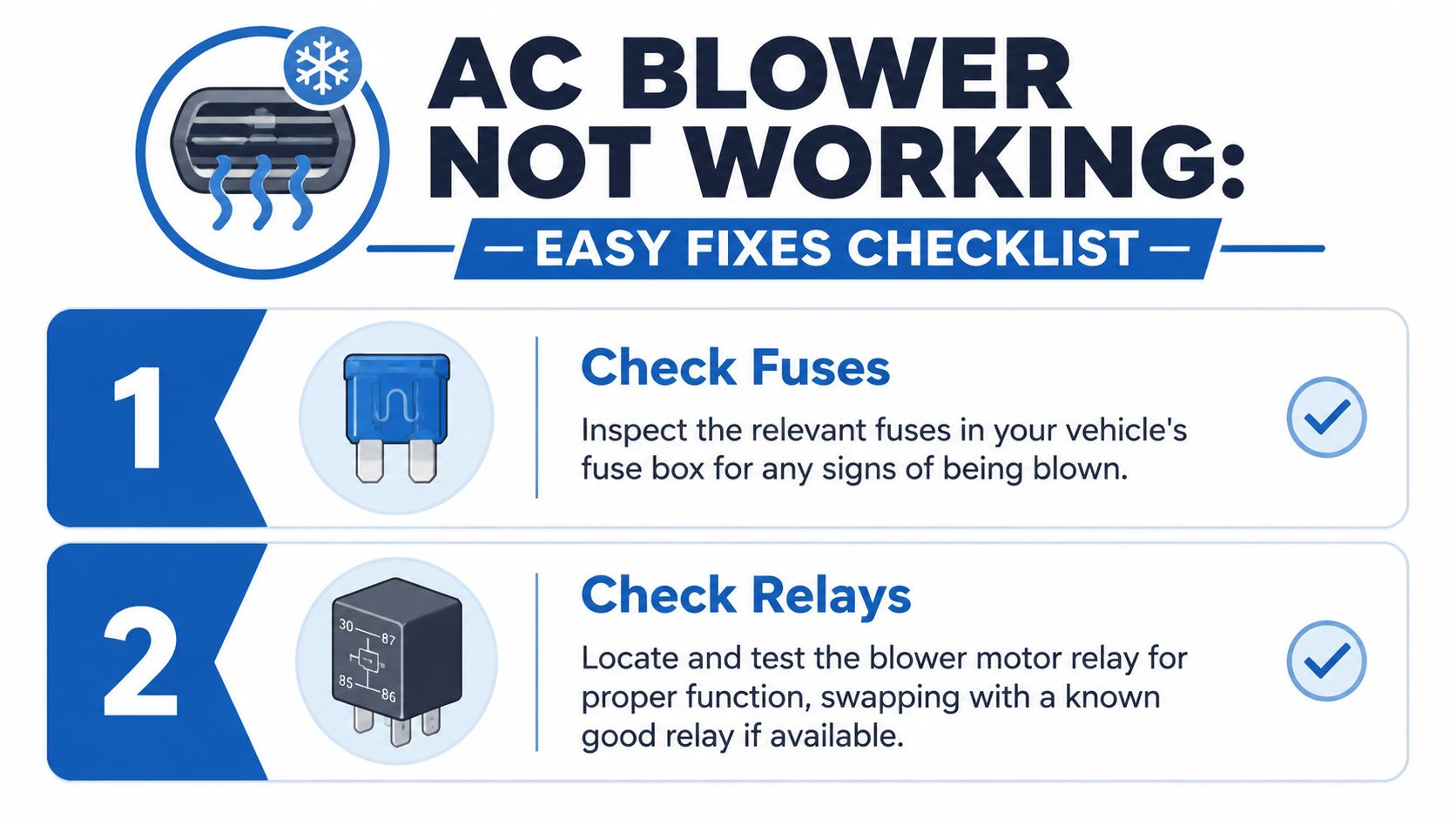
If your AC controls light up but no air comes out, begin with the simple electrical parts before you buy a motor. Many drivers skip these checks because they hear “no blower” and go straight to the most expensive part. In Arizona heat, that guess gets costly fast.
Fuse check
Start with the fuse. It is the quickest test, and it can save you from pulling trim panels for no reason.
- Turn the vehicle off first. You are checking power supply basics, not probing live circuits.
- Find both fuse panels. Many cars have one under the dash and one under the hood.
- Look for labels such as blower, HVAC, heater, AC, or climate control.
- Replace a blown fuse with the same amperage only. Never install a larger fuse to “see if it holds.”
- Stop if the new fuse blows right away. That points to a short, a seized motor, or another downstream fault.
A fuse that fails once may be simple. A fuse that fails again is a warning sign.
Relay check
Relays are small, cheap, and easy to miss. Arizona engine bay heat is hard on them, especially in older vehicles that spend all summer baking in parking lots.
- Locate the blower relay using the owner’s manual or fuse box diagram.
- Swap it with an identical known-good relay from a non-critical circuit if the part numbers match.
- Test the blower again on every speed setting.
- Leave it alone if you see melted plastic, corrosion, or heat damage. That is the point where a repair shop should inspect the circuit.
If you want a wider checklist before scheduling service, this guide to diagnosing common car AC problems lays out the other common failure points.
The symptom can feel major, but the first fix is sometimes a fuse or relay you can handle in your driveway.
Does Your Fan Only Work on High Speed
This symptom has a pattern. If the fan works only on the highest setting, the blower motor usually isn’t your first suspect. The problem is often the blower motor resistor or, on newer vehicles, a control module.
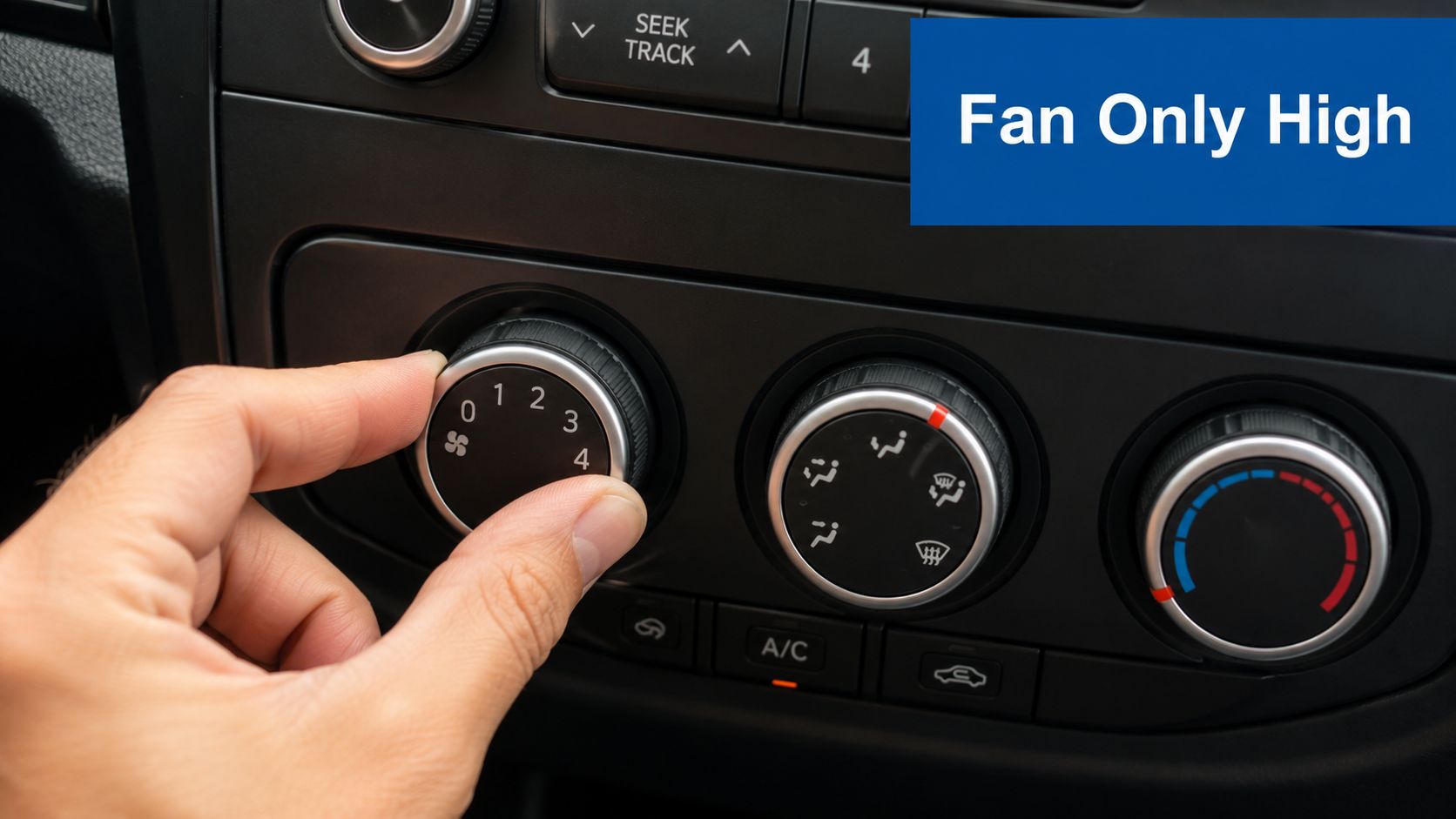
The resistor controls lower fan speeds by reducing voltage. High speed often bypasses part of that circuit. That’s why a failing resistor can leave you with “high only.”
What to look for
The resistor is commonly mounted in the HVAC case, often behind the glove box or under the passenger side dash. It’s placed in the airflow path so it can stay cool.
Signs that point toward the resistor or module:
- High speed works, low and medium don’t
- Fan cuts in and out on certain settings
- You see heat discoloration or corrosion on the connector
- The plug looks burned or loose
A practical driveway test
You don’t need to be an electrical engineer, but you do need to be careful.
- Disconnect the battery before unplugging the resistor connector.
- Access the part by removing the glove box or lower trim panel if needed.
- Inspect the connector first. Burn marks and melted plastic matter as much as the resistor itself.
- Use a multimeter if you know how to compare resistance against the service manual spec for your vehicle.
- Replace the resistor or module if the symptom matches and the connector is sound.
If you want more model-specific AC troubleshooting ideas, the Pete Nelson Automotive AC troubleshooting posts are worth browsing.
What doesn’t work well here is guessing. Plenty of people replace the whole blower motor when the actual fault is the speed control part mounted six inches away.
How to Test the Blower Motor Itself
In Sun City, this is the point where a lot of AC checks get serious. If the basics checked out and the cabin fan is still dead, you need to find out whether the motor has failed or if the problem is somewhere else in the circuit.
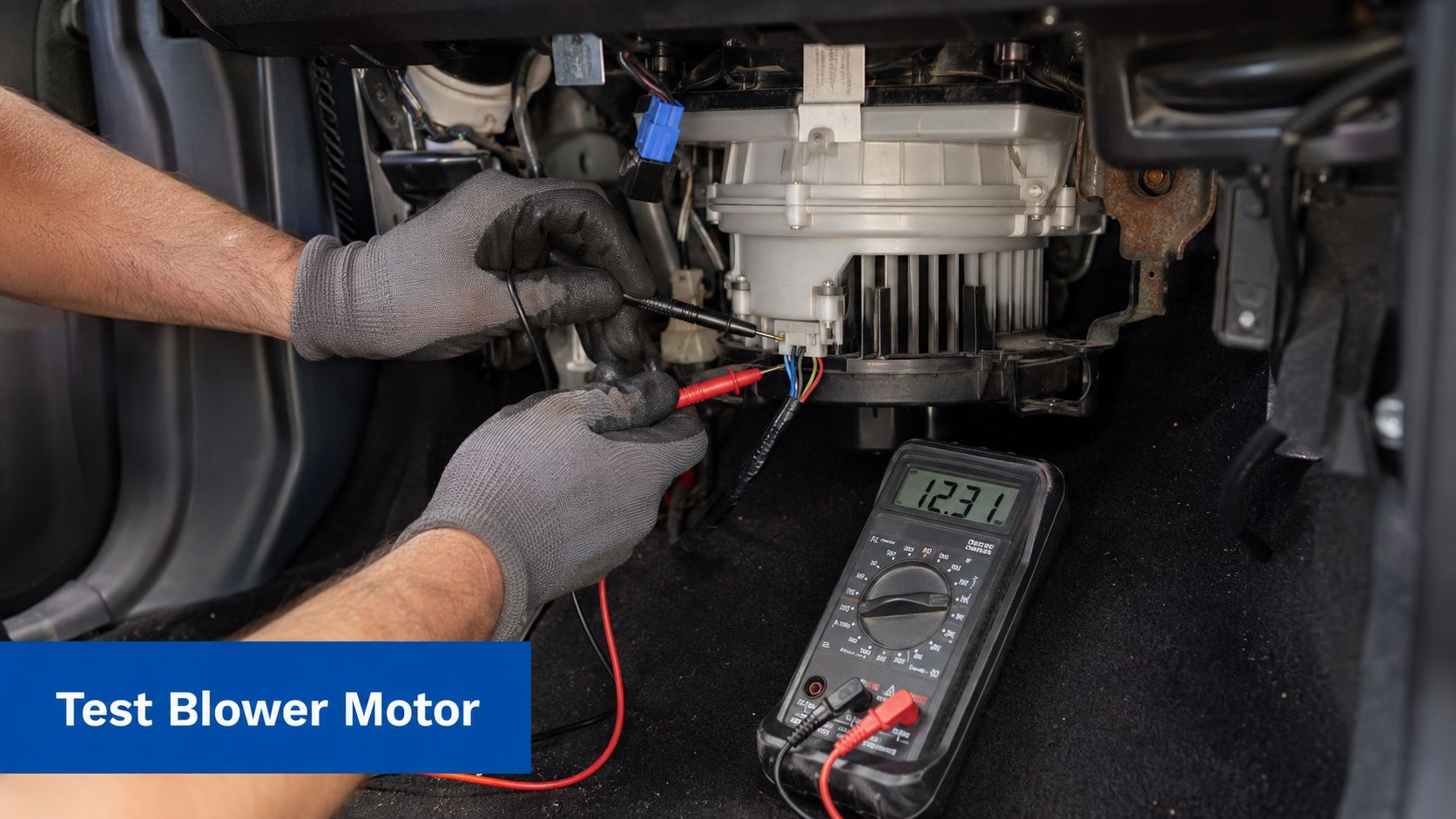
Check the motor before you test it
Most blower motors sit under the passenger side dash. On some vehicles, you can reach the fan wheel once a lower panel or glove box is out of the way.
Start with a hands-on inspection. Arizona dust, leaves, and heat can shorten blower motor life, especially in cars that spend their time parked outside.
- Spin the squirrel cage by hand if you can reach it
- Feel for roughness or drag
- Look for debris packed into the fan wheel
- Notice any burnt smell or excess heat after the fan switch has been on
A blower that feels stiff, gritty, or locked up is usually worn out. If it spins freely and smoothly, keep testing before you buy parts.
Check for power and ground
A multimeter answers the question that matters most. Is the motor being fed what it needs to run?
With the connector plugged in or back-probed, turn the key on and command the blower on. Many vehicles will show battery voltage at high speed. Lower speeds may show a different reading depending on how that system controls the motor. The exact number matters less than this: if the vehicle is commanding the blower on, you should see power and a good ground at the motor.
Use this as a practical guide:
| Test result | What it usually means |
|---|---|
| Good power and good ground, but motor does not run | The blower motor is likely bad |
| No power at the connector | The fault is upstream in the circuit |
| Power shows up only sometimes | Look for connector damage, a failing control circuit, or intermittent wiring |
| Voltage is present but low and unstable | Test the control side before replacing the motor |
If you have full power and ground and the fan still does nothing, the motor has earned suspicion.
For confident DIYers, a direct power test can confirm it. Remove the motor, use fused jumper wires, and apply battery power and ground straight to the motor terminals. If it does not spin, or it spins slowly and noisily, replace it. If you are not comfortable doing that safely under the dash, stop there. It is easy to short a connector or damage trim in a tight workspace.
On newer vehicles, blower circuits can involve modules, signal wires, and electronic controls. A quick read through how electrical system issues can affect your car’s air conditioning helps explain why a motor test by itself does not always tell the whole story.
For readers who also like seeing how blower problems are explained on the home HVAC side, this homeowner’s guide to furnace issues is a useful comparison. The systems are different, but the test logic is similar. Check for power first, then replace parts.
When Its Not the Motor Wiring and Switch Issues
At this point, many DIY repairs stall out. The blower motor may be fine, but the command never reaches it.
Over 25% of blower motor not working cases in newer vehicles and HVAC units stem from faulty control boards, resistors, or missing signal issues, according to this diagnostic discussion on control module and signal failures. In modern vehicles, that often means the dash control head, a module, or damaged wiring is interrupting the circuit.
Common hidden faults
Wiring problems don’t always look dramatic. Sometimes it’s a green, corroded connector under the dash. Sometimes it’s a partially backed-out terminal. Sometimes the fan switch itself has an internal dead spot.
Check these areas carefully:
- Connector condition at the blower motor and resistor
- Harness rubbing points near brackets or sharp metal edges
- Moisture intrusion on the passenger side floor area
- Fan control switch feel if it feels loose, inconsistent, or scratchy
When diagnostics get serious
A modern climate control system may use modules and low-voltage command signals instead of a simple old-school switch. That’s why guessing gets expensive. You can replace a good motor, a good resistor, and a good relay and still have no airflow.
If you suspect wiring or a control issue, this look at how electrical system faults can affect car AC helps connect the dots.
This is also the point where a professional scan tool and wiring diagram save a lot of time.
Costs and When to Visit a Sun City Auto Repair Pro
At some point, the smart move is to stop swapping parts and get the system tested correctly. Professional blower motor replacement costs can range from $300 to over $1,000, including parts and labor, according to this blower motor troubleshooting and repair cost guide. That’s exactly why accurate diagnosis matters.
When DIY still makes sense
If you’re comfortable with basic hand tools, these are reasonable driveway jobs:
- Replacing a blown fuse
- Swapping a matching relay
- Changing an accessible resistor
- Inspecting visible connectors and debris
When it’s time to hand it off
Professional diagnosis makes more sense when:
- You have power issues but no obvious failed part
- The blower works intermittently
- You smell hot wiring or burned plastic
- The dash has to come apart for access
- Module testing or wiring diagrams are required
For readers comparing fan motor issues across systems, this Sun City fan motor repair page from Sapper HVAC gives a helpful outside perspective on how technicians approach motor-related airflow faults. The equipment is different, but the repair decision is similar: test first, replace second.
If you need local help with auto AC repair in Sun City, one option is Pete Nelson Automotive at 9000 N 103rd Ave. Their ASE-certified technicians handle diagnostics, electrical testing, and air conditioning service for domestic and import vehicles, and the shop is known locally for clear communication and a women-friendly environment.
Good diagnostics cost less than a pile of wrong parts.
Frequently Asked Questions About Blower Motors
| Question | Answer |
|---|---|
| Why is my car AC on but not blowing air? | The most common causes are a blown fuse, bad relay, failed resistor, bad blower motor, or a wiring or control problem. Start with the simple electrical checks before assuming the motor is bad. |
| Why does my blower motor only work on high? | That usually points to a failed blower motor resistor or control module. High speed often uses a different part of the circuit than the lower settings. |
| Can Arizona heat make blower motor problems worse? | Yes. Extreme cabin and engine-bay heat can expose weak relays, brittle connectors, and worn motors faster than mild weather does. Summer is when marginal parts often fail. |
| Is it safe to drive if the blower motor isn’t working? | The car may still run, but driving without airflow can be unsafe in Arizona heat. You can also lose windshield defogging performance, which matters during monsoon season. |
| How do I know if I need a mechanic for an AC blower motor not working issue? | If fuse and relay checks don’t solve it, or if you need voltage testing, switch diagnosis, or wiring repair, it’s time for professional help. That saves time and helps avoid replacing good parts. |
If your AC blower motor isn’t working and you want a straight answer without the guesswork, contact Pete Nelson Automotive. For trusted auto repair in Sun City AZ, clear explanations, and practical diagnostics, call 623-974-4723 or visit petenelsonautorepair.com to schedule your appointment today.
Pete Nelson Automotive
This Offer Will Expire 12-31-2026
Pete Nelson Automotive is pleased to offer you

"Get Ready for the Holidays"
A $215.00 Value for Only $159.95 (+tax)
Lube, Oil, & Filter Change, Up to 5 quarts of Engine oil
Inspect and top off all fluid levels, Includes up to 5 Quarts of 5w30 synthetic blend oil, additional charge for synthetic oil.
Travel Evaluation
Set Air Pressures and Tire Rotation if needed.
Battery, Alternator and Starter Electrical Test
Load test battery, Alternator output and Starting amps.
Full Brake Evaluation
Includes check brake system on four wheels, checking and testing brake fluid condition.
So Call 623-974-4723 today and make an appointment for this exclusive Special!
*Most Cars, Vans, Motor homes, 4×4’s, Diesels, and some foreign cars may be higher. You must bring this letter at time of service and allow 2 hours to complete.



