
You’re trying to merge onto Grand Avenue here in Sun City, you press the gas pedal, and… nothing. Or maybe just a sluggish, sputtering response that leaves you feeling frustrated and a little unsafe. When your car doesn’t have the “get-up-and-go” it used to, it’s not just an annoyance; it’s a clear signal that something under the hood needs attention. The problem usually boils down to a few key areas: the fuel system, the air intake, or the electronic sensors that manage it all.
That Lagging Feeling When Your Car Won’t Accelerate
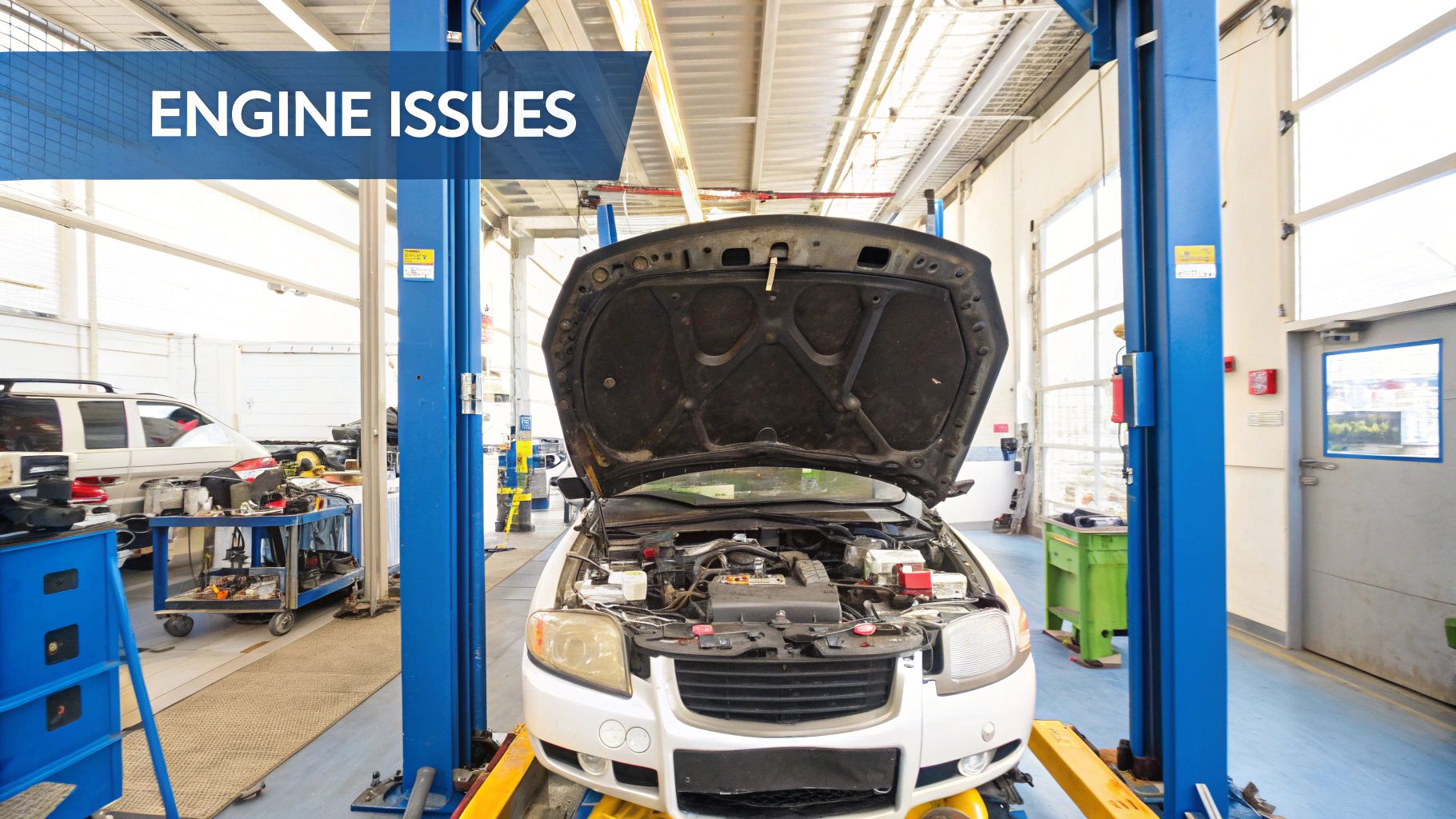
You know the feeling. You press the accelerator, expecting a smooth, quick response, but what you get is a sluggish, sputtering struggle. That lag between your foot hitting the floor and your car actually picking up speed isn’t just irritating—it’s a real safety risk when you’re trying to navigate traffic.
When your car hesitates like that, it’s basically telling you something is out of whack. For an engine to accelerate properly, it needs a perfect harmony of three things: fuel, air, and an electrical spark. If any one of those is off, the whole system suffers, and you feel it in the driver’s seat.
Understanding the Core Systems
Think of your engine as an athlete. It needs to breathe right (air intake), get the right fuel (fuel system), and get clear signals from its brain (electronic sensors) to hit peak performance. When your car isn’t accelerating like it should, one of these vital functions is probably being choked off.
Here’s a quick breakdown of what could be going wrong:
- Fuel System: This system’s job is to get a clean, steady flow of gasoline from the tank to your engine. Any blockage or failure here is like trying to run a marathon without water—the engine is starved of the energy it needs.
- Air Intake & Exhaust: Your engine inhales a massive amount of clean air to mix with that fuel. Just as important, it needs to exhale exhaust fumes efficiently. Any restriction in either direction will suffocate its power.
- Electronic Control System: A network of sensors constantly monitors everything from how hard you’re pressing the gas pedal to the oxygen levels in the exhaust. They feed this data to the car’s computer, which makes constant adjustments. A single bad sensor can feed the computer bad info, causing all sorts of performance issues.
- Transmission System: Sometimes, the engine is making plenty of power, but if the transmission can’t get that power to the wheels effectively, your car simply won’t go like it should.
To help you get a better idea of what might be happening with your vehicle, here’s a quick look at common symptoms and what they might mean.
Quick Guide to Common Acceleration Problems
| Symptom You Experience | Potential Problem Area | Why It’s Happening |
|---|---|---|
| Car sputters or jerks when you accelerate | Fuel System | A clogged fuel filter or failing fuel pump is preventing a steady stream of gas from reaching the engine. |
| Sluggish response, feels like it has no power | Air Intake & Exhaust | A dirty air filter is choking the engine, or a blocked catalytic converter is trapping exhaust fumes. |
| Check engine light is on and acceleration is poor | Electronic Control System | A bad sensor (like the mass airflow or oxygen sensor) is giving the computer incorrect data. |
| Engine revs high but the car barely moves | Transmission System | The transmission might be slipping, failing to transfer the engine’s power to the wheels. |
This table is a starting point, of course. Proper diagnosis is key to getting the right fix. Our goal is to help you understand what might be happening under the hood. By recognizing the signs, you can have a more informed conversation with your technician and get the right auto repair in Sun City AZ.
If you need a hand with diagnostics, our team is always ready to assist. You can find more about our various Services online.
When Your Engine Is Starved For Fuel
Think of your car’s fuel system as its circulatory system. For your engine to deliver the power you demand when you hit the gas, it needs a steady, clean stream of fuel. If anything interrupts that flow, your car will feel weak and unresponsive, especially when you need power the most. For drivers here in Sun City, the summer heat can put extra strain on fuel pumps, making them more likely to fail.
The Clogged Fuel Filter Roadblock
Your fuel filter has a simple but critical job: it traps dirt, rust, and other gunk before they can get to your sensitive fuel injectors. Over tens of thousands of miles, that filter inevitably gets clogged. When that happens, it’s like a roadblock for your gasoline, literally starving your engine. You’ll notice this most when you need a sudden burst of power, like merging onto a busy street.
Failing Fuel Pumps and Dirty Injectors
Another common problem we see is a weak or failing fuel pump. This part pushes fuel from the tank to the engine at a specific pressure. As the pump wears out, it can’t keep that pressure up, leading to hesitation and a serious loss of power.
Further down the line are the fuel injectors, which spray a fine mist of fuel into the engine’s cylinders. When they get clogged with carbon deposits, they can’t spray evenly. This messes up the combustion process, causing issues like:
- Engine Misfires: A distinct stutter or vibration during acceleration.
- Rough Idling: The car may shake or run unevenly at a stoplight.
- Reduced Fuel Economy: An engine that isn’t burning fuel efficiently will cost you more at the pump.
A healthy fuel system is non-negotiable for reliable performance. Addressing a seemingly minor hesitation early can prevent you from getting stranded with a car that won’t start at all. Making sure these components are clean and working right is a huge part of restoring your car’s get-up-and-go. You can learn more by checking out our guide to optimizing your vehicles performance with professional fuel system service.
When Your Engine Can’t Breathe
Think of your car’s engine like a runner. To perform at its best, it needs a steady, clean supply of oxygen. Mess with that airflow, and you’re asking your car to sprint while holding its breath. Here in dusty Arizona, a dirty engine air filter is one of the most common culprits we find for poor acceleration. Over time, that filter gets packed with dust and sand from our Sun City streets, literally choking the engine.
Pinpointing Airflow and Exhaust Problems
But it’s not always just a simple filter swap. Other components are just as critical. The Mass Airflow (MAF) sensor, for instance, tells your car’s computer exactly how much air is coming in. If that sensor gets dirty or fails, it sends bad data, which then messes up the air-to-fuel mix and causes your car to hesitate.
Then you have the other end of the cycle: the exhaust. An engine has to “exhale” just as well as it “inhales.” A blockage here, usually a clogged catalytic converter, creates backpressure that traps hot exhaust gases inside the engine, causing a major loss of power.
Air Intake vs. Exhaust Blockage Symptoms
So, how can you tell if the problem is with air coming in or exhaust going out? While a professional diagnosis is the only way to be certain, the symptoms often feel a bit different from behind the wheel.
| Symptom | Likely Air Intake Issue (e.g., Dirty Filter) | Likely Exhaust Issue (e.g., Clogged Converter) |
|---|---|---|
| Acceleration | The car feels sluggish from a dead stop, generally weak. | Power loss gets progressively worse the harder you accelerate. |
| Engine Sound | Your engine might sound muffled, almost like it’s strained. | You could hear a rattling sound from under the car or a hissing. |
| Warning Signs | A check engine light is pretty common. | Check engine light, often paired with a “rotten egg” smell. |
While both issues can cause similar problems, a clogged catalytic converter is particularly nasty. It doesn’t just kill your car’s performance; it can also create a dangerous buildup of heat, potentially leading to expensive engine damage. Regular maintenance, especially simple things like changing your air filter, is the best way to prevent these breathing problems. To learn more about how this fits into overall vehicle care, read about the importance of engine tune-ups in our related article.
Decoding Electronic Sensor Failures
Modern cars are rolling computers that use a complex web of electronic sensors to manage engine performance. When even one of these tiny digital messengers starts sending bad information, it can lead to frustrating acceleration problems. This is usually when you’ll see that dreaded “Check Engine” light pop up on your dashboard.
These sensors are the eyes and ears of your car’s main computer, the Engine Control Unit (ECU). They’re constantly monitoring everything from air temperature to how hard you’re pressing the gas pedal. When a sensor fails, the ECU is essentially flying blind.
Key Sensors That Impact Acceleration
While your car has dozens of sensors, a few are notorious for causing that sluggish feeling. Here are the main culprits we often see in our Sun City auto repair shop:
- Throttle Position Sensor (TPS): This tells the computer the exact angle of the throttle as you press the accelerator. If it’s faulty, it might tell the computer you’re barely touching the pedal when you’re actually flooring it, causing a severe delay.
- Oxygen (O2) Sensor: Located in the exhaust, this sensor measures unburnt oxygen to help fine-tune the air-fuel mixture. A failing O2 sensor can cause the engine to run too rich (too much fuel) or too lean (not enough), hurting both power and fuel economy.
- Mass Airflow (MAF) Sensor: As mentioned earlier, this measures the amount of air entering the engine. If it gets dirty or fails, it sends incorrect data, leading to a poor air-fuel ratio and sluggish performance.
A common misconception is that a check engine light for a sensor is a minor issue. In reality, a faulty sensor can reduce fuel efficiency and potentially damage expensive components like the catalytic converter over time. You can read more about these global automotive statistics to see how common these issues have become.
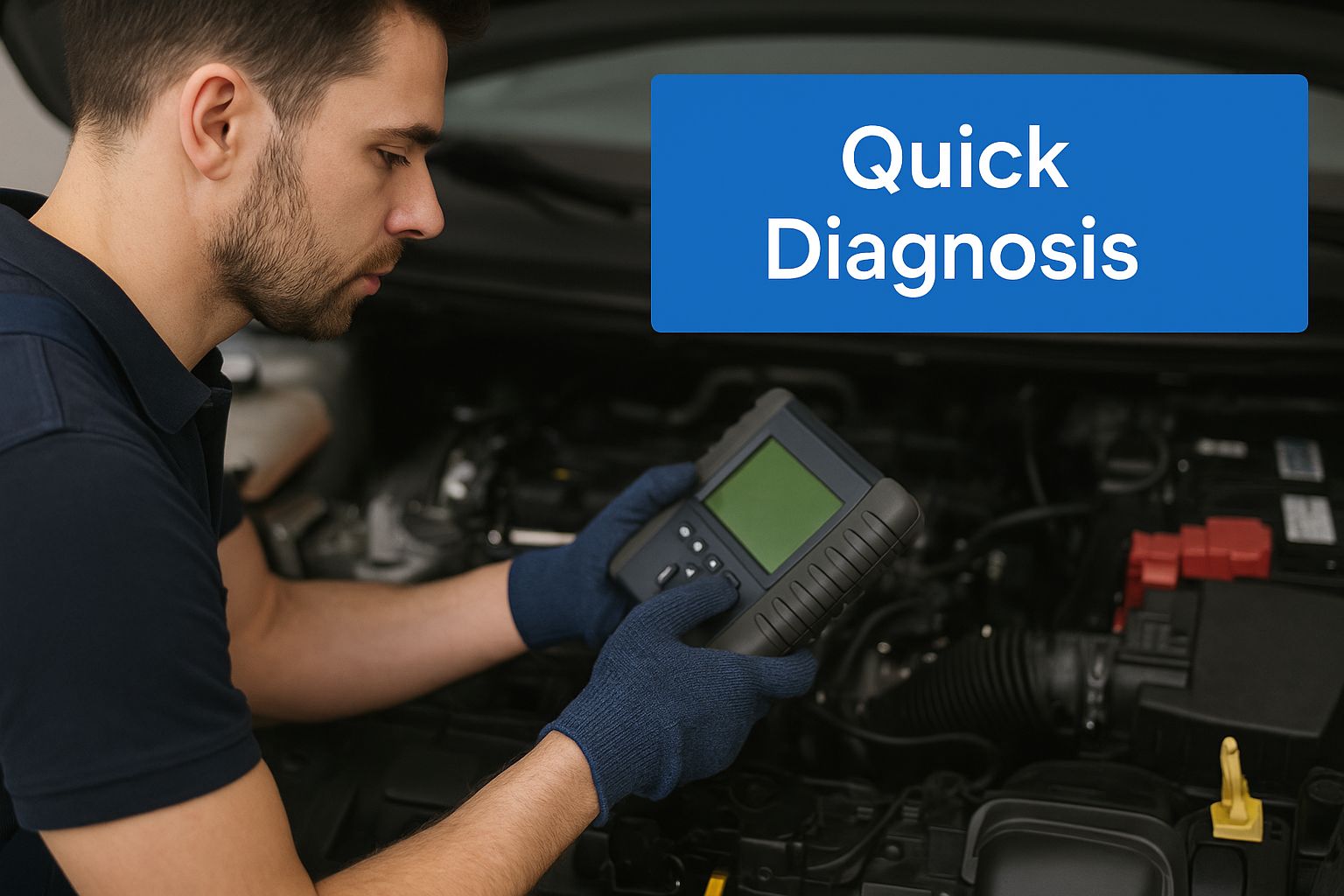
Diagnosing these electronic gremlins requires specialized equipment to read the fault codes stored in your car’s computer. You can learn more by understanding car computer diagnostics in our detailed guide. Pinpointing the exact sensor is key to an efficient repair.
Transmission Troubles: When Power Doesn’t Reach the Pavement
Your engine can be running perfectly, but if the transmission can’t get that power to the wheels, your car is going nowhere fast. When the transmission starts having problems, you’ll feel it right away in your acceleration.
For anyone driving an automatic, the classic symptom is transmission slipping. You’ll know it when it happens: you press the gas, the engine roars, but the car’s speed barely budges. It’s a frustrating feeling, almost like the car slipped into neutral before lurching forward. This is often a red flag for low or burnt transmission fluid or even worn-out internal parts.
Signs of Transmission Trouble
Whether you drive an automatic or a manual (with a worn clutch), here are a few key signs that your transmission is the culprit:
- Delayed or Rough Shifting: The car hesitates, jerks, or slams into gear.
- Strange Noises: Listen for any whining, humming, or clunking sounds that change with your engine speed.
- Leaking Fluid: A puddle of red or brownish fluid under your car is a dead giveaway of a leak that needs immediate attention.
Down here in Sun City, the intense Arizona heat puts massive stress on transmission fluid, causing it to break down faster. Regular fluid checks and changes are one of the most important preventative things you can do to protect your transmission.
Catching these signs early can be the difference between a simple service and a massive repair. If you suspect something is off, learn more about common transmission problems and how we can fix them on our blog.
Your Local Experts for Auto Repair in Sun City, AZ
When your car hesitates or struggles to get up to speed, it’s a clear sign that something’s wrong. Trying to diagnose it yourself can be a real headache, and guessing can lead to more expensive damage. More importantly, a car that can’t accelerate properly is a safety risk on Sun City roads.
At Pete Nelson Automotive, we take the guesswork out of it. Our experienced technicians use advanced diagnostic tools to pinpoint the exact source of your acceleration trouble. Whether it’s a clogged filter, a faulty sensor, or a transmission issue, we’ll find it. We believe in straight talk, explaining the problem in simple terms and walking you through your repair options. Our goal is to restore your car’s performance and your confidence behind the wheel.
Don’t let a lagging vehicle put you at risk. For reliable service from a team you can trust, you can find more of our insights on auto repair in Sun City AZ right here on our blog.
Frequently Asked Questions About Acceleration Problems
Why does my car hesitate when I press the gas?
That hesitation is often a sign your engine isn’t getting the right mix of fuel and air precisely when it needs it. Common causes include a clogged fuel filter, dirty fuel injectors, or even old spark plugs that can’t create a strong enough spark for efficient combustion. This “stumble” is the engine struggling to produce power on demand.
Can a dirty air filter really cause slow acceleration?
Yes, absolutely. An engine needs a massive amount of clean air to mix with fuel for proper combustion. A dirty air filter restricts that airflow, essentially “choking” the engine and preventing it from breathing properly. This leads directly to sluggish performance, reduced power, and even worse fuel economy.
Is it safe to drive my car if it accelerates poorly?
We strongly advise against it. Poor acceleration can become a serious safety hazard, especially when you need to merge into fast-moving traffic or pass another vehicle. It makes your car unpredictable and leaves you vulnerable in critical driving situations. It’s always best to have the issue diagnosed and repaired promptly.
How can I prevent acceleration problems?
The best defense is regular, preventative maintenance. Sticking to your vehicle manufacturer’s recommended service schedule is key. This includes simple but vital tasks like regularly replacing the engine air filter, changing the fuel filter at recommended intervals, and swapping out spark plugs before they wear out to ensure your engine runs smoothly and responds when you need it to.
If your vehicle is feeling sluggish or just isn’t responding like it should, don’t wait for the problem to get worse. The ASE-certified technicians at Pete Nelson Automotive have the expertise and diagnostic tools to find the root cause and get your car running right.
Call 623-974-4723 or visit petenelsonautorepair.com to schedule your appointment today.
Pete Nelson Automotive
This Offer Will Expire 12-31-2026
Pete Nelson Automotive is pleased to offer you
"Get Ready for the Holidays"
A $215.00 Value for Only $159.95 (+tax)
Lube, Oil, & Filter Change, Up to 5 quarts of Engine oil
Inspect and top off all fluid levels, Includes up to 5 Quarts of 5w30 synthetic blend oil, additional charge for synthetic oil.
Travel Evaluation
Set Air Pressures and Tire Rotation if needed.
Battery, Alternator and Starter Electrical Test
Load test battery, Alternator output and Starting amps.
Full Brake Evaluation
Includes check brake system on four wheels, checking and testing brake fluid condition.
So Call 623-974-4723 today and make an appointment for this exclusive Special!
*Most Cars, Vans, Motor homes, 4×4’s, Diesels, and some foreign cars may be higher. You must bring this letter at time of service and allow 2 hours to complete.



