
You’re trying to merge onto Grand Avenue during rush hour. You press the gas pedal, expecting your car to jump into the flow of traffic, but… nothing happens. It hesitates, sputters, or just flat-out refuses to pick up speed. That sluggish, unresponsive feeling isn’t just frustrating; it’s a major safety issue for any driver here in the Sun City area. When your car won’t accelerate, it’s telling you something is wrong.
This guide will walk you through the common reasons your car might feel weak or slow. We’ll cover everything from simple fuel and air delivery problems to more complex issues with electronic sensors. Think of it as your first step to understanding what’s happening under the hood.
Here at Pete Nelson Automotive, we believe an informed driver is a safer driver. Our goal is to give you the knowledge you need to make smart decisions about your car’s health and get you back on the road with confidence.
Why Does My Car Hesitate to Accelerate?
Poor acceleration isn’t the root problem; it’s a symptom. Your engine’s power comes from a precise mix of three things: fuel, air, and a spark to ignite them. When your car struggles to accelerate, it’s almost always because that perfect recipe is off.
At our auto repair Sun City AZ shop, we see a few usual suspects time and again:
- Fuel Delivery Issues: The engine could be starving for gas. This often points to a clogged fuel filter or a failing fuel pump.
- Airflow Restriction: Your engine needs to breathe. A filthy air filter can choke it, cutting off the air it needs for proper combustion.
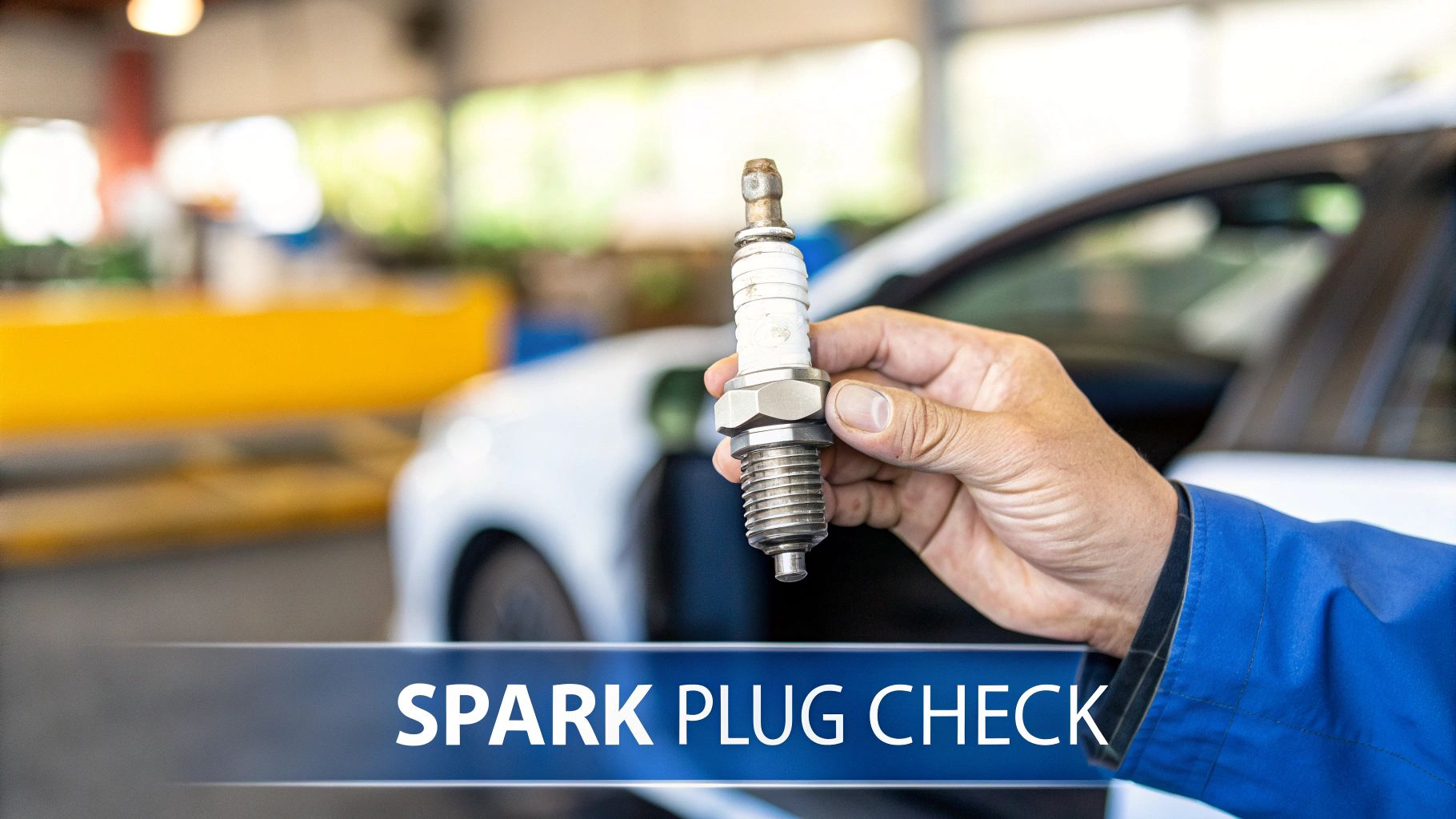
- Ignition System Failure: Old, worn-out spark plugs or faulty ignition coils can’t produce a strong enough spark.
Expert Tip: In our dusty Arizona climate, air filters can get clogged much faster than in other parts of the country. Checking the air filter is one of the first things we do when a car comes in with acceleration trouble. It’s a simple but often overlooked fix.
Understanding these basics is the first step. As we go through this guide, we’ll dig deeper into each potential cause, helping you spot the signs so you can better explain the problem to your mechanic and understand the automotive services they recommend.
Diagnosing Fuel and Air Supply Problems
For your engine to run its best, it needs a perfect balance of fuel and air. Think of it like a recipe—too much or too little of either, and the result isn’t right. When that mixture is off, poor acceleration is one of the first things you’ll notice.
In our Arizona environment, a common culprit is a clogged engine air filter. It literally chokes the engine, starving it of the oxygen it needs to burn fuel efficiently. On the other side of the equation is the fuel system. A problem here means your engine isn’t getting the gas it needs to generate power. This usually points to a clogged fuel filter, a failing fuel pump, or dirty fuel injectors.
Clogged Filters: A Common and Simple Fix
Let’s start with the easiest things to check. Clogged filters are a frequent cause of a car not accelerating as it should, and thankfully, they are a straightforward fix.
- Dirty Air Filter: If your air filter is packed with dust and debris, it’s like asking your engine to run a marathon while breathing through a straw. It can’t pull in enough air, leading to weak performance.
- Clogged Fuel Filter: Over time, sediment from the gas tank can build up in the fuel filter. This restricts the flow of gasoline, causing hesitation or sputtering when you press the accelerator.
You can often tell if your air filter needs replacing just by looking at it. If it’s dark grey or caked with dirt instead of white or off-white, it’s time for a new one. Fuel filters are harder to diagnose without the right tools, but they’re a critical maintenance item that shouldn’t be overlooked.
When the Fuel Pump is the Problem
If the filters are clean, the next component to check is the fuel pump. This part sends fuel from the tank to the engine at a specific pressure. When it starts to fail, it can’t keep up with the engine’s demand.
You might notice the car struggles most when going uphill or trying to merge onto a busy road. The engine needs more fuel during these high-load situations, and a weak pump can’t deliver. A distinct whining noise from the rear of the car, near the gas tank, can also be a tell-tale sign of a failing fuel pump.
These symptoms—hesitation, sputtering, and a loss of power under load—are classic indicators of fuel starvation. Keeping these systems in top shape is essential, which is why we often discuss the importance of regular engine tune-ups with our Sun City clients.
When Faulty Sensors Limit Your Engine’s Power
Modern cars are packed with a network of computers and sensors that all work together. But what happens when one of those sensors starts feeding bad information to the main computer, the Engine Control Unit (ECU)?
To prevent potential damage, the ECU can deliberately cut engine power. This is often called “limp mode,” and it’s a major reason your car won’t accelerate properly. It’s your car’s way of telling you it needs professional attention.
Key Sensors That Control Acceleration
A handful of specific sensors have a direct impact on your car’s power. When one of them malfunctions, it can throw the whole system off. Here are the most common culprits:
- Mass Airflow (MAF) Sensor: This measures how much air is entering your engine. If its reading is off, the ECU will inject the wrong amount of fuel, causing poor performance and sluggish acceleration.
- Oxygen (O2) Sensors: Located in your exhaust system, these sensors measure unburned oxygen to help fine-tune the fuel-to-air ratio. A bad O2 sensor can kill your car’s get-up-and-go.
- Throttle Position Sensor (TPS):: This sensor tells the ECU how far you’ve pushed the gas pedal. If it’s malfunctioning, you’ll experience hesitation or a complete refusal to accelerate.
If a sensor is the problem, your check engine light will almost certainly be on. That light is your most important clue. You can learn more by reading our guide on 8 reasons your check engine light may be on.
Common Sensors Affecting Acceleration
| Sensor Name | What It Does | Common Symptoms of Failure |
|---|---|---|
| Mass Airflow (MAF) Sensor | Measures the volume and density of air entering the engine. | Rough idling, stalling, poor acceleration, bad fuel economy. |
| Oxygen (O2) Sensor | Monitors oxygen levels in the exhaust to adjust fuel mixture. | Increased fuel consumption, failed emissions test, sluggish performance. |
| Throttle Position Sensor (TPS) | Tracks the position of the throttle plate (gas pedal). | Unexplained bucking/jerking, sudden stalls, slow or no acceleration. |
Pete’s Insight: Guessing which sensor has failed is a recipe for frustration and a large bill. Modern vehicles have dozens of sensors. Professional diagnostic tools are essential for reading the specific error codes from your car’s computer, letting us pinpoint the exact failure without any expensive guesswork.
A clogged filter can cause fuel pressure to drop, which the car’s sensors will detect instantly. To protect the engine, the system may trigger a loss of power. This is exactly why a proper diagnosis is the only way to go.
What About Your Transmission and Exhaust Systems?
Sometimes, the engine is making power, but that power isn’t reaching the wheels. When that happens, our focus shifts to two other critical systems: the transmission and the exhaust.
If you’ve ever pressed the gas, heard the engine rev, but felt the car barely move forward, you’ve experienced a classic symptom of a transmission issue. That disconnect between engine RPMs and vehicle speed is a major red flag.
Is Your Transmission Slipping?
A healthy transmission engages smoothly. When it starts to fail, you’ll feel it. The most common sign is slipping, where the engine revs up, but the car doesn’t accelerate to match.
Look for these tell-tale signs:
- Delayed Engagement: A long pause when you shift from Park into Drive before the car lurches into gear.
- Rough Shifting: Gear changes feel clunky, jerky, or abrupt.
- Strange Noises: A whining, buzzing, or humming that changes with your engine speed.
- A Burning Smell: Often caused by overheating transmission fluid—a very serious problem.
These symptoms mean your transmission is struggling and needs immediate attention to avoid a complete failure. You can learn more about common transmission problems and how we fix them.
When Your Car Can’t Breathe Out
A restricted exhaust system can also cause poor acceleration. Your engine needs to exhale just as much as it needs to inhale. The usual suspect here is a clogged catalytic converter. Over time, it can get plugged up with carbon buildup, which stops exhaust gases from escaping. This creates massive back-pressure, strangling the engine and making it feel incredibly weak.
Pete’s Insight: A car with a plugged catalytic converter often feels like it’s hit an invisible wall. It might start and idle fine, but the moment you ask for power, it feels like something is holding it back. You might also notice a rotten egg smell from the exhaust or feel unusual heat coming from under the car.
Because a failing transmission and a blocked exhaust can sometimes feel similar, a professional diagnosis is key. At our auto repair shop in Sun City, AZ, we have the right tools to pinpoint the cause of your acceleration woes.
Frequently Asked Questions (FAQ)
Here are answers to some of the most common questions we hear from Sun City drivers about acceleration problems.
1. Why is my car not accelerating but the RPMs are going up?
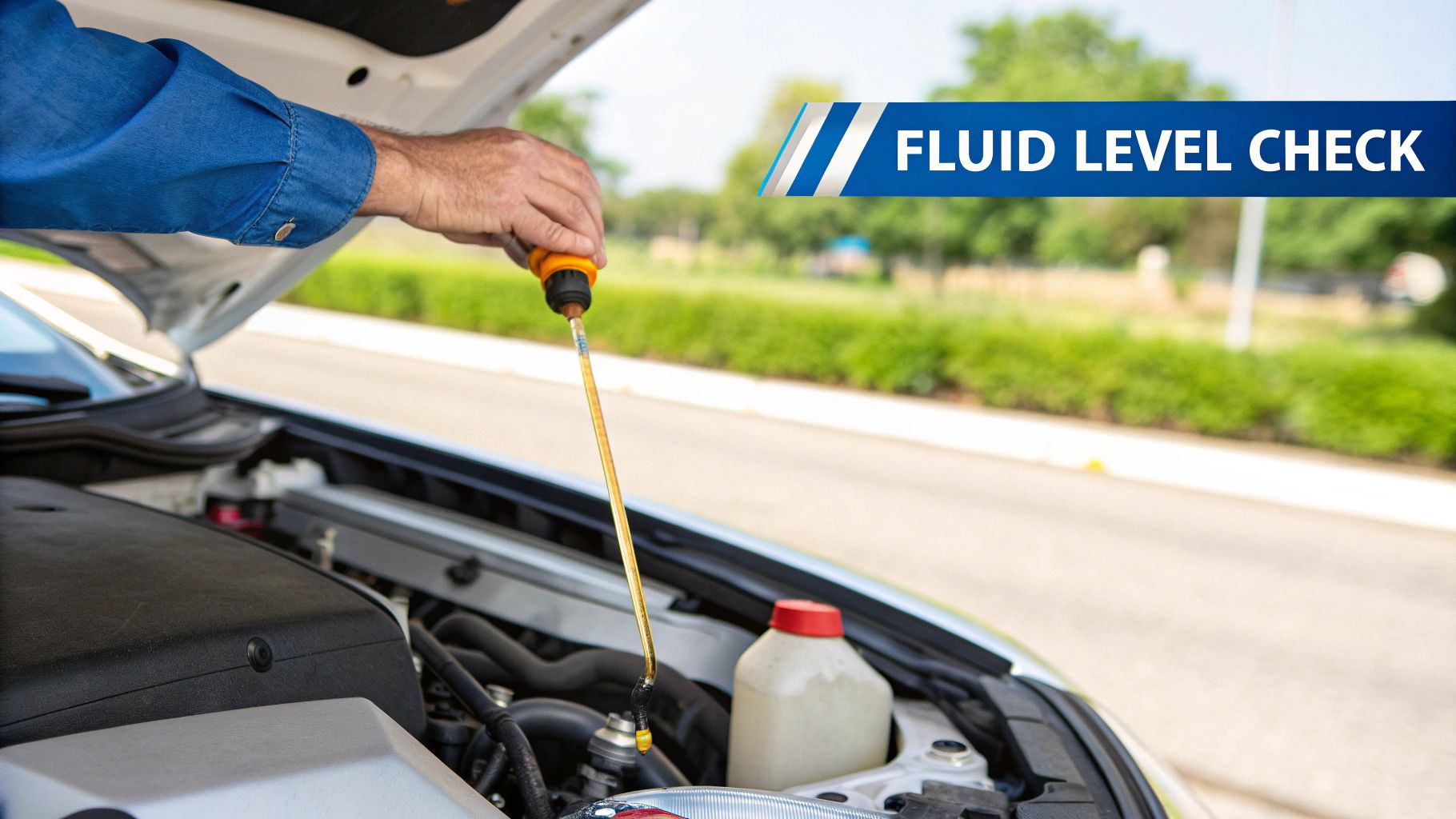
This is a classic sign of a slipping transmission. Your engine is revving and creating power (which is why the RPMs are high), but a problem inside the transmission is preventing that power from reaching the wheels. This is a serious issue that needs professional diagnosis right away to prevent a costly failure.
2. Can a bad sensor really cause my car to accelerate poorly?
Absolutely. Modern cars rely on sensors for everything. A faulty Mass Airflow (MAF) sensor or Throttle Position Sensor (TPS) can send incorrect data to the car’s computer, causing it to run poorly. To prevent engine damage, the computer may even trigger a “limp mode,” which intentionally limits power and acceleration.
3. Is it safe to drive my car if it’s not accelerating correctly?
We strongly advise against it. A car that can’t accelerate on demand is a major safety risk, especially on busy roads like Grand Avenue. You could find yourself unable to merge into traffic or get out of a dangerous situation. It’s much safer to have the vehicle inspected by a professional. You can see more signs you shouldn’t ignore in our guide to common vehicle issues.
4. How can I tell if the problem is my fuel filter or fuel pump?
While the symptoms are similar, a clogged fuel filter often causes hesitation or sputtering under heavy acceleration, like getting on the freeway. A failing fuel pump might be more severe, causing the car to stall completely, struggle to start, or you may hear a distinct whining noise from the rear of the vehicle.
Don’t let guesswork leave you stranded or compromise your safety. At Pete Nelson Automotive, we believe in diagnosing the problem right the first time.
Call 623-974-4723 or visit petenelsonautorepair.com to schedule your appointment today.
Pete Nelson Automotive
This Offer Will Expire 12-31-2026
Pete Nelson Automotive is pleased to offer you
"Get Ready for the Holidays"
A $215.00 Value for Only $159.95 (+tax)
Lube, Oil, & Filter Change, Up to 5 quarts of Engine oil
Inspect and top off all fluid levels, Includes up to 5 Quarts of 5w30 synthetic blend oil, additional charge for synthetic oil.
Travel Evaluation
Set Air Pressures and Tire Rotation if needed.
Battery, Alternator and Starter Electrical Test
Load test battery, Alternator output and Starting amps.
Full Brake Evaluation
Includes check brake system on four wheels, checking and testing brake fluid condition.
So Call 623-974-4723 today and make an appointment for this exclusive Special!
*Most Cars, Vans, Motor homes, 4×4’s, Diesels, and some foreign cars may be higher. You must bring this letter at time of service and allow 2 hours to complete.



