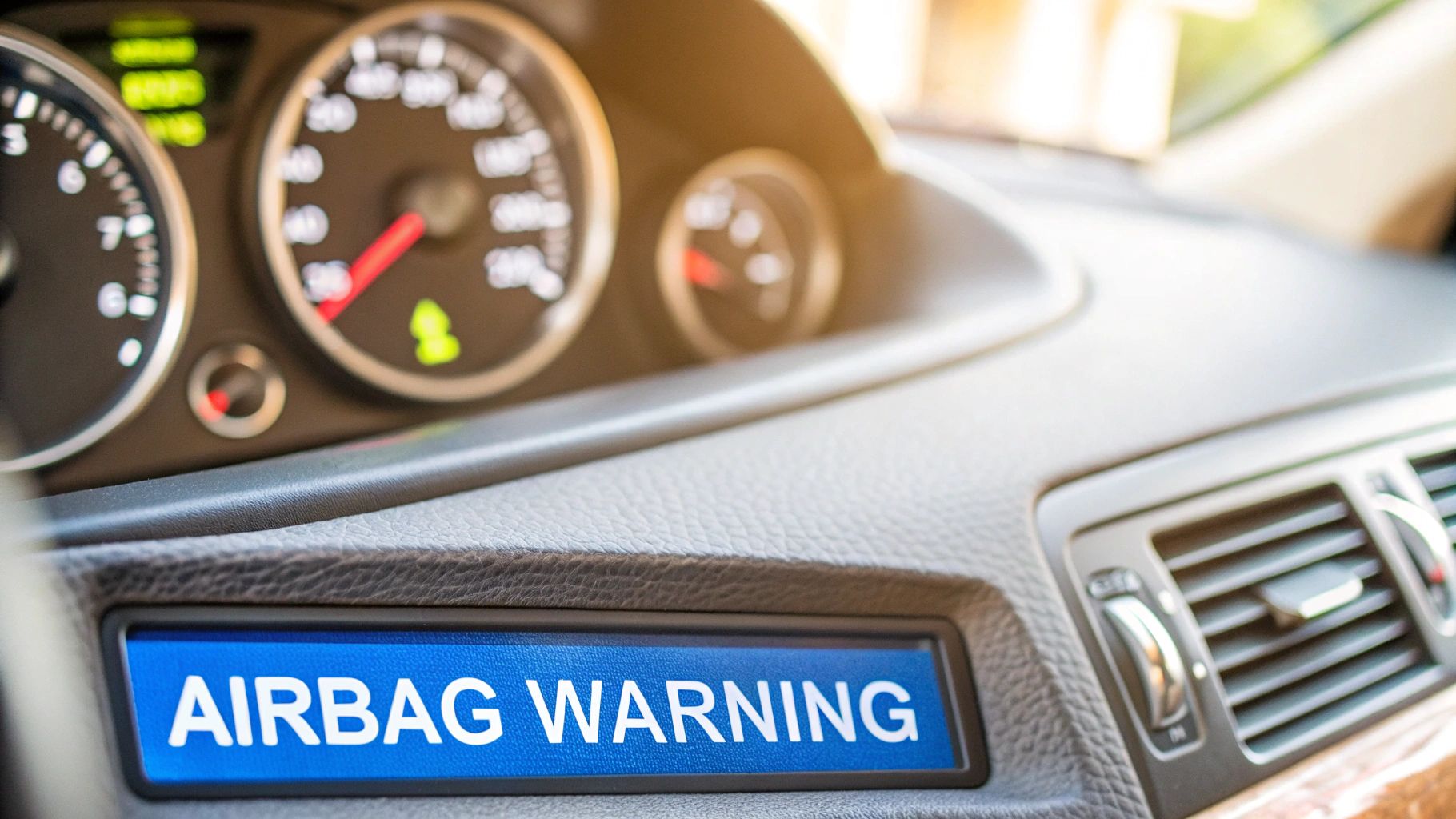
You’re cruising down Bell Road, and suddenly, a little light flickers on your dashboard—the one with the person and the airbag. It’s a sight that can make any driver in Sun City a little anxious. While any warning light is cause for concern, this one is especially important. It’s a direct alert from your vehicle’s primary safety network, the Supplemental Restraint System (SRS).
When that light comes on and stays on, it’s not just a friendly reminder. It’s a critical warning that your airbags and related safety systems are offline and will not deploy in an accident. This isn’t something to ignore or save for your next oil change; it’s a safety issue that needs immediate attention.
What an Illuminated Airbag Light Means for Your Safety
Think of your car’s SRS as a dedicated bodyguard, a complex network of sensors and control modules ready to protect you and your passengers in a split second. Its primary job is to deploy the airbags and tighten the seatbelts the moment a collision is detected.
When the airbag light is illuminated, that bodyguard is officially off-duty. The entire system is deactivated as a fail-safe to prevent an airbag from deploying unexpectedly while you’re driving, which could be incredibly dangerous.
Your Vehicle’s Guardian is Offline
This deactivation creates a significant gap in your car’s safety net. The very features designed to protect you in a crash are no longer guaranteed to work. It’s a critical failure that compromises one of the most important safety innovations in modern vehicles.
Key Takeaway: An illuminated airbag light means your airbags have been disabled as a safety precaution and will likely fail to deploy when you need them most.
To help you understand the immediate risk, here’s a quick assessment of what the light means for your safety on the road.
Airbag Light On Quick Risk Assessment
| System Status | What It Means | Safety Risk |
|---|---|---|
| Light On, Stays On | A fault is detected in the SRS. The system has been deactivated as a fail-safe. | High: Airbags will likely not deploy in a collision. |
| Light Flashes | Intermittent fault detected. The system may or may not be active. | High: Unpredictable system status. Assume airbags are non-functional. |
| Light On at Startup, Then Off | Normal system self-check. The SRS is active and ready. | Low: This is the correct and expected behavior. |
As you can see, a persistent light puts you in a vulnerable position. Don’t take that chance on our busy Sun City roads.
Why This System Is So Important
The focus on airbag technology has advanced significantly over the years, and for good reason. These systems have become incredibly sophisticated and are a cornerstone of modern vehicle safety.
The global market for airbag sensors was valued at USD 10.52 billion in 2022, highlighting just how critical these systems are in today’s cars. That’s why ignoring an airbag light isn’t just a bad idea—it’s a genuine risk to you and your passengers.
Common Reasons Your Airbag Light Is On
Seeing your airbag light pop on the dashboard can be unsettling. It’s easy to jump to the worst conclusion, but the cause isn’t always a massive system failure. Most of the time, a specific component is simply sending a fault signal to your car’s main computer. Understanding the common culprits can help you have a more informed conversation when you bring your car in for auto repair in Sun City AZ.
The image below gives you a basic layout of your car’s airbag system, showing how the different sensors connect and report back to the control unit.
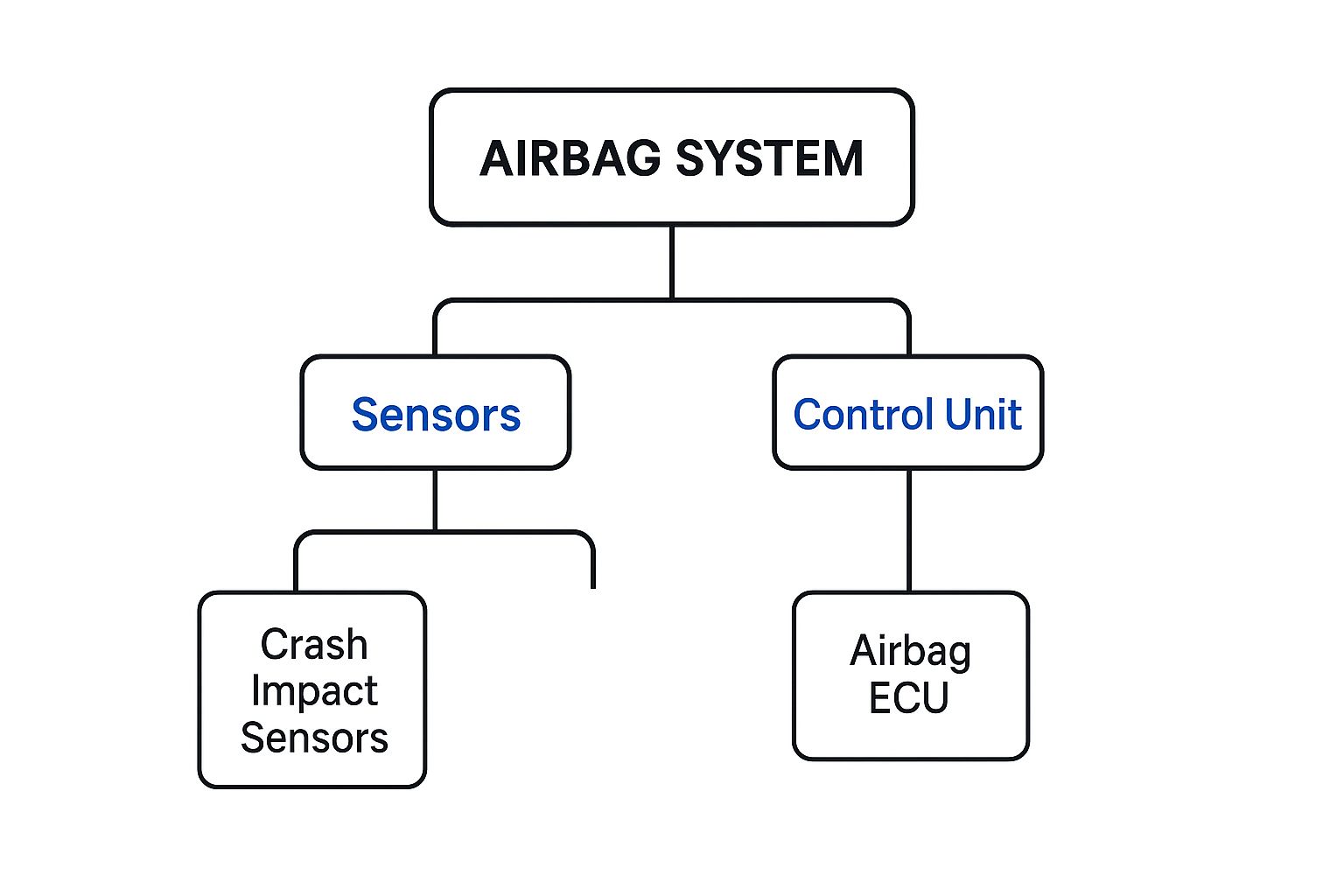
The system has two main jobs: sensing a crash and deciding when to deploy the airbags. If there’s a problem in either of those areas, that warning light is coming on.
Faulty Sensors and Seat Belt Glitches
One of the most frequent triggers for the airbag light is related to your seat belt system. Your car has sensors that know if you’re buckled up. If a sensor fails or its wiring gets knocked loose—which often happens from items sliding around under the seat—it will trigger a system warning.
Similarly, the passenger seat has an occupancy sensor to determine if someone is sitting there. Tossing a heavy bag or even your dog on the seat can sometimes confuse the sensor and cause an alert. These issues require a professional diagnosis to ensure your safety systems are ready to perform when needed.
The Misunderstood Clockspring
A very common, but often misunderstood, component is the clockspring. It’s not a spring in the traditional sense. Instead, it’s a coiled ribbon of wires located inside your steering column.
The clockspring’s job is to maintain a continuous electrical connection to the driver’s airbag, horn, and steering wheel controls as you turn the wheel. Over time, this ribbon can wear out and break, cutting off the connection to the airbag and instantly illuminating the warning light.
Because it’s in constant use, clockspring failure is a leading reason for an illuminated airbag light. This repair needs an expert touch, since it involves both the steering and airbag systems.
Common Airbag System Faults and Their Functions
| Component | Primary Function | Common Reason for Failure |
|---|---|---|
| Seat Belt Sensor | Detects if the seat belt is buckled. | Damaged wiring under the seat or sensor failure. |
| Passenger Occupancy Sensor | Determines if the passenger seat is occupied. | Heavy objects on the seat or sensor malfunction. |
| Clockspring | Maintains electrical connection to steering wheel components. | Wear and tear from the steering wheel turning over time. |
| Crash Sensors | Detect the impact of a collision. | Corrosion, physical damage, or internal electronic failure. |
| Airbag Control Module | The “brain” that decides when to deploy airbags. | Age, water damage, or electrical surges. |
| SRS Backup Battery | Provides power to the system if the main battery is disconnected. | Depletion over time, similar to any other battery. |
Each of these components plays a critical role, and a failure in any one of them will compromise the entire system’s readiness.
Deeper Electrical Problems
Sometimes, the problem isn’t just a single sensor but something deeper in the electrical system. The SRS has its own backup battery to ensure the airbags can still deploy even if the car’s main battery is damaged in an accident. If this backup battery gets low, the system will flag it with a warning light.
Even more complex is when the airbag control module—the system’s “brain”—starts to fail. This can happen due to age, an electrical surge, or even water damage. Diagnosing these kinds of faults requires specialized equipment. Our team at Pete Nelson Automotive is skilled in all aspects of automotive electrical system repair, allowing us to accurately find the source of the problem and get you back on the road safely.
Simple Checks You Can Do Before Calling a Mechanic
When that airbag light appears on your dash, it’s easy to assume the worst. While calling a professional is often the right move, there are a few simple and safe checks you can perform at home first. These steps won’t fix a serious problem, but they can sometimes resolve minor glitches or provide valuable information for our technicians.
One important note: Never attempt to tamper with the airbag module, clockspring, or sensors yourself. This is not a DIY project. These are sensitive components that should only be handled by a trained professional.
A Quick At-Home Checklist
Here are a few things to look for before scheduling service:
- Check Under the Front Seats: Carefully look under the driver and passenger seats for any loose or unplugged wires. These wires connect to the seat belt pretensioners and occupancy sensors and can easily be dislodged by stray items or during cleaning.
- Inspect the Seat Belt Buckles: Check inside the seat belt buckles for any debris like crumbs or coins. An obstruction can prevent the buckle from latching properly, which can trigger a warning light.
- Clear the Passenger Seat: The passenger seat sensor can be sensitive. A heavy backpack, groceries, or even a pet can sometimes confuse the system. Remove all items from the seat to see if the light turns off.
- Try a Simple Restart: Sometimes, a temporary electronic glitch can cause an error. Turn your vehicle off completely, wait a minute, and then restart it. This allows the system to run its self-check again and may clear a false alarm.
A weak car battery can also cause various electrical issues, including a false airbag light. If you suspect this might be the case, our guide on the signs your battery is about to fail can offer more insight.
A Note on Safety: These checks are completely safe and non-invasive. If you find a disconnected wire under the seat, plugging it back in simply restores a connection that is meant to be there.
If you’ve run through this list and the airbag light is still on, it’s a clear sign of a deeper issue. Driving with that light on means your airbags are likely disabled, so it’s a safety risk you shouldn’t take.
Why Ignoring the Airbag Light Is a Dangerous Gamble
It can be tempting to ignore that little airbag light on your dash, but doing so is a significant gamble. Driving with that light on is like heading out on the road without a seatbelt—you’re willingly giving up a critical safety feature right when you might need it most.
When your vehicle’s SRS detects a problem, its default action is to shut down the airbags as a fail-safe. This means if you get into a collision, they simply won’t deploy. That’s a risk no one should take, especially on the busy roads around Sun City.
The Real-World Consequences of a Faulty System
The massive Takata airbag recall is a sobering reminder of the devastating results of airbag failures. This recall affected approximately 67 million airbags in the United States alone. These units were at risk of exploding due to long-term exposure to heat and humidity—a serious concern for every driver in Arizona.
Tragically, these defective airbags have been linked to at least 28 deaths and 400 injuries in the U.S. This isn’t just a statistic; it’s a powerful example of why a seemingly small warning light demands your immediate attention. It’s a direct signal that a life-saving component might not work.
Your Safety is Non-Negotiable: Addressing an illuminated airbag light isn’t just another repair bill. It’s a fundamental investment in the safety of yourself and your passengers. The system must be 100% operational to provide the protection it was designed for.
For those of us in Arizona, the intense sun and heat can accelerate the degradation of sensitive electronics, including those in your SRS. Ignoring the light is a bet with the highest stakes imaginable. Beyond your physical safety, it’s also worth understanding how your vehicle’s condition can affect your financial protection, especially when it comes to your personal auto insurance.
An airbag light is one of the top signs that your vehicle needs immediate attention. Here at Pete Nelson Automotive, our team has the specialized diagnostic tools and expertise to determine exactly what’s wrong and restore your vehicle’s safety features.
How the Pros Diagnose an Airbag System Fault
When simple at-home checks don’t resolve the issue, it’s time to let a professional take over. At Pete Nelson Automotive, we treat every illuminated airbag light with the seriousness it deserves. We follow a methodical process to find the root cause, ensuring your car’s most important safety feature is fully functional.

This isn’t about guesswork. It’s a precise diagnostic journey designed to guarantee your safety on Sun City roads.
Step 1: Reading the Specialized SRS Codes
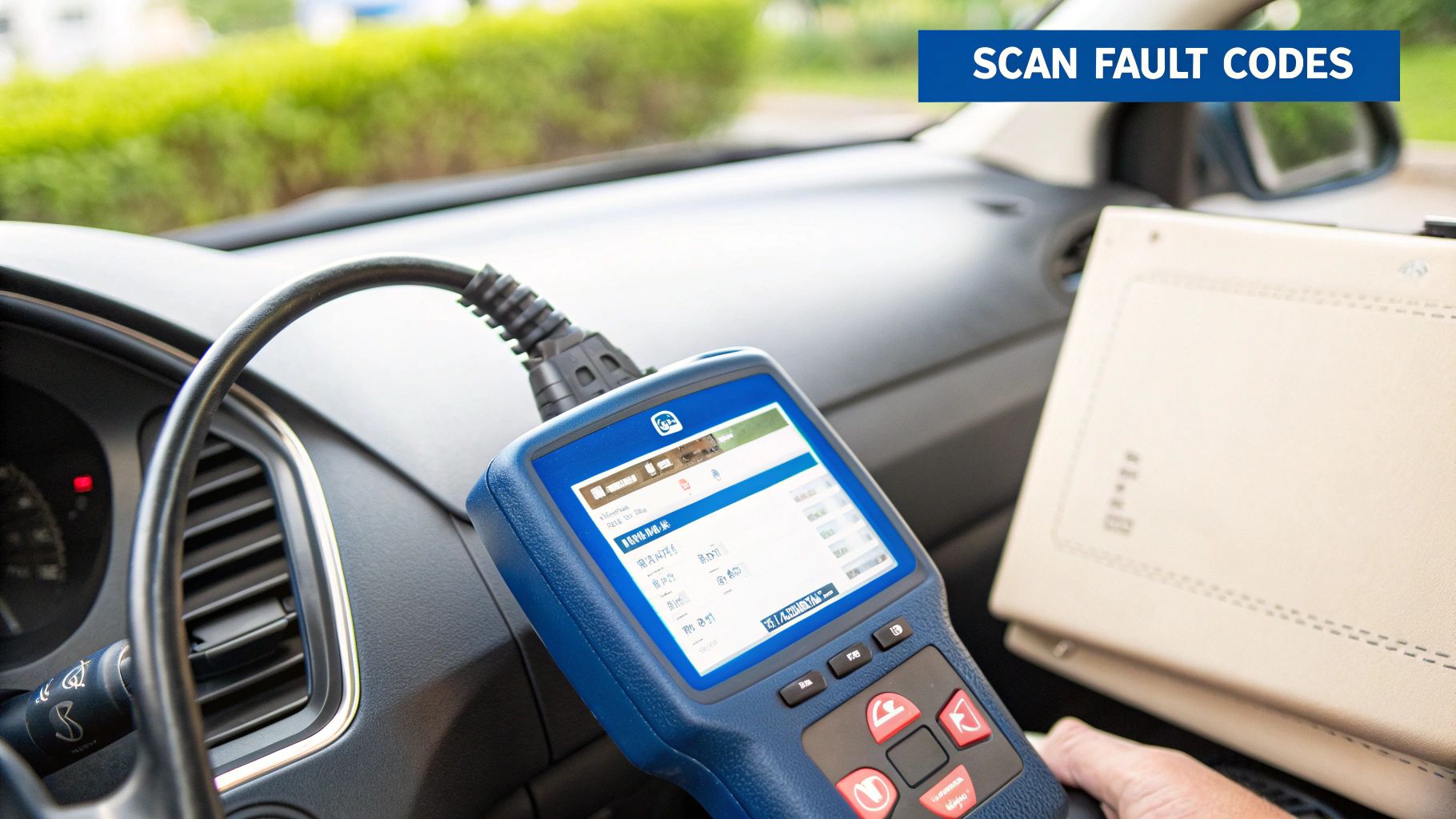
The first step is connecting your vehicle to a professional-grade OBD-II scanner. While basic code readers can check engine issues, they can’t communicate with the Supplemental Restraint System (SRS). Our advanced tools talk directly to your car’s airbag control module to pull specific fault codes that point us in the right direction.
These codes are far more detailed than a general “check engine” light. For example, a code might indicate a communication error with the passenger seat occupancy sensor or high resistance in the driver-side seat belt pretensioner. This is a key part of our expert computer diagnostics service.
Step 2: Performing a Hands-On Inspection
With the diagnostic code as our guide, our ASE-certified technicians conduct a thorough hands-on inspection. A fault code pointing to a sensor doesn’t automatically mean the sensor is bad; it could be a simple wiring issue.
We meticulously check all related components, including:
- Wiring Harnesses: We look for frayed, pinched, or disconnected wires, especially under the seats and around the steering column.
- Connectors: We ensure all connections are clean, tight, and free of corrosion, which can be a factor in the Arizona climate.
- Sensors: We visually inspect crash sensors and occupancy sensors for any signs of physical damage.
Step 3: Component-Level Testing and Confirmation
The final step is to confirm the fault before any parts are replaced. We use specialized tools to test the electrical resistance and voltage of the suspected component. This verification process ensures we only replace the part that has actually failed, saving you time and money.
By following this meticulous process, we can confidently pinpoint the exact cause of your airbag light. We don’t just clear the warning; we solve the underlying problem to ensure your safety system is ready to protect you.
This thorough approach is our commitment to providing the best auto repair in Sun City, AZ. We believe in fixing it right the first time, giving you peace of mind every time you get behind the wheel.
Frequently Asked Questions (FAQ)
Here are answers to a few common questions we hear from drivers in Sun City about their airbag light.
Why did my airbag light come on after my battery died?
A dead or weak battery can cause voltage drops that trigger false error codes in various electronic systems, including the SRS. After replacing the battery, the light may stay on. A professional technician can use a diagnostic tool to properly reset the SRS module and confirm there are no other underlying issues.
Is it safe to drive my car if the airbag light is on?
While your car will still run, it is not safe. An illuminated airbag light means the entire SRS is disabled as a precaution. In the event of an accident, your airbags will likely not deploy, putting you and your passengers at a much greater risk of injury. We strongly recommend having it inspected as soon as possible.
How much does it cost to fix an airbag light?
The cost varies widely depending on the cause. A simple fix, like re-securing a loose wire or resetting the system, can be relatively inexpensive. However, if a major component like the clockspring or the airbag control module needs to be replaced, the cost will be higher. A proper diagnosis is the first step to getting an accurate estimate.
Your safety is our top priority. Don’t take a chance with a faulty airbag system. The expert team at Pete Nelson Automotive has the right diagnostic tools and hands-on experience to identify the problem and fix it correctly. We’re proud to be your trusted local auto repair expert in Sun City, AZ.
Call 623-974-4723 or visit petenelsonautorepair.com to schedule your appointment today.
Pete Nelson Automotive
This Offer Will Expire 12-31-2026
Pete Nelson Automotive is pleased to offer you

"Get Ready for the Holidays"
A $215.00 Value for Only $159.95 (+tax)
Lube, Oil, & Filter Change, Up to 5 quarts of Engine oil
Inspect and top off all fluid levels, Includes up to 5 Quarts of 5w30 synthetic blend oil, additional charge for synthetic oil.
Travel Evaluation
Set Air Pressures and Tire Rotation if needed.
Battery, Alternator and Starter Electrical Test
Load test battery, Alternator output and Starting amps.
Full Brake Evaluation
Includes check brake system on four wheels, checking and testing brake fluid condition.
So Call 623-974-4723 today and make an appointment for this exclusive Special!
*Most Cars, Vans, Motor homes, 4×4’s, Diesels, and some foreign cars may be higher. You must bring this letter at time of service and allow 2 hours to complete.



