Is your car trying to tell you something? Picture this: you’re driving down Grand Avenue, and your car suddenly starts to sputter or hesitate. Maybe the engine feels a bit shaky when you’re idling at a stoplight. These aren’t just little quirks your vehicle picks up with age—they’re often clear signals from your engine that something isn’t right, and a bad fuel injector could be the culprit.
As your trusted auto repair experts in Sun City, AZ, we want to help you understand what these critical parts do and, more importantly, how to tell when they need attention. Think of this guide as learning to speak your car’s language so you can catch small problems before they become big, expensive ones.
Why This is a Big Deal for Arizona Drivers
Here in our desert climate, engine components work overtime. The intense heat can accelerate fuel breakdown, leading to gunk and deposits that clog sensitive injectors. Ignoring the early signs of a bad fuel injector can kick off a domino effect of problems that are always more expensive and inconvenient to fix later on.
A single malfunctioning injector can lead to:
- Reduced Fuel Economy: You’ll start noticing you’re hitting the gas station more often.
- Failed Emissions Tests: A faulty injector can be the one thing that keeps your vehicle from passing Arizona’s mandatory emissions inspection.
- Engine Damage: When the fuel-to-air mix is off, it can harm sensitive parts like your catalytic converter or oxygen sensors.
- Unreliable Performance: Stalling or hesitating is more than just annoying; it can be a real safety risk in traffic.
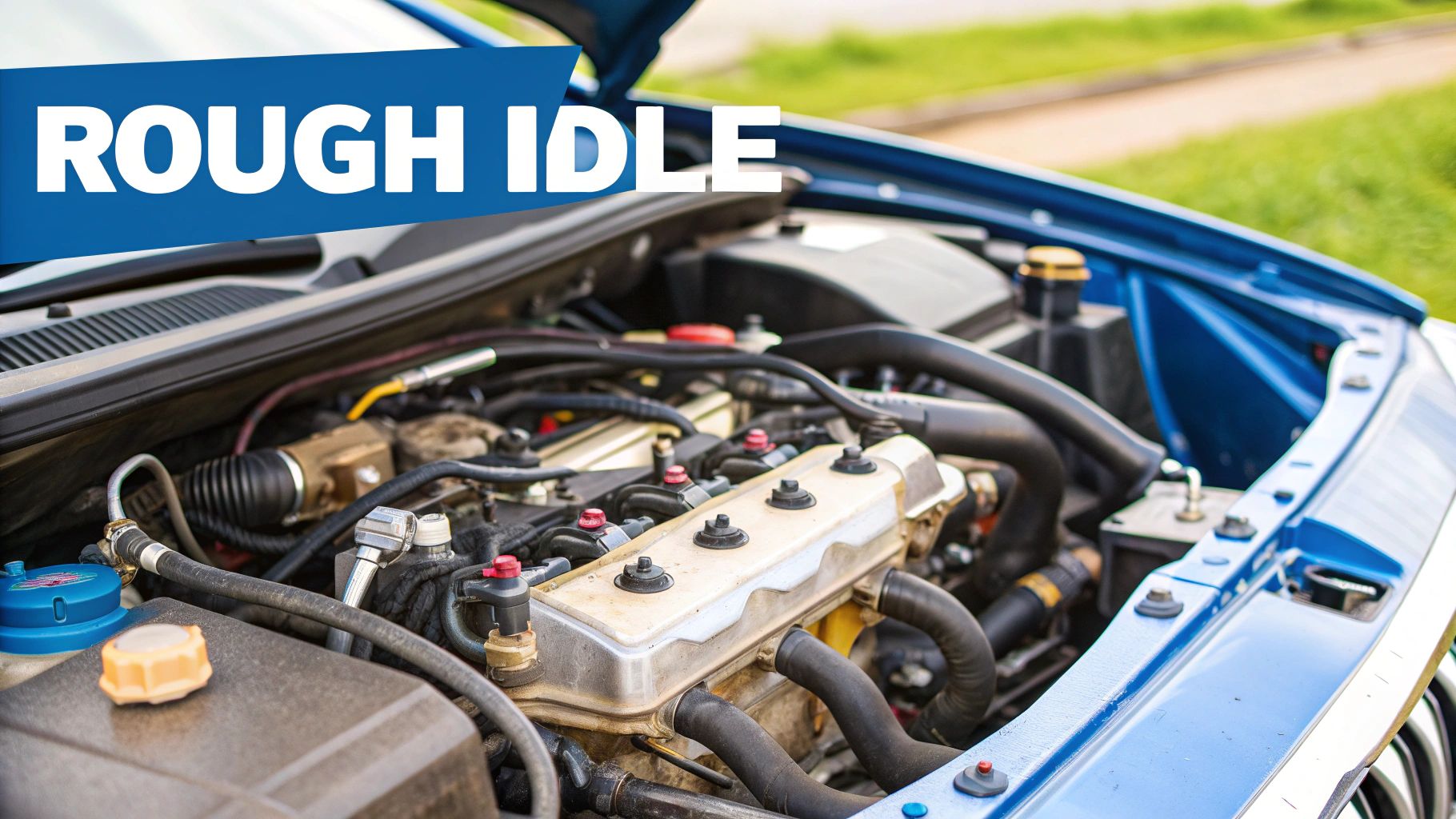
Learning to spot these symptoms early empowers you to get professional help before a small issue snowballs into a major repair. This proactive approach is what reliable vehicle ownership is all about, and it’s a core part of our philosophy here at Pete Nelson Automotive. If you have any concerns about how your car is performing, our team offering expert auto repair in Sun City AZ is always here to help.
What Exactly Is a Fuel Injector?
So, what does a fuel injector actually do? Think of it as a tiny, super-precise spray nozzle for your engine, controlled by your car’s computer. Its job is to squirt a fine, cone-shaped mist of fuel into the engine at the perfect moment, mixing it with air to create a clean, powerful combustion.
This incredible precision is the secret behind the power and fuel economy we expect from modern cars. But when one starts to go bad—whether it’s clogged, leaking, or having an electrical issue—that delicate balance gets thrown into chaos. A bad fuel injector might spray too little fuel, too much, or at the wrong time, which is why a single faulty part can trigger so many problems.
It’s All in the Spray
A fuel injector’s performance boils down to its spray pattern and timing. A healthy one atomizes the fuel into a vapor-like mist, allowing it to burn quickly and completely. A clogged or failing injector, however, throws a wrench in the works.
- Poor Atomization: Instead of a fine mist, the injector might drip or stream raw fuel, leading to an inefficient burn.
- Wrong Fuel Amount: It might deliver too much fuel (running rich) or not enough (running lean). Both are bad for your engine.
- Bad Timing: The injector has a tiny electronic gate, called a solenoid, that opens and closes. If it gets sticky or fails, it messes up the engine’s entire rhythm.
This technology is always improving. In fact, the global market for automotive fuel injectors was valued at around $70.56 billion and is still growing, mainly because of stricter fuel efficiency and emissions rules. This pushes manufacturers to design better injectors, like direct injection systems, that are less prone to common vehicle issues like clogging.
A fuel injector’s nozzle is incredibly small, with microscopic holes. Even a tiny speck of dirt or carbon can plug one of these openings, completely changing the spray pattern and crippling your engine’s performance. This is where getting a professional eye on things becomes so important. Sometimes, a thorough fuel system service is all it takes to get things back to normal without needing a costly replacement.
The Top 7 Signs of a Bad Fuel Injector
Your car has its own way of talking to you, and when a fuel injector starts acting up, it usually doesn’t keep it a secret. Learning to pick up on these early warnings can save you from bigger headaches—and much bigger repair bills. If your vehicle is showing any of the signs below, it might be time for a professional diagnosis.
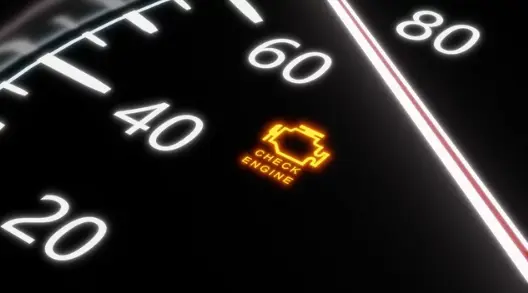 1. The Check Engine Light Comes On
This is often the first and most obvious clue. Your car’s computer constantly monitors engine performance. When a bad fuel injector messes with the air-fuel mixture, the system flags it and lights up your dashboard.
2. Rough Idling and Stalling
Does your car feel shaky or vibrate when you’re stopped at a red light? That’s a classic sign of a rough idle. A clogged or faulty injector can’t deliver a consistent spray of fuel, causing the engine’s RPMs to jump around and, in serious cases, stall completely.
3. Engine Misfires and Hesitation
An engine misfire feels like a stutter or stumble from your engine, especially when you accelerate. It happens when a cylinder doesn’t fire correctly because it received too much or too little fuel. You might notice your car hesitating or feeling sluggish when you hit the gas.
4. A Sudden Drop in Fuel Economy
Finding yourself at the gas station more often? A leaky injector can drip extra fuel into the engine, while a clogged one forces the system to work harder. Either way, your car burns more gas than it should, leading to a noticeable drop in your miles per gallon (MPG).
5. A Strong Fuel Smell
You should never smell raw gasoline inside or around your car. If you do, it could point to a leaking fuel injector. Injectors have seals that can wear out and degrade over time, causing fuel to seep out. This isn’t just wasting fuel; it’s a serious fire hazard that needs immediate attention.
6. Difficulty Starting the Engine
A healthy engine needs the right amount of fuel to start smoothly. If your injectors aren’t delivering that fuel correctly, your car might struggle to turn over. You might find yourself cranking the engine longer than usual before it finally catches.
7. Poor Overall Performance
At the end of the day, a bad fuel injector simply robs your engine of power. Your vehicle might feel weak, respond slowly, or struggle to get up to speed on the highway. If your car just doesn’t have the “get-up-and-go” it used to, a faulty fuel system component is a very likely culprit. For reliable diagnostics, check out our current specials for great value on essential services.
Why Fuel Injectors Fail in Arizona’s Climate
While modern fuel injectors are designed for the long haul, they face unique challenges here in Arizona. The combination of intense heat, dusty conditions, and stop-and-go city driving can accelerate wear and tear, leading to failure sooner than you’d expect.
The number one enemy of any fuel injector is contamination. Over time, microscopic bits of dirt, rust, and other debris from the gas tank can make their way through the fuel lines. When those particles hit the injector’s tiny nozzle, they can easily cause a clog.
The Impact of Heat and Carbon
Here in the Valley, our summer heat can cause gasoline to break down faster, leading to varnish and sticky deposits that build up inside the injector. This is just one of many ways Arizona’s climate affects your vehicle’s health. When you add in the carbon that naturally forms during combustion, these layers can slowly choke off fuel flow, making your engine work harder than it should.
Common Failure Points to Watch For
Beyond clogs, there are a few other common issues that can take a fuel injector out of commission.
- Electrical Faults: Every injector has a tiny electromagnet (solenoid) that opens and closes it. High under-hood temperatures can damage its wiring over time, causing it to fail. When that happens, the injector can get stuck open or refuse to open at all.
- Worn-Out Seals: Injectors use rubber O-rings to create a tight seal. Arizona’s dry heat is brutal on rubber, causing these seals to become brittle and crack. This can lead to a dangerous fuel leak and a strong smell of gas.
- Internal Wear and Tear: An injector’s internal components can simply wear out after millions of cycles. This throws off the precise timing of fuel delivery, causing misfires and a rough-running engine.
These issues pop up across all kinds of vehicles. For example, clogged nozzles and sticking injectors are huge problems for commercial diesel fleets. You can read more about common diesel injector failures to see how widespread the problem is. For your car, the consequences are similar: poor performance, worse gas mileage, and the risk of serious engine damage if not fixed quickly.
How Professionals Diagnose a Faulty Fuel Injector
So, you’ve spotted the signs and suspect a bad fuel injector. While it’s easy to jump to conclusions, pinpointing the exact bad part is a job for the pros. Guessing can get expensive fast.
At Pete Nelson Automotive, our diagnostic process is methodical. We rely on advanced tools and years of experience to find the real root of the problem, ensuring we recommend the right fix the first time.
Starting with a Code Scan
If your check engine light is on, our first step is to connect an OBD-II (On-Board Diagnostics) scanner to your car’s computer. This tool lets us read the Diagnostic Trouble Codes (DTCs) it has stored. A code like P0301 tells us there’s an engine misfire in cylinder one. This doesn’t automatically mean a bad injector, but it gives us a laser-focused starting point for our investigation.
Advanced Diagnostic Techniques
With a trouble code pointing us in the right direction, our ASE-certified technicians perform hands-on testing to confirm the issue.
- Fuel Pressure Test: We check the overall fuel pressure to ensure the entire system is operating correctly. Low pressure could point to a weak fuel pump or a clogged filter, not a faulty injector.
- Injector Balance Test: This test measures the precise amount of fuel each injector sprays. If one injector is delivering way more or less fuel than the others, we’ve found our culprit.
- ‘Noid Light’ Test: A “noid light” plugs into the injector’s electrical connector. A consistent flash confirms the computer is sending the right signal. If there’s no flash, the problem isn’t the injector itself but the wiring or computer.
By following this multi-step process, we can confidently tell you whether an injector needs a professional cleaning or a full replacement. This accuracy saves you from unnecessary repairs and gets you back on the road safely.
Your Trusted Partner for Fuel System Service in Sun City
Engine trouble is always a headache, but you don’t have to go it alone. Putting off the warning signs of a bad fuel injector can cause a snowball effect, leading to terrible gas mileage, a failed emissions test, and even a fried catalytic converter—a repair nobody wants to face.
At Pete Nelson Automotive, our ASE-certified technicians have the right diagnostic tools and experience to pinpoint fuel system issues with precision. We’re all about honest, clear-cut service and will always recommend the right fix for your vehicle and your budget.
Expert Solutions for Your Vehicle
Whether your car’s injectors need a professional-grade cleaning to blast away carbon deposits or a full replacement is required, our team will get your engine running right again. We’ll provide a detailed breakdown of what we find and a straightforward estimate before any work begins, so you can feel confident in your decisions.
Fuel injection technology is always evolving, pushed by the need for better efficiency. The global fuel injection market trends show systems operating at higher pressures with razor-sharp electronic controls. This progress is great for performance, but it also means you need an expert to handle these complex systems.
For years, Pete Nelson Automotive has been the name people trust for dependable auto repair in Sun City. We understand the stress our Arizona climate puts on vehicles and are committed to keeping your car running safely and efficiently.
Frequently Asked Questions (FAQ)
How much does it cost to replace a bad fuel injector?
The cost can vary significantly depending on your vehicle and the specific issue. A professional fuel system cleaning is often a more affordable first step. If an injector must be replaced, the final price will depend on the part cost and labor involved. We always provide a clear, detailed estimate after diagnosis.
Can I drive with a bad fuel injector?
We strongly advise against it. Driving with a faulty injector can lead to more severe engine damage, poor fuel economy, and unsafe conditions like stalling in traffic. It’s best to have your vehicle inspected by a professional as soon as you notice a problem.
How often should fuel injectors be cleaned?
As a general rule, we recommend a professional fuel system cleaning every 30,000 to 45,000 miles. This preventative maintenance helps prevent clogs before they start and keeps your engine running efficiently. For more helpful info, see our car maintenance tips every Arizona driver should know.
Do fuel injector cleaner additives really work?
Those additives you pour into your gas tank can be useful for light, routine maintenance and may help with minor deposit buildup. However, for a severely clogged or electrically failed injector, they lack the power to solve the problem. A professional service is needed for significant issues.
Don’t let a potential fuel injector issue turn into a major breakdown. Trust the local experts who have been proudly serving Sun City drivers for years.
Call 623-974-4723 or visit petenelsonautorepair.com to schedule your appointment today.
Pete Nelson Automotive
This Offer Will Expire 12-31-2026
Pete Nelson Automotive is pleased to offer you
"Get Ready for the Holidays"
A $215.00 Value for Only $159.95 (+tax)
Lube, Oil, & Filter Change, Up to 5 quarts of Engine oil
Inspect and top off all fluid levels, Includes up to 5 Quarts of 5w30 synthetic blend oil, additional charge for synthetic oil.
Travel Evaluation
Set Air Pressures and Tire Rotation if needed.
Battery, Alternator and Starter Electrical Test
Load test battery, Alternator output and Starting amps.
Full Brake Evaluation
Includes check brake system on four wheels, checking and testing brake fluid condition.
So Call 623-974-4723 today and make an appointment for this exclusive Special!
*Most Cars, Vans, Motor homes, 4×4’s, Diesels, and some foreign cars may be higher. You must bring this letter at time of service and allow 2 hours to complete.



