Are you hearing a strange clunking, banging, or thumping noise from under the hood every time you pull away from a stoplight in Sun City? Maybe you’ve noticed a deep, persistent vibration that shakes your steering wheel while you’re waiting in a drive-thru. These aren’t just random annoyances; they’re direct messages from your vehicle, and very often, they point straight to a failing motor mount.
A bad motor mount typically announces itself with a distinct clunking, banging, or rumbling noise coming from your engine bay. You’ll usually hear this when you accelerate, shift gears, or even just start the car. That sound is a dead giveaway that your engine is moving around excessively because it’s no longer secured properly. Don’t ignore it—addressing it quickly can save you from more expensive problems down the road.
Decoding That Clunking Sound From Your Engine

Motor mounts are the unsung heroes of a smooth, quiet ride. Their entire job is to secure your engine to the car’s frame while simultaneously absorbing its powerful vibrations. Made of a combination of metal and vibration-dampening rubber, they act as heavy-duty shock absorbers. When they wear out or break, the engine can shift and lurch during operation, causing those noises that are impossible to ignore.
The Role of a Healthy Motor Mount
Think of motor mounts as shock-absorbing cushions for your engine. Without them, the raw force and vibration of the engine would transfer directly into the car’s frame, making for an incredibly noisy and uncomfortable ride.
A healthy mount is crucial for a few key reasons:
- Vibration Control: It dampens the engine’s natural vibrations, making sure they aren’t felt inside the cabin. A good mount is essential for a quiet, comfortable drive.
- Engine Stability: It holds the engine firmly in place during acceleration, braking, and turning, preventing it from thrashing around and stressing other components.
- Component Protection: By stopping excessive movement, it protects connected parts like hoses, wiring, and the exhaust system from being stretched, stressed, or damaged.
Quick Guide to Common Motor Mount Noises
Sometimes, it helps to match the sound you’re hearing to a specific situation. Here’s a quick table to help you decode what your car might be trying to tell you.
| Sound Description | When It Happens | What It Likely Means |
|---|---|---|
| Loud “Clunk” or “Thump” | When accelerating or shifting gears | The engine is lurching forward or backward due to a broken or completely worn-out mount. |
| Deep Rumbling or Vibration | While idling or stopped in gear | The rubber in the mount has degraded and can no longer absorb normal engine vibrations. |
| Sharp “Bang” | When hitting a bump or pothole | The engine is moving excessively and making contact with other components under the hood. |
| Rattling or Clicking | At specific RPMs or while turning | A loose or partially failed mount is allowing for minor, repetitive engine movement. |
This table is a great starting point, but a professional diagnosis from a trusted shop like Pete Nelson Automotive is the best way to be certain.
The technology behind these parts has evolved significantly. The global engine mounts market, valued at around USD 5.43 billion in 2025, shows just how vital they are. Newer hydraulic mounts, which offer superior performance, now hold about a 38.6% market share.
Ignoring a bad motor mount can cause a domino effect of problems, a topic we cover in our post about common car problems. Catching and fixing the problem early is always the smartest (and cheapest) move.
Why Arizona’s Climate Is Tough on Motor Mounts
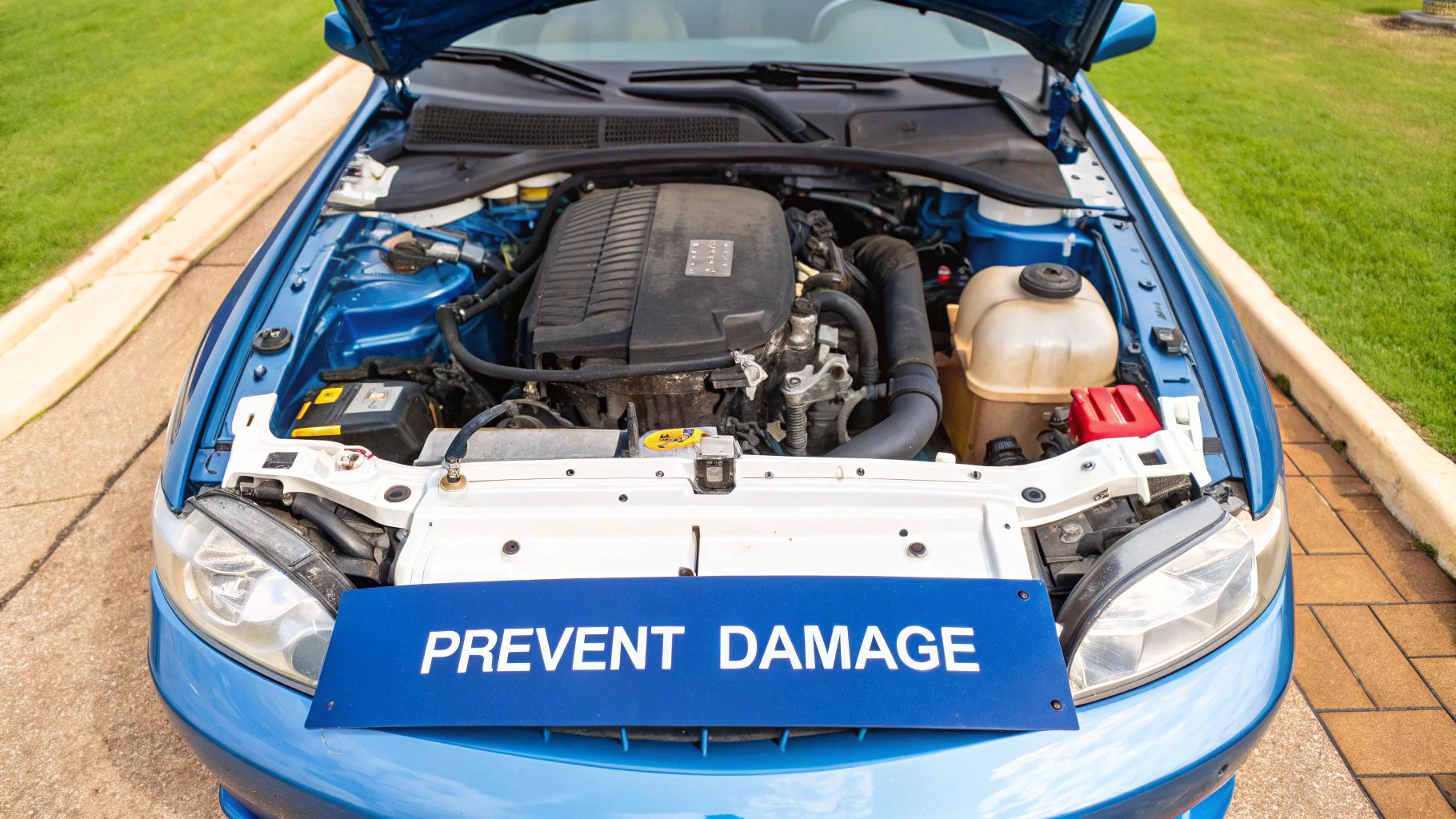
While every motor mount eventually wears out, the intense Arizona climate can seriously speed up the clock. Here in Sun City, we see it all the time—our relentless heat is a major culprit in premature part failure, especially for anything made of rubber.
Think about what happens to plastic or rubber left out in the desert sun. It gets brittle and starts to crack. The exact same thing happens to the rubber in your motor mounts. Constant exposure to extreme temperatures essentially bakes the rubber, drying out its essential oils and robbing it of its flexibility.
This accelerated aging is a primary reason for that bad motor mount sound many drivers eventually hear. Once the rubber hardens and cracks, it can no longer do its job of absorbing engine vibrations. That’s when the clunks and rumbles start, signaling a real problem.
Key Culprits of Motor Mount Failure
Of course, heat isn’t the only enemy your motor mounts face. A few other factors are working against them, too:
- Fluid Leaks: Engine oil and coolant are incredibly corrosive to rubber. Even a small leak from a gasket or hose can drip onto a mount, slowly softening and degrading the material until it gives out completely.
- Aggressive Driving: Frequent hard acceleration and sudden braking put a huge amount of strain on the entire drivetrain, including the mounts responsible for holding everything in place.
- Age and Mileage: At the end of the day, years of supporting a heavy, vibrating engine simply take their toll. Every bump, pothole, and rough road adds to the cumulative stress on these critical components.
Understanding these root causes is key. Regular vehicle inspections, like those we offer in our Sun City AZ auto repair shop, allow us to spot potential issues like fluid leaks or early signs of rubber decay before they lead to bigger, more expensive problems. Proactive vehicle care is always your best defense against our harsh climate. For more locally-focused advice, check out our 5 car maintenance tips every Arizona driver should know.
What to Feel and See Beyond the Noise
While a strange clunk or rumble is usually the first thing that gets your attention, a failing motor mount often sends out other signals you can both feel and see. These aren’t just noises; they’re physical clues that help confirm the bad motor mount sound you’re hearing is part of a bigger problem.
One of the most common signs is an excessive vibration that wasn’t there before. You’ll feel it through the steering wheel, up through your seat, or you might even see the dashboard rattling away while the car is just idling. This happens because the worn-out mount can’t absorb the engine’s natural vibrations anymore, so they travel right through the car’s frame and into the cabin.
Confirming the Problem Visually
A quick look under the hood can often tell you everything you need to know, but you have to do it safely.
Here are a few visual checks you can make:
- Look for visible damage. With the engine off and cool, inspect the mounts. You might see obvious cracks in the rubber, separation where the metal and rubber parts meet, or even fluid leaking out if you have hydraulic-style mounts.
- Check for excessive engine movement. This is a two-person job. Have a friend get in the car, start it, and hold their foot firmly on the brake while it’s in drive. Standing safely off to the side (never in front), have them give the engine a gentle rev. A bad mount will allow the engine to lurch or rock significantly. A healthy engine will barely move.
In severe cases, all that extra movement can damage surrounding parts. Keep an eye out for strained hoses, belts that look frayed, or shiny spots on the firewall where the engine might have been knocking against it. These are serious symptoms that you definitely shouldn’t ignore.
Knowing these physical and visual cues is all part of being a smart vehicle owner. To learn more, check out our guide on common car problems every vehicle owner should know. When you match these symptoms with the noises you’re hearing, it paints a very clear picture that it’s time to see a professional.
The Hidden Dangers of Ignoring a Bad Motor Mount
That clunking noise might feel like a minor irritation now, but letting a bad motor mount go unchecked can set off a dangerous and expensive chain reaction of damage. This is more than just an annoying sound—it’s a critical warning that your engine is no longer securely fastened in place.
Think about it: your engine is one of the heaviest, most powerful parts of your car. When a mount fails, the entire engine block can lurch and vibrate violently every time you accelerate or shift. This puts an incredible amount of stress on everything connected to it.
Before you know it, that movement can damage transmission components, throw belts out of alignment, and even snap radiator hoses. A severed hose can lead to catastrophic engine overheating in minutes, a major concern in the Arizona heat.
A Cascade of Costly Repairs
The damage doesn’t stop with the parts directly attached to the engine. An unsecured engine flopping around in the engine bay can wreck other vital systems, turning what should have been a straightforward fix into a massive overhaul.
Here’s some of the collateral damage we’ve seen in our shop:
- Exhaust System Damage: All that movement can easily crack or break exhaust pipes and manifolds, leading to loud noises and dangerous fume leaks.
- Axle and CV Joint Stress: Constant, jarring misalignment puts severe strain on the axles and CV joints, causing them to wear out prematurely and fail.
- Damaged Hoses and Wiring: The engine’s lurching can stretch, chafe, or completely sever delicate electrical wiring and fluid hoses.
An unstable engine doesn’t just damage other parts; it seriously compromises your vehicle’s handling and stability. This becomes especially dangerous during a sudden stop or a sharp turn, making this repair absolutely essential for your safety on the road. The core issue comes down to excessive noise, vibration, and harshness (NVH). The global market for automotive NVH materials is projected to hit USD 21.70 billion by 2032, which shows just how much consumers value a quiet, smooth ride. You can read more about this growing market on fortunebusinessinsights.com. It’s important to learn about other signs your vehicle needs immediate attention from an auto repair shop so you can make informed decisions for your car’s health.
Frequently Asked Questions About Motor Mounts
Here at Pete Nelson Automotive, we get a lot of questions from drivers in Sun City about that unmistakable bad motor mount sound. Here are answers to some of the most common ones.
Is it safe to drive with a bad motor mount?
We strongly advise against it. While you might be able to drive a very short distance, a broken mount allows your engine to move excessively. This puts severe stress on hoses, belts, axles, and your transmission. Continuing to drive risks turning a straightforward repair into a major, multi-part failure.
How much does it cost to replace a motor mount in Sun City?
The cost varies depending on your vehicle’s make, model, and the location of the failed mount. Some mounts are easily accessible, making for a quicker repair, while others require significant labor to reach. We always provide a clear, upfront estimate before any work begins, so you know exactly what to expect.
Can a bad motor mount affect my transmission?
Yes, absolutely. This is one of the biggest risks of delaying the repair. Your engine and transmission must be perfectly aligned to function correctly. A bad mount throws off this alignment, causing vibrations and stress that can lead to premature transmission wear and costly damage.
How can I tell if it’s a motor mount or something else?
While clunking and vibrations are classic signs of a bad motor mount, they can also indicate issues with the suspension or transmission. The best way to know for sure is to have a professional diagnosis. Our expert technicians can pinpoint the exact source of the noise, ensuring you only pay for the repairs you truly need.
How long does it take to replace a motor mount?
The time can range from under an hour for a simple replacement to several hours for more complex jobs where other components are in the way. Our team works efficiently to get you back on the road safely and as quickly as possible, without ever compromising on the quality of our work.
Don’t let a clunking noise turn into a costly catastrophe. The experienced team at Pete Nelson Automotive is here to provide honest diagnostics and expert auto repair in Sun City, AZ. We’ll pinpoint the problem and get it fixed right.
Call 623-974-4723 or visit petenelsonautorepair.com to schedule your appointment today.
Pete Nelson Automotive
This Offer Will Expire 12-31-2026
Pete Nelson Automotive is pleased to offer you
"Get Ready for the Holidays"
A $215.00 Value for Only $159.95 (+tax)
Lube, Oil, & Filter Change, Up to 5 quarts of Engine oil
Inspect and top off all fluid levels, Includes up to 5 Quarts of 5w30 synthetic blend oil, additional charge for synthetic oil.
Travel Evaluation
Set Air Pressures and Tire Rotation if needed.
Battery, Alternator and Starter Electrical Test
Load test battery, Alternator output and Starting amps.
Full Brake Evaluation
Includes check brake system on four wheels, checking and testing brake fluid condition.
So Call 623-974-4723 today and make an appointment for this exclusive Special!
*Most Cars, Vans, Motor homes, 4×4’s, Diesels, and some foreign cars may be higher. You must bring this letter at time of service and allow 2 hours to complete.



