
The most obvious signs of a bad oil pressure switch are pretty hard to miss: an oil pressure warning light that flickers or stays on, a gauge that’s either stuck at zero or jumping all over the place, and sometimes, a visible oil leak right around the switch itself.
It’s tempting to brush these off, but ignoring them is a massive gamble. You’re essentially betting your entire engine that the problem is just a cheap, faulty sensor and not a catastrophic loss of oil pressure that’s seconds away from destroying it.
Understanding Your Car’s Oil Pressure Warning System
That little oil light on your dashboard isn’t just for decoration—it’s one of the most critical warnings your car can give you. It’s hooked up to an oil pressure switch, which acts like a smoke detector for your engine’s lubrication system.
This switch has one job: to constantly monitor the oil pressure flowing through your engine. If that pressure ever drops to a dangerously low level, it triggers the light, giving you a crucial heads-up to pull over and shut the engine off before serious damage happens.
But what happens when the switch itself goes bad? It creates a dangerously confusing situation. A faulty switch might:
- Cry Wolf: It could trigger a false alarm, making you panic over nothing. Do this enough times, and you might start ignoring the light altogether—a bad habit to get into.
- Stay Silent: Even worse, it could fail to warn you when there’s a real low-pressure problem, leaving your engine to self-destruct without a single warning.
Figuring out whether you’re dealing with a finicky sensor or a genuine engine emergency is step number one. While some of these symptoms scream for a tow truck, just knowing the signs can stop a small electrical issue from turning into a four-figure repair bill.
For a bigger picture, you can learn more about the signs that your vehicle needs immediate attention from an auto repair shop in our other guide. Here, we’ll break down each specific symptom to help you make the right call and protect your engine.
Quick Guide to Oil Pressure Switch Failure Symptoms
Sometimes you just need a quick rundown of what to look for. This table summarizes the most common symptoms, what they mean, and how seriously you should take them.
| Symptom | What It Looks Like | Potential Cause and Risk Level |
|---|---|---|
| Flickering Oil Light | The oil pressure warning light flashes on and off, especially when idling, accelerating, or braking. | Low to Moderate Risk: Could be a faulty switch, low oil level, or the beginning of a real pressure problem. |
| Warning Light Stays On | The oil pressure light comes on and stays lit, even if the engine sounds normal and the oil level is correct. | High Risk: This could be a failed switch giving a false positive, but you must treat it as a real low-pressure event until proven otherwise. |
| Gauge Reads Zero | The oil pressure gauge on your dashboard immediately drops to 0 PSI and stays there. | High Risk: While a bad switch is possible, this is a classic sign of no oil pressure. Shut off the engine immediately. |
| Erratic Gauge Readings | The needle on the oil pressure gauge bounces around wildly or gives readings that make no sense. | Low Risk: This almost always points to an electrical issue with the switch or its wiring, not an actual pressure problem. |
| Visible Oil Leak | You see fresh oil seeping from the switch itself or dripping from the area where it’s mounted on the engine block. | Moderate Risk: The switch’s seal has failed. This will eventually lead to low oil levels and can cause the switch to fail electronically. |
While a bad sensor is often the culprit, the risk of being wrong is just too high to ignore. If you see any of these signs, especially a steady warning light or a gauge at zero, it’s time to stop driving and investigate.
An Unreliable Oil Pressure Light on Your Dash
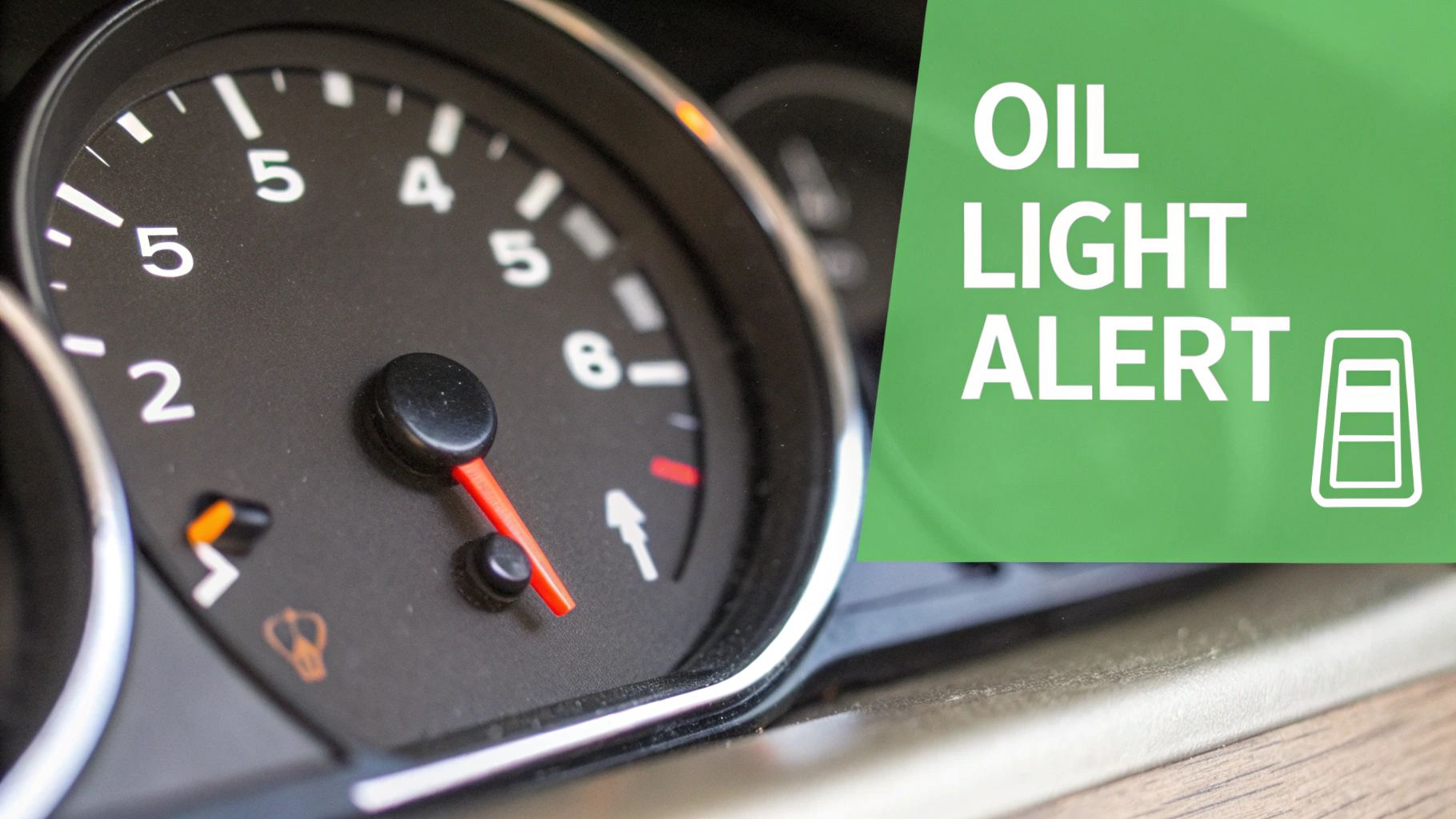
The most common—and frankly, most confusing—sign of a bad oil pressure switch is a warning light that you just can’t trust. This is the symptom that has drivers questioning everything, leading to either a whole lot of unnecessary panic or a dangerously false sense of security.
An unreliable light isn’t just one thing; it can show up in a few different ways. Each little quirk in its behavior can point to a specific type of failure inside the switch, so it pays to know what you’re looking at.
The Flickering Light Phenomenon
Ever notice your oil light flicker on for a second when you come to a stop or accelerate from a green light? This is often the very first red flag. This on-again, off-again behavior is usually caused by a shaky electrical connection inside the switch itself.
Over time, the switch’s internal guts simply wear out. This causes the connection that sends the “hey, there’s a problem!” signal to your dash to become spotty. Simple vibrations from the engine, a change in RPMs, or even a shift in temperature can be enough to jostle that faulty connection, making the light dance. While it could mean a real pressure drop at idle, a flickering light is very often just the switch crying wolf.
An unreliable warning light is a genuinely dangerous situation. When a switch constantly triggers false alarms, it can lead to “warning fatigue.” That’s when a driver starts ignoring the light altogether, potentially missing a real, catastrophic engine problem when it finally happens.
Lights That Won’t Turn Off (or On)
The other two scenarios are just as tricky. A light that stays lit up constantly, even when you’ve triple-checked that your oil level is perfect, usually means there’s an internal short circuit. The switch is basically stuck in the “on” position, screaming an alarm that isn’t real.
Even more dangerous, though, is a light that never comes on. You should see that little oil can symbol light up for a moment every time you turn the key to the “on” position before starting the engine. It’s part of the car’s self-check. If it stays dark, the bulb might be dead, or the switch has failed completely, leaving it unable to send any signal at all. This is the worst-case scenario, as you’re driving blind with no warning system for a real low-pressure disaster.
The symptoms of a bad oil pressure switch can carry significant economic and safety implications. A faulty switch can cause dashboard warning lights to malfunction, potentially leading to catastrophic engine failure if a real pressure drop is not detected and addressed promptly. Since this warning can also be tied to other issues, it helps to understand the 8 reasons your check engine light may be on and what steps to take.
Inaccurate or Zero Oil Pressure Gauge Readings
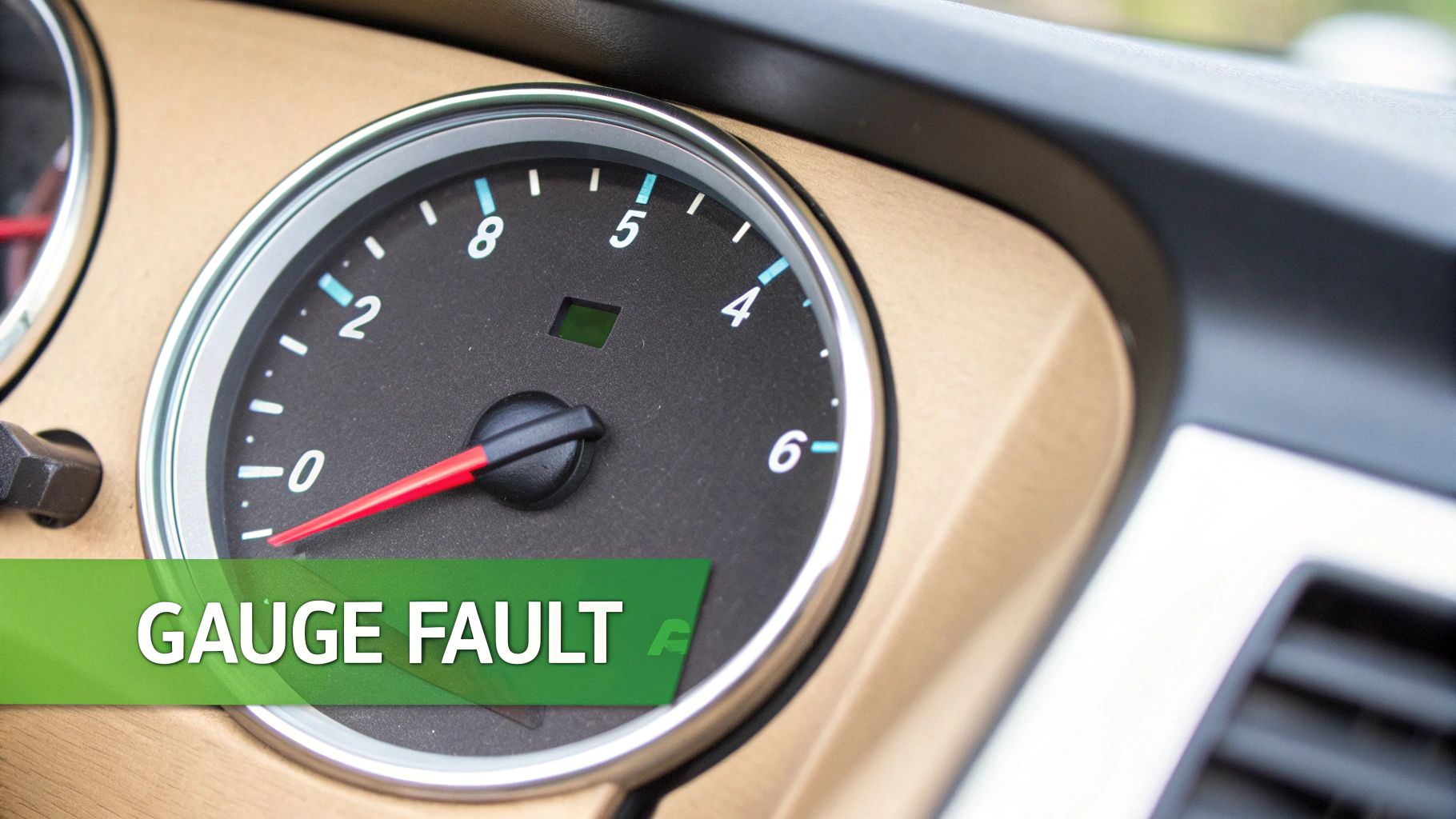
While a simple warning light gets the job done on many cars, lots of vehicles give you a more detailed look at your engine’s health with an actual oil pressure gauge on the dashboard. Think of this gauge as a direct hotline to your engine’s lubrication system. But when the component sending the signal starts to fail, that message gets scrambled, leading to some confusing and frankly alarming bad oil pressure switch symptoms.
Unlike the basic switch that just flips a warning light on or off, a gauge gets its information from an oil pressure sending unit or sensor. This little device sends a variable signal, telling the gauge exactly how much pressure is in the system at any given moment. When this sender goes bad, it doesn’t just flicker a light—it can send your gauge on a wild ride.
Interpreting a Rogue Gauge
A failing oil pressure sender can make your gauge do some pretty weird things, and almost all of them point to an electrical gremlin, not a real mechanical problem. These symptoms are usually less about your engine being in actual danger and more about getting bad data.
Here are the common signs of a bad sending unit:
- The Gauge Flatlines: Your needle suddenly drops to 0 PSI and just stays there, even though the engine is running perfectly fine. This usually means a complete signal loss from the sender.
- A Wildly Swinging Needle: The needle bounces erratically from low to high for no apparent reason, totally unrelated to your engine’s speed or how hard you’re driving.
- Maxed-Out Readings: The needle shoots straight to the maximum reading and gets stuck there, which often points to an internal short circuit inside the sending unit.
Driving with a gauge you can’t trust is like driving with a broken speedometer—you’re missing critical information. You have no way of knowing if your engine is perfectly healthy or on the verge of catastrophic failure. That uncertainty is a huge risk because you might just write off a real pressure drop as another sensor glitch.
A gauge that reads zero is a high-stakes situation. Even though it’s often just a sensor failure, you have to treat it like a genuine emergency until you know for sure. The first and most important thing to do is pull over safely, shut off the engine, and check your oil level immediately.
Figuring out if you have a sensor glitch or a true oil pressure crisis is the first crucial step. A faulty sender often causes bizarre behavior at all engine speeds, whereas real pressure problems typically show up or get worse at low RPMs, like when you’re idling at a stoplight.
Keeping up with routine maintenance helps, too. Knowing your car’s service history can help you rule out simple issues. To get a better handle on this, check out our guide on the five signs your car needs an oil change now. This knowledge gives you the power to understand the problem before you even talk to a mechanic.
Unusual Engine Noises and Poor Performance
Okay, so let’s move past the dashboard lights for a minute. Some of the most gut-wrenching signs of a bad oil pressure switch are the ones you can actually hear and feel while driving. A faulty switch doesn’t just feed your car’s computer bad information; it can mess with how your engine runs and, even worse, stay silent when it should be screaming about a real problem.
Today’s engines are run by a central computer, the Engine Control Unit (ECU), which is constantly making tiny adjustments based on data from dozens of sensors. The oil pressure sensor is a major player in this orchestra. It provides critical info for complex systems like variable valve timing (VVT), which fine-tunes engine timing on the fly for better power and fuel economy.
How a Bad Signal Hurts Performance
When that oil pressure switch starts sending erratic or just plain wrong signals, it throws the ECU into a state of confusion. Think of it like trying to run a marathon while your coach yells out completely random, incorrect heart rate numbers at you—you’d stumble, slow down, and perform poorly. Your engine does the same thing.
This confusion shows up in a few noticeable ways:
- Rough Idling: You might feel the engine sputter or vibrate unevenly at a stoplight as the ECU struggles to find a stable rhythm with junk data.
- Sluggish Acceleration: Without a clear picture of oil pressure, the VVT system can’t do its job right. The result? A frustrating lack of power when you hit the gas pedal.
- Reduced Fuel Efficiency: An engine that’s constantly second-guessing itself and running inefficiently is going to burn more fuel to get the job done.
The Sounds of Engine Damage
Now for the really important part—the noises you absolutely never want to hear. If the switch completely fails and doesn’t warn you about a real drop in oil pressure, the first clue you’ll get is often a sickening metallic sound from under the hood.
A light ticking or a deeper knocking noise isn’t a symptom of the switch itself failing. It’s the sound of your engine actively destroying itself from oil starvation. You’re hearing metal parts grinding together without lubrication.
This is where the switch’s job as a guardian becomes terrifyingly clear. By the time you hear those sounds, the switch has already failed its one critical mission, and expensive damage is happening in real-time. While a noisy engine can sometimes point to other problems, like a header gasket leak, any noise connected to oil pressure is a code red. Shut the engine off immediately and get it checked out. Don’t risk it.
Visible Oil Leaks Near the Switch
While flickering lights and wonky gauges are confusing signals coming from your dashboard, a failing oil pressure switch can also leave a much more obvious clue: a good old-fashioned oil leak. This isn’t just some random drip—it’s a very specific sign that the switch itself is physically breaking down and on its last legs.
Think about the environment where the oil pressure switch lives. It’s bolted directly to the engine, constantly dealing with intense heat and thousands of pressure cycles. Over time, that stress takes a toll. The plastic housing can develop tiny cracks, or the internal seals can get brittle and give up. When that happens, pressurized oil will find the easiest way out, and that’s right through the failing switch.
How to Spot a Leaky Switch
First, you’ve got to find the switch. It’s usually a small sensor with one or two wires sticking out, screwed right into the engine block. You’ll often find it near the oil filter. You don’t need to be a seasoned mechanic to play detective here.
Keep an eye out for these telltale signs:
- Fresh Oil Residue: You’ll see a dark, wet patch of fresh oil coating the switch and the engine area right around it.
- Grime Buildup: A slow, long-term leak will attract dirt and road grime, creating a thick, oily buildup caked onto the switch.
Even a small leak from the switch is a big deal. It’s not just telling you the sensor is bad; it’s an active oil leak that can snowball into much bigger engine problems. Of course, a vehicle can lose oil for many reasons, and knowing the common culprits can help you track down the source faster. You can learn more about what causes an oil leak in vehicles in our detailed guide.
A leaking oil pressure switch is a double-edged sword. On one hand, the leaking oil can contaminate the electrical connection, causing the same erratic signals you’d get from a switch that failed internally. On the other hand—and this is the more critical part—it’s actively draining your engine of oil. If you don’t catch it, that slow leak could eventually lead to a genuine, and potentially catastrophic, low oil pressure emergency.
How to Tell if It Is the Switch or Real Low Oil Pressure
That dreaded oil light flashes on your dash, and your stomach drops. You’re immediately hit with a crucial question: is this just a cheap sensor on the fritz, or is my engine about to suffer a catastrophic failure?
Figuring out whether you have a bad switch or genuine low oil pressure is the most important diagnostic step you can take. Luckily, your engine usually gives you some pretty clear clues.
The very first thing you need to do is safely pull over, shut the engine off, and check your oil level. If that dipstick comes out dry or critically low, you’ve got a real, urgent problem on your hands. Do not restart the engine.
Interpreting the Warning Signs
If your oil level is fine, the next step is to pay close attention to how the warning light or gauge is behaving. Its pattern can tell you a lot.
A tell-tale sign of real low oil pressure is a light that only flickers at idle but vanishes as soon as you step on the gas. This happens because oil pressure is naturally at its lowest when the engine is idling. A worn-out oil pump or tired engine bearings might be struggling to keep the pressure up at those low RPMs.
On the other hand, if the warning light is acting erratically at all speeds—maybe flickering randomly on the highway or staying on constantly even when the engine sounds perfectly healthy—you’re likely seeing one of the classic electrical bad oil pressure switch symptoms. This behavior points to a problem with the switch itself, not your engine’s critical lubrication system.
For one of the most common physical symptoms—an actual oil leak—this decision tree can help you trace the source.
As the chart shows, if you can locate the switch and confirm oil is weeping from it, the path forward is clear: it’s time for a replacement.
The Professional Diagnostic Approach
While these observations are great starting points, the only way to be 100% certain is to measure the oil pressure directly. A mechanic will do this by temporarily removing the oil pressure switch and screwing a mechanical oil pressure gauge into its place. This tool completely bypasses the car’s electronics and gives a direct, undeniable reading of what’s happening inside your engine.
If the mechanical gauge shows healthy pressure while your dashboard is screaming bloody murder, you’ve confirmed the switch is the culprit. But if that gauge shows dangerously low pressure, you’ve just caught a major engine problem before it became a disaster. The market for these critical sensors was valued at over $3.5 billion in 2023, a number that underscores just how vital they are for modern engine protection. You can learn more about the growth of the oil pressure switch market and its importance in the automotive industry.
The Golden Rule: Never, ever assume it’s “just the switch.” Always treat an oil pressure warning as a genuine emergency until you have proven it’s not. The cost of being wrong is an entirely new engine.
Frequently Asked Questions (FAQ)
Even after walking through the symptoms, you might have a few lingering questions. That’s perfectly normal. Let’s tackle some of the most common concerns drivers have when they suspect an oil pressure switch problem.
Can I drive with a bad oil pressure switch?
No, it is highly recommended that you do not drive if you suspect a bad oil pressure switch. You cannot be certain if the warning is a false alarm from a faulty sensor or a true, engine-threatening loss of oil pressure. The risk of catastrophic engine damage is too high to ignore.
How much does it cost to replace an oil pressure switch?
Replacing an oil pressure switch is typically an affordable repair. The part itself usually costs between $20 and $100, with labor costs ranging from $50 to $150 depending on its location on the engine. The total cost for the replacement will likely be between $75 and $250.
What is the difference between an oil pressure switch and a sensor?
An oil pressure switch is a simple on/off device that triggers the dashboard warning light when pressure drops below a set level. An oil pressure sensor (or sending unit) is more advanced; it provides a variable signal that allows a physical gauge on your dashboard to display the exact oil pressure in real-time.
Can a bad oil pressure switch cause the check engine light to come on?
Yes, absolutely. A modern vehicle’s Engine Control Unit (ECU) monitors the signal from the oil pressure switch. If the signal is erratic, incorrect, or missing, the ECU will log a fault code and illuminate the check engine light to alert you to the problem.
It’s amazing how a small, inexpensive part can play such a huge role. These switches aren’t just for cars; they’re essential in heavy machinery and all sorts of industrial equipment. While things like high sensor costs can be a challenge in those fields, the technology is always improving. You can read more about the oil pressure switch market and its applications to get a sense of its broader importance.
If any of this sounds familiar, don’t leave your engine’s future to chance. The ASE-certified technicians at Pete Nelson Automotive have the tools and expertise to pinpoint the problem and get you back on the road with confidence.
Visit https://petenelsonautorepair.com or give us a call at 623-974-4723 to schedule your appointment today.
Pete Nelson Automotive
This Offer Will Expire 12-31-2026
Pete Nelson Automotive is pleased to offer you

"Get Ready for the Holidays"
A $215.00 Value for Only $159.95 (+tax)
Lube, Oil, & Filter Change, Up to 5 quarts of Engine oil
Inspect and top off all fluid levels, Includes up to 5 Quarts of 5w30 synthetic blend oil, additional charge for synthetic oil.
Travel Evaluation
Set Air Pressures and Tire Rotation if needed.
Battery, Alternator and Starter Electrical Test
Load test battery, Alternator output and Starting amps.
Full Brake Evaluation
Includes check brake system on four wheels, checking and testing brake fluid condition.
So Call 623-974-4723 today and make an appointment for this exclusive Special!
*Most Cars, Vans, Motor homes, 4×4’s, Diesels, and some foreign cars may be higher. You must bring this letter at time of service and allow 2 hours to complete.



