
Is your car feeling a little sluggish lately, maybe not getting the gas mileage it used to here in the Arizona heat? Sometimes, the first clue to an engine problem isn’t a dashboard light, but something much smaller. When you pull out a spark plug and find it covered in a dry, black soot, your engine is definitely trying to tell you something. That soot is a clear signal of incomplete combustion, which almost always points to a ‘rich’ air-fuel mixture—in other words, too much gas and not enough air.
What Your Spark Plugs Are Telling You
Think of a spark plug as a window into your engine’s health. Its condition gives you a direct look at the combustion process happening thousands of times every minute. A healthy, happy spark plug should have a light tan or grayish color on its insulator tip. Anything else, especially that black, powdery soot, means there’s an underlying problem that needs your attention.
Here in Sun City, AZ, the combination of summer heat and frequent short trips can create the perfect conditions for this kind of buildup. Letting it go can lead to a domino effect of other problems.
- Poor fuel economy (you’ll be visiting the gas station more often)
- Sluggish acceleration and hesitation when you hit the gas
- Difficulty starting your vehicle, especially on cold mornings
- Potential damage to expensive parts like the catalytic converter
Reading the Signs Correctly
Mechanics have been using spark plugs as a primary diagnostic tool for decades. The color and deposits on that little plug reveal surprisingly precise details about the engine’s air-fuel ratio, its operating temperature, and its overall condition. The industry standard, which you’ll find in manuals from every major manufacturer, diagnoses that soft, black soot as carbon fouling—the classic sign of a rich fuel condition.
This simple visual helps trace the potential sources of that pesky black soot.
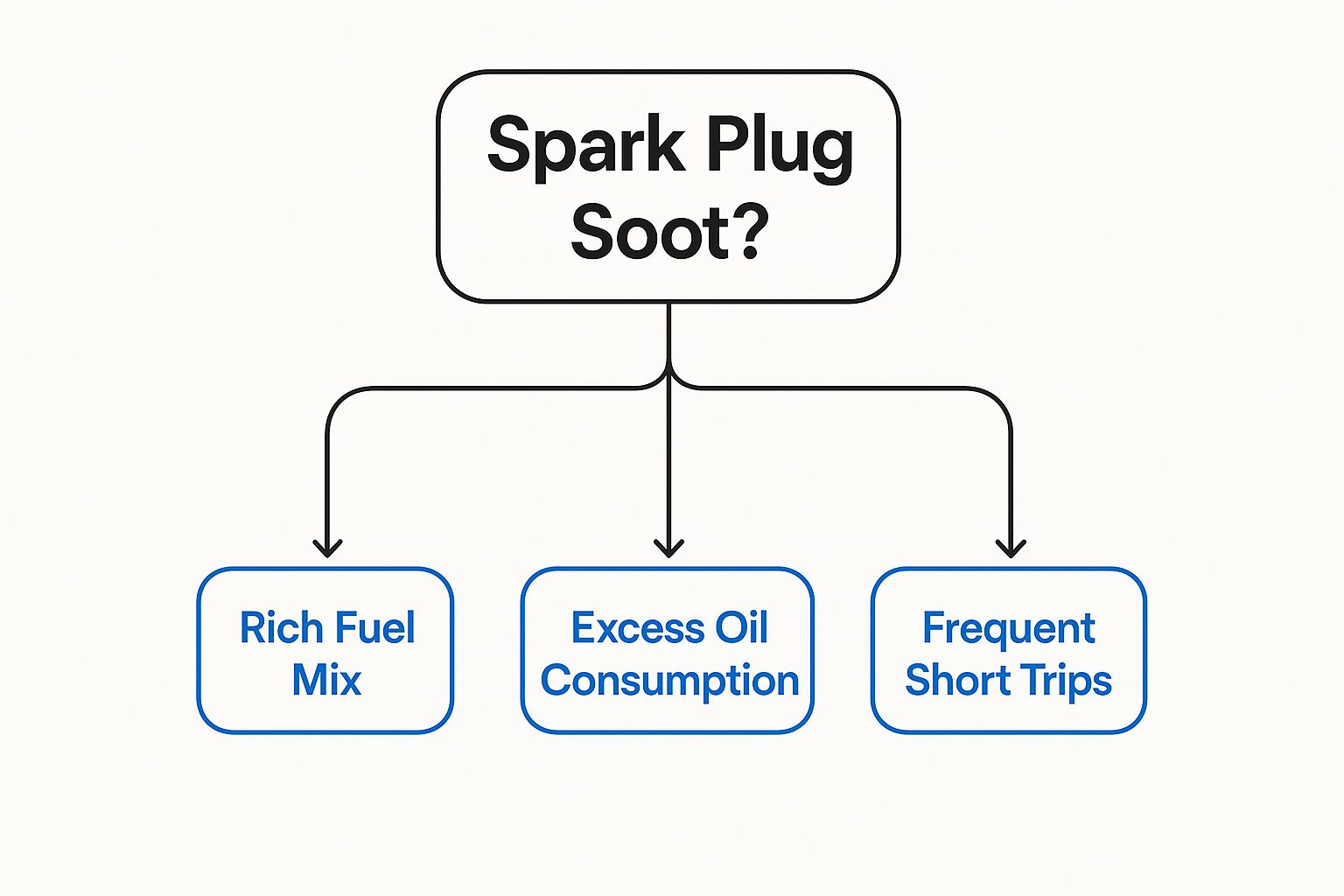
As you can see, the problem usually starts with the fuel mix, potential oil consumption, or even just your driving habits. Figuring out the true root cause is key to a proper fix and is a core part of understanding why regular engine tune-ups and their importance can’t be overstated. Catching these early warnings stops a small issue from snowballing into a major, wallet-draining auto repair.
For drivers in Sun City, AZ, being able to quickly identify what your spark plugs are saying can save a lot of headaches. This chart breaks down the most common conditions you might find.
Spark Plug Condition Quick Diagnostic Chart
| Plug Appearance | What It Means | Common Causes |
|---|---|---|
| Light Tan/Gray | Normal & Healthy. Your engine is running efficiently. | Proper air-fuel mixture and correct spark plug heat range. |
| Dry, Black Soot | Rich Fuel Mixture. Too much gasoline is entering the cylinder. | Leaky fuel injectors, faulty oxygen sensor, clogged air filter. |
| Oily, Black Deposits | Oil Leak. Oil is getting into the combustion chamber. | Worn piston rings, failing valve seals, or a bad PCV valve. |
| White/Glazed Deposits | Engine Overheating. The plug is running too hot. | Incorrect plug heat range, lean fuel mixture, cooling system issues. |
| Melted Electrode | Severe Overheating/Pre-Ignition. A serious internal engine problem. | Wrong fuel octane, incorrect ignition timing, major engine malfunction. |
This chart is a great starting point, but if you find anything other than a normal-looking plug, it’s always best to have a professional take a closer look to pinpoint the exact cause.
Common Causes of a Rich Fuel Mixture
So, now we know that black soot on spark plugs is the classic sign of a rich fuel mixture. The next question is obvious: “What’s causing it?” Your engine needs a very specific recipe of air and fuel to run right—think of it like a campfire. Give it the right amount of oxygen, and it burns bright and hot. Choke off the air, and you just get a lot of smoke. When your engine’s air-fuel balance is off, you get soot.
Let’s dig into the most common culprits we see day in and day out at our auto repair shop right here in Sun City, AZ.

A Starving Engine: The Clogged Air Filter
More often than not, the simplest explanation is the right one. A dirty or clogged air filter is by far the most common cause we run into. Imagine trying to run a race while breathing through a thick, dusty mask—that’s what you’re asking your engine to do.
When not enough air can get into the engine, the fuel system doesn’t always adjust perfectly. The result is a mix that’s way too heavy on gasoline, leading directly to the incomplete burn that leaves that tell-tale soot. The good news? This is an easy and cheap fix, and it’s part of our standard Services.
An engine that can’t breathe properly can’t perform efficiently. Regularly checking your air filter is one of the quickest ways to prevent the rich fuel conditions that cause sooty plugs and poor gas mileage.
Faulty Sensors Sending Bad Information
Modern cars are packed with sensors that act as the engine’s eyes and ears. They all report back to the main computer (the PCM), which then decides how much fuel to inject. If one of these sensors starts feeding the computer bad info, the computer will start making bad decisions.
Here are the usual suspects:
- Oxygen (O2) Sensor: This sensor lives in your exhaust and sniffs for unburnt oxygen. If it’s failing, it might mistakenly tell the PCM that the engine is running lean (too much air). The computer’s response? It dumps in more fuel to “correct” a problem that doesn’t exist.
- Mass Airflow (MAF) Sensor: The MAF sensor’s job is to measure the precise amount of air coming into the engine. When it gets dirty or goes bad, it can under-report how much air is flowing in, tricking the computer into injecting too much fuel.
- Coolant Temperature Sensor: This sensor tells the PCM whether the engine is cold or fully warmed up. A bad sensor might get stuck telling the computer the engine is always cold, keeping it in a “warm-up mode” that uses a much richer fuel mixture.
Fuel System Malfunctions
Finally, the problem might be with the hardware that actually delivers the fuel. These issues can get a bit more complicated and usually need a professional to diagnose properly.
A leaking fuel injector, for example, can literally drip extra gas into the combustion chamber, throwing the whole air-fuel ratio out of whack. In the same vein, a faulty fuel pressure regulator can let too much pressure build up in the system, forcing more fuel through the injectors than the engine needs.
These aren’t just minor annoyances. They not only cause black soot on spark plugs but can also tank your fuel economy. In fact, severe carbon fouling from a rich mixture has been known to cut a car’s mileage in half or worse, as you’ll see if you explore these expert forum discussions.
How Ignition System Problems Create Soot
While a rich fuel mixture is the most common reason you’ll find black soot on spark plugs, it’s not the only story to tell. Your engine’s ignition system can absolutely be the culprit. Think of it like trying to light a damp campfire with a weak match—instead of a clean, hot fire, you just get a lot of smoke and smolder. A weak spark does the same thing to the fuel in your engine, leaving behind unburnt gasoline that turns into soot.
This is a totally different kind of problem than having too much fuel. Here, the issue is that the spark itself just isn’t strong enough to get the job done right. When the ignition system can’t deliver a powerful, consistent spark at precisely the right moment, combustion is incomplete. The result? A fouled-up spark plug.

Weak Spark: The Usual Suspects
Several components have to work together perfectly to create that high-voltage spark your engine needs. If any one of them starts to fail, it can weaken the final spark that reaches the plug. Here in Sun City, AZ, those high under-hood temperatures can really speed up the wear and tear on these critical parts.
The main components to put on your investigation list are:
- Failing Ignition Coils: These little transformers are responsible for taking your car’s low battery voltage and ramping it up to the thousands of volts needed for a spark. As they get older, their performance can degrade, leading to a much weaker spark.
- Worn Spark Plug Wires: The wires are the delivery route, carrying that high-voltage charge from the coil to the spark plug. Over time, their insulation can crack and the internal conductor can break down, causing a loss of electrical energy before it even gets where it’s going.
The Right Plug for the Right Job
It’s also incredibly important to use the correct type of spark plug for your specific vehicle. Spark plugs are designed with a “heat range,” which is just a fancy term for how quickly they get rid of heat from the combustion chamber. Using the wrong plug can cause some significant headaches.
A spark plug that is too “cold” for your engine won’t get hot enough to burn off the carbon deposits that naturally form during combustion. This allows soot to build up quickly, even if your air-fuel mixture is spot on.
Incomplete combustion inside the engine cylinder is a frequent cause of this black, sooty deposit on the spark plug’s electrode and insulator. This buildup happens when the spark plug isn’t firing hot enough or is misgapped, letting unburned fuel turn into carbon soot. If you leave it unchecked, this can lead to a check engine light and misfires, as you can discover in more detail from industry experts. That’s why we always double-check that the correct parts are being used during any of our specials or service appointments.
The Domino Effect of Sooty Spark Plugs
Finding black soot on your spark plugs is more than just a little grime; it’s a big, red flag that your vehicle’s engine isn’t happy. Think of it as the first domino to fall—ignoring it can set off a chain reaction that turns a simple fix into a much bigger, more expensive headache.
The first thing you’ll probably feel is a dip in engine performance. A spark plug caked in soot simply can’t do its job right, which is to create a strong, consistent spark. This leads to engine misfires. You’ll feel this as a shudder, a hesitation, or just a general roughness, especially when you step on the gas.
It’s More Than Just a Rough Ride
Those annoying vibrations are just the beginning. Every time a cylinder misfires, raw, unburnt fuel gets dumped straight into your exhaust system. That wasted fuel means your gas mileage takes a nosedive. You’ll be making extra trips to the pump here in Sun City, AZ, as your engine chugs along inefficiently.
But it gets worse. Over time, all that unburnt fuel can absolutely wreck one of your car’s most expensive parts: the catalytic converter.
The catalytic converter’s job is to clean up exhaust gases, not to be showered in raw gasoline. When it’s constantly flooded with fuel from a rich-running engine, it can overheat, melt down internally, and become totally clogged. That’s a repair bill that can easily soar past $1,000.
How a Small Sign Snowballs into a Big Problem
When you ignore sooty plugs, you’re kicking off that chain reaction. A struggling engine puts extra stress on everything around it, causing other parts to wear out faster. What might have started as a cheap fix, like a dirty air filter, can lead to fouled plugs, terrible fuel economy, and a fried catalytic converter. This is a classic example of why catching common vehicle issues early is so important.
Here’s a quick rundown of how this problem escalates:
- The First Clue: You find black, sooty gunk on your spark plugs.
- The Immediate Problem: The spark weakens, causing engine misfires and a rough idle.
- The Secondary Effect: You’re wasting fuel, and your miles per gallon plummets.
- The Long-Term Damage: Raw fuel poisons and clogs the catalytic converter.
- The Final Bill: A costly repair that could have been completely avoided with an early diagnosis.
Your Guide to Diagnosing and Fixing the Problem
Alright, so you’ve found black soot on your spark plugs. Now what? Pinpointing the exact cause is the key to a lasting fix, not just a temporary patch. Here at our auto repair shop in Sun City, AZ, we approach this like a detective, starting with the simplest clues and working our way toward the more complex culprits.
This step-by-step process is exactly how a professional technician would start to figure out what’s going on with your vehicle. Just be sure the engine is cool before you begin—working on a hot engine is a recipe for burns.
Start With the Basics: A Visual Inspection
The best place to begin your investigation is with the parts that are easiest to get to. More often than not, one of these components is the source of the problem, and checking them first can save you a ton of time and money.
- Inspect the Air Filter: Pull out your engine’s air filter. Is it filthy? Clogged with dust and debris? A blocked filter is like trying to breathe through a straw—it chokes off the air, creating that rich fuel mixture that leads to soot. This is a common and thankfully inexpensive fix.
- Examine the Spark Plugs and Wires: Take a closer look at the plugs themselves. Is the soot dry and powdery, or is it wet and oily? That detail tells a story. While you’re there, check the spark plug wires for any visible cracks, fraying, or burn marks. Damaged wires can cause a weak spark, which is another path to incomplete combustion.
Digging Deeper Into the Fuel and Ignition Systems
If the air filter looks clean and the plugs and wires seem okay, it’s time to move on. The next step is to investigate the systems that actually control your fuel and spark, and this is where things can get a bit more technical.
- Check Fuel System Components: A faulty oxygen (O2) sensor, a dirty mass airflow (MAF) sensor, or leaky fuel injectors are all common culprits. These parts feed information to your car’s computer, and if they’re sending bad data, the air-fuel mix will be completely off.
- Test the Ignition System: A failing ignition coil can deliver a spark that’s too weak to get the job done, leading to that unburnt fuel and soot. While you often need special tools to properly test these components, a quick visual inspection might reveal obvious damage.
It’s at this stage that the diagnosis can get really tricky without the right equipment. Throwing parts at the problem by guessing can get expensive fast, and you might end up replacing perfectly good components.
When to Bring in the Professionals
While a visual inspection is a great starting point, accurately diagnosing sensors or internal fuel system problems is nearly impossible without the right tools. The single most effective tool for this job is a professional computer diagnostic scan.
Plugging into your car’s onboard computer lets a technician read error codes and, more importantly, see live data from all the sensors. It takes the guesswork completely out of the equation. This ensures we fix the right part the first time, saving you time and money.
If you’ve checked the basics and are still stumped, it’s time to let a professional take over. This ensures the repair is done safely and correctly, getting you back on the road with confidence.
Proactive Maintenance to Prevent Sooty Plugs
The best way to handle black soot on spark plugs is to stop it from ever showing up. A proactive approach to car care, rather than just reacting to problems, keeps your engine running clean and efficient. It’ll save you from headaches and surprise repair bills down the road.
Think of it as a small investment in your car’s long-term health. A few simple, regular checks can prevent the rich fuel conditions and weak spark that cause soot to build up in the first place. Keeping your engine in top shape means you get the best gas mileage, smoother performance, and more peace of mind.
Your Simple Prevention Checklist
Staying ahead of potential problems doesn’t take a ton of work. If you add a few key tasks to your routine, you can keep your engine’s combustion process perfectly balanced. This not only prevents sooty plugs but also protects other critical parts from damage.
Here’s a straightforward maintenance checklist to follow:
- Replace Your Air Filter Regularly: A clogged air filter is one of the most common reasons an engine runs rich. We suggest checking it every time you get an oil change and swapping it out at least once a year to make sure your engine can breathe.
- Use High-Quality Fuel: Sticking with Top Tier gasoline really helps keep your fuel system clean. These fuels have more detergents that stop carbon deposits from building up on your fuel injectors and inside the combustion chamber.
- Stick to Your Spark Plug Schedule: Spark plugs don’t last forever, and a worn-out plug creates a weak spark. Always replace them according to your car manufacturer’s schedule to maintain a strong, efficient ignition.
A healthy engine is the result of consistent care, not a one-time fix. Following a regular maintenance plan is the single most effective way to avoid the common issues that lead to performance loss and costly damage.
On top of that, getting a periodic fuel system cleaning service is an excellent preventive step. This service gets rid of stubborn deposits from injectors and sensors, making sure they operate with the precision they’re supposed to. Understanding the 5 benefits of keeping up with scheduled maintenance can help you see how these small steps add up to big savings and a more reliable vehicle.
Frequently Asked Questions About Spark Plugs
Over the years here in Sun City, AZ, we’ve heard just about every question you can imagine when it comes to keeping a car running right. To wrap things up, here are some quick answers to the questions we get asked most often about spark plugs and engine health.
Can I just clean black soot off my spark plugs and reuse them?
While you can technically clean minor carbon buildup off a spark plug, it’s really just a temporary fix. That soot is a symptom of a deeper problem, like a rich fuel mixture or a weak ignition system. If you don’t fix the root cause, the soot will return quickly, and the underlying issue will continue to harm your engine’s performance and fuel economy.
How often should I replace my spark plugs?
This depends on your vehicle and the type of plugs it uses. Standard copper plugs may need replacing every 30,000 miles, while more durable iridium or platinum plugs can last up to 100,000 miles. Always check your owner’s manual for the manufacturer’s recommendation, and remember that our intense Arizona heat can sometimes shorten that lifespan.
Can a bad spark plug make my check engine light come on?
Absolutely. A fouled or failing spark plug is a very common cause of an engine misfire. Your car’s computer is designed to detect misfires almost instantly, and its first response is to turn on the check engine light to alert you to the problem. To learn what else might trigger that light, check out our guide on common car problems every vehicle owner should know.
Is black soot on spark plugs a serious problem?
It can be. While the soot itself isn’t the immediate danger, it’s a clear warning sign that your engine isn’t running efficiently. Ignoring it can lead to poor gas mileage, engine hesitation, and, in the long run, very expensive damage to critical components like your catalytic converter. It’s always best to get it diagnosed by a professional auto repair shop in Sun City, AZ.
If you’ve noticed your car isn’t running like it used to or you’ve found sooty plugs under the hood, don’t wait for a small hiccup to turn into a major repair. The ASE-certified team at Pete Nelson Automotive has the expertise and diagnostic tools to find the real problem and fix it right.
Call 623-974-4723 or visit petenelsonautorepair.com to schedule your appointment today.
Pete Nelson Automotive
This Offer Will Expire 12-31-2026
Pete Nelson Automotive is pleased to offer you

"Get Ready for the Holidays"
A $215.00 Value for Only $159.95 (+tax)
Lube, Oil, & Filter Change, Up to 5 quarts of Engine oil
Inspect and top off all fluid levels, Includes up to 5 Quarts of 5w30 synthetic blend oil, additional charge for synthetic oil.
Travel Evaluation
Set Air Pressures and Tire Rotation if needed.
Battery, Alternator and Starter Electrical Test
Load test battery, Alternator output and Starting amps.
Full Brake Evaluation
Includes check brake system on four wheels, checking and testing brake fluid condition.
So Call 623-974-4723 today and make an appointment for this exclusive Special!
*Most Cars, Vans, Motor homes, 4×4’s, Diesels, and some foreign cars may be higher. You must bring this letter at time of service and allow 2 hours to complete.



