That moment your heart skips a beat—spotting a small, oily puddle under your car in your Sun City driveway. It’s tempting to brush it off as just another drip from the air conditioner, but that little spot could be a critical warning sign: a brake fluid leak. This isn’t just a minor issue—it’s a serious safety problem that demands your immediate attention. Ignoring it puts you, your passengers, and everyone else on the road at risk.
At Pete Nelson Automotive, we believe an informed driver is a safe driver. Let’s walk through what a brake fluid leak is, how to spot one, and why it’s one of the most important issues to address right away.
The Lifeblood of Your Braking System
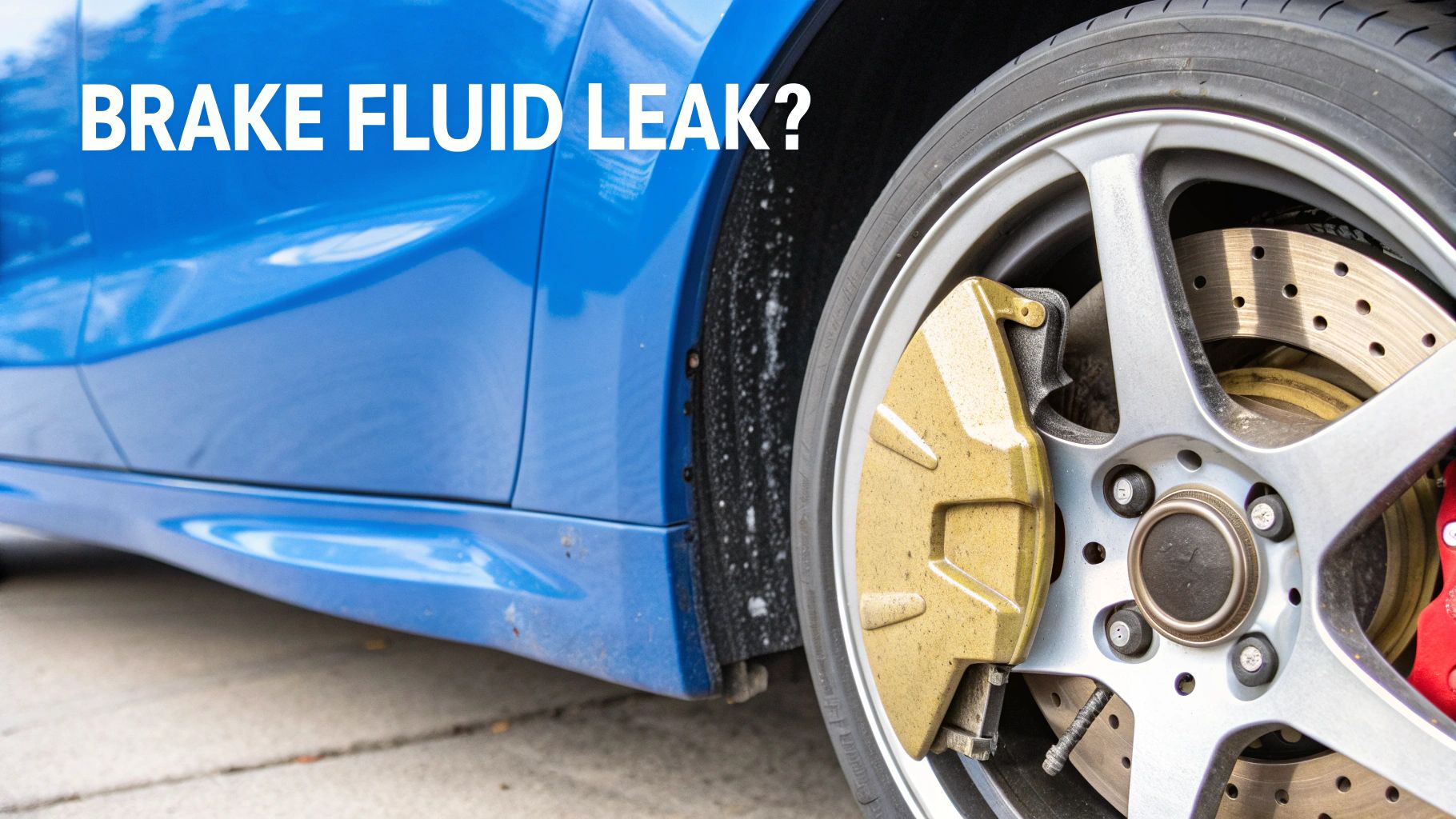
Think of brake fluid as the unsung hero of your car’s braking system. It’s a specialized hydraulic fluid that acts as a messenger, carrying the force from your foot on the brake pedal directly to the brakes at each wheel. Without it, you’re not stopping.
When you press the brake pedal, you’re not physically clamping down on the wheels. Instead, you’re pushing a piston inside the master cylinder. This creates immense pressure in the brake fluid, which then travels through a network of brake lines and hoses to the calipers. The calipers squeeze the brake pads against the rotors, generating the friction needed to slow you down.
Why Hydraulic Pressure Is a Big Deal
The whole system works on the principle of hydraulic pressure. It’s a bit like a hydraulic jack that lets you lift a two-ton car with just a few pumps of a handle. Since liquids don’t compress, the force you apply with your foot gets multiplied many times over by the time it reaches the wheels.
But this powerful system has one major weakness: it has to be a perfectly sealed, closed-loop circuit. The moment a leak appears, the system can’t build or hold that critical pressure.
A brake fluid leak shatters the hydraulic integrity of your braking system. Without proper pressure, the force from your foot gets lost along the way and never fully reaches the wheels, leading to a frightening loss of stopping power.
What to Look For
So, how can you be sure that mystery puddle is actually brake fluid? It has a few distinct traits that make it stand out from other automotive fluids. Keep an eye out for these clues:
- Color: Brand new brake fluid is usually clear to a light amber or honey color. Over time, as it gets old and contaminated, it can darken to a murky brown.
- Consistency: It has a slippery, oily feel, almost like cooking oil but thinner than motor oil.
- Location: You’ll most likely spot drips or puddles near the wheels or somewhere under the car where the brake lines run.
The auto industry is always pushing for better safety and reliability to prevent failures like these. In fact, the global market for automotive brake tubes is expected to hit roughly $127.4 billion by 2035, a testament to the demand for stronger, more corrosion-resistant materials. This focus on advancement is why regular inspections are so important—to ensure your car’s safety systems are up to par.
How To Identify The Telltale Signs Of A Leak
So, you’ve spotted a mysterious puddle, or maybe your brakes just don’t feel quite right. How can you be sure you’re dealing with a brake fluid leak? Fortunately, your car usually gives you plenty of warning signs long before a small drip turns into a full-blown emergency. Learning to spot these clues is the first step toward smart, proactive car care.
One of the most common—and frankly, unnerving—symptoms is a change in how your brake pedal feels under your foot. If it suddenly feels soft, spongy, or sinks toward the floor with much less resistance than normal, that’s a classic sign of trouble. Air has likely gotten into the brake lines through a leak, compromising the hydraulic pressure that makes your brakes work. That solid, responsive feel you’re used to is gone.
What To Look And Listen For
You don’t need fancy tools to start diagnosing a problem; your own senses are surprisingly effective. Beyond the feel of the pedal, keep your eyes and ears open for other indicators that point straight to a brake fluid leak.
Here’s a simple checklist of what to watch for:
- Brake Warning Light: This is your car’s most direct cry for help. If the ABS or brake light pops up on your dashboard, it often means the brake fluid level is dangerously low, which is a strong hint that you have a leak.
- Reduced Stopping Power: Does your car seem to take its sweet time stopping these days? A noticeable increase in stopping distance is a serious red flag. It means your brakes aren’t clamping down with their usual force, a dangerous symptom of a failing hydraulic system.
- Visible Puddles: Take a peek at your usual parking spot. Brake fluid is typically clear to light amber and has a slick, slightly oily feel, which is different from dark, heavy engine oil or colorful coolant.
- Low Fluid in the Reservoir: This is an easy one. Pop the hood and find the brake fluid reservoir—it’s a small, see-through plastic container, usually mounted on the firewall. If the fluid is below the “MIN” line, it had to go somewhere, and a leak is the most likely culprit.
Sometimes, a picture makes it all click. This image shows some of the common physical culprits behind these symptoms.
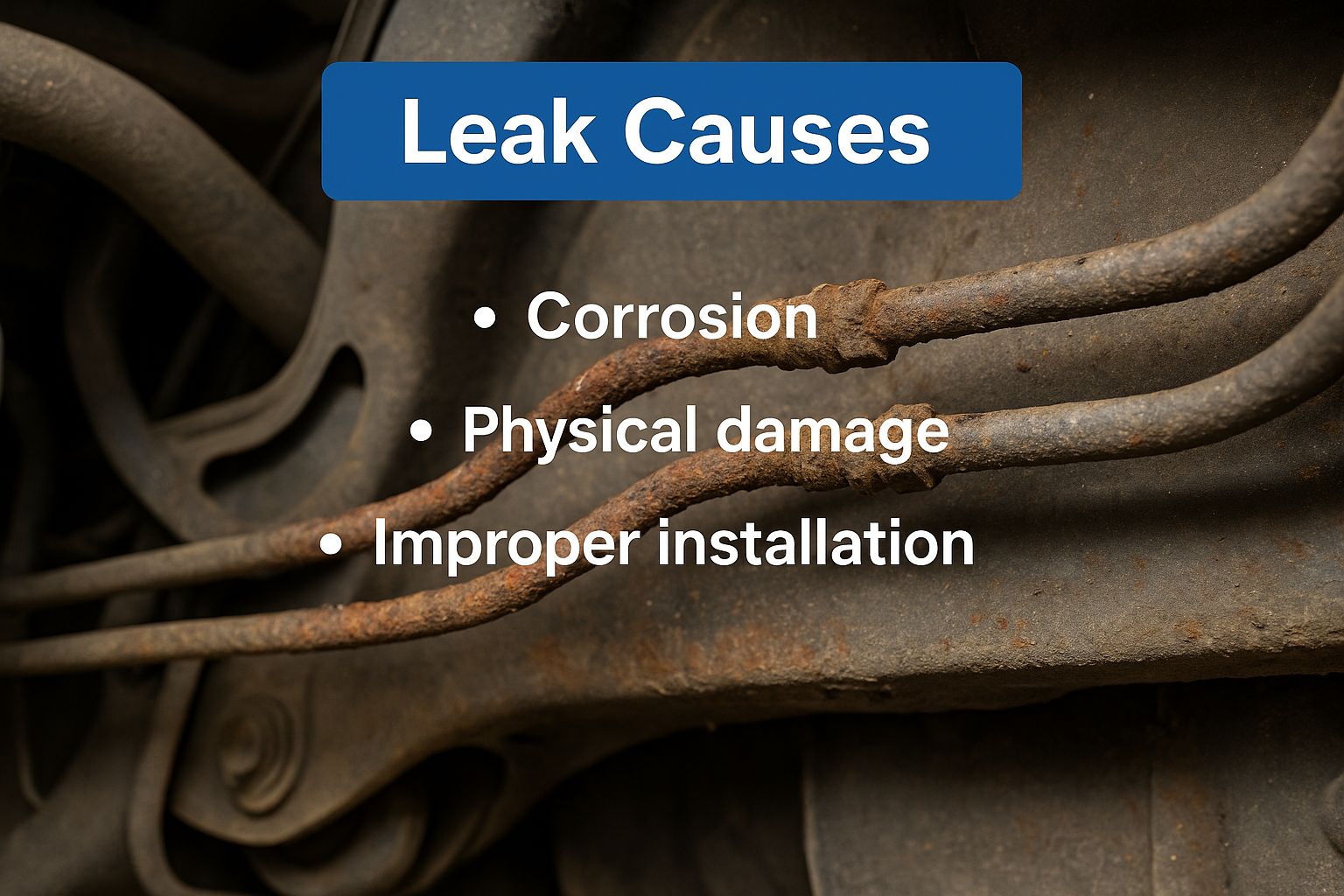
As you can see, corroded and damaged brake lines are a prime suspect. Over time, these lines can rust and weaken, especially with the road conditions here in Arizona, allowing precious brake fluid to seep out and pressure to drop.
A Quick Visual Inspection
You don’t have to be a certified mechanic to do a quick visual check. Grab a flashlight and take a look around the inside of each wheel. Do you see any unusual wetness or oily residue clinging to the brake parts or the inner wall of the tire?
Next, try to trace the thin metal brake lines that run underneath your car, from the engine bay back to the wheels. Scan for any dark, wet spots or areas of rust that look unusually damp. Finding fluid anywhere along this path is a dead giveaway.
To help you distinguish brake fluid from other potential leaks, here’s a quick reference table. It’s not uncommon to see drips under a car, but knowing what you’re looking at is key.
Quick Guide to Identifying Vehicle Fluid Leaks
| Fluid Type | Typical Color | Consistency | Common Leak Location |
|---|---|---|---|
| Brake Fluid | Clear to Light Amber | Slippery, slightly oily | Near wheels or under the car along brake lines |
| Engine Oil | Light Brown to Black | Oily and thick | Front of the engine, under the oil pan |
| Coolant/Antifreeze | Bright Green, Pink, or Orange | Slimy, sometimes sticky | Under the radiator or engine bay |
| Transmission Fluid | Red or Brown | Oily and slick | Middle or front of the vehicle |
| Power Steering Fluid | Reddish-Brown or Clear | Thin and oily | Near the front of the car |
| Water (from A/C) | Clear | Just like water | Under the passenger side dashboard area |
This chart can help you make a more educated guess before you even bring your car into a shop like ours for auto repair in Sun City AZ.
Expert Tip: Catching a leak early is absolutely critical. Low fluid doesn’t just mean weaker brakes; it also allows moisture and dirt to get into the system. That can lead to internal corrosion and much more expensive repairs down the road.
Recognizing these warnings gives you the power to act before it’s too late. If you’re noticing any of these issues, it’s a good time to learn more about the 5 signs your car desperately needs a brake fluid change, as old, contaminated fluid can also contribute to system failure. Your safety, and the safety of others, depends on a fully functional brake system. Ignoring these signs is a risk you just can’t afford to take.
Understanding What Causes Brake Fluid Leaks
A brake fluid leak rarely pops up out of the blue. It’s almost always the end result of a component giving up after thousands of miles of hard work. Getting to know the usual suspects is the first step toward prevention—and it highlights why routine checks are so vital for your safety.
Your car’s brake system is built with tough, durable parts, but nothing lasts forever. Over time, the metal lines, rubber hoses, and critical seals are exposed to some pretty harsh conditions. Here in Sun City, AZ, that means a constant battle with intense heat, dust, and road debris, all of which can speed up wear and tear and eventually cause a dangerous leak.
The Most Common Culprits
Think of your brake system like the plumbing in your house. You’ve got rigid pipes (the brake lines), flexible hoses, and valves (the calipers and cylinders). If any one of these parts springs a leak, the whole system loses pressure.
Here’s a breakdown of the primary reasons a brake fluid leak might start:
- Corroded Brake Lines: Those long metal tubes running underneath your car are constantly blasted with moisture and road grime. Over many years, this exposure can lead to rust and corrosion, which slowly eats away at the metal until tiny, almost invisible cracks form and fluid escapes.
- Worn-Out Seals and Gaskets: Key parts like the master cylinder and wheel cylinders rely on rubber seals to keep the fluid contained. The relentless Arizona heat is notorious for making this rubber dry, brittle, and cracked, which breaks the seal and lets fluid seep out.
- Damaged Brake Hoses: Flexible rubber hoses are needed to connect the solid brake lines to the wheels, allowing your suspension to move freely. These hoses can degrade, bulge, or get nicked by road debris, which can lead to a rupture under the intense pressure of braking.
Each of these issues seriously compromises your ability to stop safely. Recognizing them is key, and you can learn even more by exploring some of the top 5 most common brake problems and their solutions in another one of our guides.
Wear and Tear on Key Components
Beyond just the lines and hoses, the core components of your brake system can also be a source of leaks. These are the parts doing the heavy lifting every time your foot hits the pedal, and all that work eventually takes its toll.
A Note on Wear: A brake fluid leak is rarely a sudden, random event. It’s typically the final stage of a component’s lifecycle. This is why professional inspections are so vital—they allow a trained technician to spot signs of wear long before a leak actually starts.
Here are the other places to look for age-related failures:
- Master Cylinder Failure: This is the heart of your hydraulic brake system. Over time, its internal seals can wear out, causing fluid to leak either externally down the firewall or internally, which leads to that classic “spongy” pedal feel.
- Leaking Brake Calipers: The calipers house the pistons that squeeze your brake pads against the rotors. The seals around these pistons can fail, causing fluid to leak out directly onto your wheels and tires—a tell-tale sign of trouble.
- Faulty Wheel Cylinders (in drum brakes): Similar to calipers, these parts found in older drum brake systems can also develop leaks from worn-out seals.
If you suspect any of these issues, a professional inspection is the only safe way forward. At Pete Nelson Automotive, we offer expert brake services in Sun City to accurately find the source of the leak and get you back on the road safely.
The Serious Dangers of Ignoring a Brake Fluid Leak
A brake fluid leak is one of those car problems you simply can’t afford to ignore. This isn’t just about a slow decline in performance; it’s a direct and immediate threat to your safety. Some drivers think a small leak is no big deal, but the reality is far more terrifying: it can lead to a sudden and complete loss of your ability to stop.
Imagine you’re approaching a busy intersection. You go to press the brake pedal, but instead of slowing you down, it sinks straight to the floor with zero resistance. It’s a scary thought, and it’s the real-world consequence of a compromised hydraulic system. Without enough brake fluid, the system can’t generate the massive pressure needed to clamp the brake pads against the rotors. The force from your foot just disappears into thin air, leaving you powerless.
More Than Just a Loss of Pressure
Even a small, slow leak creates another huge problem by introducing contaminants—specifically air and moisture—into what should be a completely sealed system. This is where a minor issue can quickly spiral into a catastrophic failure.
Moisture is brake fluid’s absolute worst enemy because it dramatically lowers the fluid’s boiling point. Under the intense heat your brakes generate, especially during our hot Arizona summers, this contaminated fluid can actually boil, creating compressible gas bubbles in the brake lines.
Key Takeaway: When you have gas bubbles in your lines, pressing the brake pedal just compresses the air instead of applying force to the brakes. This is what causes that dreaded “spongy” or “mushy” pedal feel—a critical warning sign that your stopping power is severely compromised.
This means that even if you still have some fluid left in the system, your brakes could fail without warning during a hard stop or when you’re driving down a steep hill.
A Risk to Everyone on the Road
The danger isn’t just to you and your passengers; it’s a risk to everyone sharing the road. Manufacturers take this threat incredibly seriously. For instance, Ford Motor Company recently recalled over 123,000 vehicles for potential brake fluid leaks that could impact front-wheel braking. By early 2025, they had already received 73 warranty claims for this one issue alone, highlighting just how critical brake system integrity is.
Ignoring the warning signs puts you, your family, and every other driver in Sun City at risk. The fluid level won’t magically fix itself, and the leak is guaranteed to get worse. If you’ve noticed any red flags, it’s crucial to understand the 5 signs you need brake repair and get your vehicle checked out by a professional right away. A quick inspection is a tiny price to pay for your safety and peace of mind.
What to Do If You Suspect a Brake Fluid Leak
If you think you have a brake fluid leak, the first and most important step is to stop driving. Seriously. A compromised brake system isn’t something to gamble with. Your next move should be to get your vehicle to a trusted expert, like our team at Pete Nelson Automotive, for an accurate diagnosis and a solid repair. We know brake problems are stressful, so we walk you through everything, making sure you feel confident and in the loop.
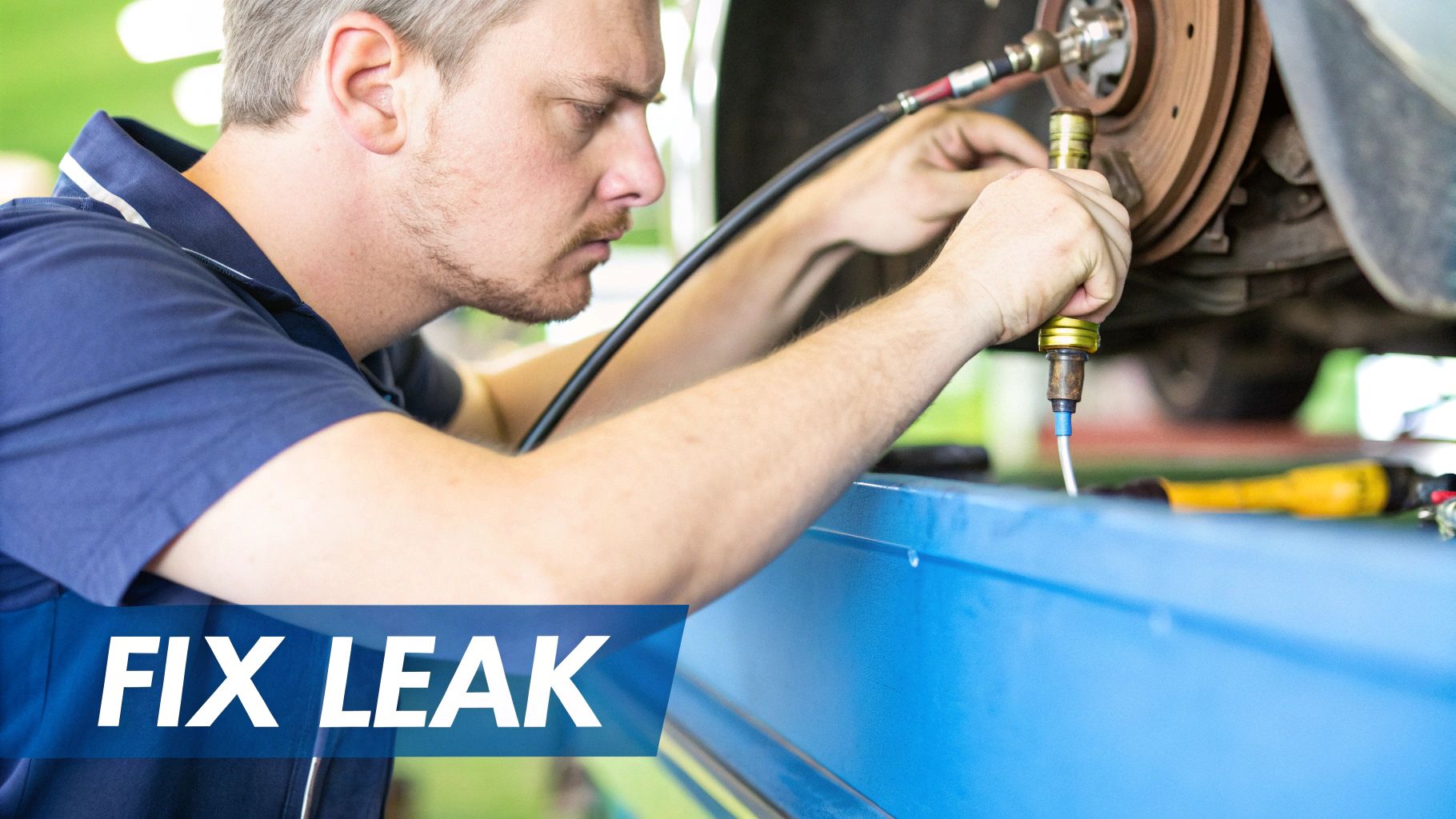
The first thing we do is a thorough diagnostic inspection. One of our ASE-certified technicians will get hands-on with your entire brake system, from the master cylinder right under the hood all the way to the calipers and wheel cylinders at each wheel. We trace every inch of the brake lines and hoses, searching for those classic tell-tale signs of a leak—damp spots, corrosion, or any obvious physical damage.
Pinpointing the Source of the Leak
Just finding a leak isn’t the whole story; we need to nail down exactly where it’s coming from. To do that, we perform a pressure test. This involves carefully applying pressure to the hydraulic lines, which makes it much easier to see where the fluid is managing to escape. It’s a methodical process that guarantees we’re fixing the root problem, not just patching up a symptom.
While we’re at it, we’ll also take a good look at the condition of your brake fluid itself. If it’s dark, murky, or looks contaminated, that’s another problem waiting to happen.
Expert Tip: Clean, high-quality brake fluid is absolutely critical for safe braking. Contaminated fluid boils at a lower temperature, which can give you that dreaded “spongy” pedal feel and seriously reduce your stopping power—a real risk in the Arizona heat.
Common Repair Solutions
Once we’ve located the source of the leak, we’ll explain exactly what we found and recommend the best way to fix it. Our priority is always a safe, durable repair using only top-quality parts that meet or exceed what the manufacturer recommends.
Some of the most common fixes for a brake fluid leak include:
- Replacing Corroded Brake Lines: We’ll swap out the damaged section of the line to make the system secure again.
- Installing New Brake Hoses: Old, brittle rubber hoses are a common failure point and are replaced to prevent future breaks.
- Overhauling a Faulty Caliper: This could mean replacing worn-out seals or, if the damage is bad enough, the entire caliper.
- Replacing a Leaking Master Cylinder: A bad master cylinder won’t build or hold pressure correctly, so it has to be replaced to restore proper function.
The sheer volume of brake fluid sold worldwide—hitting 92.7 million units in 2023—shows just how vital these systems are for vehicle safety. This growth highlights the auto industry’s ongoing focus on safety and the absolute necessity of proper maintenance.
Our team at Pete Nelson Automotive is committed to providing the best brake repair services you’ll find in Sun City, AZ. We don’t cut corners, because when it comes to your brakes, your safety is our number one job.
Frequently Asked Questions About Brake Fluid Leaks
We get it—car troubles are stressful, especially when they involve something as important as your brakes. To give you a clearer picture and a bit more confidence, here are some of the most common questions our customers in Sun City ask about brake fluid leaks and general brake care.
How much does it cost to fix a brake fluid leak in Sun City, AZ?
The cost to fix a brake fluid leak really depends on what’s causing it. A simple repair, like replacing a small, cracked brake hose, is relatively affordable. However, if the master cylinder has failed or multiple brake lines have rusted through, the job is more complex and the cost will be higher. The best first step is to bring your vehicle in for a professional diagnosis so we can give you a clear, honest estimate before any work begins.
Can I drive my car if I think it has a brake fluid leak?
We strongly advise against it. Driving with a suspected brake fluid leak is incredibly dangerous because your brakes rely on hydraulic pressure. If that fluid is escaping, you could lose your ability to stop suddenly and completely. For your safety and everyone else’s on the road, your best move is to get your vehicle towed to a professional shop for an immediate inspection.
How often should I get my brakes checked?
As a general rule of thumb, it’s wise to have your brake fluid level and overall brake system checked with every oil change. Most car manufacturers also recommend a full brake fluid flush and replacement every two to three years. This is because brake fluid absorbs moisture over time, which can cause internal corrosion and reduce braking performance—a risk you don’t want to take in Arizona’s heat.
Is it okay to just top off low brake fluid?
While adding a little brake fluid might seem like a quick fix, it’s really just a band-aid that can hide a serious safety issue. A low fluid level is almost always a sign of a bigger problem, like a leak or severely worn brake pads. Just topping it off can give you a false sense of security while the real issue gets worse. A certified technician needs to find the root cause to ensure your brakes are safe and reliable. Understanding common car problems every vehicle owner should know helps you see when a small symptom is pointing to something much bigger.
Your safety is our number one priority. If you’ve noticed any signs of a brake fluid leak or have other concerns about your brakes, don’t wait. The experienced, ASE-certified technicians at Pete Nelson Automotive are here to provide expert diagnostics and reliable auto repair in Sun City, AZ. We’re your neighbors, and we’re here to help keep you safe on the road.
Call 623-974-4723 or visit our location in Sun City to schedule your appointment today.
Pete Nelson Automotive
This Offer Will Expire 12-31-2026
Pete Nelson Automotive is pleased to offer you
"Get Ready for the Holidays"
A $215.00 Value for Only $159.95 (+tax)
Lube, Oil, & Filter Change, Up to 5 quarts of Engine oil
Inspect and top off all fluid levels, Includes up to 5 Quarts of 5w30 synthetic blend oil, additional charge for synthetic oil.
Travel Evaluation
Set Air Pressures and Tire Rotation if needed.
Battery, Alternator and Starter Electrical Test
Load test battery, Alternator output and Starting amps.
Full Brake Evaluation
Includes check brake system on four wheels, checking and testing brake fluid condition.
So Call 623-974-4723 today and make an appointment for this exclusive Special!
*Most Cars, Vans, Motor homes, 4×4’s, Diesels, and some foreign cars may be higher. You must bring this letter at time of service and allow 2 hours to complete.



