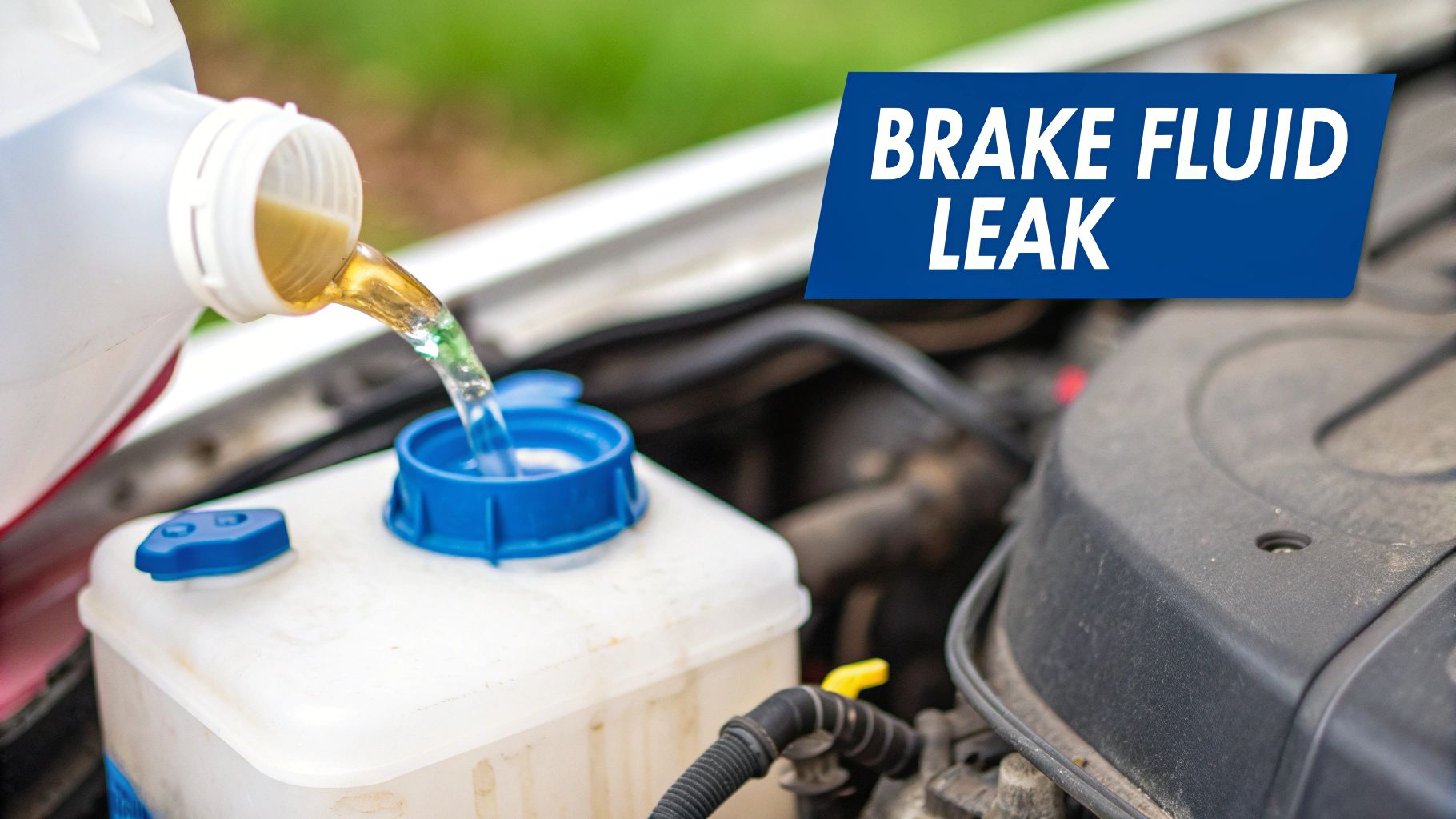
That dark, oily puddle on your driveway can be alarming. Is it just condensation from the AC, or something far more serious? For Sun City drivers, discovering a brake fluid leak is one of the most critical safety issues your vehicle can have. This slick, oily fluid is the lifeblood of your car’s hydraulic braking system, and a leak means your ability to stop is dangerously compromised.
If you spot a puddle of clear-to-brownish fluid under your car, your next step is crucial. For your safety and the safety of others on the road, do not drive it. It’s time to call for professional help right away.
That Puddle Under Your Car Could Be a Brake Fluid Leak
It’s a moment every Sun City driver dreads: you’re backing out of your driveway and notice a fresh, dark spot on the pavement. Your first thought might be an oil leak, but it’s critical to consider another, more urgent possibility—a brake fluid leak.
Knowing what you’re looking at is the first step toward staying safe. Unlike other fluids in your car, brake fluid has a few distinct characteristics that can help you identify it on sight.
How to Identify Leaking Brake Fluid
Your first clue is its appearance. Brand new brake fluid is usually clear with a slight yellowish tint. However, as it gets older and absorbs moisture from the air, it can turn a dark, murky brown.
The texture is another dead giveaway. It feels incredibly slippery and oily to the touch, almost like cooking oil but with a unique, sharp chemical smell that’s hard to mistake.
A leak in your brake system isn’t just a simple maintenance item; it’s a direct threat to your car’s stopping power. The immense hydraulic pressure needed to squeeze your brake pads against the rotors depends entirely on a sealed, full system.
One of the most common places to find a puddle is near one of your wheels. This could point to a leaky brake line, a cracked hose, or a failing caliper in that specific corner of the car. However, the leak could also come from the master cylinder, which is located under the hood near the driver’s side.
If you want to get a better idea of what old or contaminated fluid looks like inside the system, check out our guide on the five signs your car desperately needs a brake fluid change.
Quick Fluid Identification Guide
It can be tough to tell one fluid leak from another just by looking. Here’s a simple chart to help Sun City drivers figure out what might be dripping from their vehicle.
| Fluid Type | Color | Texture | Common Location |
|---|---|---|---|
| Brake Fluid | Clear/Yellow to Dark Brown | Very Oily & Slippery | Near Wheels, Under Hood |
| Engine Oil | Light Brown to Black | Oily | Under the Engine |
| Coolant | Green, Pink, or Orange | Slightly Slimy, Sweet Smell | Front of Car (Radiator Area) |
| Water | Clear | Watery | Under AC Unit (Normal in AZ!) |
This guide is a great starting point, but if you’re ever unsure, it’s always best to have a professional take a look. Recognizing these signs helps you understand just how urgent the situation is. Taking quick, decisive action by calling for professional auto repair in Sun City AZ is the only way to prevent a potential accident and keep yourself and others safe on the road.
How Your Brakes Depend on Hydraulic Power
To really get why a brake fluid leak is so dangerous, you first have to understand how your brakes actually work. It’s easy to picture them as a simple mechanical clamp, but your brake system is a powerful hydraulic machine. When you push the brake pedal, you aren’t physically stopping the car yourself—you’re giving a command to a sealed system of fluid that does all the heavy lifting.
Think of it like a hydraulic press. A small amount of force from your foot gets multiplied into an immense amount of power, strong enough to bring thousands of pounds of metal to a stop, even at high speed. This incredible multiplication of force is only possible because brake fluid can’t be compressed.
The Journey of Pressurized Fluid
Every time you step on the brake, you’re pushing a piston inside a component called the master cylinder. This simple action pressurizes the brake fluid, sending it shooting through a network of tough steel brake lines and flexible rubber hoses.
This high-pressure fluid travels to each wheel, where it forces pistons inside the brake calipers to move. Those caliper pistons then squeeze the brake pads against the spinning rotors, creating the friction that slows and stops your car. The entire process happens in an instant, but it completely depends on that sealed, pressurized system. For a deep dive into how these parts work together, our team offers expert brake services in Sun City.
The core principle of hydraulic brakes is simple but non-negotiable: the system must be a closed loop. Any leak, no matter how small, introduces a breach that allows this critical pressure to escape, severely weakening or eliminating your stopping power.
Even a minor drop in fluid can compromise the whole system. This concept map shows the direct relationship between fluid loss, a pressure drop, and the dangerous increase in how far your car travels before stopping.
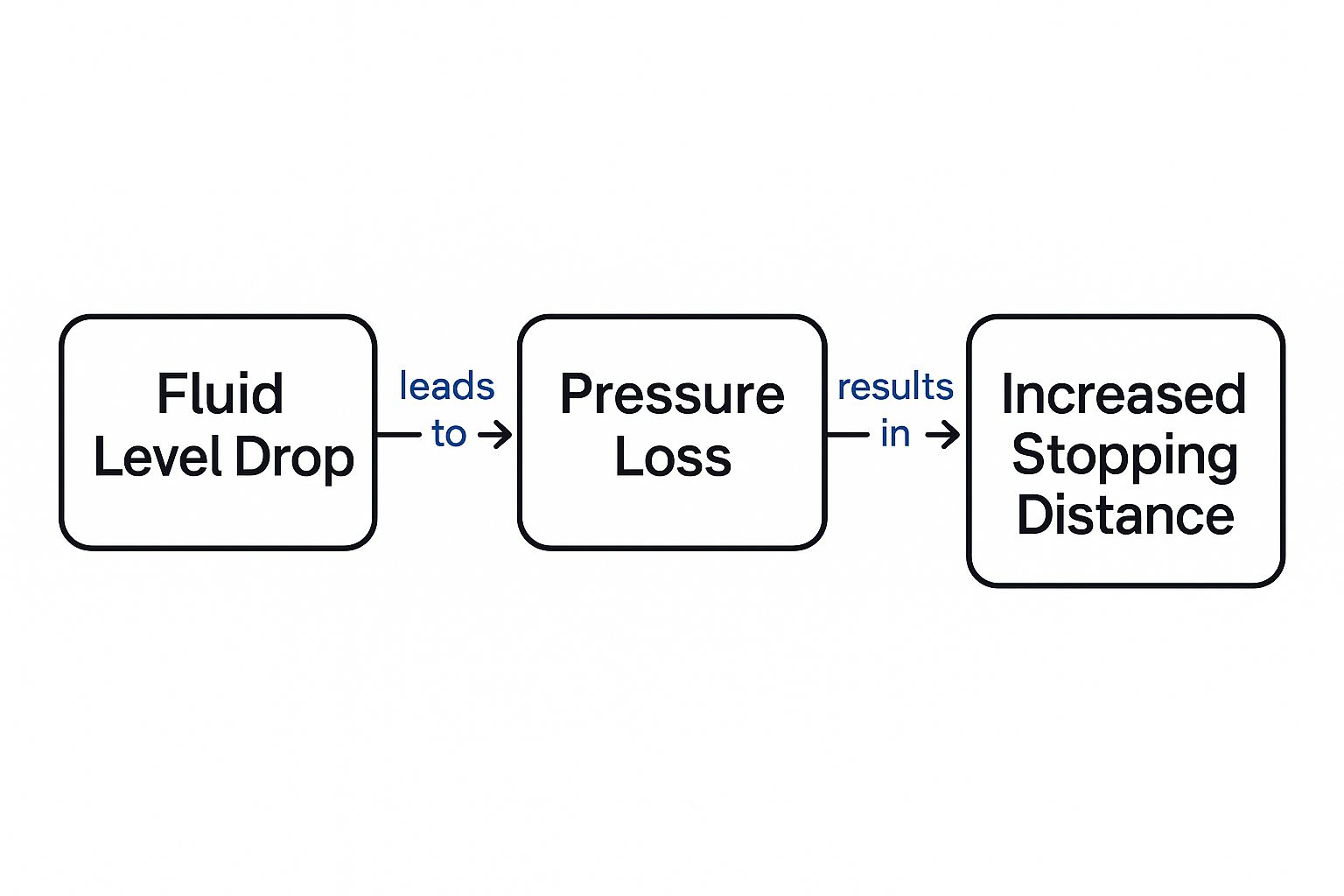
As the visual shows, these three factors are directly linked in a dangerous chain reaction. A fluid level drop immediately causes a loss in hydraulic pressure. That makes your brakes less effective and significantly increases the distance you need to stop safely on Sun City roads.
Common Causes of Brake Fluid Leaks
A brake fluid leak isn’t some random fluke. It’s almost always a clear sign that a key part of your braking system has worn out, and unfortunately, Arizona’s intense heat and dry climate can make that happen a lot faster. When you know what the usual suspects are, you start to see why routine inspections are so critical for staying safe on the road.
These leaks typically pop up at specific failure points within the hydraulic system. From flexible hoses that need to bend and move to the master cylinder that acts as the system’s heart, every component has a job to do—and a limited lifespan.
Aging and Damaged Brake Hoses
Think about the flexible rubber hoses that connect the solid brake lines to the brake calipers at each wheel. They have to endure constant vibration, movement, and incredible pressure every single time you hit the brakes. Over time, that takes a toll.
Here in Sun City, the combination of extreme heat and road debris is brutal on rubber. It can make the hoses brittle, leading to tiny cracks that eventually spring a leak. A good mechanic can often spot a hose that’s starting to swell or crack during a routine check, long before it fails completely.
Corroded Steel Brake Lines
The rigid metal lines carrying brake fluid along the length of your vehicle are tough, but they’re not indestructible. Exposure to moisture, road grime, and debris can eventually lead to rust and corrosion.
Once corrosion starts, it weakens the steel, creating thin spots that can burst under the immense pressure of your braking system. Even a pinhole leak in a brake line is a serious problem that will only get worse, fast.
Statistically, brake fluid leakage is a primary cause of brake failure, accounting for roughly 15-20% of all vehicle brake system malfunctions recorded worldwide. These leaks are most often traced back to high-wear components like brake lines, hoses, and master cylinders.
Failing Seals and Cylinders
Your brake system is a sealed, high-pressure environment, and it relies on a series of rubber seals to keep that powerful fluid contained. Two of the most common spots for these seals to fail are the calipers and the master cylinder.
- Brake Caliper Seals: The pistons inside your calipers have rubber seals that can degrade with heat and age, allowing fluid to seep out around your brake pads.
- Wheel Cylinder Leaks (Drum Brakes): If your vehicle has rear drum brakes, the wheel cylinders inside can develop leaks from their internal seals. You’ll often see fluid dripping on the inside of the wheel.
- Master Cylinder Failure: The master cylinder is the command center of your brake system. Its seals can wear out, causing fluid to leak either externally down the firewall or internally, which often just feels like a soft, spongy brake pedal.
While regular maintenance is your best line of defense, sometimes problems come from the factory. This is why it’s so important to stay informed about any widespread defects leading to auto safety recalls that could affect your vehicle.
Recognizing these potential failure points is key. If you’re noticing any performance issues, our guide on the top 5 most common brake problems and solutions can give you more insight. Pinpointing these causes really drives home the value of regular brake services Sun City, where our technicians can spot weak points before they become a dangerous failure on the road.
Critical Warning Signs of a Brake Problem
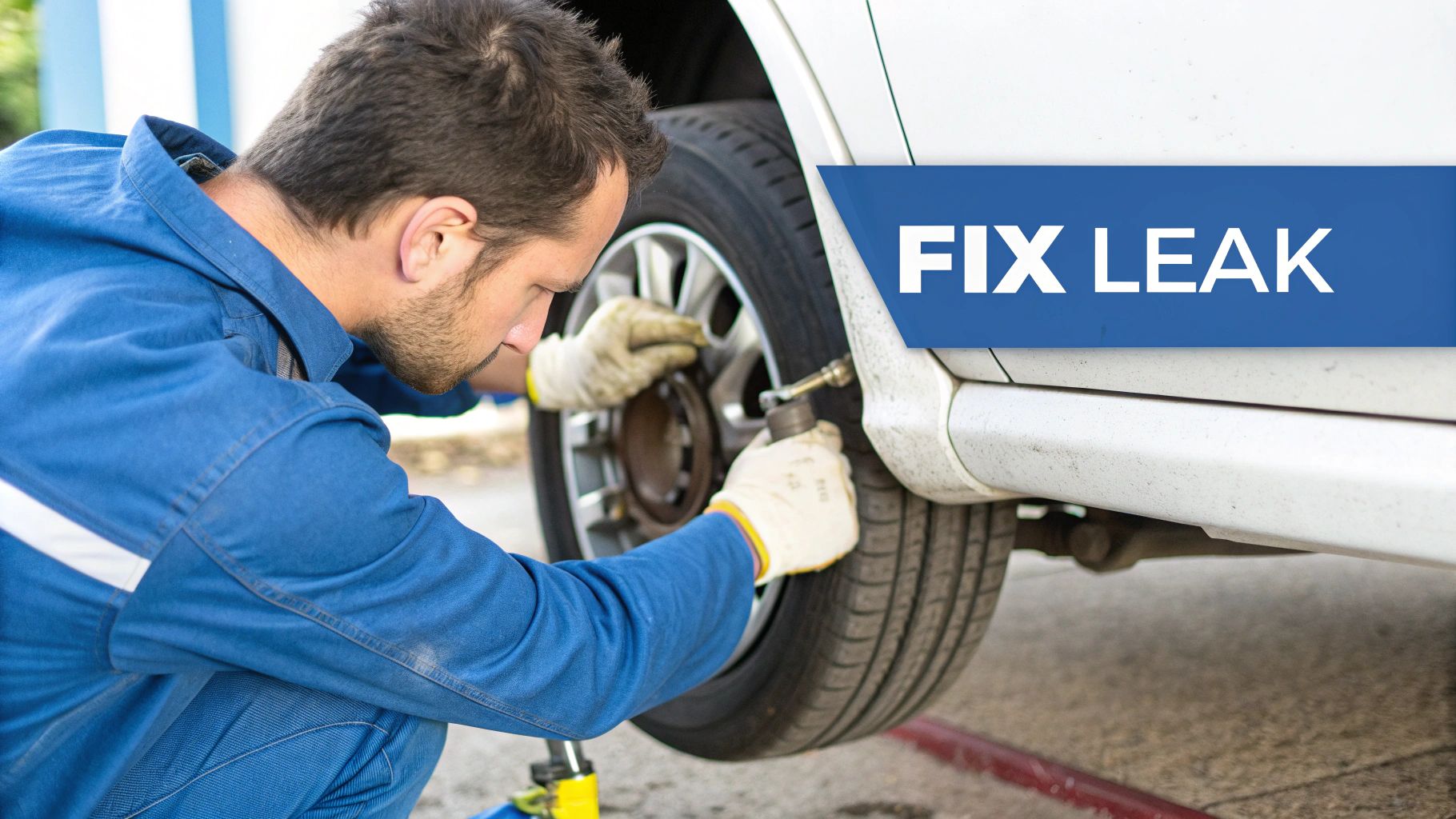
Long before you experience a total brake failure, your car will almost always send out clear distress signals. Learning to recognize these symptoms is one of the most important things any driver can do. It’s not just about finding a puddle on your garage floor; you need to pay close attention to what your car is telling you through touch, sight, and sound.
Ignoring these clues is a gamble you really can’t afford to take. A sudden change in how your brakes feel or a new light on your dashboard are urgent messages that demand immediate attention from a professional.
That Spongy or Soft Brake Pedal
One of the most classic signs of a brake fluid leak is a change in how the brake pedal feels under your foot. A healthy brake system gives you firm, consistent resistance every time. If your pedal suddenly feels soft, mushy, or slowly sinks toward the floorboard when you hold it down, that’s a major red flag.
This “spongy” feeling is a tell-tale sign that air has seeped into the brake lines, which happens when fluid leaks out. Unlike brake fluid, air compresses easily. This means the force from your foot is just squeezing air bubbles instead of actually stopping your car.
Your Dashboard Brake Warning Light
Modern cars are packed with monitoring systems, and the brake warning light is one of your most critical safety alerts. This light—usually a red circle with an exclamation point or the word “BRAKE”—can pop on for a few reasons, but low brake fluid is one of the most common.
A sensor inside the master cylinder reservoir detects when the fluid level dips below a safe point. When this light comes on, your car is essentially screaming that there’s a problem with the hydraulic system that needs to be diagnosed right away by a professional auto repair Sun City AZ shop.
A soft brake pedal combined with a dashboard warning light is a clear and present danger. This combination indicates a significant loss of hydraulic pressure and severely compromised stopping ability. Do not continue driving.
Other Important Sensory Clues
Your own eyes and ears are also powerful tools for spotting trouble early. Keep an eye out for these other signs that could point to a brewing brake issue:
- Visibly Low Fluid: Pop the hood and take a look at the brake fluid reservoir. If the fluid is way below the “MIN” line, it’s not just evaporating—it’s leaking out somewhere.
- Squealing or Grinding Noises: While these sounds are often linked to worn-out pads, they can also point to caliper problems that might be connected to a leak. You can find out more by reading about the top 7 signs you need new brake pads and rotors.
Understanding the seriousness of these warning signs is absolutely vital, as a brake problem that’s ignored can lead to a terrible accident. If something that unfortunate does happen, knowing when and how to file a car accident claim becomes extremely important for protecting your rights.
Your Immediate Action Plan for a Suspected Leak
That sinking feeling when you suspect brake fluid leaking is something no driver wants to experience. But knowing what to do in that moment can make all the difference. Your next few actions are absolutely critical for your safety and everyone else on the road. The first, and most important thing to do, is stop driving. Immediately.
Why You Can’t Just Add More Fluid
One of the most dangerous mistakes a driver can make is to simply top off the brake fluid and keep going. This gives you a false sense of security while completely ignoring the real problem. Your brake system is a sealed hydraulic loop—if the fluid is low, it’s because there’s a leak somewhere.
Adding more fluid is like pouring water into a bucket with a hole in it. It’s just going to leak right back out, potentially leaving you with no stopping power when you need it most.
Safety is the absolute priority. Driving with a compromised brake system is a risk no one should ever take. The potential for complete brake failure is high, and the consequences can be catastrophic.
A Safe Step-by-Step Protocol
If you think you have a leak, follow these steps to handle the situation safely.
- Pull Over and Park Safely: As soon as you can, get your vehicle to the side of the road, far from traffic. Turn off the engine. Don’t even think about trying to “limp” it home or to the nearest shop.
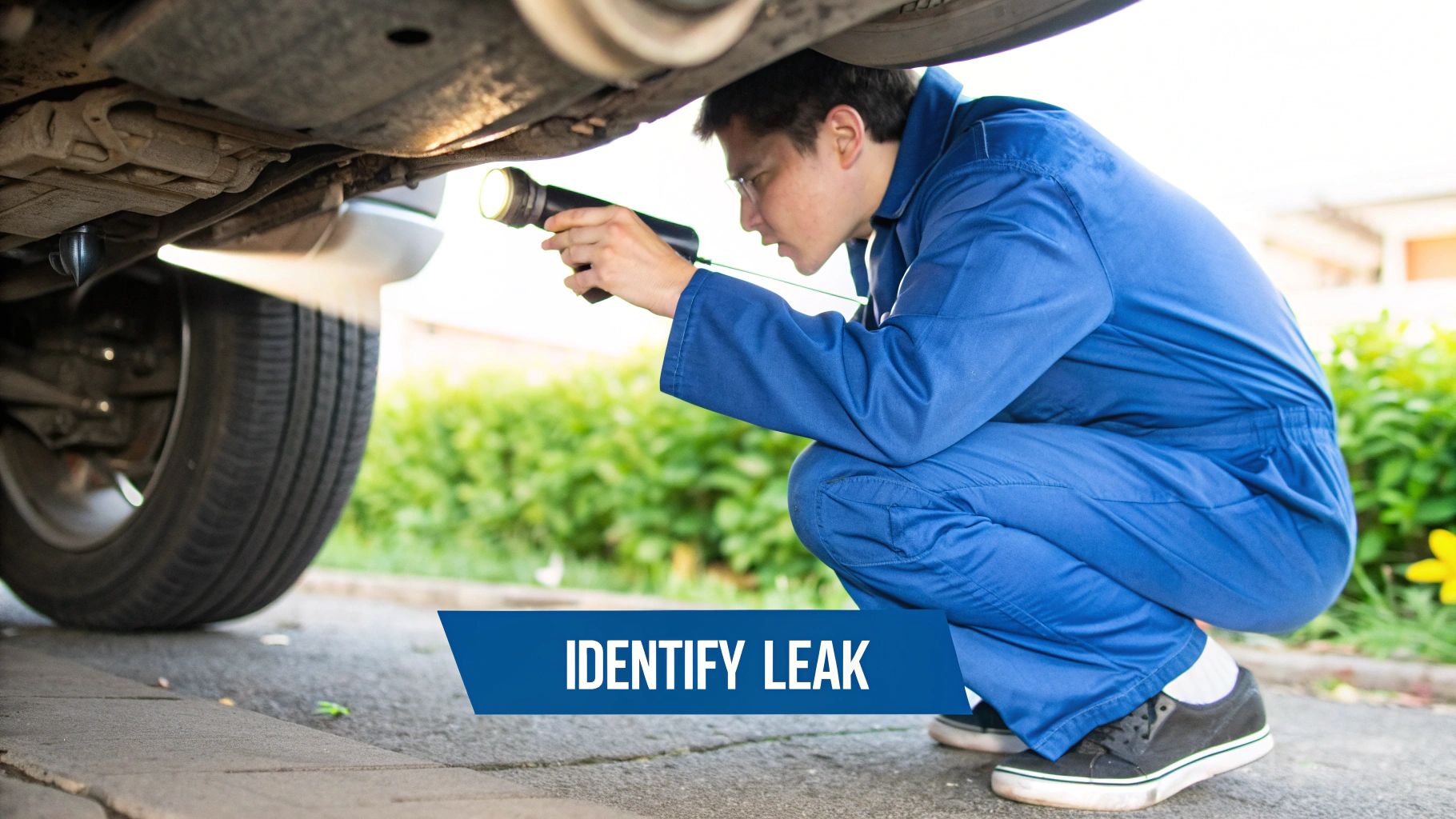
- Visually Inspect for Evidence: Without putting yourself in harm’s way, take a quick look under the car. Check around the wheels and under the hood near the driver’s side for any signs of a leak. You can also pop the hood and look at the brake fluid reservoir to see if the level has dropped below the “MIN” line.
- Do Not Drive the Vehicle: I can’t say this enough. Even if the brakes seem to be working here and there, they could give out completely without any warning. Your next move is to call for help.
- Call for a Tow: The only safe way to get your car to a mechanic is on the back of a tow truck. Contact a local towing company or your roadside assistance provider and have them take your vehicle to a trusted auto repair Sun City AZ shop.
Following these steps is non-negotiable. For a deeper dive into other critical vehicle issues, you can learn more about the signs that your vehicle needs immediate attention from an auto repair shop. Taking quick, decisive action ensures a certified technician can find and fix the leak properly, getting you back on the road safely.
The Professional Brake Fluid Leak Repair Process
Once your car is safely in the hands of a certified technician, the real detective work begins. Understanding what a professional repair looks like helps you appreciate why each step is so critical for your safety. It’s never about just plugging a hole; it’s about restoring the complete integrity of your car’s most important safety system.
The first step is always a meticulous diagnosis. Our technicians don’t just guess where the brake fluid leaking is coming from. We perform a comprehensive visual inspection of the entire system—from the master cylinder under the hood, along every inch of the brake lines, all the way to the calipers and wheel cylinders at each wheel.
Pinpointing the Exact Problem
After a thorough visual check, we often perform a pressure test. This involves pressurizing the brake system to simulate the force of you slamming on the brakes. This simple but effective test forces even the tiniest, most hidden pinhole leak to reveal itself. Getting this right is key to fixing the root cause, not just a symptom.
Common repairs we perform include:
- Replacing Worn Brake Hoses: Old, cracked rubber hoses get swapped out with new ones designed to handle intense pressure.
- Installing a New Caliper: If a caliper’s internal seals have failed, a full replacement is the safest and most reliable fix.
- Swapping a Faulty Master Cylinder: When the heart of the system gives out, we replace it to restore proper hydraulic command.
The Critical Step of Bleeding the Brakes
After we replace any component that holds fluid, the system absolutely must be “bled.” This isn’t some final touch-up; it’s a non-negotiable safety step. Bleeding the brakes means we systematically force fresh fluid through the lines to push out every last air bubble that snuck in during the repair.
Air in your brake lines is the enemy of stopping power. Since air compresses easily and fluid doesn’t, even a tiny amount can lead to that dreaded spongy pedal feel and a terrifying increase in your stopping distance. A proper brake bleed is what guarantees a firm, responsive pedal you can trust.
This methodical repair process highlights the value of expert brake services in Sun City. The global automotive brake fluid market, valued at around $1.82 billion USD, is growing, partly because issues like fluid degradation and leaks are so common. It really underscores just how important regular maintenance is. Research shows that routine fluid changes every 2-3 years are key to keeping the system reliable and preventing leaks in the first place. You can discover more insights about the brake fluid market and see why safety regulations drive these standards.
Frequently Asked Questions About Brake Fluid Leaks
How often should my brake fluid be checked?
It’s a great practice to have your brake fluid level and condition checked with every oil change. In Sun City, the extreme heat can wear down fluids and parts faster, so regular inspections are key to catching potential leaks or contamination early. This proactive step can save you from a much bigger problem down the road.
What does leaking brake fluid look like?
Fresh brake fluid is clear with a light yellow tint, but it darkens to a brown or black color as it ages and collects dirt. It has a distinctly oily and slippery texture, similar to cooking oil. If you see a puddle with these characteristics, especially near a wheel, it’s a strong sign of a brake fluid leak.
Is it safe to drive with a suspected brake fluid leak?
Absolutely not. Driving with a known or suspected brake fluid leak is extremely dangerous. A leak means your brake system is losing hydraulic pressure, which can lead to a sudden and complete failure of your brakes. The only safe move is to stop driving immediately and call for a tow to a trusted repair shop.
Can I just add more brake fluid if the level is low?
Topping off low brake fluid is a temporary fix that masks a serious safety hazard. Your brake system is a sealed loop; if fluid is low, it has leaked out. Simply adding more won’t fix the leak, and the new fluid will just escape, leaving you in the same dangerous situation. It’s crucial to have a professional find and repair the source of the leak.
Your Trusted Partner for Brake Safety in Sun City
A brake fluid leak is a serious issue that demands immediate, professional attention. If you’re worried about a potential leak or just want some peace of mind, don’t wait. The ASE-certified technicians at Pete Nelson Automotive are here to provide expert brake services and keep you safe on the road. We’ll diagnose the problem accurately and get you back behind the wheel with confidence.
Call 623-974-4723 or visit petenelsonautorepair.com to schedule your appointment today.
Pete Nelson Automotive
This Offer Will Expire 12-31-2026
Pete Nelson Automotive is pleased to offer you
"Get Ready for the Holidays"
A $215.00 Value for Only $159.95 (+tax)
Lube, Oil, & Filter Change, Up to 5 quarts of Engine oil
Inspect and top off all fluid levels, Includes up to 5 Quarts of 5w30 synthetic blend oil, additional charge for synthetic oil.
Travel Evaluation
Set Air Pressures and Tire Rotation if needed.
Battery, Alternator and Starter Electrical Test
Load test battery, Alternator output and Starting amps.
Full Brake Evaluation
Includes check brake system on four wheels, checking and testing brake fluid condition.
So Call 623-974-4723 today and make an appointment for this exclusive Special!
*Most Cars, Vans, Motor homes, 4×4’s, Diesels, and some foreign cars may be higher. You must bring this letter at time of service and allow 2 hours to complete.



