
Stuck in traffic on Grand Avenue, the last thing you want to see is that temperature gauge creeping into the red. In the intense Arizona heat, your vehicle’s cooling system is already working overtime. While the usual suspects for overheating are a bad radiator or low coolant, sometimes the real problem is hiding deep inside your dashboard. So, can a clogged heater core cause overheating?
Yes, a clogged heater core can absolutely make your engine overheat. It’s a surprising diagnosis for many drivers here in Sun City, AZ, who understandably think of the heater as a winter-only part. But the heater core is a critical, year-round player in your engine’s cooling system. A blockage can fool your car’s thermostat, preventing the main radiator from ever getting the signal to do its job.
How a Clogged Heater Core Can Make Your Engine Overheat
That little heater core, the component responsible for giving you warm air in the winter, is actually a small radiator that hot engine coolant flows through 365 days a year. This happens whether your heat is on or off. That constant circulation isn’t just for your comfort; it’s an essential part of the circuit that helps regulate your engine’s temperature.
How a Small Clog Creates a Big Problem
The trouble begins when the narrow tubes inside the heater core get choked with rust, scale, or gunk from old coolant. This clog creates a serious bottleneck, slowing down—or even stopping—the flow of hot coolant through that part of the system.
This is where the real problem kicks in:
- The thermostat gets left in the dark. Your engine’s thermostat is designed to open up when it senses hot coolant, allowing that fluid to flow to the main radiator to be cooled.
- The engine temperature keeps climbing. With the thermostat stuck closed, the coolant trapped inside the engine block just gets hotter and hotter, with no way to release that dangerous heat.
- A chain reaction begins. Your engine is overheating, but the thermostat has no idea because the hot coolant can’t reach it. This situation puts you at risk for severe and expensive engine damage, like a warped cylinder head or blown head gasket.
That blockage effectively blinds the thermostat to the engine’s true temperature. If you’re seeing your temp gauge spike unexpectedly, it’s vital to consider all the potential car overheating causes, not just the obvious ones.
Your vehicle’s heater core isn’t just for winter warmth; it’s an active and essential part of the cooling system all year long. Ignoring signs of a clog can lead directly to engine overheating, especially in our demanding Sun City climate.
Quick Guide to Heater Core and Overheating Symptoms
Trying to figure out what’s going on under the hood can be confusing. The table below breaks down some common symptoms you might experience and what they could point to.
| Symptom | What It Could Mean |
|---|---|
| No heat or lukewarm air from vents | This is the classic sign of a clogged heater core. Coolant isn’t flowing through it properly to generate heat for the cabin. |
| Sweet, syrupy smell inside the car | You might have a leaking heater core. The sweet smell is from coolant (antifreeze) seeping into your cabin. |
| Engine overheats, but radiator feels cool | This can happen when the thermostat isn’t opening, possibly because a clogged heater core is preventing hot coolant from reaching it. |
| Foggy windows that are hard to clear | A leaking heater core can release coolant vapor into the cabin, which then condenses on the inside of your windshield. |
| Gurgling sound from the dashboard | Air pockets trapped in the cooling system, often caused by a clog or leak in the heater core, can make this noise. |
If you’re noticing any of these issues, especially a combination of them, it’s a strong indicator that your heater core needs a professional inspection.
How Your Car’s Cooling System Really Works
To get your head around how a tiny part like the heater core can create such a massive headache, it helps to understand how all the pieces connect to keep your engine safe.
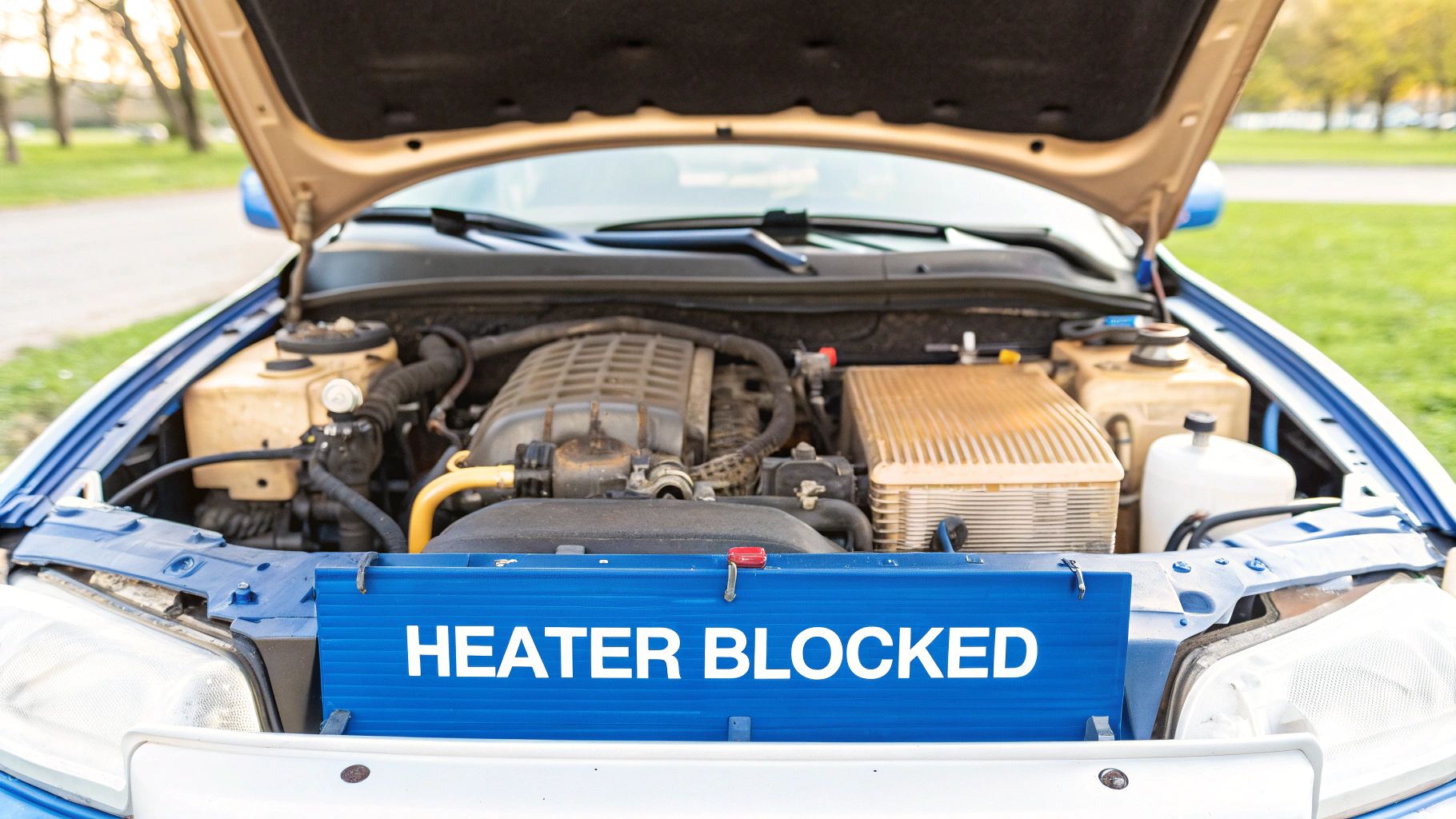
Your engine is basically a furnace, kicking out an incredible amount of heat as a natural part of making power. If that heat isn’t pulled away effectively, it doesn’t take long for catastrophic engine damage to occur.
The Key Players in Your Cooling System
The whole system depends on a few key components working together perfectly to keep those temperatures under control. Each part has a very specific job, and if one fails, it can throw the entire operation into chaos.
- Coolant (Antifreeze): This is the lifeblood of the operation. It’s a specialized fluid engineered to soak up heat from the engine block and carry it somewhere else.
- Water Pump: Think of this as the heart of the system. It’s constantly circulating the coolant, pushing it from the hot engine to the radiator and back again in a continuous loop.
- Thermostat: This is the system’s gatekeeper. It’s a simple valve that stays shut when the engine is cold to help it warm up faster. Once the coolant hits the right operating temperature, the thermostat opens and lets the fluid flow to the radiator.
- Radiator: This is the main heat exchanger, sitting right up at the front of your car. As hot coolant zig-zags through its thin fins, the air rushing past (helped by a fan) pulls the heat out, cooling the fluid down before it heads back to the engine to repeat the process.
Where the Heater Core Fits In
So, where does the heater core slot into this system? It’s basically a miniature radiator, but it’s tucked away deep inside your dashboard. Here’s the critical part: hot coolant constantly flows through it, whether your heater is on or off.
When you crank up the heat in your car, a blower fan pushes air across that hot little heater core, and that warm air gets sent into the cabin. But even when the heat is off, that coolant loop is still an active, vital part of the engine’s cooling circuit. This is a crucial detail, especially when considering how Arizona heat affects your vehicle.
The heater core isn’t some isolated part you only use in the winter. It is an integral, year-round piece of your engine’s cooling loop, and a blockage here directly sabotages the entire system’s ability to do its job.
This non-stop flow is exactly why a clog can cause so much trouble. By creating a bottleneck in the coolant’s path, it completely disrupts the delicate balance needed to keep your engine running at a safe temperature.
The Science: How a Clog Causes Overheating
So, let’s connect the dots. How exactly does a small clog in your heater core lead to your entire engine overheating? It’s a chain reaction that catches a lot of Sun City drivers by surprise, turning what seems like a minor problem into a major risk for your engine.
Inside your heater core, you’ll find a series of incredibly narrow tubes. Over time, these tiny passages are magnets for blockages from rust, sediment, and sludgy, broken-down coolant. When these little pathways get clogged up, they create a serious bottleneck that restricts the flow of coolant.
The Thermostat’s Critical Role
Think of your engine’s thermostat as a gatekeeper. It needs a steady stream of hot coolant flowing over it to know when the engine reaches its ideal running temperature. Once it senses that heat, it opens the gate, letting coolant flow to the main radiator to get cooled down.
But a clogged heater core basically starves the thermostat of that hot coolant. It gets tricked into thinking the engine is still cold, so it stays shut. All the while, the coolant trapped inside your engine block is getting hotter and hotter by the second.
This flow chart breaks down how a simple clog can quickly escalate into a dangerous situation.
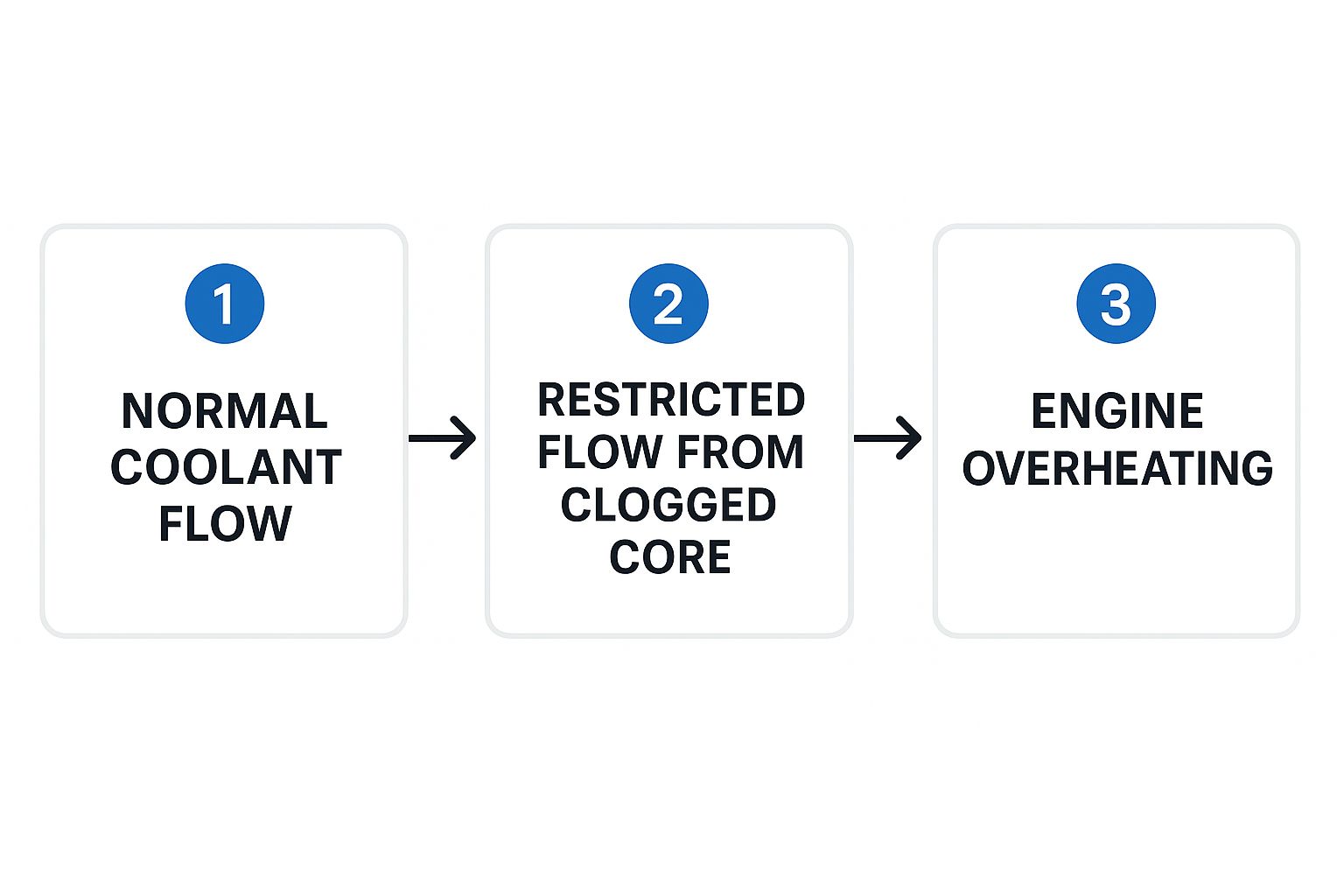
The blockage stops the cooling system from working as a complete circuit. It completely isolates the engine’s heat from the very parts designed to get rid of it. We’ve seen this exact issue puzzle vehicle owners who couldn’t figure out why their temperature gauges were spiking.
A clogged heater core doesn’t just kill your cabin heat; it actively fools your engine’s thermostat. It keeps the thermostat from opening, which triggers a rapid and dangerous spike in engine temperature.
In the end, this simple clog sets off a catastrophic chain of events. The engine overheats while the thermostat remains completely unaware—a problem our technicians see far too often. Understanding how these systems work together can also help you spot other common vehicle issues before they turn into expensive emergencies.
Five Telltale Signs of a Clogged Heater Core
Your car is pretty good at dropping hints when a small issue is about to turn into a big headache. Catching these warning signs early can save you from the stress and expense of a major engine repair. If you’re worried that a clogged heater core is the culprit behind your overheating troubles, here are five common signs you should look for.

- No Heat Coming From Your Vents: This one is the classic, textbook symptom. Your engine is fully warmed up, you crank the heat, and… nothing. The air blowing from your vents is cool, or lukewarm at best. This happens when hot coolant is blocked from flowing through the core.
- A Sweet Smell Inside the Car: Do you notice a sweet, almost syrupy smell? That’s the unmistakable scent of antifreeze. It’s a huge red flag that your heater core isn’t just clogged; it’s actively leaking coolant into your cabin air.
- Persistently Foggy Windows: If your windshield keeps fogging up with a greasy film that’s a pain to clear, you’re likely looking at another sign of a coolant leak. The coolant vapor makes its way through your defrost vents and condenses on the cold glass.
- Sudden Engine Temperature Spikes: As we’ve discussed, a blockage can make your temperature gauge climb much higher than normal, especially if you’re stuck in stop-and-go traffic around Sun City.
- Coolant Leak on the Passenger Floorboard: This is the most definitive sign. If you find a visible puddle of coolant—usually a vibrant green, pink, or orange—soaking into the carpet on your passenger-side floorboard, the heater core has failed and needs immediate attention.
If you’re experiencing any of these issues, it’s time for a professional inspection. The technicians at Pete Nelson Automotive in Sun City, AZ have the diagnostic tools and expertise to pinpoint the problem and provide honest advice on all your car service needs.
How to Prevent Costly Cooling System Repairs
The old saying is true: the best way to fix a problem is to keep it from happening in the first place. When it comes to your vehicle’s cooling system, being proactive isn’t just a good idea—it’s essential, especially with the kind of relentless heat we get here in Sun City, AZ.

So, what’s the number one culprit behind a clogged heater core? Old, neglected coolant. Over time, the special anti-corrosive additives in your coolant break down. When that happens, rust, scale, and other gunk start building up and circulating through the entire system, eventually creating a nasty sludge that chokes off those narrow passages.
The Power of a Professional Coolant Flush
A professional coolant flush is the single best thing you can do to prevent this mess. This service is way more than just draining out the old fluid. We use specialized equipment to power-flush harmful contaminants out of the system. Then, we refill it with fresh, high-quality coolant packed with the protective additives your engine needs. Think of it as a smart investment in your car’s long-term health. For a deeper dive, check out our guide on car maintenance tips every Arizona driver should know.
“An ounce of prevention is worth a pound of cure, especially under the hood. A routine coolant flush costs a fraction of what it takes to replace a heater core or repair an overheated engine.”
Why Regular Maintenance Matters
Heater cores are one of those parts that fail almost exclusively because of poor maintenance. Industry data confirms that skipping regular coolant flushes—typically recommended every 30,000 to 60,000 miles—dramatically increases the risk of a clog that can lead straight to overheating. Protecting your engine from a clog-related disaster starts with simple, consistent care.
Expert Solutions for a Clogged Heater Core
If you’re pretty sure a clogged heater core is making your engine run hot, let a professional mechanic take a look. Here at Pete Nelson Automotive, we’ve seen our fair share of cooling system problems for drivers all over Sun City. A proper diagnosis is the key to finding the right fix. There are generally three ways to tackle the problem.
- Flushing the Heater Core: The least invasive route is a professional flush. We use specialized equipment to push a cleaning solution through the core to break up minor clogs. If the blockage isn’t too stubborn, a good flush will get the coolant flowing freely again.
- Bypassing the Heater Core: Sometimes, a technician might suggest bypassing the heater core. This is usually a temporary solution to confirm the core is the culprit. A bypass reroutes coolant hoses to skip the heater core, which will stop the overheating but also means you won’t have cabin heat.
- Replacing the Heater Core: If the core is severely clogged or leaking, the only long-term solution is a full replacement. This is a big job, as the core is buried deep inside the dashboard. Though it’s more involved, a new heater core guarantees your cooling system and cabin heat will work properly for years. If you’re running into cooling system troubles, take a look at our current specials to see how we can help.
Frequently Asked Questions (FAQ)
How much does it cost to fix a clogged heater core?
The cost can vary significantly. A professional chemical flush is the most affordable option for minor clogs. However, if a full replacement is needed, the cost is much higher due to the intensive labor required to access the part behind the dashboard. An accurate diagnosis is the first step to getting an honest quote.
Can I keep driving with a clogged heater core?
We strongly advise against it. Continuing to drive with any cooling system blockage puts your engine at high risk of severe damage from overheating. This can lead to far more expensive repairs, like a warped cylinder head or blown head gasket, than fixing the heater core in the first place.
How often should I get my coolant flushed?
As a general rule, a coolant flush is recommended every 30,000 to 60,000 miles, but you should always check your vehicle’s owner’s manual. Here in Sun City, AZ, the extreme heat can put extra stress on your cooling system, so preventive maintenance is key to avoiding common car problems every vehicle owner should know.
Is it a bad heater core or a bad thermostat?
It can be tricky to tell, as both can cause overheating. A key sign of a bad heater core is a lack of cabin heat. If your heater works fine but the engine still overheats, the thermostat might be the issue. The best way to know for sure is to have a professional technician at an auto repair shop in Sun City, AZ perform a diagnostic check.
Don’t let a small cooling system issue turn into a major engine repair. At Pete Nelson Automotive, our ASE-certified technicians have the expertise to diagnose the problem correctly and get you back on the road safely.
Call 623-974-4723 or visit petenelsonautorepair.com to schedule your appointment today.
Pete Nelson Automotive
This Offer Will Expire 12-31-2026
Pete Nelson Automotive is pleased to offer you

"Get Ready for the Holidays"
A $215.00 Value for Only $159.95 (+tax)
Lube, Oil, & Filter Change, Up to 5 quarts of Engine oil
Inspect and top off all fluid levels, Includes up to 5 Quarts of 5w30 synthetic blend oil, additional charge for synthetic oil.
Travel Evaluation
Set Air Pressures and Tire Rotation if needed.
Battery, Alternator and Starter Electrical Test
Load test battery, Alternator output and Starting amps.
Full Brake Evaluation
Includes check brake system on four wheels, checking and testing brake fluid condition.
So Call 623-974-4723 today and make an appointment for this exclusive Special!
*Most Cars, Vans, Motor homes, 4×4’s, Diesels, and some foreign cars may be higher. You must bring this letter at time of service and allow 2 hours to complete.



