
You’re driving through Sun City, AZ, counting on your AC to keep you cool, but instead of a quiet breeze, you hear a strange squeal, rattle, or hum. That new sound is more than just an annoyance—it’s your car’s way of telling you that something in the air conditioning system needs attention. Ignoring it, especially during a scorching Arizona summer, can turn a small fix into a major, expensive repair.

The specific sound your car AC is making is a valuable clue. A high-pitched squeal often points to a different problem than a deep, metallic grinding noise. This guide will help you decode those sounds, understand the likely causes, and know when it’s time to seek professional auto repair in Sun City, AZ.
Decoding the Sounds: What Is Your Car’s AC Trying to Tell You?
Think of these noises as your car’s warning system. Just like a strange cough might send you to the doctor, a new noise from under the hood is a clear sign that a part is wearing out or has failed. The trick is to listen closely to the type of sound and when it happens. Does it start the moment you turn on the AC, or is it constant? Does the pitch change when you accelerate? Answering these questions can help narrow down the suspects.
Why Acting Fast Matters in Arizona
Here in Sun City, a working air conditioner is a necessity, not a luxury. When a critical part like the AC compressor fails, it doesn’t just stop producing cold air. It can seize up, shredding the serpentine belt that also runs your alternator and power steering. Suddenly, a simple AC problem becomes a roadside breakdown. Addressing the noise right away can often mean a simpler, more affordable fix.
Here’s a quick guide to common car AC noises and what they usually mean.
Quick Guide to Common Car AC Noises
| Noise Type | What It Sounds Like | Potential Cause |
|---|---|---|
| High-Pitched Squeal | A sharp, piercing sound, often when the AC is first turned on. | Worn or loose serpentine belt or a failing belt tensioner. |
| Rattling or Grinding | A deep, metallic rattle or grinding that may get louder with RPMs. | Failing AC compressor clutch or internal compressor failure. |
| Humming or Buzzing | A steady hum from the dashboard vents that changes with fan speed. | Debris in the blower motor fan or a worn-out blower motor. |
| Clicking | A rapid, repetitive clicking sound from the engine bay. | The compressor clutch engaging and disengaging, possibly due to low refrigerant. |
Paying attention to these sounds is the first step in keeping your AC running smoothly. You can learn more about how to pinpoint the issue in our guide on the 5 ways to diagnose common car A/C problems. If you hear any of them, it’s a good idea to get it checked out by a trusted mechanic before a small noise turns into a big headache.
Identifying Common AC Sounds and Their Sources
Every sound your car’s AC makes tells a story about its health. Listening closely is the first step toward diagnosing the issue. While some noises are minor annoyances, others are your car’s way of signaling a major failure is on the horizon.
A sharp, high-pitched squeal the moment you turn on the AC is one of the most frequent complaints we hear at our Sun City shop. This sound is a classic sign of a problem with the serpentine belt or its tensioner. This single belt drives several components, and when it gets old, brittle, or loose, it slips on the pulleys and protests loudly.
Grinding and Rattling Noises Under the Hood
If you hear a deep, metallic grinding or a rattling from the engine bay that gets worse when you accelerate, your AC compressor is the likely culprit. The compressor is the heart of your AC system. When its internal bearings or components fail, they produce a distinct, unpleasant metallic noise that’s hard to ignore.
This infographic connects the dots between common AC noises and their usual causes.
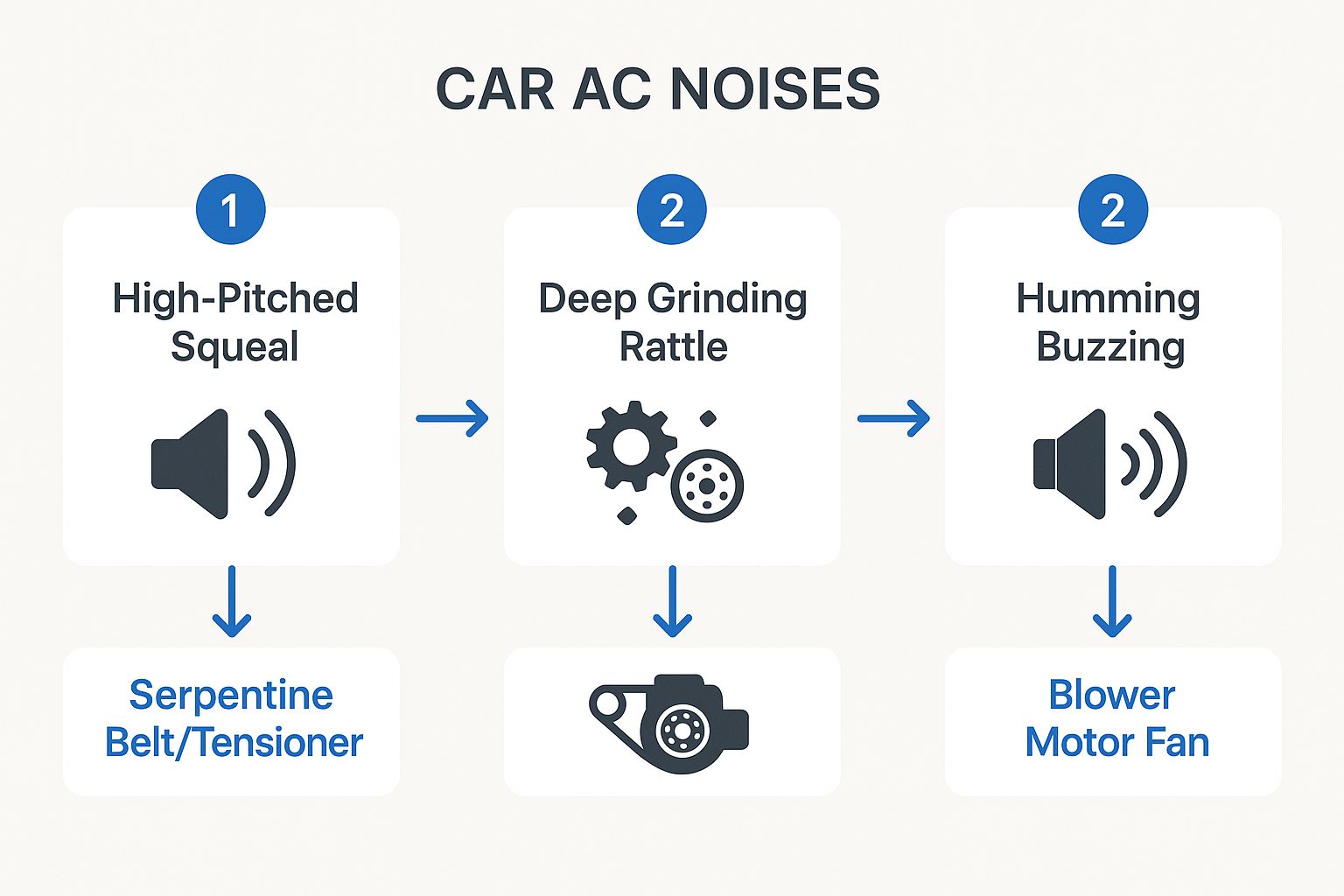
As you can see, a specific sound often points directly to a particular part, which helps a qualified technician quickly diagnose the problem. The AC compressor is a critical component, and many noise issues trace back to worn-out parts or insufficient lubrication.
Clicking, Humming, and Buzzing Sounds
What about a constant clicking sound? A single click when you turn the AC on is normal—that’s the compressor clutch engaging. However, if you hear rapid, non-stop clicking, it often indicates the system is low on refrigerant. Safety switches are cycling the compressor on and off to prevent it from running dry and burning out.
A humming or buzzing sound that seems to come from inside the cabin usually points to the blower motor fan. This is the fan that pushes cold air through your vents. Over time, leaves and debris can get lodged in the fan cage, throwing it off balance and causing a hum. In other cases, the motor’s bearings are simply worn out. For more hands-on advice, check out our articles on car AC troubleshooting.
A Closer Look at the AC Compressor and Clutch
If the noise from your car’s air conditioner is a deep grind or a loud rattle, it’s time to focus on the AC compressor. This component is the heart of your cooling system, and its health is crucial, especially under the intense Arizona sun. The most alarming (and often most expensive) sounds usually trace back to an issue with the compressor.
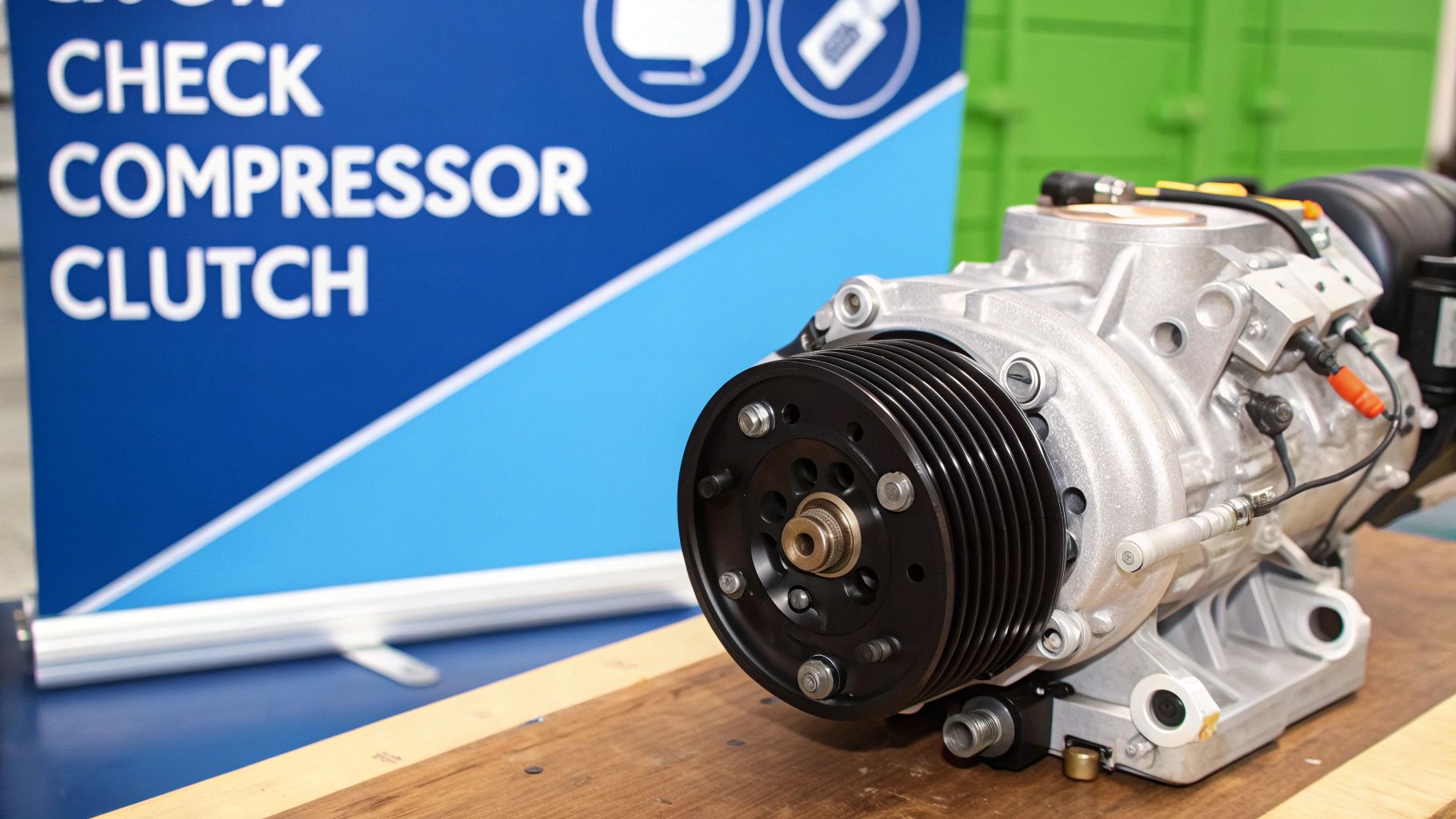
The compressor’s clutch is also a common source of noise. A failing clutch can create its own distinct sounds, from a loud bang upon engagement to a constant rattle even when the AC is off. This is often caused by a worn-out bearing inside the clutch pulley.
What to Look and Listen For
A quick visual check can sometimes reveal the problem. With the engine off, pop the hood and look for oily residue around the compressor body or its hose connections. This is a tell-tale sign of a refrigerant leak, which means the compressor is also losing the oil it needs for lubrication.
A catastrophic compressor failure is the worst-case scenario. It can send metal shavings throughout the entire AC system, contaminating other components. This requires a complete system flush and replacing multiple parts, turning a single failure into a massive repair bill.
Common Causes of Compressor Failure
At our Sun City auto repair shop, we see compressors fail for a few key reasons. Understanding these can help you catch problems early.
- Lack of Lubrication: This is the most common cause. When refrigerant levels are low due to a leak, oil isn’t circulating properly. This causes internal parts to grind against each other.
- Internal Wear and Tear: Like any mechanical part, the pistons and valves inside a compressor eventually wear out after years of service.
- Electrical Issues: The compressor clutch is controlled by your car’s electrical system. A problem elsewhere can affect its operation. We explore this in our article about how electrical system issues can affect your car’s air conditioning.
The bottom line is simple: address any compressor-related noises as soon as you hear them. It’s the best way to prevent a small problem from becoming a system-wide disaster.
Checking the Serpentine Belt and Blower Motor
Before assuming the worst, it’s important to rule out simpler—and less expensive—causes for a noisy car air conditioner. Two of the most common culprits are the serpentine belt and the blower motor.
The serpentine belt is a long rubber belt that powers many of your engine’s accessories, including the alternator, power steering pump, and the A/C compressor. When this belt wears out, it often produces a high-pitched squeal, especially when you start the car or turn on the A/C.
Inspecting Your Serpentine Belt
You don’t need to be a mechanic to give your serpentine belt a quick visual inspection. With the engine off, look for these signs of trouble:
- Cracks and Fraying: Small cracks along the ribbed side of the belt or frayed edges mean it’s time for a replacement.
- Glazed or Shiny Surface: A glossy sheen indicates the rubber has hardened. A hard belt can’t grip the pulleys properly, leading to slipping and noise.
- Contamination: Oil or coolant on the belt will cause it to slip and squeal and indicates another leak that needs to be addressed.
A good belt can also squeal if the belt tensioner is failing. This spring-loaded pulley keeps the belt tight, and if the spring weakens, the belt will slip. Keeping up with your vehicle’s air conditioning maintenance schedule can help catch these issues early.
Diagnosing the Blower Motor
If the noise is a humming or whirring sound coming from behind your dashboard, the blower motor is the likely culprit. This fan pushes cool air through your vents. The tell-tale sign of a failing blower motor is a noise that changes with the fan speed. If the humming gets louder as you turn the fan from low to high, you’ve likely found the problem. Often, this is caused by leaves or debris stuck in the fan cage, but it can also mean the motor itself is worn out.
The good news? Replacing a serpentine belt or blower motor is far more affordable than a full compressor replacement. Checking these two components first could save you a major headache.
When to Get Professional Auto AC Repair in Sun City
While some car maintenance is DIY-friendly, your vehicle’s A/C system is best left to the professionals. It’s a complex, high-pressure system, and a car air conditioner making noise often hints at a problem that requires specialized tools and expertise.
If you’ve checked for simple issues like debris in the blower motor and the noise persists, it’s time to call a professional. The refrigerant in your A/C system is a controlled substance that requires an EPA 609 certification to handle. It’s unsafe for you and illegal to release into the atmosphere.
The Risks of DIY A/C Fixes
DIY A/C recharge kits can be tempting, but they pose a significant risk. It is very easy to overcharge the system with these kits, which creates dangerously high pressure. This can cause catastrophic damage to the compressor, turning a manageable repair into an expensive replacement.
An overcharged A/C system is a ticking time bomb. The excessive pressure puts a huge strain on every component, and the compressor is often the first to fail.
Why Professional Diagnostics Matter
At Pete Nelson Automotive, our ASE-certified technicians in Sun City use advanced diagnostic tools to find the exact source of any AC noise. We don’t guess—we test. This allows us to determine if the issue is:
- Internal compressor failure
- A blockage in the system
- An electrical fault
Once we pinpoint the root cause, we can safely recover the old refrigerant, perform the necessary repairs, and recharge your system to precise factory specifications. This professional approach ensures your A/C runs quietly and efficiently. When you hear grinding or rattling, a professional diagnosis is the safest and fastest route back to a cool, quiet drive. If you’re looking for expert Services, our team is ready to help.
Frequently Asked Questions (FAQ) About Noisy Car AC Systems
How much does it cost to fix a noisy car air conditioner?
The cost to fix a noisy car air conditioner in Sun City, AZ, varies widely depending on the cause. A simple serpentine belt replacement might cost between $100-$200, whereas a full AC compressor replacement can range from $800 to over $1,500, including labor and a system recharge. An accurate estimate requires a professional diagnosis to identify the specific failed component.
Is it safe to drive if my car AC is making a loud noise?
It depends on the noise. If you hear a light squeal, you can likely drive to the repair shop, but don’t delay, as a broken serpentine belt can disable your car. If you hear a loud grinding or rattling noise, turn the AC off immediately and have your vehicle inspected as soon as possible to prevent further damage to the compressor and other system components.
Why does my car AC only make noise when I turn it on?
A noise that only occurs when you turn on the AC often points to a component that engages with the system, such as the AC compressor clutch. It could also be a worn serpentine belt that slips under the added load of the compressor. This initial sound is a clear warning sign that a part is beginning to fail.
Can low refrigerant cause my car AC to make noise?
Yes, low refrigerant can cause noise. The refrigerant carries lubricating oil throughout the AC system, and when levels are low, the compressor can be starved of oil, leading to a grinding or whining sound. You may also hear a rapid clicking as the compressor clutch cycles on and off due to low pressure.
Don’t let a noisy A/C ruin your comfort on the road. The ASE-certified team at Pete Nelson Automotive has the expertise to diagnose these issues quickly and accurately, getting your car back to blowing cold, quiet air. Check out our latest Specials for savings on your next visit.
Call 623-974-4723 or visit petenelsonautorepair.com to schedule your appointment today.
Pete Nelson Automotive
This Offer Will Expire 12-31-2026
Pete Nelson Automotive is pleased to offer you

"Get Ready for the Holidays"
A $215.00 Value for Only $159.95 (+tax)
Lube, Oil, & Filter Change, Up to 5 quarts of Engine oil
Inspect and top off all fluid levels, Includes up to 5 Quarts of 5w30 synthetic blend oil, additional charge for synthetic oil.
Travel Evaluation
Set Air Pressures and Tire Rotation if needed.
Battery, Alternator and Starter Electrical Test
Load test battery, Alternator output and Starting amps.
Full Brake Evaluation
Includes check brake system on four wheels, checking and testing brake fluid condition.
So Call 623-974-4723 today and make an appointment for this exclusive Special!
*Most Cars, Vans, Motor homes, 4×4’s, Diesels, and some foreign cars may be higher. You must bring this letter at time of service and allow 2 hours to complete.



