Is there a worse feeling than getting into your car on a scorching Arizona afternoon, cranking the AC, and getting hit with a blast of warm air? Here in Sun City, a working air conditioner isn’t a luxury—it’s a lifeline for getting through our brutal summers. When your car’s AC stops working, it’s more than just frustrating; it’s a clear sign that something in the system needs attention.
The most common culprit when your car air conditioning is not working is a refrigerant leak, which prevents the system from cooling the air properly. Other usual suspects include a failed AC compressor, a clogged condenser, or a pesky electrical fault. While you can do some basic checks, these problems often need a professional eye to diagnose correctly. Understanding the basics can help you know what to look for and when it’s time to call in the experts.
Why Your AC is Your Best Friend in Sun City
Let’s be honest, nothing beats that cool relief when you first start your car after it’s been baking in the sun. But when that relief is replaced by more hot air, it’s a clear sign your AC system has a problem.
The Core Components of Your AC System
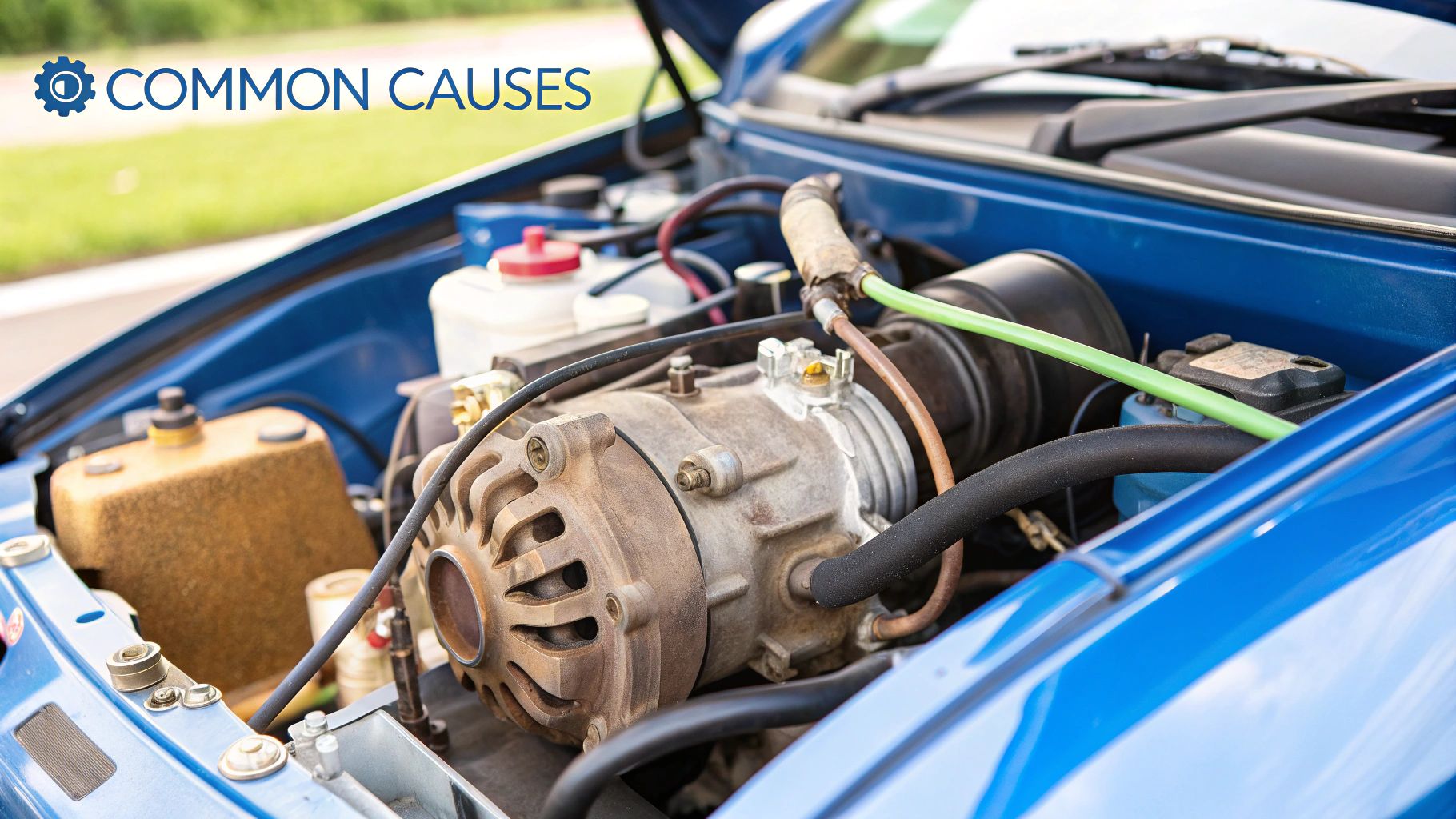
Your car’s AC is a closed-loop system with a few star players, all working together to pull heat out of your cabin.
- The Compressor: You can think of this as the heart of the whole operation. It’s driven by the engine’s serpentine belt and its job is to pump refrigerant through the lines, creating the pressure that kicks off the cooling cycle.
- The Condenser: Usually sitting right up front near the radiator, the condenser’s task is to cool down the hot, high-pressure refrigerant. This process turns it from a gas back into a liquid, getting it ready for the next stage.
- Refrigerant: This is the lifeblood of the system. It’s a special chemical that absorbs heat from inside your car and carries it outside. If your refrigerant level is low, your AC just won’t have the juice to cool things down.
These components are so critical that the global market for automotive HVAC systems is expected to hit USD 71.1 billion by 2033. That number tells you just how much we all depend on staying comfortable on the road. It also shows why failures in parts like compressors and condensers keep shops like ours busy. You can learn more about the automotive HVAC market’s growth and its trends.
When even one of these parts goes down, the entire system can grind to a halt. Our goal is to help you figure out what might be going on, what you can safely check on your own, and when it’s time to call in the pros for auto repair in Sun City AZ.
Simple Checks You Can Do Before Calling a Mechanic
Before you pick up the phone, there are a handful of simple diagnostic checks you can safely do right in your own driveway. Think of it as playing detective with your car. The clues you gather can be incredibly valuable, helping you have a much more productive conversation with your technician when you bring your vehicle in for our expert diagnostic services.
When a car’s air conditioning starts acting up, the problem often makes itself known with more than just warm air. The first tool you should use is your ears.
With the car running, crank the AC up to its highest setting and just listen.

- Do you hear a high-pitched squeal? This is a classic sign of a worn-out serpentine belt that’s struggling to turn the AC compressor.
- Do you hear a deep, grinding sound? This could point to a more serious internal problem with the compressor itself.
A Quick Look Under the Hood
Next, let’s pop the hood for a quick visual inspection. Make sure the engine is off and cool first. Your goal is to find the AC compressor—it’s a small pump driven by the main serpentine belt.
Now, have a friend safely start the car and turn on the AC while you watch from a safe distance. Pay close attention to the clutch on the compressor’s pulley. You should hear a solid “click” as the clutch engages, and then you’ll see the center part of that pulley start spinning. If it just sits there, or if it clicks on and off every few seconds, that’s a huge clue.
Expert Tip: An AC compressor clutch that won’t engage is usually a symptom, not the root of the problem. The car’s computer is smart enough to keep it from turning on if it detects low refrigerant pressure (from a leak) or an electrical fault, preventing even more damage.
Check Your Airflow and Look for Clues
Sometimes, the issue isn’t that the AC isn’t making cold air, but that the cold air can’t get to you. Weak airflow is a common complaint. A severely clogged cabin air filter will choke off the air trying to get to your vents. Checking and replacing this filter is often an easy DIY job.
Finally, look for the tell-tale signs of a refrigerant leak. The refrigerant contains a special oil to keep the compressor lubricated. When refrigerant escapes, some of that oil often comes with it. Get a flashlight and inspect the AC system’s metal lines and connections for:
- Oily, greasy residue: Pay close attention to the fittings where different hoses connect.
- Dirt and grime buildup: That sticky, escaped oil is a magnet for dust and road grime.
Finding any of these clues helps us zero in on the problem much faster when you visit our shop for auto repair in Sun City AZ.
The Truth About Refrigerant Leaks and Recharge Kits
When your car’s air conditioning starts blowing warm in the middle of a Sun City summer, low refrigerant is almost always the culprit. But here’s the thing: your AC is a sealed system. If the refrigerant is low, it means it’s leaking out somewhere. Simply dumping more in without finding and fixing the leak is like putting a Band-Aid on a wound that needs stitches.
Leaks are sneaky problems. Over time, rubber hoses can get brittle and crack, tiny O-ring seals can fail, or a rock from the road can even puncture the condenser.
The Problem With DIY Recharge Kits
It’s tempting to grab a DIY recharge can from the auto parts store for a quick, cheap fix. But I’ve seen firsthand how these kits can cause more harm than good, often leading to a much more expensive repair.
The biggest issue is that these kits don’t solve the real problem—the leak. Worse yet, it’s incredibly easy to overcharge the system. Too much refrigerant creates insane pressure, which can destroy your AC compressor. That turns a small, manageable repair into a very costly replacement.
Expert Insight: An overcharged AC system works much harder than it’s designed to. This strain can lead to catastrophic compressor failure, one of the most expensive components to replace in the entire system.
Why a Professional Service is a Smarter Choice
While a DIY kit is a gamble, a professional AC service is a smart investment. At Pete Nelson Automotive, we use specialized equipment to find the exact source of the leak, fix it properly, and then charge the system with the precise amount of refrigerant your vehicle’s manufacturer specifies.
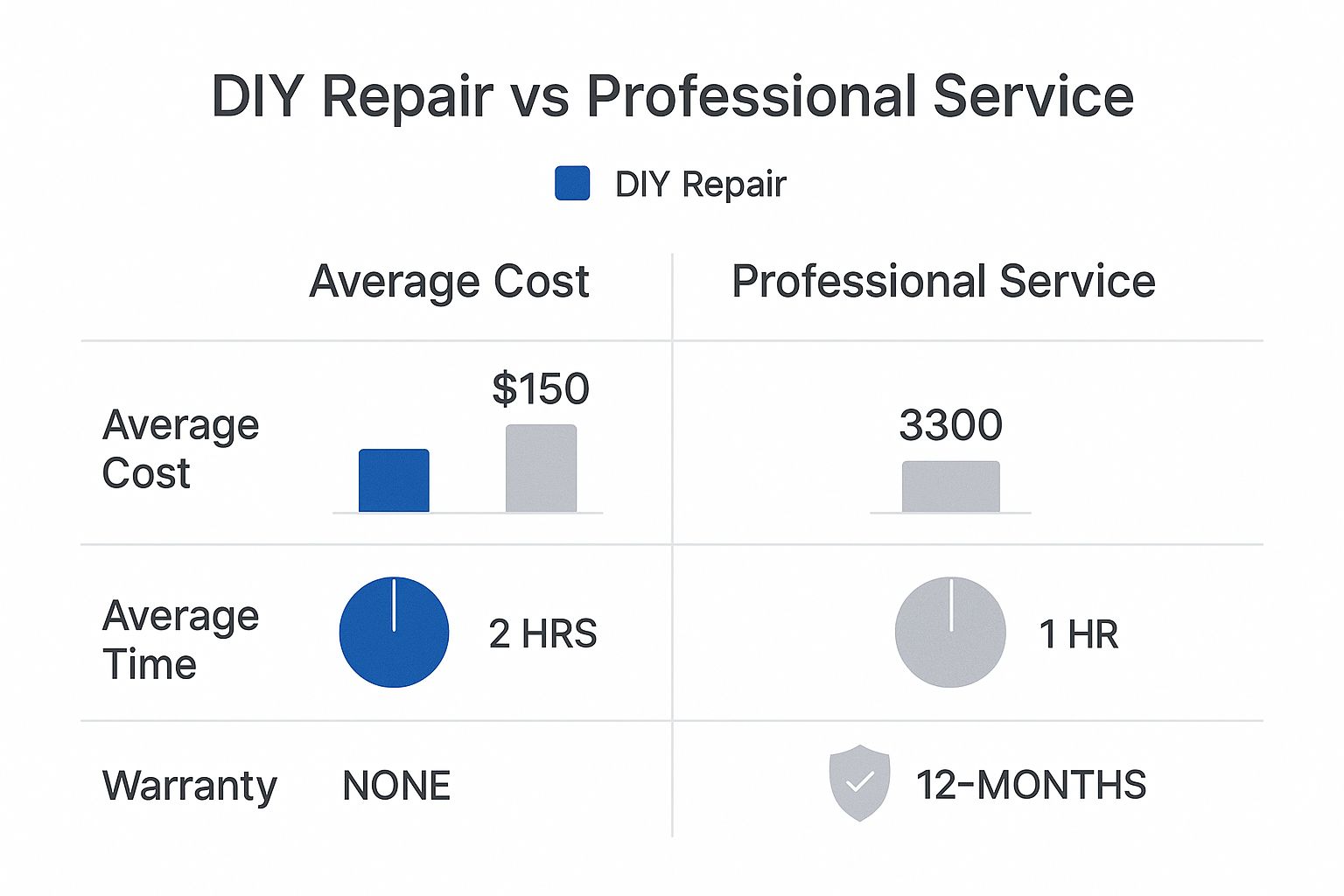
DIY Recharge Kits vs Professional AC Service
| Feature | DIY Recharge Kit | Professional Service (Pete Nelson Automotive) |
|---|---|---|
| Leak Detection | None. Does not find or fix the root cause. | Uses specialized dye and electronic sniffers to pinpoint the exact source of the leak. |
| Fixing the Problem | Temporarily adds refrigerant, which will just leak out again. | Repairs the leak permanently by replacing faulty seals, hoses, or components. |
| Accuracy of Charge | Inaccurate gauge leads to a high risk of overcharging or undercharging the system. | Precisely measures and charges the system to the exact manufacturer specifications. |
| Potential Risks | High risk of causing catastrophic compressor failure from overcharging. | Minimal risk. Performed by trained technicians who understand the system. |
| Cost | Low initial cost, but can lead to very expensive repairs later. | Higher initial cost, but provides a long-term solution and prevents costly damage. |
| Warranty | None. If something breaks, you’re on your own. | Work and parts are backed by a warranty for peace of mind. |
Ultimately, the choice comes down to a temporary patch versus a permanent solution. For a reliable, long-term fix, professional service is the way to go.
Diagnosing Deeper Electrical and Mechanical Problems
So, you’ve checked for leaks and everything seems fine, but your car’s AC is still just blowing hot air. This is where we dig deeper into the more complex electrical and mechanical heart of the system. A simple blown fuse is one of the first things any good mechanic will check.
Common Culprits Beyond Refrigerant
Here are some of the usual suspects we investigate when a refrigerant leak isn’t the issue:
- Blown Fuse or Bad Relay: The AC system is protected by fuses and relays. If one fails, it cuts power to the compressor clutch, and nothing happens.
- Faulty Pressure Switch: These safety switches shut the compressor down if they sense pressure is too low or too high. A faulty switch can send a false alarm.
- Failing Compressor or Clutch: The compressor clutch can wear out, or the compressor itself can fail internally. Loud grinding or squealing is a major red flag.
Interpreting the Symptoms
How your AC fails can give us big clues. For example, a common complaint we see in our Sun City shop is, “My AC cools fine on the highway, but gets warm at a stoplight.” This almost always points to a problem with the condenser fan. That fan’s job is to pull air across the condenser, and if it’s broken, the refrigerant gets too hot in traffic, and your cool air vanishes.
Why Professional Diagnosis Matters
Guessing which part has failed can be an expensive game. You don’t want to replace a perfectly good compressor only to find out the real problem was a $10 relay. Our technicians use specialized diagnostic tools to test each component, pinpointing the exact failure so you’re not paying for unnecessary parts and labor.
Proactive Maintenance to Avoid AC Failure
The best repair is always the one you never have to make. When it comes to your car’s air conditioning, a little proactive care goes a long way, especially here in Sun City where your AC works overtime for months.
Keep the System Lubricated Year-Round
One of the easiest maintenance tips is to run your AC system, even when it’s cold outside. We tell our customers to run the air conditioner on full blast for at least ten minutes once a month, no matter the season. Doing this circulates the refrigerant and the special oil mixed in with it. This oil is vital for lubricating the compressor and keeping the system’s seals from drying out and cracking—a primary cause of leaks.
Expert Tip: Think of it like starting a car that’s been sitting for a while. You want to keep all the internal parts moving and lubricated to prevent them from failing prematurely. The same principle applies to your AC.
Don’t Forget the Simple Things
A couple of other key tasks are crucial for preventing unnecessary strain on your system.
- Replace Your Cabin Air Filter: A clogged filter chokes the system, forcing the blower motor to work harder. Replacing it annually improves airflow and the quality of the air you breathe.
- Keep the Condenser Clean: The condenser sits at the front of your car and gets plastered with bugs and debris. Gently rinsing it with a garden hose helps it dissipate heat more effectively, reducing the workload on the compressor.
Before summer hits, scheduling a professional AC performance check is a smart move. A technician can inspect belts, verify refrigerant pressure, and make sure everything is ready for the intense Arizona heat. For more tips, check out our guide on how to prepare your car for the Arizona summer heat. This proactive approach helps catch small issues before your car air conditioning is not working on a 110-degree day.
Frequently Asked Questions about Car AC Problems
Why is my car AC blowing warm air?
The most common reason for a car’s AC blowing warm air is a refrigerant leak. Since the AC is a sealed system, low refrigerant means it has escaped. Other causes can include a failed compressor, a clogged condenser, or an electrical issue preventing the system from turning on. A professional diagnosis is the best way to find the exact cause.
How much does car AC repair cost in Sun City?
The cost of car AC repair varies widely based on the problem. A simple fix, like repairing a small leak and recharging the system, could be a few hundred dollars. However, replacing a major component like the compressor can cost over a thousand dollars. We always provide a clear, upfront estimate for any auto repair in Sun City AZ before starting work.
Are DIY AC recharge kits a good idea?
We generally advise against using DIY recharge kits. While they seem like a cheap fix, they don’t solve the underlying leak, and it’s very easy to overcharge the system. Overcharging creates excessive pressure that can destroy your compressor, leading to a much more expensive repair. A professional service ensures the leak is fixed and the system is charged to precise specifications.
What causes a musty smell from my AC vents?
That mildew smell is typically caused by mold and bacteria growing on the evaporator core behind your dashboard. This area is naturally dark and damp, creating a perfect environment for buildup. Replacing your cabin air filter can help, but a persistent smell may require a professional cleaning service to disinfect the system.
Don’t let a broken AC ruin your summer drive. When your comfort and safety are on the line, trust the experts at Pete Nelson Automotive to get to the root of the problem and have you driving cool again in no time.
Call 623-974-4723 or visit petenelsonautorepair.com to schedule your appointment today.
Pete Nelson Automotive
This Offer Will Expire 12-31-2026
Pete Nelson Automotive is pleased to offer you
"Get Ready for the Holidays"
A $215.00 Value for Only $159.95 (+tax)
Lube, Oil, & Filter Change, Up to 5 quarts of Engine oil
Inspect and top off all fluid levels, Includes up to 5 Quarts of 5w30 synthetic blend oil, additional charge for synthetic oil.
Travel Evaluation
Set Air Pressures and Tire Rotation if needed.
Battery, Alternator and Starter Electrical Test
Load test battery, Alternator output and Starting amps.
Full Brake Evaluation
Includes check brake system on four wheels, checking and testing brake fluid condition.
So Call 623-974-4723 today and make an appointment for this exclusive Special!
*Most Cars, Vans, Motor homes, 4×4’s, Diesels, and some foreign cars may be higher. You must bring this letter at time of service and allow 2 hours to complete.



