
Is there anything more frustrating than turning the key and hearing that dreaded click-click-click? Here in Sun City, where the heat is relentless, a car that won’t start can ruin your whole day. When your car battery is not holding a charge, it’s a clear sign that something in your electrical system needs attention. It could be an aging battery cooked by the Arizona sun, a failing alternator, or even a sneaky electrical drain you can’t see. Let’s walk through how to figure out what’s going on and what you can do about it.
The Telltale Signs of a Dying Car Battery
That slow, groaning sound when you try to start your car is a sound no driver in Sun City wants to hear. It’s a classic signal of a weak battery, and it always seems to happen at the worst possible time. When your car battery won’t hold a charge, it’s your vehicle’s way of telling you that something in the electrical system needs immediate attention.
Getting to the “why” behind the problem is the first step toward finding a real solution. Here in Arizona, the intense climate significantly shortens a battery’s life, often cutting it down to just 2-3 years, while folks in cooler regions might get 4-5 years. That relentless heat just accelerates the chemical reactions inside, causing it to wear out much faster.
Common Symptoms to Watch For
Long before you get the dreaded click, your car usually gives you some subtle warnings that its power source is getting weak. Paying attention to these clues can help you tackle the issue before you’re left stranded.
You might notice things like:
- A Slow Engine Crank: When you turn the key, the engine sounds sluggish and labored instead of turning over with a crisp, quick sound.
- Dimming Lights: Your headlights and interior lights might look dimmer than usual, especially right after you start the car.
- Electrical Gremlins: The radio might cut out, power windows could move slower, or you might see random warning lights flicker on the dash.
- Visible Corrosion: A white, blue, or greenish powder builds up on the metal battery terminals, which can mess with the electrical connection.
Recognizing these symptoms is key. To help you spot a failing battery early, we’ve put together a more detailed guide on the signs your battery is about to fail. Learning these signals will give you the confidence to make an initial assessment of what’s going on with your vehicle.
Getting to the Bottom of Most Battery Problems
Before you jump to conclusions and start pricing out a major repair, let’s look at the usual suspects when a car battery just won’t hold a charge. More often than not, the real cause is a lot simpler than you’d think. It could be anything from a simple mistake to the brutal reality of our Sun City, AZ, climate. Let’s pop the hood and see what’s really going on.
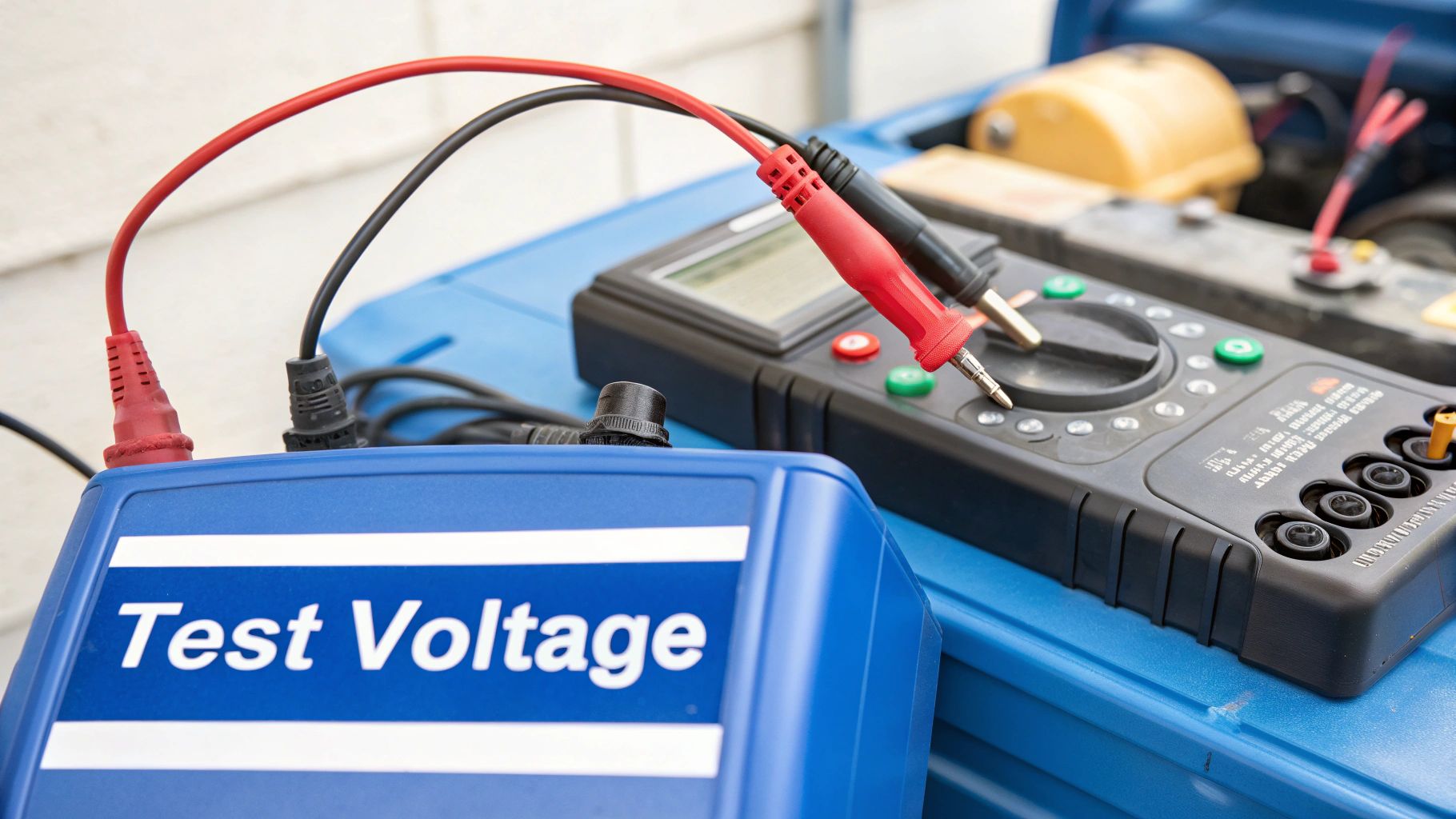
A lot of battery headaches are actually pretty straightforward. Knowing what to look for can save you a ton of time and stress, and it helps you have a more informed conversation with your technician at our Sun City auto repair shop.
Parasitic Drains and Simple Human Error
We’ve all been there: you get home after a long day and forget to turn off the headlights, the dome light, or the radio. This creates what we call a parasitic drain, which means an electrical component is still pulling power even after the engine is off. A single slip-up might just drain a healthy battery once, but if it keeps happening, you might have a bigger problem on your hands.
Sometimes, though, the drain isn’t your fault at all. A sneaky glove box light that refuses to turn off, a faulty alarm system, or even an aftermarket stereo or dash cam that wasn’t installed quite right can quietly suck the life out of your battery overnight. This is one of the most common reasons a perfectly good battery seems to go dead for no apparent reason.
When the Alternator Isn’t Pulling Its Weight
Your battery’s main gig is to get the car started. Once the engine is running, the alternator is supposed to take over. It powers all your car’s electrical systems and, most importantly, recharges the battery as you drive. If that alternator starts to fail, it won’t produce enough juice to keep the battery topped off.
Expert Tip: A classic sign of a struggling alternator is when your headlights get brighter as you rev the engine but dim back down when you’re idling at a stoplight. It’s a dead giveaway that the alternator isn’t generating enough power at low RPMs.
A bad alternator means your battery will never hold a charge, no matter how new it is. In fact, driving will actually drain it further instead of recharging it. When you suspect this is the problem, it’s time for professional diagnostics to confirm it and keep other electrical parts from getting damaged. To get a better handle on these complex systems, take a look at our page on electrical system repair.
Physical Problems and Old Age
Finally, the problem might be staring you right in the face—on the battery itself. Here are a few physical culprits to look out for:
- Corroded Terminals: See that fuzzy, white or greenish stuff building up on the battery posts? That corrosion can act as an insulator, blocking the flow of electricity.
- Loose Connections: If the battery cables aren’t clamped down good and tight, the connection might be too weak to either start the car or let the alternator do its recharging job properly.
- Just Plain Old: Here in Arizona, the brutal heat cooks car batteries. Their lifespan is typically just 2-3 years. The intense heat breaks down the internal components until the battery just can’t hold a full charge anymore.
Diagnosing Your Electrical System Issues
When your car refuses to start, the first thought is usually a dead battery. But what if the real problem is the alternator? Getting this diagnosis right from the start is crucial. One issue might just need a simple jump start and a new battery, but the other could signal a failing alternator that’s about to leave you stranded and potentially damage your car’s entire electrical system.
The good news is, you don’t have to be a master mechanic to figure out what’s going on. A few simple checks can point you in the right direction, saving you time, money, and a lot of frustration.
Performing a Simple Voltage Test
The most straightforward way to get some answers is with a multimeter. You can grab one from any auto parts store, and it’s a fantastic tool for diagnosing electrical gremlins. It measures voltage, which tells you a ton about the health of both your battery and alternator.
Here’s a quick rundown of what the numbers are telling you:
- Engine Off: A healthy, fully charged car battery should give you a reading of 12.6 volts or a little higher. If it’s sitting around 12.2 volts, your battery is only at about a 50% charge. Anything below 12 volts means it’s pretty much dead and will struggle to crank the engine.
- Engine Running: Now, start the car. With the engine running, the multimeter reading should jump up to between 13.7 and 14.7 volts. That higher number is what you want to see—it means the alternator is working correctly, pushing a charge back into the battery.
If the voltage reading doesn’t change—or worse, it drops—when the car is running, your alternator is almost certainly the culprit. But if the battery shows low voltage with the car off and then jumps into that healthy 13.7-14.7 volt range once the engine is on, it’s a clear sign your alternator is fine, but the battery itself just can’t hold a charge.
Visual Checks You Can Do Yourself
Sometimes, you can spot the problem just by popping the hood. Take a look at the alternator belt—it’s that long rubber belt snaking around several pulleys at the front of your engine. It needs to be tight and in good shape to do its job.
If you see that the belt is frayed, has cracks all over it, or feels loose, it can’t spin the alternator pulley effectively. And if the alternator isn’t spinning right, it can’t generate power to charge the battery.
This simple decision tree can help you figure out your next move.
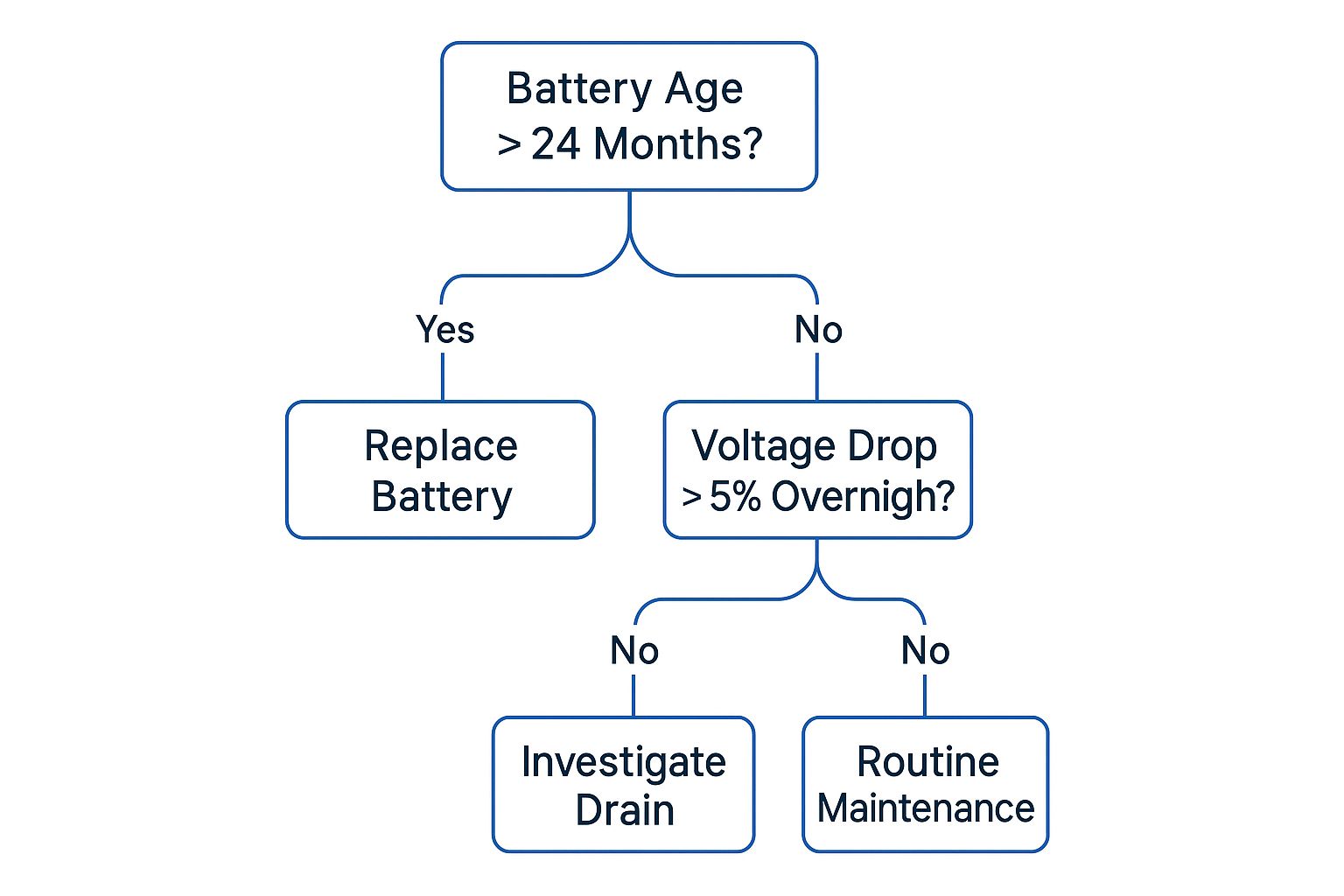
As you can see, key factors like the battery’s age and whether it loses its charge overnight are big clues that help you decide between replacing the battery or hunting for a parasitic drain.
Bad Battery vs Failing Alternator Common Symptoms
Often, the symptoms alone can tell you what you need to know. The way your car acts up can be a dead giveaway for which part is failing, as the warning signs are usually quite different.
To make it easier, here’s a quick reference guide to help you distinguish between the two common culprits.
| Symptom | Likely Cause Bad Battery | Likely Cause Failing Alternator |
|---|---|---|
| Slow, struggling engine crank | YES | NO |
| Car is dead, no lights or power | YES | RARELY |
| Jump start works, but car dies again later | YES | POSSIBLY |
| Headlights dim while driving | NO | YES |
| Whining or grinding noise from engine | NO | YES |
| Battery or “ALT” warning light is on | POSSIBLY | YES |
| Smell of burning rubber or hot wires | NO | YES |
This table should help you narrow down the possibilities based on what you’re experiencing with your vehicle.
Expert Insight: A slow, sluggish crank when you turn the key almost always points to the battery. On the other hand, if your car starts up just fine but your headlights get dim while you’re driving, or you hear a distinct whining sound coming from the engine bay, that’s a classic sign of a failing alternator.
Of course, if you’ve run through these checks and you’re still not sure, or if you’re just not comfortable poking around under the hood, it’s always smart to get a professional opinion. Our team is great at tracking down these kinds of electrical issues. You can learn more about our approach to electrical system repair and how we pinpoint the exact cause to get you back on the road safely.
Proactive Tips for Extending Your Battery Life
Once your car is running reliably again, the goal is to keep it that way. Proactive maintenance is your best defense against future battery problems, especially when a battery not holding charge can leave you stranded in that intense Arizona heat. Adopting a few simple habits can seriously boost your battery’s lifespan and your car’s overall reliability.
Think of your battery like any other part of your car—it needs a little TLC to perform its best. The extreme temperatures here in Sun City, AZ, speed up the chemical breakdown inside, but you can fight back with smart care.
Your Simple Battery Maintenance Checklist
Regular checks are the cornerstone of a healthy electrical system. You don’t have to be a seasoned mechanic to do a quick visual inspection, which can catch problems long before you’re stuck needing a jump start.
Here’s what to look for every few months:
- Keep Terminals Clean: Pop the hood and check for any white or greenish, crusty buildup on the battery terminals. That corrosion acts like an insulator, blocking the electrical current. Cleaning it off with a wire brush and a simple paste of baking soda and water can restore a solid connection.
- Ensure a Secure Fit: Gently try to wiggle the battery. If it moves, the hold-down clamp is too loose. Engine vibrations can wreck a battery’s internal components, so making sure it’s securely mounted is a quick but crucial fix.
- Check Fluid Levels (If Applicable): While most modern batteries are sealed and “maintenance-free,” some older types have removable caps. If yours does, pop them off periodically to check that the electrolyte fluid covers the lead plates inside. If not, top it off with distilled water.
Expert Insight: A loose battery is one of the most overlooked causes of premature failure. Constant jostling and vibration can cause internal plates to crack or short out, leading to a battery that suddenly can’t hold a charge.
Driving Habits That Make a Difference
Believe it or not, how you drive has a major impact on your battery’s health. Your alternator needs enough time to fully replenish the power it took to start the engine in the first place. Frequent short trips—like those quick runs to the grocery store—are especially tough on batteries. The engine just doesn’t run long enough for the alternator to top it off, slowly draining its reserve capacity over time.
Try to take your car for a longer drive of at least 20-30 minutes at least once a week. This gives the alternator plenty of time to work its magic and give the battery a complete, healthy recharge. For more ways to protect your vehicle’s power source, check out our top 10 tips for keeping your car battery in prime condition.
Finding Elusive Parasitic Drains and Short Circuits
So, your battery and alternator check out just fine, but your car is still dead every morning. What gives? Chances are, you’re dealing with a parasitic drain, one of the most frustrating electrical gremlins a car owner can face. This is when one of your car’s components secretly keeps drawing power long after you’ve locked up for the night. It’s a silent thief, slowly draining your battery while you sleep, leaving you stranded when you need to get going. The battery itself isn’t the problem—it’s that something is stealing its charge.
Hunting Down Electrical Gremlins
Tracking down these elusive power draws can be maddening. They don’t always leave obvious clues, and the drain can be so small it takes hours to completely deplete the battery. At Pete Nelson Automotive, our technicians hunt down these power draws using specialized tools like a multimeter set to measure amperage. By connecting it between the battery cable and the battery post, we can see exactly how much current is leaving the battery when everything should be off.
Once we confirm a parasitic drain, the real detective work begins. We methodically pull one fuse at a time, watching the ammeter for a drop in the current draw. When the reading suddenly falls back to normal, we’ve found the circuit where the culprit is hiding.
Common Culprits Behind Parasitic Drains
While any electrical component can theoretically cause a drain, some offenders are way more common than others. After years of providing auto repair in Sun City AZ, we’ve seen a few repeat troublemakers.
These often include:
- Stuck Relays: A relay that fails to open can keep a module or component powered up indefinitely.
- Faulty Control Modules: Modern cars have dozens of computer modules that can fail to go into “sleep mode.”
- Interior Lights: The classic example is a glove box or trunk light switch that breaks, leaving the light on permanently.
- Aftermarket Accessories: Improperly wired stereos, alarms, or dash cams are frequent sources of power drains.
When to Call in the Professionals
While knowing the process is helpful, diagnosing a parasitic drain yourself can be a real headache without the right tools and experience. It often requires deep knowledge of your vehicle’s specific wiring diagrams. Our climate already puts a ton of stress on your car, and tracking down electrical issues just adds another layer of complexity. If you want to learn more, check out our guide on how Arizona heat affects your vehicle.
If your battery keeps dying and you’ve ruled out the obvious, let our ASE-certified technicians handle the electrical mystery. We have the diagnostic equipment to pinpoint the problem efficiently and get you back on the road with confidence.
When DIY Isn’t Enough, We’re Here to Help
Getting your hands dirty and figuring out your car is a great feeling, but some electrical gremlins are just too stubborn for a driveway diagnosis. If you’ve worked through the basics and that battery still won’t hold a charge, it’s probably time to bring in a pro. Tricky issues like parasitic drains or recurring electrical faults are notoriously hard to pin down without advanced diagnostic tools. That’s where we come in.
A Deeper Look Than Just the Battery
A professional system check goes way beyond a simple voltage test you might do at home. We dig into the entire starting and charging system—the alternator, starter, wiring, and all the related modules. This lets us find those hidden problems that are often the real root of the issue, ensuring we fix it right the first time.
Living in Arizona adds another layer of complexity. The heat can be brutal on batteries. For more on that, check out our guide on prolonging car battery life in Sun City heat. We’ve built our reputation on being the honest, reliable auto repair shop for the Sun City, AZ community. Our job isn’t just to fix your car today; it’s to be the team you trust to keep it running safely for years to come.
Don’t let a frustrating electrical problem leave you stranded. Our ASE-certified technicians are here to give you the peace of mind you deserve.
Frequently Asked Questions (FAQ)
How long should a car battery last in Arizona?
That intense Arizona heat is a battery killer. While you might see a battery last 4 or 5 years in a milder climate, the reality here in Sun City is much different. You should realistically expect about 2-3 years of solid performance before problems start to creep in.
Can a completely dead battery be recharged?
Sometimes, but it’s not a guarantee. If the battery is just drained because you accidentally left the lights on, a jump-start followed by a long drive can often bring it back to life. However, if the battery is old or has an internal problem like a dead cell, it won’t hold a charge and replacement is your only option.
Does corrosion on battery terminals mean I need a new battery?
Not usually. That crusty buildup on the terminals just blocks the electrical connection. Cleaning it with a wire brush and a baking soda/water mix can often restore the connection and solve your starting problems completely, making a perfectly good battery seem healthy again.
Why does my car battery keep dying overnight?
If a good battery is dead every morning, you’re almost certainly dealing with a parasitic drain. This is a sneaky issue where something in your car—like a faulty light or module—is drawing power after the car is off. Finding these drains is a job for a professional technician with the right diagnostic tools.
When in doubt, the experienced team at Pete Nelson Automotive is here to provide the answers and expert service you need.
Call 623-974-4723 or visit petenelsonautorepair.com to schedule your appointment today.
Pete Nelson Automotive
This Offer Will Expire 12-31-2026
Pete Nelson Automotive is pleased to offer you

"Get Ready for the Holidays"
A $215.00 Value for Only $159.95 (+tax)
Lube, Oil, & Filter Change, Up to 5 quarts of Engine oil
Inspect and top off all fluid levels, Includes up to 5 Quarts of 5w30 synthetic blend oil, additional charge for synthetic oil.
Travel Evaluation
Set Air Pressures and Tire Rotation if needed.
Battery, Alternator and Starter Electrical Test
Load test battery, Alternator output and Starting amps.
Full Brake Evaluation
Includes check brake system on four wheels, checking and testing brake fluid condition.
So Call 623-974-4723 today and make an appointment for this exclusive Special!
*Most Cars, Vans, Motor homes, 4×4’s, Diesels, and some foreign cars may be higher. You must bring this letter at time of service and allow 2 hours to complete.



