Living in Sun City, AZ, means relying on your car for everything from grocery runs to escaping the summer heat. But have you ever wondered if you’re really keeping up with what your vehicle needs to handle our unique Arizona climate? A solid car maintenance schedule by mileage is the best way to ensure your car stays reliable, safe, and ready for whatever our desert roads throw at it.
Following this schedule is the smartest way to maintain performance, improve fuel economy, and avoid those dreaded, unexpected breakdowns that always seem to happen on the hottest day of the year.
Why Mileage Is Your Best Guide For Car Maintenance
It’s easy to lose track of time under that brilliant Arizona sun, but your car’s odometer never forgets. Think of your mileage as its personal health tracker—it’s a direct, no-nonsense guide to what your car needs. A calendar can’t tell you about that long road trip you took last month or the quiet week it spent in the garage. Mileage, on the other hand, perfectly reflects how much work your engine and all its parts have actually done.
For us here in Sun City, this is a huge deal. Our unique driving conditions—from the intense summer heat that pushes cooling systems to their limits, to the stop-and-go traffic that’s tough on brakes—can speed up wear and tear. A proactive, mileage-based schedule is like a regular check-up. It lets our techs at Pete Nelson Automotive spot small issues, like thinning brake pads or aging fluids, before they blow up into expensive, trip-ruining repairs.
This infographic breaks down just how important mileage is as a maintenance guide.

As you can see, the higher the numbers climb on your odometer, the more critical that preventative care becomes.
The Cost of Skipping Service
Sticking to a schedule isn’t just about keeping your car reliable; it’s about saving real money. Data from CARFAX reveals that 29% of car owners are behind on oil changes, and an eye-opening 44% have skipped required tire rotations. Putting off this kind of maintenance almost always leads to more frequent and much costlier repairs down the road.
A well-maintained vehicle not only lasts longer but also costs less over time and holds onto more of its value when you eventually decide to sell it.
Keeping your vehicle safe and sound isn’t just about what’s under the hood; you also have to protect it from outside threats. Learning a few practical tips on how to prevent car break-ins is a smart move to safeguard your investment. At the end of the day, following a proven plan is what gives you peace of mind. We’ve even detailed the 5 benefits of keeping up with scheduled maintenance in another guide, explaining how this proactive approach keeps you safe and your wallet happy.
Your Car’s First 20,000 Miles: Setting the Stage for Longevity
The first 20,000 miles of your car’s life are all about building a strong foundation for the long haul. Think of it like setting the groundwork for a new house; the small, consistent steps you take right now will prevent major headaches and ensure stability for years to come.
These early services are simple but incredibly important. They target the parts of your car that see the most day-to-day action. By staying on top of these tasks, you’re not just doing basic maintenance—you’re actively protecting your investment and keeping it running at its best.
Oil Changes: The Lifeblood of Your Engine
Clean oil is the single most critical thing for a healthy engine, especially under the intense Arizona sun. It’s not just a recommendation; it’s the lifeblood that lubricates moving parts, keeps the engine cool, and clears out harmful gunk. Old, dirty oil can’t protect your engine, leading to friction and heat—two things that can quickly cause serious and expensive damage.
For most modern cars, we recommend an oil and filter change every 5,000 to 7,500 miles, but it’s always smart to double-check your owner’s manual. If you’re not sure if it’s time, your car will often give you clues. You can get familiar with what to look for by checking out these 5 signs your car needs an oil change now.
Tire Rotations and Pressure Checks: Your Connection to the Road
Your tires are the only part of your car that actually touches the road, so keeping them in top shape is a huge deal for safety. Regular tire rotations, which we typically do during every oil change, help them wear down evenly. This simple step makes your tires last longer, saving you money while making sure your car handles predictably.
On top of that, our Sun City heat can make tire pressure swing wildly. Keeping your tires properly inflated is crucial for a few big reasons:
- Safety: Underinflated tires can get dangerously hot, raising the risk of a blowout.
- Fuel Economy: Correctly inflated tires roll with less resistance, which means fewer trips to the pump.
- Tire Life: The wrong pressure causes uneven wear, forcing you to buy new tires way too soon.
That’s why we check and adjust your tire pressure every single time you visit, ensuring they’re set perfectly for your vehicle.
Core Inspections: The Essential Checklist
Beyond oil and tires, a few other systems need a quick but thorough look-over during these early check-ups. These inspections help us spot small problems, like a slow fluid leak or a clogged filter, before they turn into something much bigger.
Think of these inspections as a mini physical for your car. By checking its vital signs regularly, we can ensure every system is working in harmony and address potential concerns before they impact performance or safety.
Here’s what our multi-point inspection at Pete Nelson Automotive covers:
- Fluid Levels: We check your coolant, brake fluid, power steering fluid, and windshield washer fluid, and top them off if they’re low.
- Air Filters: Both the engine and cabin air filters get a look to make sure air is flowing clean and strong.
- Belts and Hoses: We inspect for any signs of cracking, fraying, or brittleness that could lead to a failure down the road.
- Battery Test: We check your battery’s terminals and test its charge to make sure your car starts reliably every time.
These foundational services are the key to building a reliable vehicle that will serve you well for years. We’ve put together a quick-reference table to summarize what you should be looking at during these early mileage intervals.
Early Mileage Maintenance Checklist (Every 5,000-7,500 Miles)
Here’s a summary of the essential services your vehicle needs at each early interval to stay in peak condition.
| Service Item | Why It’s Important for Arizona Drivers | Signs of Trouble |
|---|---|---|
| Oil & Filter Change | Protects the engine from extreme heat and prevents sludge buildup. | Dark/gritty oil, engine noise, check engine light. |
| Tire Rotation | Promotes even tread wear on hot asphalt, extending tire life. | Uneven wear patterns, vehicle vibrations. |
| Tire Pressure Check | Prevents blowouts caused by heat-induced pressure spikes. | Low tire pressure warning, poor handling, uneven wear. |
| Fluid Level Inspection | Ensures critical systems (cooling, braking) have enough fluid to operate in high temperatures. | Warning lights, visible leaks, poor performance. |
| Brake Inspection | Catches early wear on pads and rotors, crucial for safe stopping in traffic. | Squealing or grinding noises, vibrating brake pedal. |
| Air Filter Check | Keeps dust and debris out of your engine and cabin, improving performance and air quality. | Reduced fuel economy, sluggish acceleration. |
| Battery Test | Heat is a battery killer; regular tests prevent you from getting stranded. | Slow engine crank, dimming headlights, warning light. |
Sticking to this checklist ensures you’re building a solid maintenance foundation, which is the best way to keep your car running smoothly and avoid surprises on the road.
Navigating Mid-Range Maintenance: 30,000 to 60,000 Miles
Once your car sails past the 30,000-mile mark, it’s graduating from its early, foundational services. Think of this next phase as your car’s adolescence—it’s growing up, and its maintenance needs are getting a bit more complex. This is the sweet spot where the car maintenance schedule by mileage starts to introduce more significant tasks.
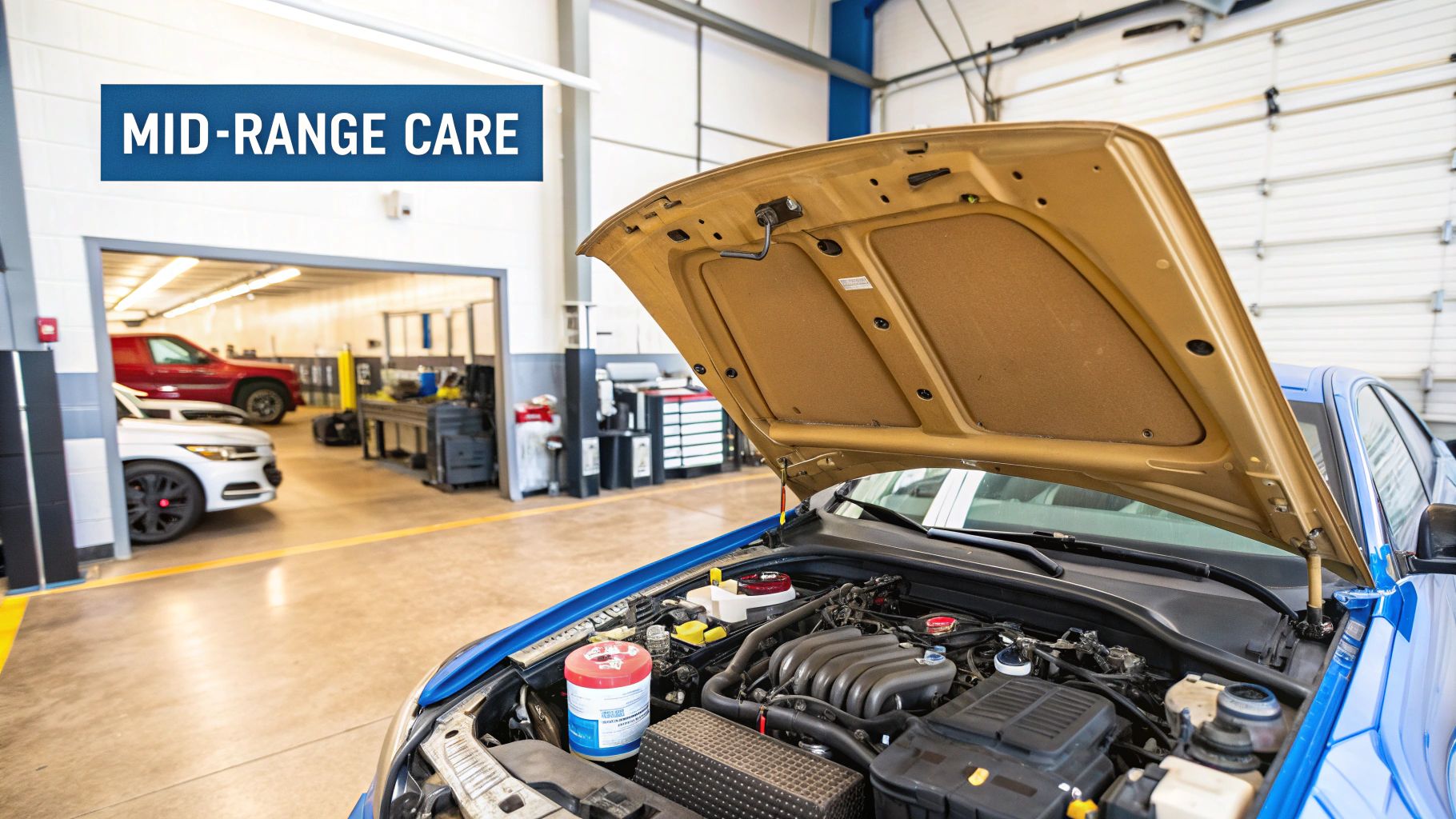
During these middle miles, our focus shifts from simple checks to proactively replacing key components. This is where preventive care really pays off, saving you from the headache and expense of a major breakdown down the road. Sticking to the schedule now is what keeps your vehicle reliable for its next chapter.
Filters Your Lungs and Your Engine Will Thank You
Just like we need clean air to breathe, your car relies on fresh filters to keep its engine and cabin running smoothly. By 30,000 miles, these filters have usually trapped enough dust, pollen, and road gunk to become clogged, which hurts both performance and comfort.
- Engine Air Filter: This is what stops dirt and debris from getting into your engine. When it’s clogged, it’s like trying to run a marathon while breathing through a straw—the engine has to work way harder and burns more fuel. Replacing it is a quick, cheap way to maintain good gas mileage.
- Cabin Air Filter: This filter cleans the air you breathe inside your car. A dirty one restricts your A/C’s airflow and can lead to musty smells. Nobody wants that, especially during a Sun City summer.
The Importance of Fluid Flushes
Over thousands of miles, your car’s essential fluids start to break down. Heat and contaminants wear them out, reducing their ability to lubricate, cool, and protect critical systems. Just topping them off isn’t enough. A full flush is needed to clear out the old, gunky fluid and the grime that comes with it.
Think of a fluid flush like giving your car’s internal systems a complete detox. It removes harmful deposits and sludge that have built up over time, restoring the system to peak condition and preventing catastrophic failures.
Between 30,000 and 60,000 miles, two systems really need this detox:
- Transmission Fluid Exchange: Transmission fluid is the lifeblood that cools and lubricates the complex gears in your transmission. Old fluid loses its protective qualities, leading to overheating, rough shifting, and wear that could result in a full transmission rebuild—one of the most expensive repairs you can face.
- Coolant System Flush: In Arizona’s heat, your car’s coolant (or antifreeze) is working overtime to prevent overheating. Over time, old coolant becomes acidic and can actually start corroding your radiator from the inside out. A flush gets rid of this corrosive fluid and restores its protective abilities.
Comprehensive Brake System Inspection
We glance at your brakes with every oil change, but the 30,000-mile mark is the time for a much deeper dive into the entire system. This goes way beyond just checking the brake pads. Our technicians will measure the exact thickness of your brake pads and rotors, hunt for any leaks in the brake lines, and test the health of your brake fluid.
Clean brake fluid is non-negotiable for solid stopping power. It naturally absorbs moisture from the air, which lowers its boiling point and can make the brake pedal feel soft or spongy. A fluid flush ensures your brakes work exactly when you need them to. These checks are crucial, as they often reveal hidden issues that you wouldn’t notice on a normal drive. For a deeper look into how we pinpoint these problems, you can learn more about how regular computer diagnostics can save you money on our blog.
Major Milestones: 75,000 to 100,000 Miles
When your odometer ticks past 75,000 miles, it’s a bit like a major anniversary for your car. It’s proven its staying power, but now’s the time for some serious preventative care to get it ready for the next big chapter. This is the point where the car maintenance schedule by mileage starts calling for more significant services that are absolutely vital for long-term reliability.
These aren’t just minor check-ups. Think of them as smart, predictable investments that protect your car’s engine, performance, and overall value. While they are more involved, tackling them now is what allows a car to sail past 100,000 miles and keep running strong for years.
Powering Up with a Spark Plug Replacement
Spark plugs are small, but they’re mighty. They create the tiny bolt of lightning that ignites the fuel-and-air mix in your engine, which is what actually pushes your car forward. After tens of thousands of miles, the electrodes on these plugs wear down, making that spark weaker and less consistent.
Worn-out spark plugs can cause a whole host of problems you’ll definitely notice.
- Worse Fuel Economy: A weak spark means your engine isn’t burning fuel efficiently. You’ll find yourself at the gas pump more often.
- Sluggish Acceleration: Does your car feel like it doesn’t have the same “get-up-and-go” it once did? Bad plugs could be the culprit.
- Rough Idling: A failing plug can make your engine sputter or run unevenly when you’re stopped at a light.
- Trouble Starting: In some cases, bad plugs can make it a real struggle to get your car started at all.
Replacing your spark plugs somewhere between the 75,000 to 100,000-mile mark is a straightforward way to restore that crisp engine performance and make sure you’re getting the most out of every drop of fuel.
The Critical Timing Belt or Chain Service
Inside your engine, the timing belt (or timing chain) is like the conductor of an orchestra. It keeps the rotation of the crankshaft and camshafts perfectly synchronized, ensuring the engine’s valves open and shut at the exact right moment. The name says it all—it’s a job that demands perfect timing.
The catch? This critical part doesn’t last forever.
A timing belt is a wear-and-tear item, usually made of rubber that breaks down over time. If it snaps while you’re driving, the pistons can slam into the open valves, causing catastrophic—and incredibly expensive—engine damage.
This is hands down one of the most important preventative services in your vehicle’s entire life. Your owner’s manual will tell you the exact replacement schedule, which is usually between 60,000 and 100,000 miles. Ignoring this service is a huge gamble that no driver should take. If you’re not sure about your timing belt’s condition, it’s best to have a professional take a look. Our team can provide the expert auto repair Sun City AZ drivers have relied on for this vital service for years.
Refreshing Your Cooling System for the Arizona Heat
Here in Sun City, your car’s cooling system is its number one defense against our brutal heat. By 75,000 miles, the coolant (or antifreeze) in your radiator has likely lost a lot of its anti-corrosive properties and can’t protect your engine as well as it used to.
A full cooling system service at this mileage is more than just a simple drain and fill.
- System Flush: We’ll flush the entire system to clear out the old, worn-out coolant along with any rust or gunk that has built up.
- Hose and Belt Inspection: We’ll give all the radiator hoses and serpentine belts a thorough check for any cracks, brittleness, or weak spots.
- Water Pump Check: If your vehicle has a timing belt, it’s often smart to replace the water pump simultaneously. They’re located right next to each other and tend to have similar lifespans.
This service is absolutely non-negotiable for any Arizona driver. It ensures your engine stays at a safe operating temperature, preventing an overheating disaster that could leave you stranded on a scorching hot day. For a deeper dive into what your car might need as the miles add up, check out our guide on what maintenance a high-mileage car needs in Arizona.
How to Listen to Your Car Between Service Intervals
Your car maintenance schedule by mileage is a fantastic roadmap, but it’s not the whole story. Think of it like this: you go for an annual check-up with your doctor, but you also pay attention if you feel sick between visits, right? Your car is constantly “talking,” giving you little clues about its health. You don’t need to be a mechanic to pick up on these signals.
Learning to spot the early warnings makes you a smarter, more confident car owner.

Catching a small issue before it snowballs into a massive, expensive repair is a huge win. It’s all about strengthening the partnership between you and your mechanic. So, trust your gut—if something feels, sounds, or looks different, it’s always worth checking out.
Paying Attention to Strange Noises
Your car has a familiar hum, a rhythm you get used to every day. When a new, strange sound pops up, that’s your car’s first attempt to get your attention. Don’t just turn up the radio to drown it out; those noises are your vehicle asking for a little help.
Here are a few common sounds and what they might be whispering (or shouting) about:
- Squealing or Grinding When Braking: This is the classic, textbook sign that your brake pads are worn out. That awful grinding is a metal-on-metal scream for help, meaning your rotors are now at risk. For reliable brake services Sun City, getting this looked at ASAP is a must for your safety.
- A High-Pitched Squeal from the Engine: This usually points to a worn or loose serpentine belt. That one belt powers critical parts like your alternator and water pump, so it’s a big deal.
- Clunking or Knocking When Driving Over Bumps: Hear that? It could be worn-out suspension parts like shocks or struts. Those components are what give you a smooth, controlled ride, and they’re telling you they’re tired.
Watching for Dashboard Warning Lights
Your dashboard lights are your car’s most direct line of communication. Some are just simple reminders (like low fuel), but others are flashing red flags signaling urgent problems that need immediate attention.
Think of your dashboard warning lights as a direct message from your car’s onboard computer. Ignoring them is like ignoring a text from your engine saying, “Help, I’m not feeling so good!” A quick diagnostic check can translate that message and prevent serious damage down the road.
A flashing Check Engine Light is one you should never ignore. It often signals a severe problem that could quickly damage expensive parts like your catalytic converter. Likewise, if the oil pressure or engine temperature lights pop on, find a safe place to pull over and shut the engine off as soon as you can. We offer comprehensive diagnostic Services to get to the bottom of any warning light.
Noticing Changes in Performance
You know your car. You know how it feels when you turn, how it accelerates, and how it handles on the road. When that familiar feeling changes, it’s a clear signal that something’s off.
Keep an eye out for these shifts in performance:
- Vehicle Pulling to One Side: This could be a simple alignment issue, or it might point to a problem with your tires or brakes.
- Vibrations or Shuddering: If you feel a shake through the steering wheel or seat, it could be anything from unbalanced tires to a suspension problem or even a transmission issue.
- Reduced Fuel Economy: Suddenly stopping at the gas station way more often? The culprit could be anything from old spark plugs to a clogged fuel filter.
Catching these signs early and bringing your car in for an inspection can save you from a breakdown on a hot Sun City afternoon. Don’t wait for your next scheduled service if your car is telling you something is wrong now. Check out our current Specials for a great deal on a vehicle check-up. And if you have any questions at all, please don’t hesitate to Contact our friendly team.
Your Trusted Partner for Auto Repair in Sun City, AZ
Keeping up with a car maintenance schedule by mileage is easily the smartest move you can make for your vehicle’s health and your own peace of mind. It stops expensive surprise repairs in their tracks, saves you money on fuel, and, most importantly, keeps you and your family safe on the road.
At Pete Nelson Automotive, we’re here to take the guesswork out of car care. We’re not just another repair shop; we’re your local partners in keeping your car safe and reliable. Our team of ASE-certified technicians has spent years building a reputation for honest advice and professional service, right here in Sun City, AZ. From a simple oil change to complex diagnostics, we bring the same commitment to quality and transparency to every single job.
Let us take the stress out of car care. Our aim is to build a lasting relationship with you, making sure your car stays a dependable part of your daily life for years to come. To see the full scope of how we can keep your car in peak condition, feel free to explore our comprehensive auto repair services.
Frequently Asked Questions (FAQ)
How strictly should I follow my car’s maintenance schedule in Arizona?
You should treat the manufacturer’s schedule as the absolute minimum. Here in Sun City, the extreme heat puts extra stress on your battery, cooling system, and tires. We often recommend slightly shorter intervals for services like coolant flushes and battery tests to prevent heat-related breakdowns.
Do I need to get my new car serviced at the dealership to keep my warranty?
No, you don’t! This is a common myth. As long as you have your vehicle serviced according to the manufacturer’s recommended schedule by a certified shop like Pete Nelson Automotive, your warranty remains valid. We use quality parts and keep detailed records for your peace of mind.
What’s the most important maintenance service for a car in Sun City?
While all services are important, regular oil changes Sun City AZ drivers get are crucial. Our high temperatures can cause motor oil to break down faster, reducing its ability to protect your engine. Clean oil is the number one defense against engine wear and overheating in our climate.
Why does my “Check Engine” light turn on?
The Check Engine light can indicate anything from a loose gas cap to a serious engine misfire. While it’s not always an emergency, you should never ignore it. Getting it professionally diagnosed quickly can prevent a small issue from turning into a very expensive repair down the road.
Call 623-974-4723 or visit petenelsonautorepair.com to schedule your appointment today.
Pete Nelson Automotive
This Offer Will Expire 12-31-2026
Pete Nelson Automotive is pleased to offer you
"Get Ready for the Holidays"
A $215.00 Value for Only $159.95 (+tax)
Lube, Oil, & Filter Change, Up to 5 quarts of Engine oil
Inspect and top off all fluid levels, Includes up to 5 Quarts of 5w30 synthetic blend oil, additional charge for synthetic oil.
Travel Evaluation
Set Air Pressures and Tire Rotation if needed.
Battery, Alternator and Starter Electrical Test
Load test battery, Alternator output and Starting amps.
Full Brake Evaluation
Includes check brake system on four wheels, checking and testing brake fluid condition.
So Call 623-974-4723 today and make an appointment for this exclusive Special!
*Most Cars, Vans, Motor homes, 4×4’s, Diesels, and some foreign cars may be higher. You must bring this letter at time of service and allow 2 hours to complete.



