
Driving through Sun City, AZ, the last thing you want to see is your dashboard giving you confusing signals. What does it mean when your car’s temperature gauge is stuck on “C” even on a sweltering Arizona afternoon? More importantly, can you keep driving? A car temperature gauge not working is more than just an annoyance; it’s a critical warning that could be hiding a serious engine problem.
Ignoring a faulty gauge is like driving blind—you have no idea if your engine is running safely or moments away from overheating. At Pete Nelson Automotive, we see this issue often and know how stressful it can be. This guide will walk you through the most common causes, helping you understand what’s happening under the hood and why getting it fixed is so important for your vehicle’s health.
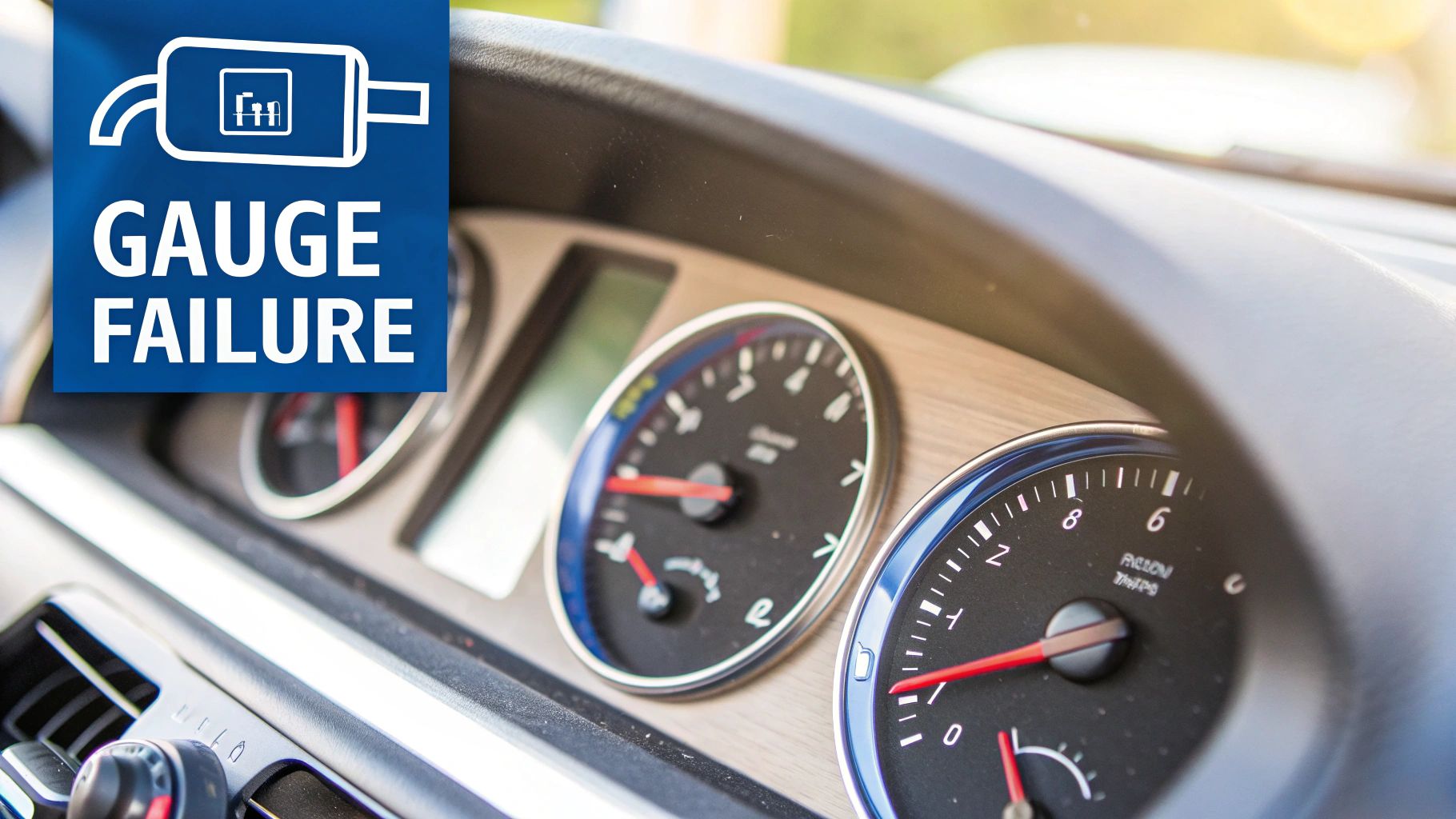
Why Is My Car’s Temperature Gauge Stuck on Cold?
It’s a hot day, but your gauge insists your engine is cold. While it might seem like a minor glitch, this is your vehicle’s way of telling you that it can’t monitor its own temperature. This lack of information puts your engine at serious risk of overheating, which can lead to catastrophic and expensive damage.
The problem usually isn’t the gauge itself. More often, it’s a faulty sensor, a stuck thermostat, or an electrical issue preventing the correct information from reaching your dashboard. Let’s break down the most common culprits we see at our Sun City auto repair shop.
Common Causes for a Non-Working Gauge
When your gauge refuses to move from the cold setting, it’s almost always pointing to one of a few specific problems inside your vehicle’s cooling system. Each one prevents the gauge from getting the information it needs to show your engine’s true temperature.
To make it easier to figure out what’s going on, here are the usual suspects:
- Faulty Coolant Temperature Sensor (CTS): This is the most common cause. The sensor acts as the engine’s thermometer. If it fails, it sends incorrect (or no) data to your gauge.
- Stuck-Open Thermostat: The thermostat regulates coolant flow. If it’s stuck open, coolant circulates constantly, preventing the engine from reaching its optimal operating temperature.
- Wiring & Electrical Issues: Damaged wires, loose connectors, or a blown fuse can interrupt the signal between the sensor and the dashboard gauge. The intense Arizona heat can make these components brittle over time.
- Low Coolant Level: This is a simple but critical one. If the coolant is too low, the sensor can’t get an accurate reading because it’s not submerged. This often indicates a leak somewhere in the system.
Key Takeaway: A temperature gauge that reads cold is not something to ignore. It’s a critical warning that your vehicle’s cooling system isn’t being monitored correctly, which could be masking serious issues. If you’re worried about potential car overheating causes, it’s always best to get a professional diagnosis.
The Role of Your Coolant Temperature Sensor
More often than not, the culprit behind a faulty temperature gauge is a small but mighty part called the coolant temperature sensor (CTS). Think of it as your engine’s personal thermometer. It constantly measures the temperature of the engine coolant and sends that information to both your car’s main computer (the ECU) and the gauge on your dashboard.
When this sensor goes bad, the data it sends becomes unreliable. It might send jumpy signals that make your gauge needle dance around, or it might fail completely, leaving your gauge stuck on cold no matter how long you’ve been driving.
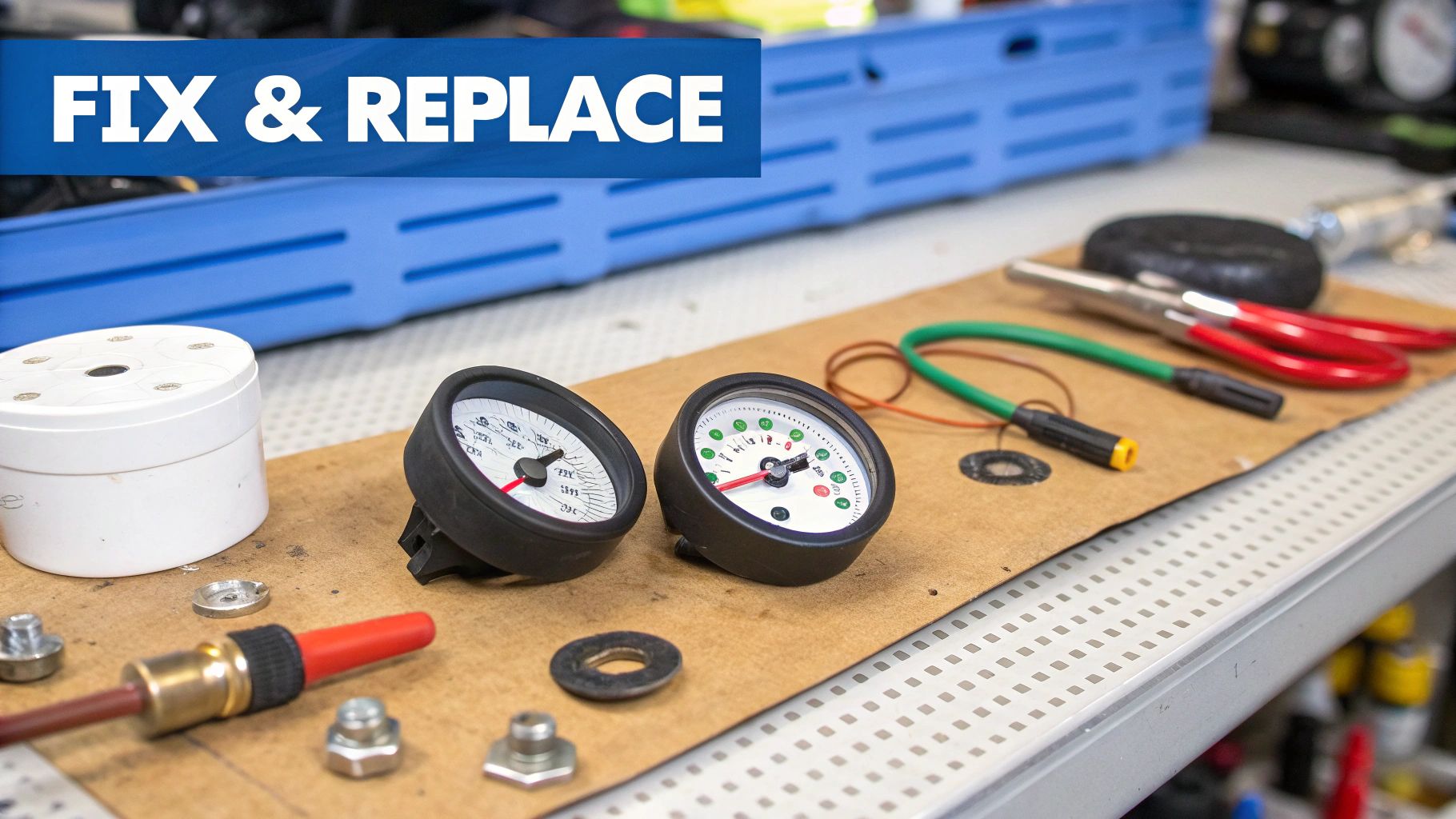
Signs of a Failing CTS Go Beyond the Gauge
Here’s where it gets more serious. A failing CTS can cause a host of problems beyond your dashboard. Your car’s computer relies on that temperature reading to make critical decisions about fuel mixture and engine performance. When the data is wrong, the computer gets confused.
Look for these other warning signs that point to a bad sensor:
- Poor Fuel Economy: If the sensor tells the ECU the engine is cold when it’s not, the computer will inject extra fuel, causing you to burn more gas than necessary.
- Black Smoke from the Tailpipe: This is a classic sign of an overly rich fuel mixture. Unburned fuel exits the exhaust as dark, sooty smoke.
- Difficulty Starting: An incorrect temperature reading can mess with the engine’s startup sequence, making it hard to start, especially when warm.
- Rough Idle: Without accurate temperature data, the ECU can’t properly regulate the idle speed, leading to a shaky idle or even stalling.
Ignoring these symptoms is a bad idea. A simple sensor issue can cascade into more complex and expensive engine trouble. Catching it early means a smarter, more affordable visit to a trusted auto repair Sun City AZ shop. At Pete Nelson Automotive, our Services include advanced diagnostics to find the real source of the problem, saving you time and money. For more details on sensor issues, see this guide about common sensor issues on ancel.com.
When Your Thermostat Is the Troublemaker
It’s not always the sensors or wires. Sometimes, the real culprit is the thermostat. Think of it as a gatekeeper for your engine’s coolant. This small, spring-loaded valve opens and closes to control coolant flow between the engine and the radiator, ensuring your engine runs at its ideal temperature.
When a thermostat fails, it usually gets stuck in one of two positions—open or closed. Each scenario creates a unique set of problems for your car and your temperature gauge.

Symptoms of a Stuck-Open Thermostat
If the valve gets stuck wide open, coolant flows nonstop. This means your engine struggles to warm up properly, especially on short trips around town.
You’ll likely notice a few things:
- Your gauge stays cold: The temperature needle won’t climb into the normal operating range.
- Poor fuel economy: An engine that’s too cool is inefficient and burns more gas.
- Weak heater performance: The air blowing from your vents will feel lukewarm at best because the engine isn’t getting hot enough.
The Danger of a Stuck-Closed Thermostat
A thermostat that’s stuck closed is a far more urgent problem. It completely blocks coolant from reaching the radiator, trapping all the engine’s heat. The result is rapid overheating.
The tricky part is that your gauge might not warn you immediately. If the temperature sensor is located after the thermostat, it won’t know how hot the engine is getting until it’s too late. Catastrophic damage, like a warped cylinder head or blown head gasket, can occur in minutes. A stuck thermostat can even be a sneaky reason why you find your car A/C blowing warm air, as the entire system is put under incredible stress.
Key Takeaway: A stuck-closed thermostat is a true emergency. If you suspect this is the issue, pull over safely and shut the engine off immediately to prevent massive damage.
Since the symptoms of a failing thermostat can mimic a bad sensor, a professional diagnosis is the only way to be certain. Getting an expert opinion at a trusted auto repair Sun City AZ shop is your best defense against a potentially huge repair bill.
Investigating Wiring and Electrical Faults
If the sensor and thermostat check out, it’s time to look at the electrical pathways. Sometimes, a non-working temperature gauge isn’t caused by a broken part but by a breakdown in communication. Wires, fuses, and connectors form the network that carries temperature readings from the engine to your dashboard.
The intense Arizona sun is incredibly harsh on these components. Over time, extreme heat can make wires brittle, crack insulation, and corrode connectors. This damage can easily interrupt the electrical signal, causing your gauge to act up or stop working entirely. An electrical system repair may be needed.
What You Can Safely Check at Home
Before heading to the shop, there are a couple of simple things you can check yourself. Safety first: only perform these checks when your engine is completely cool. Never open the radiator cap on a hot engine, as pressurized, scalding coolant can cause serious burns.
- Check Your Coolant Level: Find the coolant reservoir (a semi-transparent plastic tank) under the hood. If the liquid is below the “MIN” or “COLD” line, top it off with the correct type of coolant for your vehicle. A low coolant level is often a sign of a leak, which needs to be addressed, especially when preparing your car for the Arizona summer heat.
- Inspect the Fuse: Your owner’s manual will show you the location of the fuse box. Find the fuse for the instrument cluster and check if the metal strip inside is broken. A blown fuse is an easy fix but could signal a deeper electrical problem.
Our Pro Tip: These DIY checks are great for ruling out the simple stuff. But if your coolant is full, the fuse is fine, and the gauge still isn’t working, it’s time for a professional diagnosis. The problem is likely a bad sensor, thermostat, or wiring issue that requires expert tools and knowledge.
Your Trusted Partner For Auto Repair in Sun City, AZ
A car temperature gauge that’s not working is more than just a minor inconvenience—it’s a critical warning that your engine’s health is at risk. Guessing the cause, especially in the Arizona heat, can lead to serious and expensive damage.
This is where having an experienced auto repair Sun City AZ shop makes all the difference. At Pete Nelson Automotive, we don’t play guessing games. We use modern diagnostic tools to pinpoint the source of the problem, whether it’s a simple sensor replacement or a complex electrical fault. Understanding the common engine repair warning signs and solutions is the best first step you can take.
As a local Sun City business, our goal is simple: provide honest answers and reliable work to keep our neighbors safe on the road. Don’t let a faulty gauge leave you stranded. Let our team of ASE-certified experts provide the peace of mind you need to drive with confidence.
Frequently Asked Questions (FAQ)
What does it cost to fix a car temperature gauge that is not working?
The cost depends entirely on the cause. A simple fix like topping off coolant or replacing a fuse might cost very little. If the issue is a faulty coolant temperature sensor, you can typically expect a repair cost between $150 and $300, including parts and labor. More complex electrical issues or problems with the instrument cluster itself will cost more, which is why a professional diagnosis is so important. Check our Specials for deals on inspections and services.
Can I drive my car if the temperature gauge is not working?
We strongly advise against it. Driving with a broken temperature gauge means you have no way of knowing if your engine is overheating. This is a huge gamble that could lead to catastrophic engine damage, such as a warped cylinder head or a blown head gasket, resulting in repairs that cost thousands of dollars. It’s simply not worth the risk.
Why does my temp gauge go to hot then back to normal?
This erratic behavior is a classic symptom of a failing coolant temperature sensor or a loose electrical connection. The sensor is sending faulty, intermittent signals to your gauge, causing it to jump around. It could also indicate an air bubble in your cooling system or a thermostat that is sticking. Get it checked out promptly to avoid potential engine damage.
How do I know if my thermostat or temperature sensor is bad?
A bad thermostat often causes the gauge to stay cold (if stuck open) or overheat quickly (if stuck closed). A bad sensor, on the other hand, can cause the gauge to read cold, hot, or jump around erratically, and is often accompanied by other performance issues like poor fuel economy or a rough idle. Because the symptoms can overlap, a professional diagnostic is the best way to accurately identify the problem.
When your dashboard gives you confusing signals, don’t leave it to chance. The expert technicians at Pete Nelson Automotive have the right tools and experience to diagnose the problem quickly and accurately. We are proud to be the trusted choice for auto repair in Sun City, AZ.
Call 623-974-4723 or visit petenelsonautorepair.com to schedule your appointment today.
Pete Nelson Automotive
This Offer Will Expire 12-31-2026
Pete Nelson Automotive is pleased to offer you

"Get Ready for the Holidays"
A $215.00 Value for Only $159.95 (+tax)
Lube, Oil, & Filter Change, Up to 5 quarts of Engine oil
Inspect and top off all fluid levels, Includes up to 5 Quarts of 5w30 synthetic blend oil, additional charge for synthetic oil.
Travel Evaluation
Set Air Pressures and Tire Rotation if needed.
Battery, Alternator and Starter Electrical Test
Load test battery, Alternator output and Starting amps.
Full Brake Evaluation
Includes check brake system on four wheels, checking and testing brake fluid condition.
So Call 623-974-4723 today and make an appointment for this exclusive Special!
*Most Cars, Vans, Motor homes, 4×4’s, Diesels, and some foreign cars may be higher. You must bring this letter at time of service and allow 2 hours to complete.



