
Living in Sun City, you know the summer heat can feel relentless. Have you ever wondered if your car is feeling that same strain? The old 3,000-mile oil change rule is a thing of the past, with most modern cars now going 7,500 to 15,000 miles between services. But here in Arizona, that intense heat, our dusty conditions, and your daily driving habits can change the game entirely.
So, how often should you really service your car to keep it running smoothly and avoid unexpected breakdowns on a scorching afternoon? Let’s break it down.
Decoding Your Car’s Service Needs in Arizona
Thanks to major improvements in engine technology and high-quality synthetic oils, today’s vehicles are built to last longer between check-ups. However, the manufacturer’s recommendation is just a starting point, especially for those of us driving in the unique Arizona climate.
For a general idea of how service intervals have changed, here’s a quick look.
General Car Service Interval Guidelines
This table gives a basic snapshot of what to expect, but remember, your owner’s manual and a trusted mechanic should always be your primary guides.
| Service Type | Older Vehicles (Pre-2010) | Modern Vehicles (Post-2010) | Key Focus |
|---|---|---|---|
| Oil Change | 3,000–5,000 Miles | 7,500–15,000+ Miles | Engine lubrication, heat reduction, cleaning contaminants |
| Brake Inspection | Every 6 months or 6,000 miles | Every 12 months or 12,000 miles | Pad wear, fluid levels, rotor condition, overall safety |
| Tire Rotation | Every 5,000–7,500 Miles | Every 5,000–7,500 Miles | Even tread wear, extending tire life, maintaining grip |
| Full Inspection | Annually or every 12,000 miles | Annually or every 15,000 miles | Fluids, filters, belts, hoses, battery, suspension |
These are just starting points. The real answer for your car depends on a lot more than just what the calendar says.
Think of your owner’s manual as the official textbook for your car’s health. It lays out the baseline schedule created by the very engineers who designed your vehicle. But that’s just the starting point.
Your manual provides the what and the when, but a trusted local mechanic provides the why—tailoring that advice to our unique Arizona conditions.
The decision tree below does a great job of showing how mileage, age, and our intense climate all team up to influence your ideal service schedule.
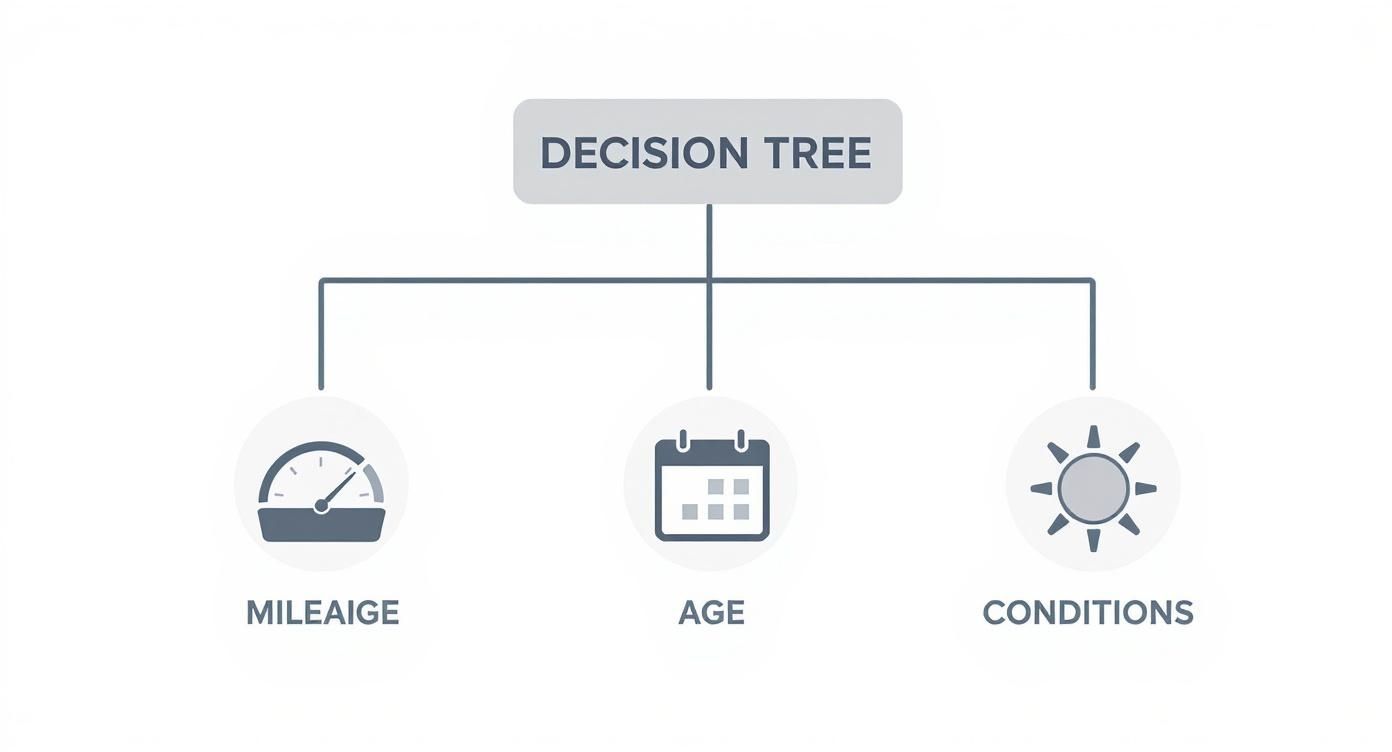
As you can see, a one-size-fits-all approach just doesn’t work. Your personal driving habits and the demanding Arizona environment play a huge role in determining the true answer to “how often should I service my car?”
Following these personalized guidelines is one of the key benefits of keeping up with scheduled maintenance, as it stops small issues from snowballing into major, expensive repairs down the road. This guide will walk you through everything you need to know to keep your car running reliably.
Translating Your Manufacturer’s Service Schedule
Think of your car’s owner’s manual as the official playbook, written by the very engineers who built your vehicle. Inside, you’ll find the manufacturer’s recommended service schedule—your absolute best starting point for knowing how often your car needs service. It’s a detailed plan designed to keep your car running safely and smoothly for years.
This schedule is more than just a friendly suggestion; it’s a roadmap to a long and healthy life for your vehicle. Following it is often a requirement to keep your new-car warranty valid. More importantly, it helps you catch small, easy-to-miss issues before they snowball into expensive, unexpected breakdowns on a hot Sun City afternoon.
Key Service Milestones Explained
Your service schedule is usually laid out by mileage. While every car is a bit different, you’ll typically see major service recommendations pop up at specific milestones. These aren’t just another oil change—they are comprehensive, bumper-to-bumper check-ups that address all the systems that wear down over thousands of miles.
Here are a few common milestones you’ll see:
- 30,000 Miles: This first major check-up often involves inspecting the fuel system, swapping out the engine air filter, and giving the exhaust system a thorough look.
- 60,000 Miles: This is a more significant service. It might include replacing spark plugs, inspecting the timing belt, and changing the transmission fluid. As cars get up there in mileage, this kind of proactive care becomes even more crucial. You can learn more about what maintenance a high-mileage car needs in Arizona in our detailed guide.
- 90,000 Miles: At this point, your technician might be replacing old hoses, re-inspecting the timing belt, and taking a deep dive into the cooling system to make sure you’re protected from overheating.
Think of these milestones like a doctor’s wellness visit for your car. They’re proactive check-ups designed to catch potential problems early, ensuring your car stays healthy and reliable on the road.
Can’t find your owner’s manual? No problem. As a trusted local auto repair shop right here in Sun City, AZ, our team at Pete Nelson Automotive can pull up the specific service schedule for your vehicle’s make and model. We’ll make sure you get the exact care your car was designed to have.
How Arizona Driving Habits Change the Rules
That service schedule in your car’s manual? Think of it as a helpful guide, but one written for a perfect world scenario that looks nothing like a typical day here in Sun City, AZ.
Our unique driving conditions throw a whole new set of challenges at your vehicle. The factory schedule is just the starting point; ignoring the reality of driving in Arizona can lead to premature wear and tear, and trust us, you don’t want those kinds of surprise repairs.
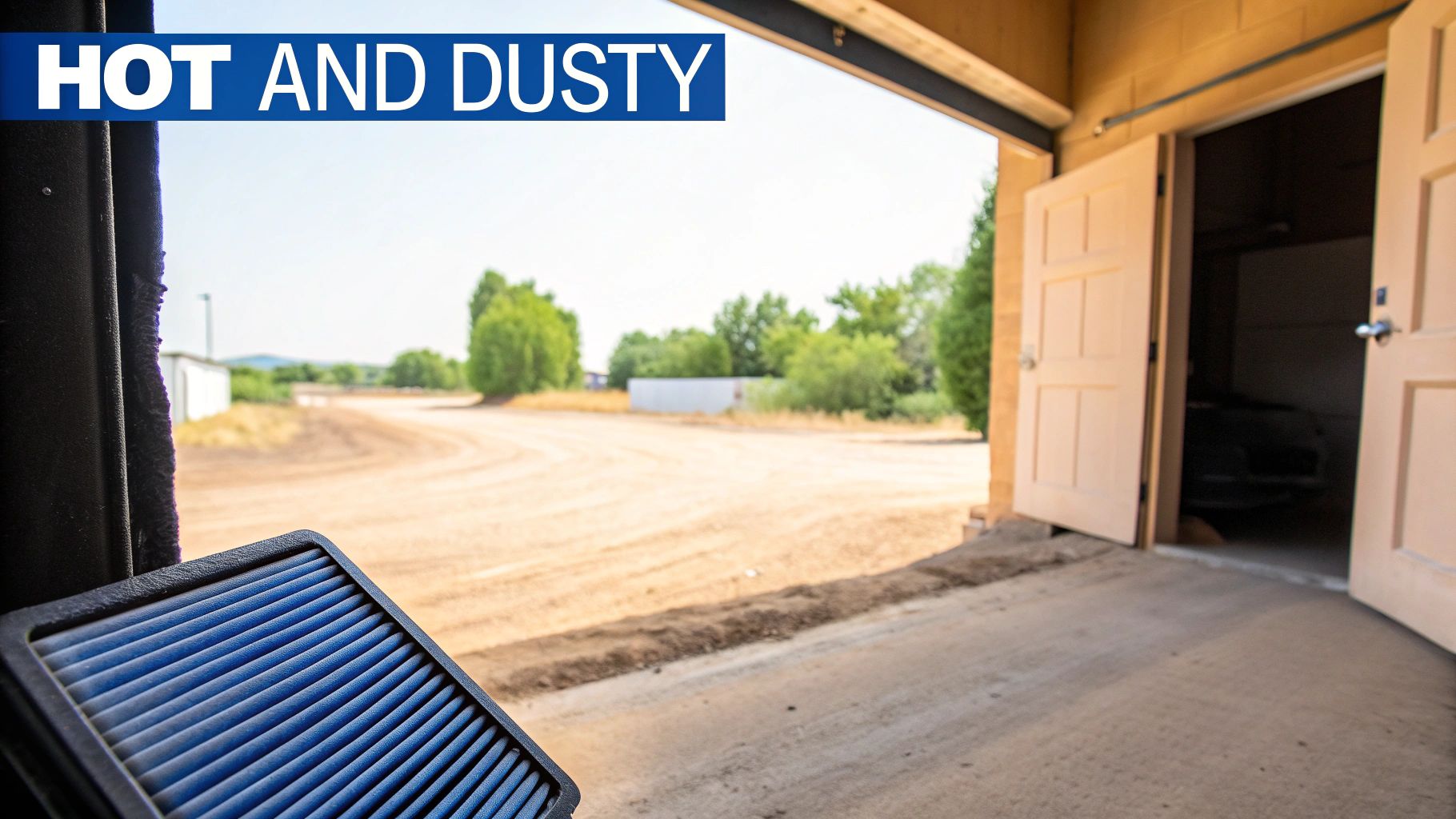
The intense Arizona heat is, without a doubt, your car’s number one enemy. It’s relentless. It breaks down engine oil, cooks the fluid right out of your battery, and drastically speeds up the aging process for all the rubber belts and hoses under the hood. We’ve actually got a whole post dedicated to how Arizona heat affects your vehicle if you want to dive deeper.
Driving Conditions That Demand More Frequent Service
Beyond the blistering heat, a few other local factors can easily shorten your service intervals. If any of these sound like your daily drive, it’s a good sign you should probably be visiting your local auto repair Sun City AZ shop a bit more often.
- Dusty Roads: Our dry, dusty environment means your engine’s air filter is working overtime, all the time. A clogged filter essentially chokes your engine, tanking its performance and fuel economy.
- Stop-and-Go Traffic: Cruising on the highway is easy on a car. The constant short trips and city traffic we deal with? That’s hard work for your engine, transmission, and especially your brakes.
- Monsoon Season: Those sudden, heavy downpours put a huge demand on your wipers, tires, and your braking system when the roads get slick and dangerous.
Think of it this way: your car’s manual assumes you’re driving in a mild, predictable climate. Driving in Arizona is like asking it to run a marathon in the desert—it simply needs more support and hydration (or in this case, maintenance) to perform at its best.
This constant need for proactive, condition-specific maintenance is a big reason the global automotive repair market keeps growing. In fact, passenger cars made up a whopping 63.2% of service revenues in 2024, which just shows how critical proper upkeep is for the millions of cars out there.
Understanding how our local environment impacts your vehicle is the first step toward building a maintenance plan that actually works for your car.
Recognizing When Your Car Is Asking for Help
While sticking to a service schedule is the bedrock of good car care, sometimes your vehicle sends up a flare, letting you know it needs help right now. Learning to “speak car” is one of the best ways to stop a small, fixable issue from snowballing into a major, wallet-busting repair on a hot Sun City afternoon.
Think of your car’s dashboard warning lights as its most direct form of communication. That glowing check engine light, the battery warning, or the brake system alert? Never ignore them. They are your vehicle’s way of crying for help, and getting a diagnostic check is always the smartest move.

Common Signs Your Car Needs Service
Beyond the dashboard, your own senses are fantastic diagnostic tools. New sounds, strange smells, or a change in how the car feels can help you catch problems early. Keep an eye (and an ear) out for these red flags:
- Strange Noises: Squealing or grinding brakes are a classic sign. So are clunking sounds when you turn or a knocking noise coming from the engine. These aren’t just quirks; they’re signs that a component is failing.
- Performance Issues: Is your car suddenly sluggish when you accelerate? Does it idle roughly at a stoplight? Have you noticed your gas mileage tanking? These drops in performance almost always point to an underlying problem.
- Unusual Smells: The distinct scent of burning oil, a weirdly sweet smell from antifreeze, or the raw odor of gasoline are all major warnings that something is either leaking or overheating.
- Fluid Leaks: Finding new puddles of red, green, or dark brown fluid under your car is a dead giveaway. It means a system is compromised and needs an immediate look.
Think of these signs as your car’s way of telling you a story. A high-pitched squeal is a cry for new brake pads; a rough idle is a cough signaling a fuel system issue. Listening to these clues helps you act before the story has a bad ending.
And it’s not just about what happens when the car is running. Even something like troubleshooting a car key that won’t turn in the ignition is an undeniable signal that your vehicle needs a professional eye. For a deeper dive, check out our guide on the signs that your vehicle needs immediate attention.
How Modern Technology Is Reshaping Car Maintenance
If you think car maintenance is still about slapping a sticker on the windshield, think again. Technology has completely changed the game, and for the better. Many cars rolling off the line today have smart maintenance reminder systems, like oil life monitors, that have made the old 3,000-mile rule a thing of the past.
Instead of relying on a fixed schedule, these systems are constantly analyzing your actual driving data. They know if you’ve been stuck in city traffic or cruising on the highway, and they tell you exactly when it’s time for service. This shift from guessing to data-driven insights means your car gets the attention it needs, right when it needs it.
The Rise of Smarter Vehicles
Onboard reminders are just the tip of the iceberg. The real magic is happening with connected vehicle technology, which is making maintenance more proactive than ever before. Real-time diagnostics can now flag a potential issue and alert both you and your mechanic long before it spirals into a serious, expensive problem.
Think of it like a fitness tracker for your car. Instead of just counting miles, it’s monitoring engine hours, temperatures, and your driving habits to give you a personalized health report.
This kind of tech helps technicians slash diagnostic time by up to 50%, letting them pinpoint issues with stunning accuracy. To really get a handle on how this works, check out our guide on understanding car computer diagnostics.
Electric vehicles (EVs) are also shaking things up in a big way. They don’t need oil changes, but they come with their own unique service needs, from complex battery systems and software updates to thermal management.
In 2024, battery-electric vehicles (BEVs) needed about 40% fewer routine service visits than gas-powered cars, mostly because there’s no oil to change. But don’t be mistaken—they still need an expert eye on their brakes, tires, and suspension. No matter how advanced our cars get, skilled oversight will always be essential for keeping them safe and performing at their best. You can find more on this trend from Mordor Intelligence.
Keeping Your Car on the Road in Sun City
Living in Arizona, we know the heat and dust can be tough on our cars. Keeping your vehicle reliable and safe isn’t complicated, but it does require a smart approach. Think of it as a simple, three-part formula for success.
First, always start with your manufacturer’s recommended service schedule. That’s your baseline, the foundation for everything else. But you can’t stop there.
Next, you have to factor in our unique Sun City climate and how you drive. Are you making lots of short trips to the store? Do you get stuck in stop-and-go traffic? The intense heat and dusty air here mean your car needs more frequent attention than one driven in a cooler, milder part of the country.
Finally, and this is crucial, you have to listen to your car. Don’t ignore the little things. If you hear a strange noise or see a new warning light pop up on the dash, it’s telling you something.
A Local Shop Makes All the Difference
The single best thing you can do for your car’s long-term health is to build a relationship with a local auto shop you trust. A team that truly understands the challenges of driving in Arizona can give you advice that goes far beyond what you’ll find in the owner’s manual.
When a mechanic knows your car’s history, they can help you make smarter, more cost-effective decisions about its care. We even offer regular Specials to make staying on top of maintenance easier on your wallet.
Proactive maintenance isn’t just another bill to pay. It’s the smartest way to protect your safety, keep your car’s value up, and avoid those huge, unexpected repair bills down the road.
When you’re ready for expert care from a team that knows Sun City inside and out, Pete Nelson Automotive is here for you. Give us a call at 623-974-4723 or visit petenelsonautorepair.com to schedule your next service.
Frequently Asked Questions
How often should I get my brakes checked in Sun City?
For Sun City drivers, we recommend a brake inspection at least once a year or every 12,000 miles. However, if you do a lot of stop-and-go city driving, getting them checked with every tire rotation (around every 6,000 miles) is a smart, proactive step for your safety.
What’s more important for service: mileage or time?
Both are equally important, and it depends on your driving habits. If you drive a typical amount, following the mileage intervals is usually best. But if you don’t drive much, fluids still degrade and rubber parts can dry out over time, so you should follow the time-based recommendations (e.g., every 6 or 12 months) to prevent problems.
How often should I change my oil in Arizona’s heat?
The extreme heat in Arizona breaks down engine oil much faster. For most vehicles here, especially if you do a lot of short trips, we advise an oil change closer to every 5,000-7,500 miles, even with synthetic oil. This protects your engine from the added stress of our climate.
Do I really need to follow the maintenance schedule in my owner’s manual?
Yes, absolutely. The manufacturer’s schedule is your best guide for keeping your car reliable and is often required to keep your warranty valid. Think of it as the minimum requirement for care—we can then help you adjust it for our local Sun City conditions.
Pete Nelson Automotive
This Offer Will Expire 12-31-2026
Pete Nelson Automotive is pleased to offer you
"Get Ready for the Holidays"
A $215.00 Value for Only $159.95 (+tax)
Lube, Oil, & Filter Change, Up to 5 quarts of Engine oil
Inspect and top off all fluid levels, Includes up to 5 Quarts of 5w30 synthetic blend oil, additional charge for synthetic oil.
Travel Evaluation
Set Air Pressures and Tire Rotation if needed.
Battery, Alternator and Starter Electrical Test
Load test battery, Alternator output and Starting amps.
Full Brake Evaluation
Includes check brake system on four wheels, checking and testing brake fluid condition.
So Call 623-974-4723 today and make an appointment for this exclusive Special!
*Most Cars, Vans, Motor homes, 4×4’s, Diesels, and some foreign cars may be higher. You must bring this letter at time of service and allow 2 hours to complete.



