Driving through Sun City, the last thing you want is for your car to suddenly start acting up. That lurch, the strange whining noise, or the hesitation when you accelerate—are you just imagining things, or is your vehicle trying to tell you something is wrong? Your transmission is one of the most complex and critical components of your car, responsible for delivering power from the engine to the wheels. When it starts to fail, the signs can range from subtle to severe, and ignoring them can lead to a breakdown on Grand Avenue and a repair bill that ruins your week.
At Pete Nelson Automotive, we believe an informed driver is a safe driver. That’s why we’ve put together this friendly, practical guide to help you identify the crucial signs your transmission is failing. We’ll break down exactly what to look, listen, and feel for, from slipping gears and rough shifting to unusual smells and warning lights on your dashboard. Understanding these indicators allows you to address potential issues before they become catastrophic failures, saving you time, money, and stress right here in Arizona.
1. Slipping Transmission
One of the most classic signs your transmission is failing is when it starts “slipping.” This unnerving experience happens when your vehicle unexpectedly changes gears for no reason, struggles to stay in the correct gear, or fails to engage a gear altogether. You might notice the engine revving high, creating a loud whining sound, but your car doesn’t accelerate as it should. It feels as if the power from the engine isn’t reaching the wheels properly.
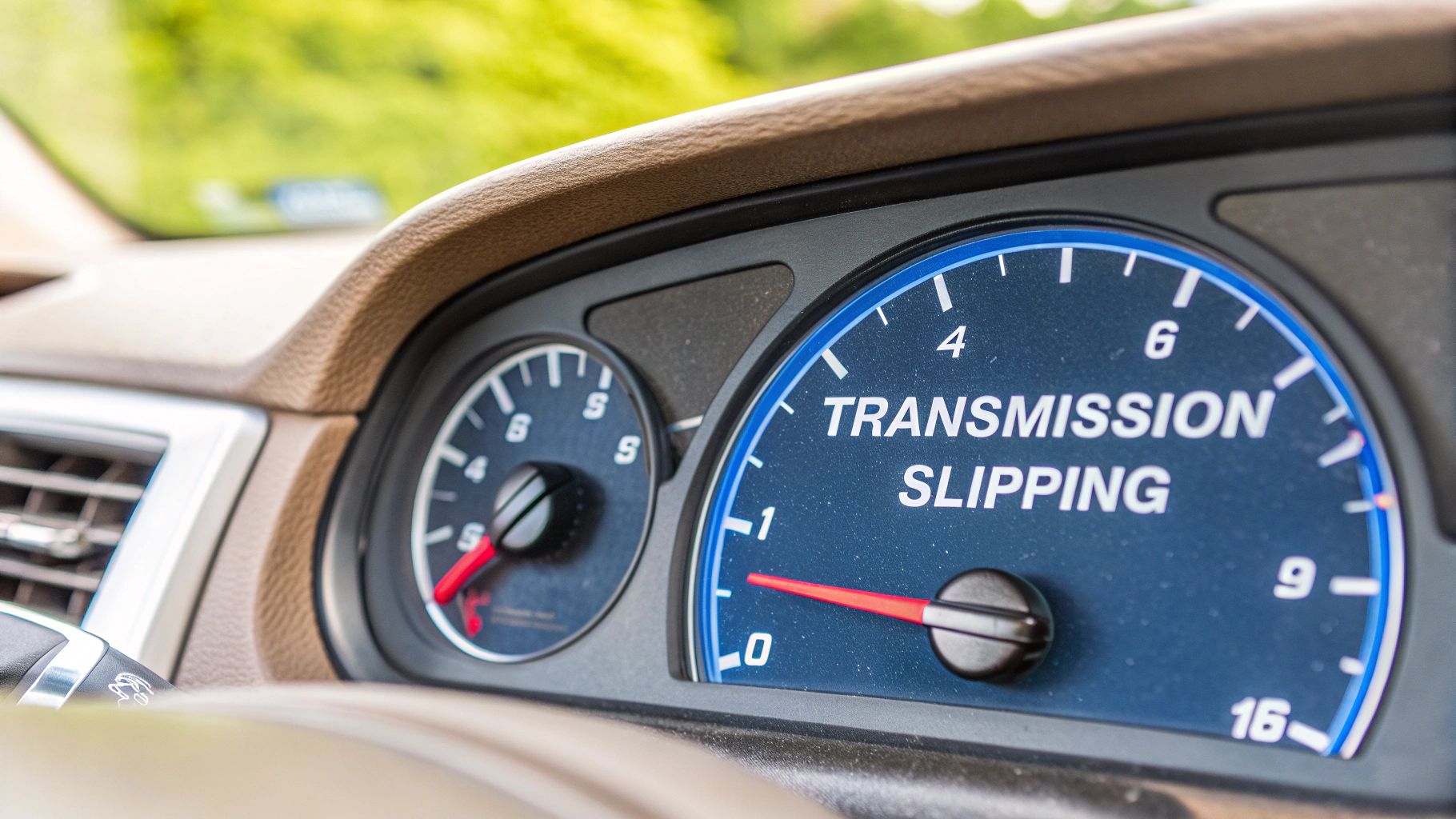
This dangerous issue often points to worn-out internal components. Over time, parts like clutch plates, bands, or the torque converter can degrade, preventing the transmission from creating the necessary hydraulic pressure to hold a gear. Low or burnt transmission fluid is another common culprit, as it’s the lifeblood that lubricates and cools these critical parts.
What Does Transmission Slipping Feel Like?
Recognizing the sensation of a slipping transmission is key to addressing it early. Here are a few common scenarios our customers in Sun City describe:
- Delayed Engagement: When shifting from Park to Drive, there’s a noticeable pause before the gear engages.
- Sudden High Revs: While accelerating, the engine RPMs spike without a corresponding increase in speed, as if you’ve suddenly shifted into neutral.
- Erratic Shifting: The transmission may shift up or down unexpectedly, especially when going up a hill or under heavy acceleration.
- Popping Out of Gear: In a manual transmission, the gear shifter might physically move back into neutral on its own.
What to Do if Your Transmission Slips
A slipping transmission is a serious safety concern and a clear sign that immediate attention is needed. Continuing to drive can cause catastrophic internal damage, turning a potentially manageable repair into a full, expensive replacement. If you experience this, pull over safely and have your vehicle inspected by a professional technician. At Pete Nelson Automotive, we can perform diagnostics to pinpoint the exact cause of these common transmission problems and recommend the right solution.
2. Delayed or Rough Shifting
A healthy transmission should shift between gears almost seamlessly, but when it starts to fail, these transitions can become jarring and unpredictable. Delayed or rough shifting is another one of the most common signs your transmission is failing. You might feel a significant hesitation or a long pause when shifting from Park into Drive, or experience a forceful “clunk” or “jerk” as the vehicle moves through its gears while accelerating.

This issue often stems from problems with hydraulic pressure, which is essential for smooth gear changes in an automatic transmission. Low or dirty transmission fluid can’t create the pressure needed, leading to harsh engagement. Other potential causes include failing shift solenoids—computer-controlled valves that direct fluid flow—or worn-out synchronizers in a manual transmission.
What Does Rough or Delayed Shifting Feel Like?
Recognizing the specific sensations of poor shifting can help you communicate the problem clearly to your technician. Our customers in the Sun City area often describe these experiences:
- Noticeable Hesitation: There’s a 2-3 second delay before your car moves after shifting from Park to Drive or Reverse.
- Hard “Clunking” Shifts: The transition from first to second gear is particularly harsh, causing you and your passengers to jerk forward.
- Grinding in Manuals: You hear or feel a grinding sensation when trying to shift gears, indicating the clutch isn’t fully disengaging or synchronizers are worn.
- Shuddering or Shaking: The vehicle may shudder or shake as it struggles to find the right gear, especially under light acceleration.
What to Do if You Experience Rough Shifting
Harsh or delayed shifting is more than just an annoyance; it’s a clear signal that internal components are under stress. Ignoring it can lead to more severe and widespread damage. Your best first step is to have the vehicle inspected professionally. A simple fluid and filter change can sometimes resolve the issue. At Pete Nelson Automotive, we can investigate these key signs that point to needing a transmission check and provide an accurate diagnosis to prevent further damage.
3. Strange Noises
Your vehicle’s transmission is a complex mechanical system, and it usually operates quietly in the background. When it starts making new and unusual sounds like whining, humming, or clunking, it’s often an audible cry for help and one of the clearest signs your transmission is failing. These noises can range from a subtle hum to a loud, jarring clunk, and ignoring them can lead to severe and costly damage.
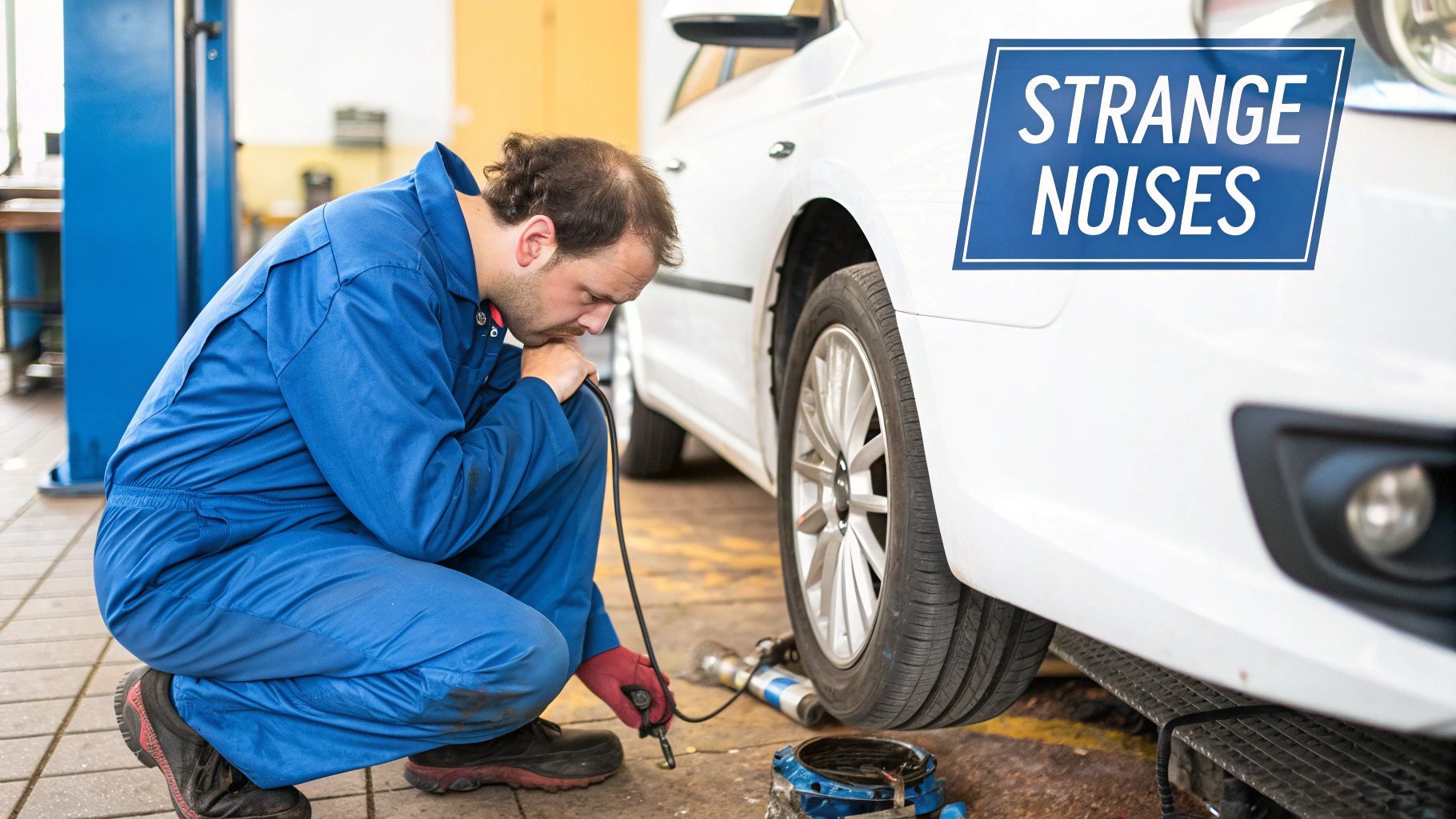
These sounds are typically caused by metal-on-metal contact from worn-out parts or issues with the transmission fluid. For instance, a whining noise might indicate a problem with the torque converter or a clogged fluid filter, while a grinding sound could point to damaged gears or bearings.
What Do Failing Transmission Noises Sound Like?
Pinpointing the exact type of sound and when it occurs is crucial for a correct diagnosis. Here are a few common noises our Sun City customers report:
- Whining or Humming: You might hear a high-pitched whining or a low hum that changes in pitch as you accelerate or change gears.
- Clunking or Banging: A loud “clunk” when shifting from Park into Drive or Reverse can signal a serious internal issue.
- Grinding: If you hear a harsh grinding noise, especially during shifts, it likely indicates severe wear on planetary gears or bearings.
- Buzzing: A constant buzzing sound can be another indicator of low transmission fluid or a more serious internal seal or solenoid problem.
What to Do if You Hear Strange Noises
Unusual transmission noises should never be ignored. A strange noise is your vehicle’s early warning system. Addressing it promptly can often prevent a minor issue, like a worn bearing, from causing a chain reaction of failures throughout the entire transmission. The most effective course of action is to schedule a professional inspection. At Pete Nelson Automotive, our diagnostic services can quickly identify the source of the noise.
4. Transmission Fluid Leaks
Spotting a reddish or brownish puddle under your car is one of the most visible signs your transmission is failing. Transmission fluid is essential for lubricating moving parts, cooling the unit, and creating the hydraulic pressure needed for gear shifts. A leak starves the system of this vital fluid, leading to friction, overheating, and eventual component failure.
This issue stems from compromised seals, gaskets, or lines that have degraded over time due to heat and age. The color of the fluid can also tell a story: fresh fluid is typically bright red, while old, burnt fluid turns dark brown or black and may have an acrid smell, indicating a more serious internal problem.
What Does a Transmission Leak Look Like?
Identifying a transmission leak is usually straightforward once you know what to look for:
- Red or Brown Puddles: The most obvious sign is a bright red (if the fluid is new) or dark brown puddle on your driveway, usually located toward the middle front of the vehicle.
- Drips from the Transmission Pan: You might notice active dripping from the gasket that seals the bottom pan of the transmission.
- Sweet or Burnt Smell: Fresh transmission fluid has a distinctly sweet, almost oily smell, while burnt fluid smells acrid and unpleasant.
What to Do if You Spot a Leak
Even a small leak can quickly become a major problem, as low fluid levels can cause severe damage. The cost of replacing a few seals is minimal compared to a complete transmission rebuild. Leaks are often caused by issues similar to those that cause vehicle oil leaks, so it’s best to have a professional diagnose the source. At Pete Nelson Automotive, we can pinpoint the leak and perform the necessary repairs to protect your transmission.
5. Warning Lights
Your vehicle’s dashboard is its primary communication tool, and an illuminated warning light is one of the clearest signs your transmission requires attention. Modern vehicles are equipped with an On-Board Diagnostics (OBD-II) system that constantly monitors the transmission’s performance. When this system detects an abnormality, it triggers a warning light to alert you before the problem becomes a catastrophic failure.
The vehicle’s computer stores a specific Diagnostic Trouble Code (DTC) that corresponds to the detected issue, such as a problem with a sensor, solenoid, or fluid temperature. Ignoring these electronic warnings can lead to severe and costly damage.
What Do Transmission Warning Lights Look Like?
Recognizing these specific alerts is crucial for taking prompt action. Here are a few common warnings our Sun City customers see:
- Check Engine Light: This is the most common indicator. A solid or flashing light can point to hundreds of potential issues, many of which are transmission-related.
- Transmission Temperature Warning: Often shaped like a gear with a thermometer inside, this light indicates that your transmission fluid is overheating.
- “Service Transmission” Message: Some vehicles have a dedicated message that appears on the instrument cluster.
- Flashing Gear Indicator: If your gear selector display (P, R, N, D) starts flashing, it’s a direct signal of an electronic fault.
What to Do if a Warning Light Comes On
An illuminated warning light is a direct request from your vehicle for a professional diagnosis. Do not ignore it. A professional shop like Pete Nelson Automotive can interpret the codes, perform further diagnostics, and pinpoint the exact source of the problem. To understand more about common alerts, you can learn about the eight reasons your check engine light may be on and what to do next.
6. Burning Smell
Your sense of smell can be one of the most effective tools for diagnosing vehicle problems, and a burning odor is a major red flag. If you notice a sharp, acrid smell coming from your car, it’s one of the most urgent signs your transmission is failing. This distinct smell is often the result of overheating transmission fluid, which begins to break down and lose its lubricating properties when subjected to excessive heat.
Overheating is a transmission’s worst enemy. When the fluid burns, it can no longer protect the intricate network of gears and clutches inside. This leads to increased friction, sludge buildup, and accelerated wear on critical components. Common causes include low fluid levels, towing heavy loads, or an internal issue preventing proper fluid circulation.
What Does a Burning Transmission Smell Like?
Distinguishing a transmission-related odor from other car smells is crucial. Here’s what to look for:
- Acrid, Sweetish Odor: The smell is often compared to burning toast or slightly sweet, burnt marshmallows. It’s different from the scent of burning oil or rubber.
- Smell After Heavy Use: You might notice the odor most strongly after climbing steep hills or driving in stop-and-go traffic on a hot Arizona day.
- Dark, Burnt Fluid: When you check the dipstick, the transmission fluid may appear dark brown or black and have a burnt smell.
What to Do if You Smell a Burning Odor
A burning smell indicates that damage is actively occurring. The moment you smell it, you should stop driving as soon as it is safe to do so. Continued operation generates more heat and can cause irreversible damage. The best and safest course of action is to have your vehicle towed to a trusted repair shop. At Pete Nelson Automotive, our technicians can diagnose the cause of the overheating and recommend the necessary auto repair services to prevent a catastrophic failure.
7. Unresponsive Transmission
Among the most alarming signs your transmission is failing is when it becomes completely unresponsive. This critical failure occurs when your transmission does not engage any gear, leaving your vehicle immobile despite the engine running perfectly. You might shift the lever from Park to Drive or Reverse, but the car simply won’t move.
This severe symptom often points to a catastrophic issue. It could be caused by a complete loss of hydraulic pressure, a failed torque converter, a broken internal component, or a major electronic malfunction. Regardless of the specific cause, an unresponsive transmission is a definitive signal that the system has suffered a major breakdown.
What Does an Unresponsive Transmission Look Like?
Recognizing the signs of a completely failed engagement can prevent you from causing further harm to your vehicle.
- No Movement: The most common sign is when you shift into Drive or Reverse, the engine revs, but the car doesn’t move.
- Stuck in Gear: The transmission locks into a single gear (often called “limp mode”) and will not shift up or down.
- Inability to Shift Out of Park: The gear selector may be physically stuck in Park, or it might move freely without engaging any gear.
What to Do if Your Transmission is Unresponsive
An unresponsive transmission renders your vehicle undrivable. Attempting to force the car to move can lead to even more extensive damage. Your only safe option is to have the vehicle towed to a trusted repair shop. At Pete Nelson Automotive, our technicians can diagnose the root cause, whether it’s a simple sensor issue or a complex internal failure. In some cases, a complete overhaul may be necessary, and understanding how a transmission rebuild can extend the life of your car can help you make an informed decision.
Expert Answers to Your Transmission Questions (FAQ)
1. How often should I get my transmission fluid checked?
We recommend having your transmission fluid checked during your regular oil changes, at least twice a year. This allows our technicians to monitor the fluid level and condition, catching potential issues like leaks or contamination early. In the hot Sun City, AZ climate, regular checks are crucial for preventing overheating.
2. Can I drive my car if the check engine light is on for a transmission problem?
It’s not recommended. While the car may seem to drive fine, a check engine light for a transmission issue indicates an underlying problem that could worsen quickly. Continuing to drive could turn a minor sensor replacement into a major transmission rebuild. It’s always safest to get it diagnosed promptly.
3. What does a transmission service include?
A typical transmission service involves draining the old fluid, replacing the filter, cleaning the transmission pan, and refilling with new, manufacturer-approved fluid. This service helps remove contaminants and ensures the system is properly lubricated and cooled, extending its lifespan and maintaining smooth performance.
4. Is it better to repair or replace a failing transmission?
This depends on the extent of the damage and the age of your vehicle. For minor issues or on newer cars, a repair or rebuild is often more cost-effective. If the damage is extensive or the vehicle is older, a replacement with a remanufactured unit might be a better long-term solution. Our team can provide an honest assessment to help you decide.
Your Trusted Auto Repair Partner in Sun City, AZ
Recognizing the signs your transmission is failing is the critical first step in preventing a minor issue from becoming an expensive breakdown. From slipping gears to strange noises, each symptom is your vehicle’s way of communicating a problem that needs immediate attention. Ignoring these warnings is a gamble that rarely pays off.
At Pete Nelson Automotive, our goal is to keep you safe on the road. By paying attention to these warning signs and seeking professional help, you can protect your vehicle and your wallet. Don’t wait for a small problem to leave you stranded.
Call 623-974-4723 or visit Pete Nelson Automotive to schedule your appointment today.
Pete Nelson Automotive
This Offer Will Expire 12-31-2026
Pete Nelson Automotive is pleased to offer you
"Get Ready for the Holidays"
A $215.00 Value for Only $159.95 (+tax)
Lube, Oil, & Filter Change, Up to 5 quarts of Engine oil
Inspect and top off all fluid levels, Includes up to 5 Quarts of 5w30 synthetic blend oil, additional charge for synthetic oil.
Travel Evaluation
Set Air Pressures and Tire Rotation if needed.
Battery, Alternator and Starter Electrical Test
Load test battery, Alternator output and Starting amps.
Full Brake Evaluation
Includes check brake system on four wheels, checking and testing brake fluid condition.
So Call 623-974-4723 today and make an appointment for this exclusive Special!
*Most Cars, Vans, Motor homes, 4×4’s, Diesels, and some foreign cars may be higher. You must bring this letter at time of service and allow 2 hours to complete.



