Driving through Sun City, whether you’re heading down Grand Avenue or running errands near Bell Road, the last thing you want to worry about is whether your car will stop when you need it to. But how do you know when it’s time to replace your car brakes? It’s one of the most common questions we hear at Pete Nelson Automotive, and the answer isn’t a specific mileage marker—it’s about learning to listen to what your car is telling you.
Your vehicle has its own way of communicating, using a language of sounds, vibrations, and visual cues. Understanding these signals is key to staying safe on our Arizona roads. This guide will help you translate those messages so you can handle your brake maintenance with confidence.
Recognizing the Telltale Signs: Your Guide to Brake Replacement
The lifespan of your brakes is unique to your vehicle, your driving habits, and even our intense local climate. Stop-and-go traffic and the extreme Arizona heat put extra stress on your braking system. Fortunately, your car is designed to give you clear warnings when its brakes are wearing down.
Listen for Your Car’s Warning Signs
Think of your brake system’s sounds and feelings as a direct conversation. That high-pitched squeal or deep grinding noise isn’t just an annoyance; it’s a message that something needs a closer look. Key indicators include:
- Audible Warnings: Squealing, grinding, or clicking noises when you press the brake pedal.
- Physical Sensations: A vibrating steering wheel, a pulsating brake pedal, or your car pulling to one side while braking.
- Visual Clues: Thinning brake pads (less than a quarter-inch thick) or a dashboard warning light.
Your brakes are your car’s most important safety feature. Paying attention to these early warnings is crucial for preventing more costly damage and ensuring you can stop safely when it matters most.
By learning what to look and listen for, you can catch issues early and make smarter decisions about your car’s maintenance. This knowledge empowers you to seek professional brake services in Sun City before a small problem turns into a major safety risk. Here at Pete Nelson Automotive, we’re ready to help you understand your vehicle better and give it the expert care it deserves.
Quick Guide to Brake Warning Signs
It’s easy to overlook subtle changes in your vehicle’s performance, but when it comes to brakes, paying attention is non-negotiable. The table below summarizes the most common red flags that signal your braking system needs immediate professional attention.
| Warning Sign | What It Means | Recommended Action |
|---|---|---|
| High-Pitched Squealing | The brake pad wear indicators are exposed, signaling the pads are thin. | Schedule a brake inspection soon. |
| Deep Grinding Noise | The brake pads are likely completely worn, causing metal-to-metal contact. | Stop driving immediately and have your vehicle towed for repair. |
| Vibrating Steering Wheel | The brake rotors may be warped or uneven. | Get your rotors inspected and possibly resurfaced or replaced. |
| Car Pulls to One Side | Uneven wear on brake pads or a stuck brake caliper. | Have your entire brake system inspected for uneven wear. |
| Spongy or Soft Pedal | There might be air or moisture in the brake lines, or a fluid leak. | Seek immediate professional diagnosis to check the hydraulic system. |
Remember, these aren’t just minor annoyances; they are critical safety alerts. Acting on them quickly will keep you safe and can often prevent more extensive and expensive repairs down the line.
Sounds Your Brakes Make and What They Mean
Your car’s brakes often “talk” to you through sound long before you feel a problem in the pedal. Learning to translate these noises is a huge part of being a proactive car owner and knowing when to replace your brakes.
The most common sound you’ll probably hear is a persistent, high-pitched squeal when you first step on the brake. This is often the sound of the wear indicators—small metal tabs built into your brake pads. Think of them as your car’s built-in alarm system. They’re designed to make that noise when your brake pads are getting thin, basically signaling, “Hey, it’s time for an inspection!”
From Squeal to Grind: A Serious Warning
If you ignore that initial squeal, the sound can become much more aggressive. A deep, harsh grinding noise is a major red flag. This awful sound usually means your brake pads have completely worn away, causing metal-on-metal contact between the brake caliper and the rotor. This isn’t just a warning anymore; it’s an active problem causing real damage to your braking system every time you stop.
Ignoring a grinding sound can quickly turn a simple brake pad swap into a much more expensive repair that includes new rotors and maybe even calipers. If you hear this, you need to get professional brake services in Sun City right away. For a deeper dive, you can learn more about the top 7 signs you need new brake pads and rotors in our detailed guide.
Other Important Brake Noises
Beyond the classic squeals and grinds, other sounds can point to specific issues. Keep an ear out for these less common, but equally important, noises:
- Clicking or Tapping: A steady clicking sound when you hit the brakes could point to loose or worn-out hardware, like the clips that hold your brake pads steady.
- Thumping or Banging: A loud thud when you brake hard might suggest a problem with a loose caliper or a related suspension part.
- Rattling When Not Braking: If you hear a rattle that vanishes the moment you apply the brakes, it’s a good sign your brake pads are loose and need to be secured or replaced.
Your ears are one of your best diagnostic tools. An unusual noise is your vehicle’s way of asking for help. Responding quickly keeps you safe and helps you dodge a much bigger repair bill down the road.
How Your Brakes Should—and Shouldn’t—Feel
Beyond the noises your car makes, your brakes often communicate problems through what you feel in the pedal and steering wheel. A healthy brake system feels smooth, responsive, and predictable. When you press the pedal, it should feel firm, engage near the top, and slow your car down in a straight line. Anything different is a clear sign something is off.
What to Feel for in the Brake Pedal
The brake pedal is your most direct link to the braking system, and it’s usually the first place you’ll feel trouble.
- A Spongy or Soft Pedal: Does your pedal feel squishy, sinking toward the floor with little resistance? This likely means there’s air in the brake lines, which is a major safety issue that reduces stopping power.
- A Vibrating or Pulsating Pedal: A throbbing feeling through the pedal as you brake is a classic symptom of warped brake rotors. This pulsation happens as the brake pads try to grip an uneven surface.
- A Hard or Stiff Pedal: If you have to stand on the brake pedal to get your car to slow down, you could have a problem with the brake booster or a blockage in the brake lines. This requires immediate professional attention.
Trust your gut—if the pedal just doesn’t feel right, it probably isn’t. Changes in how the brake pedal feels are one of the most reliable signs that it’s time for brake service.
Sensations in the Steering Wheel and Car Body
Sometimes, brake problems send signals through the entire car. One of the most common signs is your vehicle pulling to one side when you hit the brakes. This could be caused by a stuck brake caliper, a collapsed brake hose, or unevenly worn pads, creating a dangerous imbalance. For a deeper dive into these symptoms, check out our guide on the five signs you need brake repair. Any unusual feeling is your car’s way of telling you it’s time for a visit to a trusted mechanic for auto repair in Sun City AZ.
Simple Visual Brake Checks You Can Do at Home
You don’t need to be a professional mechanic to get a general idea of your brake system’s health. Performing a simple visual inspection right in your driveway can help you spot potential problems before they become serious safety issues.
Inspecting Your Brake Pads and Rotors
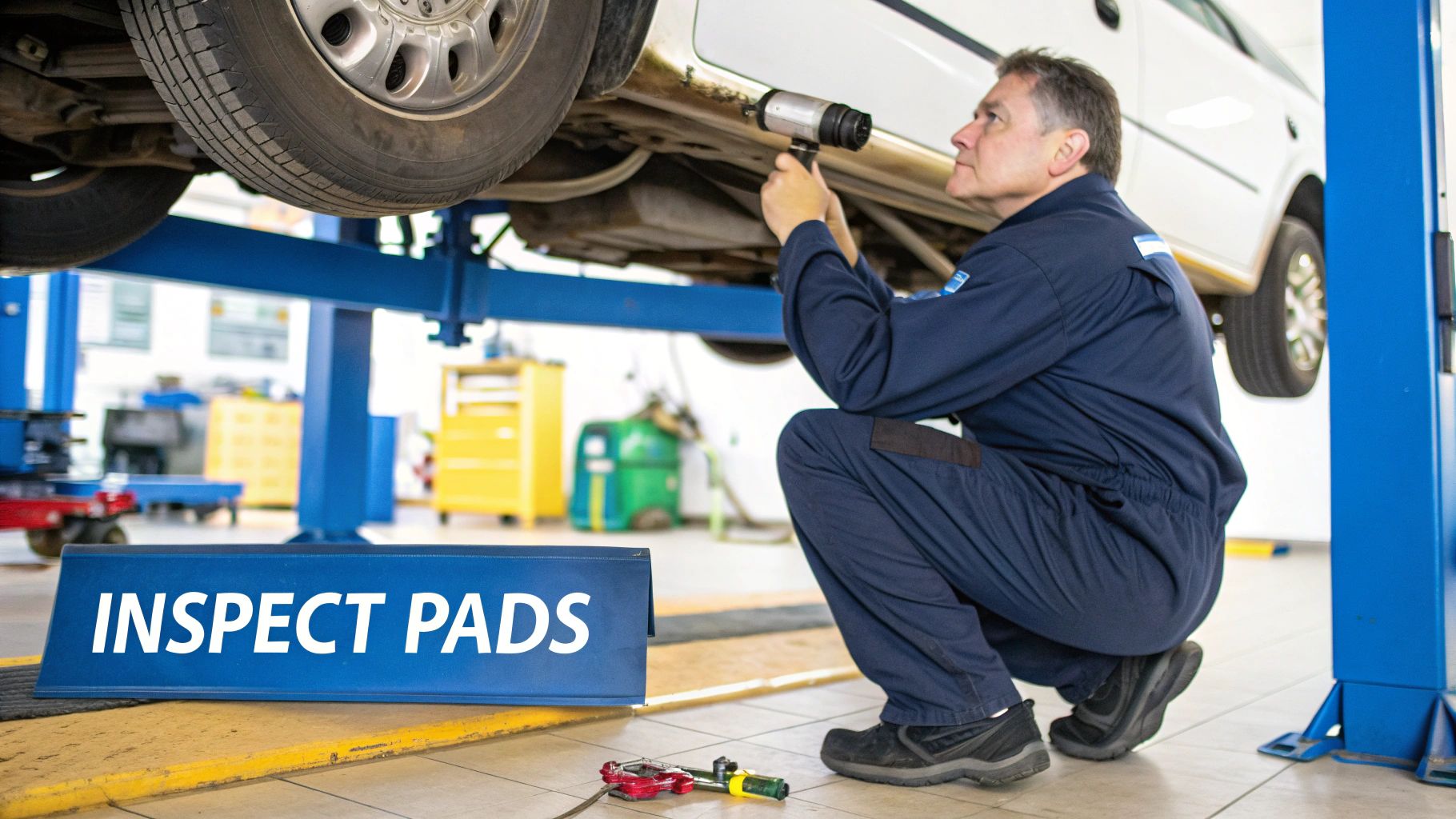
On many cars, you can get a glimpse of your brake pads by looking through the spokes of your wheels. Find the shiny metal disc—that’s your brake rotor. The component clamped around it is the caliper. Tucked inside, you’ll see the brake pad pressing against the rotor. You should see at least a quarter-inch (about 6mm) of the outer pad material. If it looks much thinner, it’s a clear sign you’re getting close to needing a replacement.
Checking Your Brake Fluid
Another easy check is under the hood. Locate your brake fluid reservoir—it’s usually a small, translucent plastic container near the back of the engine bay on the driver’s side. Here’s what to look for:
- Fluid Level: The fluid should be between the ‘MIN’ and ‘MAX’ lines. If it’s low, it could signal a leak or very worn brake pads.
- Fluid Color: Healthy brake fluid is clear with a slight yellowish tint. If it looks dark, murky, or brown, it has been contaminated with moisture and debris.
Dark fluid can lead to a spongy pedal and reduced stopping power. This is a major red flag that it’s time for service. To better understand the risks, check out our guide on the five signs your car desperately needs a brake fluid change.
How Driving Habits and Mileage Affect Brake Life
Ever wonder why your neighbor’s brakes seem to last 70,000 miles, while yours need attention after just 30,000? The answer almost always boils down to your driving style, your vehicle, and where you do most of your driving.
For instance, constant stop-and-go driving in Sun City traffic is much harder on brake pads than smooth cruising on the highway. Every stop creates friction and heat, which are the main culprits behind brake wear. Aggressive driving—mashing the brake pedal for hard, sudden stops—is the fastest way to wear out your brakes. Gentle, progressive braking is much kinder. By anticipating stops and coasting to slow down, you can add thousands of miles to the life of your pads and rotors.
On average, brake pads are replaced every 18,600 to 43,500 miles, while rotors often last about twice as long. This huge range highlights why your personal habits play such a massive role.
The type of vehicle you drive also makes a big difference. A heavy SUV needs more braking force to stop than a small sedan, leading to faster wear. Finally, the quality of the brake parts matters. Premium parts may cost more upfront but often deliver better performance and a longer service life. For more info on spotting wear, check out our guide on the top 5 most common brake problems and solutions.
Understanding Your Car’s Brake System
Knowing how your brakes work takes the mystery out of what’s happening when you press the pedal. Most modern cars use disc brakes on the front wheels—and often the back ones, too. The concept is like the hand brakes on a bicycle. A caliper squeezes brake pads against a spinning metal disc, the rotor, creating the friction that brings your car to a stop. This design is also excellent at shedding heat, which is crucial for preventing brake fade, especially in our hot Arizona climate. For more about this, read about the impact of heat on your brakes.
While disc brakes are standard, some vehicles might have drum brakes on the rear wheels, where brake shoes push outward against a spinning drum. They work, but they aren’t as efficient at managing heat.
By 2025, developed countries like the United States have a disc brake installation rate of 90-95% in passenger vehicles, driven by strict safety standards. You can discover more insights about this trend and how it affects brake services on MarketsandMarkets.com.
Your Trusted Partner for Sun City Brake Repair
Your safety on the road is everything, and that starts with knowing when your brakes need professional attention. The key takeaways are simple: listen for strange noises, feel for vibrations in the pedal, and keep an eye on visible wear. These are your car’s ways of telling you it needs help.
At Pete Nelson Automotive, our priority is providing Sun City drivers with honest advice and expert brake services. If you’ve noticed any of the signs we’ve discussed, our certified technicians are ready to perform a thorough inspection and give you a clear, straightforward recommendation. We believe in empowering our customers with knowledge and building relationships based on trust. Don’t let a small brake issue turn into a serious safety risk.
Frequently Asked Questions (FAQ)
How often should I get my brakes checked?
We recommend a professional brake inspection at least once a year or every 12,000 miles. This proactive check allows our technicians to measure your brake pad life, check the condition of your rotors, and assess your brake fluid. Regular inspections help catch potential issues before they become serious safety problems.
Can I replace just the brake pads and not the rotors?
Sometimes, yes. If your rotors are still in good condition and measure within the manufacturer’s specified thickness, they can often be resurfaced or left as-is. However, for the best performance and safety, replacing them together is often the best practice, especially in Arizona where heat can cause rotors to warp or wear more quickly.
What is the average cost of brake replacement in Sun City, AZ?
The cost varies depending on your vehicle’s make and model and what parts need to be replaced—just the pads, or rotors and calipers as well. The best way to get an accurate number is to bring your car in for an inspection. We will provide a transparent, detailed quote before any work begins. Be sure to check our Specials page for current deals on our services.
Your safety is our top priority. If you have any concerns about your brakes, please don’t wait. The team at Pete Nelson Automotive is here to provide the honest, expert service you can count on.
Call 623-974-4723 or visit petenelsonautorepair.com to schedule your appointment today.
Pete Nelson Automotive
This Offer Will Expire 12-31-2026
Pete Nelson Automotive is pleased to offer you
"Get Ready for the Holidays"
A $215.00 Value for Only $159.95 (+tax)
Lube, Oil, & Filter Change, Up to 5 quarts of Engine oil
Inspect and top off all fluid levels, Includes up to 5 Quarts of 5w30 synthetic blend oil, additional charge for synthetic oil.
Travel Evaluation
Set Air Pressures and Tire Rotation if needed.
Battery, Alternator and Starter Electrical Test
Load test battery, Alternator output and Starting amps.
Full Brake Evaluation
Includes check brake system on four wheels, checking and testing brake fluid condition.
So Call 623-974-4723 today and make an appointment for this exclusive Special!
*Most Cars, Vans, Motor homes, 4×4’s, Diesels, and some foreign cars may be higher. You must bring this letter at time of service and allow 2 hours to complete.



