Vehicle Safety Inspection Checklist for Safe Driving
You’re getting ready for a summer drive from Sun City, and the Arizona heat is already pressing against the windshield. Maybe your vehicle has spent the week on dusty roads, sat outside through extreme temperatures, or carried an aging battery that’s starting more slowly than usual. Add monsoon rain, highway speeds, and long stretches between services, and a quick safety check becomes a smart part of trip planning.
A vehicle safety inspection checklist helps you spot visible risks before they become roadside failures. It can reveal a soft tire, a failed light, a low fluid level, or a cracked belt. It won’t replace professional diagnosis for hidden wear, leaks, braking faults, alignment concerns, structural damage, or electronic warning systems. For background on a specific vehicle, you can also check Camry safety history.
Use this printable sequence system by system. Inspect the item, compare what you find with the pass or fail signs, note symptoms, and schedule service if the result is unclear or fails. Drivers searching for auto repair in Sun City AZ can use this process before visiting Pete Nelson Automotive, where trained technicians can test the systems that a driveway inspection can’t confirm.
1. Brake system inspection
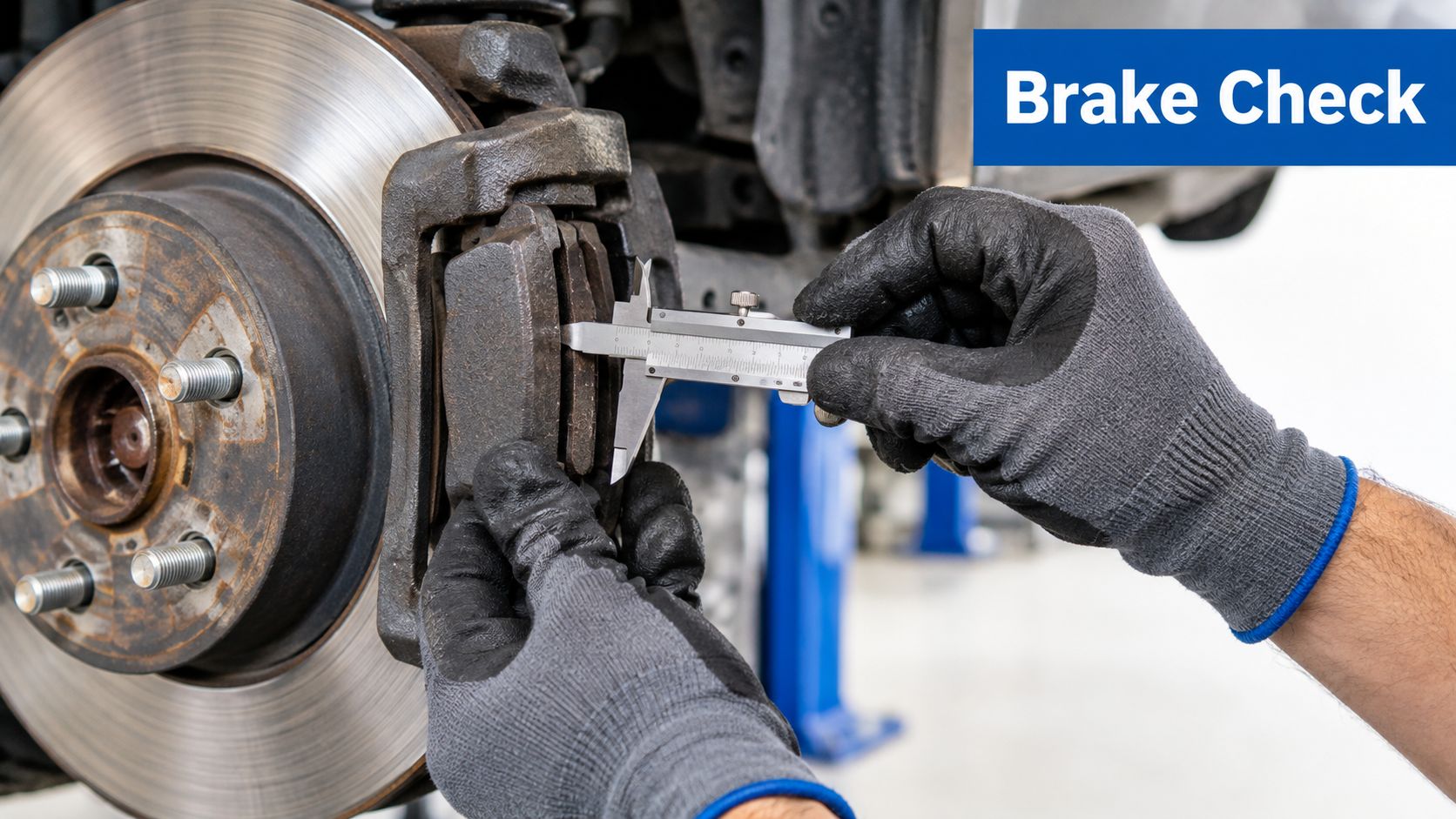
Brakes deserve the first serious check because a vehicle can look fine and still have a hydraulic or friction problem. Look through the wheels for visibly thin pads, deep rotor grooves, heavy rust, or blue discoloration. Check the brake fluid reservoir on level ground, but don’t assume a normal-looking fluid level proves the system is healthy.
A pass means the pedal feels firm and consistent, the vehicle stops without pulling, and there’s no grinding, pulsation, burning odor, or sudden change in stopping distance. A fail includes a soft or sinking pedal, grinding, a brake warning light, fluid below the marked range, or wetness around a wheel, hose, or caliper.
Arizona heat can accelerate brake-fluid deterioration and expose weaknesses in an already worn system. A slow caliper leak, for example, may first appear as low fluid and a soft pedal. A classic vehicle may also need deeper inspection when glazed rotors or aged hoses aren’t obvious during a quick walk-around.
What to do before driving
- Check the pedal: Press it with the engine running. It shouldn’t slowly sink under steady pressure.
- Listen during a test stop: Squeaking can indicate wear, while grinding requires prompt attention.
- Watch the wheel: Pulling or a pulsating pedal can point to uneven braking or rotor problems.
- Ask during routine service: A brake check during an oil change can catch wear before it damages other parts.
Have brakes inspected every 12 months, or sooner when symptoms appear. Don’t wait until pads are nearly gone. For help recognizing a hydraulic problem, review this guide to a brake fluid leak. A professional brake inspection should confirm pad thickness, rotor condition, brake lines, hoses, and fluid condition before a long trip.
2. Tire condition and tread depth
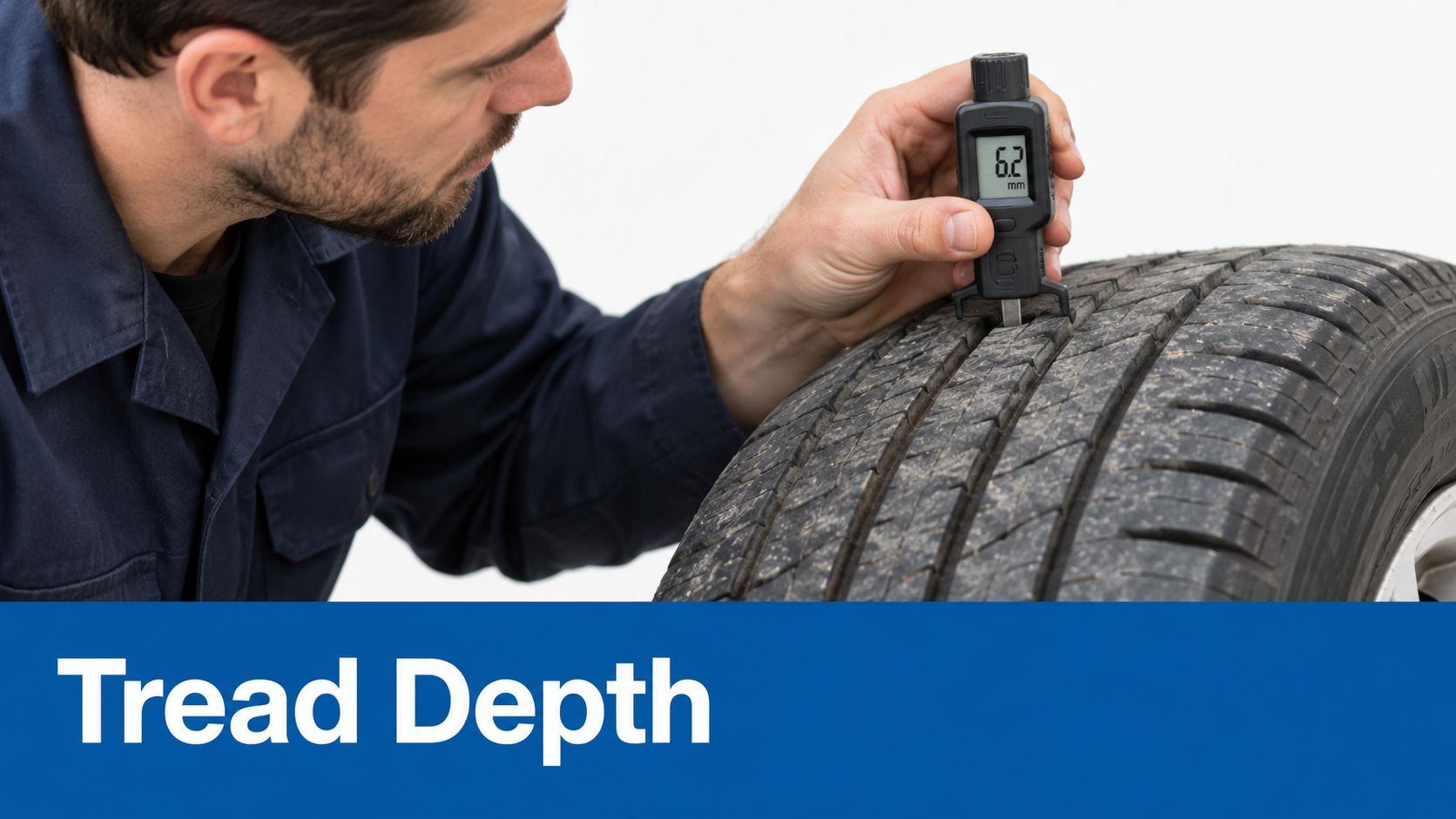
A tire can hold air and still be unsafe. Walk around all four tires and inspect the tread, inner and outer shoulders, sidewalls, and valve stems. Arizona pavement and heat can make cracking, uneven wear, and underinflation more consequential, especially before a highway trip.
Use the vehicle manufacturer’s recommended pressure, found on the driver’s door-jamb label, and check it when tires are cold. A pass means the pressure is correct, the tread wears evenly, and there are no bulges, exposed cords, deep cuts, cracks, or embedded objects. A fail means a visible sidewall defect, a tire that repeatedly loses pressure, severe shoulder wear, or tread approaching the wear indicators.
A quick driveway check
- Measure tread consistently: Check several points across each tire, not just the center.
- Look for uneven patterns: One worn edge can indicate alignment or suspension trouble.
- Inspect after dusty-road travel: Remove stones from the tread and look for punctures.
- Check the spare: A flat or deteriorated spare won’t help during a roadside emergency.
Rotate tires according to the vehicle and tire manufacturer’s guidance. The plan for your vehicle may also call for balancing or alignment when wear becomes uneven. If you’re unsure whether age, cracking, or tread loss means replacement, use this explanation of signs your tires need replacing.
3. Lighting system
Lighting checks are simple, but they’re easy to skip when you drive mostly during daylight. A complete walk-around includes headlights on low and high beam, taillights, brake lights, turn signals, hazard lights, parking lights, and the license plate light. The Nationwide vehicle inspection overview specifically includes these exterior lighting areas because they affect visibility and communication with other drivers.
Ask someone to stand behind the vehicle while you press the brake pedal. If you’re alone, use a reflection in a garage door or store window, then confirm the result before driving at night.
Pass and fail signs
A pass means every required light illuminates brightly, the turn indicators flash consistently, and lenses aren’t badly cracked or clouded. A fail includes a burned-out bulb, intermittent operation, corroded wiring, a loose socket, or headlights aimed so poorly that they reduce your view or glare into oncoming traffic.
Heat can shorten the useful life of bulbs, plastic lenses, and wiring insulation. If both taillights fail together, don’t just replace bulbs and leave. The cause may be a fuse, ground, socket, or wiring fault. A battery or charging concern can also affect electrical operation, so this guide on how to tell if an alternator is bad may help you recognize related symptoms.
4. Fluid levels and condition
Fluid checks work best with the engine cool, the vehicle parked level, and the owner’s manual nearby. Check the engine oil, coolant, transmission fluid where accessible, power steering fluid on applicable vehicles, and brake fluid. Don’t open a hot coolant reservoir. A sudden release of pressure can cause serious burns.
Engine oil should sit within the dipstick range and shouldn’t contain obvious coolant contamination or metal particles. Coolant should be at the proper reservoir mark, with no crusty residue around hoses, the radiator, or the water pump area. Transmission fluid that looks unusually dark or smells burnt needs professional evaluation rather than an automatic flush.
What a failed check can mean
- Low engine oil: Possible consumption or an external leak. Add the correct oil only as a temporary measure and find the cause.
- Low coolant: Possible leak, overheating risk, or air in the system. Never treat repeated top-offs as normal.
- Low brake fluid: Worn brake components or a hydraulic leak may be present.
- Noisy steering pump: Low power-steering fluid or a failing component may be responsible.
- Wet pavement underneath: Identify the fluid before driving farther.
Arizona heat places extra stress on fluids and cooling components. Use the fluid specified for your vehicle, and don’t mix products unless the manufacturer permits it. If you see oil around the engine or driveway, read about what causes an oil leak in vehicles. A shop can pressure-test cooling systems, inspect for leaks, and evaluate fluid condition with equipment a visual check can’t provide.
5. Suspension and steering system inspection
Sun City’s roads, construction areas, driveway edges, and potholes can expose suspension wear that isn’t visible from the driver’s seat. During a quiet road test, notice whether the vehicle pulls, wanders, shakes, or needs constant steering correction. Listen for clunks over bumps and clicking or popping during turns.
A pass means the steering responds predictably, the vehicle tracks straight on a suitable road, and the body settles quickly after a bump. A fail includes excessive bouncing, nose-diving under braking, pronounced body roll, a loose steering feel, uneven tire wear, or a clunk that repeats over bumps or while turning.
When alignment isn’t the whole answer
A steering wheel that sits off-center may need an alignment, but alignment can’t repair a worn tie rod, ball joint, spring, strut, or steering linkage. Replacing or adjusting the wrong part can leave the original safety problem in place. After hitting a pothole, have the system inspected before assuming a new tire or alignment will solve everything.
Listen for changes rather than waiting for a dramatic failure. This resource on whether your suspension is ready for Arizona roads explains symptoms that deserve attention. A technician can inspect components under load, measure alignment, and identify play that a driveway bounce test may miss.
Practical rule: If the vehicle pulls, steering feels loose, or a wheel wears unevenly, treat the symptom as a safety concern, not a comfort issue.
6. Battery health and electrical system
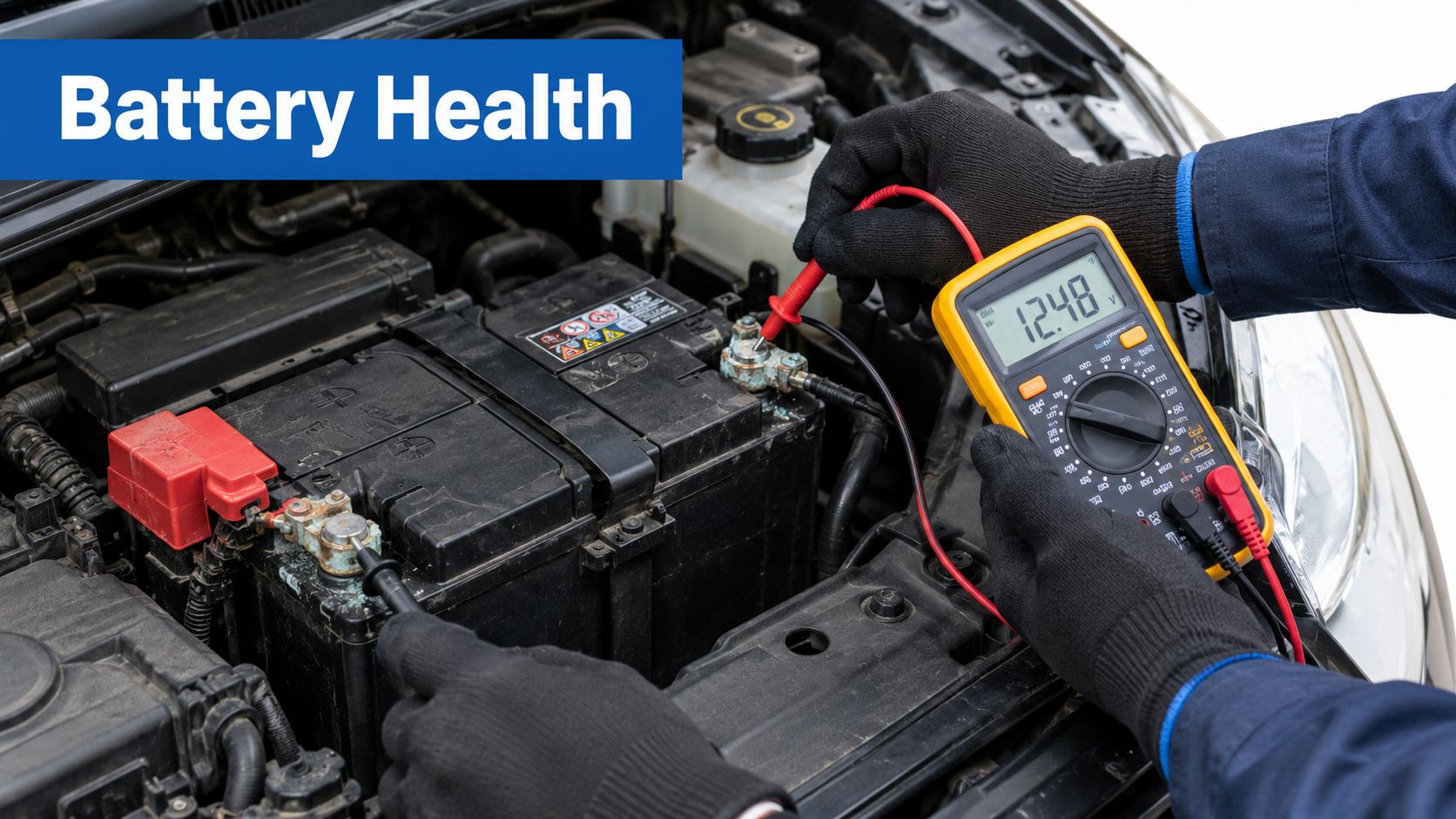
Arizona heat is hard on batteries, and a vehicle that starts normally today can fail without much warning. Inspect the battery case for swelling or damage, then look for white or blue-green corrosion at the terminals. Check that cables are secure, but don’t disconnect anything unless you understand the vehicle’s electrical requirements.
A pass means the engine cranks at normal speed, the terminals and cables are sound, and no charging warning remains illuminated after startup. A fail includes slow cranking, repeated clicking, dimming lights, an electrical warning light, a swollen battery case, or corrosion that returns after cleaning.
Testing is safer than guessing
A visual check can’t measure reserve capacity or charging performance. A professional battery and charging-system test can identify a weak battery, poor cable connection, or alternator fault before the vehicle leaves you stranded. That’s especially useful before summer travel or when a battery has already shown slow starting.
Have the battery tested annually and before demanding travel. Clean minor terminal corrosion only with the correct protection and safety precautions, and never ignore a charging warning. If the vehicle needs a jump repeatedly, the battery may not be the only problem.
7. Air filter and cabin air filter condition
Dusty desert roads can load filters faster than a clean suburban commute. The engine air filter protects the intake system and supports proper airflow, while the cabin filter helps keep dust and pollen out of the passenger compartment. On many vehicles, the cabin filter sits behind the glove box and the engine filter sits in an airbox under the hood.
A pass means the filter media is intact and reasonably clean, with no heavy dust matting, oil saturation, moisture, or collapse. A fail means the engine filter is visibly restricted or damaged, or the cabin filter is packed with debris and causing a musty smell, weak airflow, or poor defroster performance.
Make the check part of routine service
Ask to see both filters during an oil service. Replace them according to the manufacturer’s schedule and sooner when your driving conditions load them heavily. Don’t judge an engine filter by color alone. Some filter media is naturally dark, and a technician should evaluate restriction and fit as well as appearance.
A dirty cabin filter is primarily a comfort and airflow concern, but a badly restricted engine filter can affect performance and intake protection. If the check-engine light is on, filter replacement alone may not explain the fault. Scan the vehicle and diagnose the stored code instead of guessing.
8. Wiper blades and washer fluid system
Monsoon rain can turn a familiar Sun City route into a visibility test within minutes. Dust storms create another problem, because a dry windshield covered with fine grit can smear badly when the wipers first move. Inspect the rubber edges for cracks, hardening, splitting, or sections that no longer contact the glass.
Fill the washer reservoir with the correct fluid and test every nozzle. A pass means the spray reaches the intended glass area, the pump sounds normal, and the blades clear water without streaks, chatter, or skipped sections. A fail includes a blocked nozzle, empty reservoir, weak spray, loose arm, cracked blade, or windshield damage in the driver’s viewing area.
Don’t overlook the glass
A small chip can spread in heat and may interfere with clear vision. A loose wiper arm can scratch the windshield if the blade lifts or the retaining clip fails. Replace worn blades before the first serious storm, and test them with washer fluid rather than dragging them across dry dust.
If the pump doesn’t run, check the fluid level and fuse only if you know the vehicle’s layout. Electrical testing may be needed when the reservoir is full but the pump remains silent. Visibility problems are a good reason to stop driving until the system works correctly.
9. Hoses and belts inspection
Belts and hoses often fail after a period of gradual deterioration, but the first visible crack may not show the full condition. With the engine off and cool, inspect accessible belts for fraying, missing ribs, glazing, oil contamination, and improper routing. Check coolant and other rubber hoses for bulges, soft areas, cracks, wetness, or loose clamps.
A pass means the belt runs correctly, the tension appears appropriate for the vehicle, and hoses are firm without swelling or leaks. A fail includes squealing at startup, belt wobble, exposed reinforcement, coolant residue, a hose that feels unusually soft, or a clamp that has allowed fluid to escape.
Why Arizona changes the maintenance conversation
Heat accelerates rubber deterioration. A belt failure can remove alternator, water-pump, power-steering, or air-conditioning operation depending on the vehicle’s design. A hose rupture can cause rapid coolant loss and overheating. Those failures may happen after a vehicle has passed a basic visual check, which is why annual professional inspection matters.
Look under the engine after parking, but don’t reach near belts while the engine is running. If you smell coolant, see a colored deposit, or hear a chirp that changes with engine speed, schedule diagnosis before a long trip. Replace aging components proactively when inspection shows deterioration rather than waiting for a roadside failure.
10. Exhaust system condition and emissions
An exhaust inspection starts with your ears and nose. Listen for a new ticking, hissing, rumbling, or unusually loud sound around the engine or underneath the vehicle. Look for hanging pipes, damaged heat shields, broken hangers, soot marks, or obvious holes, but don’t crawl under a vehicle supported only by a jack.
A pass means the exhaust is secure, quiet for the vehicle, and free of obvious leaks or warning lights. A fail includes exhaust fumes in the cabin, a dragging muffler, loud new noise, visible damage, or a check-engine light that remains on. Exhaust leaks can also affect sensor readings and emissions performance.
When diagnostics are required
A check-engine light doesn’t identify the failed part by itself. The fault may involve an oxygen sensor, catalytic converter efficiency, evaporative system, fuel control, or another emissions-related component. A scan tool provides a starting code, but the repair still requires testing and confirmation.
Don’t delay when you smell exhaust inside the passenger area. Open the windows, leave the vehicle safely, and arrange professional evaluation. For owners who want added visibility into vehicle status between visits, this option to monitor vehicle health remotely may complement, but not replace, hands-on inspection.
10-Point Vehicle Safety Inspection Comparison
| Inspection Item | Implementation Complexity 🔄 | Resource & Time ⚡ | Expected Outcomes ⭐📊 | Ideal Use Cases 💡 | Key Advantages ⭐ |
|---|---|---|---|---|---|
| Brake System Inspection | Moderate, technical checks, ABS testing 🔄🔄🔄 | Moderate, specific tools, ~30–60 min ⚡⚡ | ⭐⭐⭐⭐⭐ / Prevents brake failure; restores stopping power 📊 | Annual safety check, pre-trip, soft pedal or noises | Prevents accidents; extends rotor life; detects leaks early |
| Tire Condition and Tread Depth | Low, simple measurements and visual checks 🔄🔄 | Low, gauge/visual; quick monthly check ⚡ | ⭐⭐⭐⭐ / Reduces blowout risk; improves grip and fuel economy 📊 | Monthly checks, before highway travel or summer heat | Prevents blowouts; improves handling and fuel efficiency |
| Lighting System (All Lights) | Low–Moderate, bulb & wiring tests; some housings complex 🔄🔄🔄 | Low, bulbs, multimeter; occasional professional labor ⚡⚡ | ⭐⭐⭐⭐ / Restores visibility and legal compliance 📊 | Night driving, pre-trip, after bulb failure or dim beams | Improves visibility; avoids citations; long-life LED options |
| Fluid Levels and Condition | Moderate, multiple fluid tests and leak checks 🔄🔄🔄 | Moderate, various testers; may require flush services ⚡⚡ | ⭐⭐⭐⭐ / Prevents overheating and component failure 📊 | Regular maintenance, before summer, if overheating or leaks | Protects engine/transmission; cost-effective preventive care |
| Suspension & Steering Inspection | High, alignment and component play tests 🔄🔄🔄🔄 | Moderate–High, lift, alignment machine; can be time‑consuming ⚡⚡⚡ | ⭐⭐⭐⭐ / Restores stability, reduces uneven tire wear 📊 | Rough roads, pulling steering, noisy/clunking suspension | Improves control and comfort; prevents rapid tire wear |
| Battery & Electrical System | Low, voltage/load tests and terminal checks 🔄🔄 | Low, multimeter/tester; quick annual check ⚡ | ⭐⭐⭐⭐ / Prevents no‑start events; detects charging faults 📊 | Pre‑summer check, slow cranking, aging batteries (~3–4 yrs) | Predicts failure; improves starting reliability; simple fixes |
| Air Filter & Cabin Filter | Low, visual inspection; usually DIY 🔄🔄 | Very Low, inexpensive parts; minutes to replace ⚡⚡ | ⭐⭐⭐ / Improves fuel economy and cabin air quality 📊 | Dusty climates (Arizona), during oil changes, poor HVAC airflow | Low cost; protects engine; easy DIY replacement |
| Wiper Blades & Washer System | Low, visual and spray pattern checks 🔄🔄 | Very Low, quick replacement; refill fluid ⚡⚡ | ⭐⭐⭐ / Ensures clear visibility in dust/monsoon conditions 📊 | Monsoon/dust season, before long trips, streaking wipers | Inexpensive; critical for safety; fast service |
| Hoses & Belts Inspection | Moderate, visual/tension checks; routing assessment 🔄🔄🔄 | Moderate, some replacements are labor‑intensive ⚡⚡⚡ | ⭐⭐⭐⭐ / Prevents overheating and sudden breakdowns 📊 | High‑mileage, older vehicles, after overheating or squeal noises | Prevents catastrophic failures; relatively low replacement cost |
| Exhaust System & Emissions | Moderate, visual, leak & emissions tests 🔄🔄🔄 | Moderate, inspections and possible diagnostics ⚡⚡ | ⭐⭐⭐ / Prevents CO ingress; improves performance and compliance 📊 | Emissions testing, loud exhaust, check engine light on | Protects cabin air quality; ensures emissions compliance |
Turn Your Checklist Into Safer Miles
A useful inspection is orderly, repeatable, and honest about its limits. Start with the items that can affect immediate control: tires, brakes, lights, fluids, steering, and suspension. Then check the battery and charging system, air and cabin filters, wipers and washer fluid, belts and hoses, and exhaust. This sequence moves from contact with the road and stopping ability to visibility, reliability, and emissions concerns.
A driveway walk-around can reveal a low tire, failed bulb, fluid stain, cracked hose, worn wiper, or visibly damaged belt. It can also help you describe a symptom clearly when you call a repair shop. Write down what you saw, when it happens, whether the engine was hot or cold, and whether a dashboard warning appeared.
Don’t turn a failed check into a guess-and-replace project. Low brake fluid may indicate worn pads or a leak. Unusual tire wear may come from alignment, suspension, inflation, or a damaged component. A warning light requires code retrieval and testing, not just clearing the light. Charging faults need electrical measurements, and exhaust concerns may require leak testing, sensor diagnosis, and emissions-related evaluation.
Know when to hand off the diagnosis
Professional attention is the safer choice when you find:
- Brake concerns: A soft pedal, grinding, pulsation, pulling, or low fluid.
- Tire or steering concerns: Sidewall damage, repeated pressure loss, wandering, or severe uneven wear.
- Fluid problems: An unexplained leak, repeated coolant loss, or fluid that looks or smells abnormal.
- Electrical warnings: A charging light, repeated no-start, dimming lights, or suspected alternator problem.
- Suspension symptoms: Clunks, excessive bouncing, loose steering, or damage after a pothole.
- Exhaust faults: Cabin fumes, a dragging component, loud new noise, or a persistent check-engine light.
Pete Nelson Automotive serves Sun City and the West Valley at 9000 N 103rd Ave with ASE-certified technicians and more than 50 years of combined experience. The shop handles brake service, computer diagnostics, transmission work, wheel alignments, air conditioning, tires, and oil changes for domestic vehicles, imports, classic cars, and modern models. Its women-friendly environment, clear communication, courtesy shuttle, and on-site automatic car wash can make routine maintenance easier to manage.
For routine needs, ask about the Smooth Ride Special, which combines a lube, oil, and filter change with fluid top-off, a bumper-to-bumper trip safety inspection, and four-tire balance and rotation. If you’re preparing for a longer drive, a bumper-to-bumper trip inspection can provide a more complete review than a quick home check. Brake symptoms, warning lights, alignment concerns, and starting problems deserve the corresponding brake or diagnostic service rather than a basic oil visit.
A checklist also helps you plan instead of react. Keep a printed copy in the glove box, mark each result, and bring the notes to your appointment. If you see a failed pass or fail item, don’t keep driving just because the vehicle still moves. A trained technician can determine whether the issue needs immediate repair, a scheduled service, or additional testing.
Use the checklist before summer highway travel, after a hard pothole impact, when a vehicle begins handling differently, and whenever a warning light appears. Routine oil changes and inspections can uncover developing problems, but they don’t replace a system-specific diagnosis when symptoms point to a deeper fault. Drivers looking for brake services in Sun City or dependable auto repair in Sun City AZ can contact Pete Nelson Automotive for a clear explanation of the finding and the next safe step.
Pete Nelson Automotive can perform safety inspections, brake checks, computer diagnostics, battery and charging tests, suspension evaluations, tire service, alignments, oil changes, and related repairs for all makes and models. Schedule your visit before a road trip or bring in the vehicle when a checklist item fails, and ask about current service specials and eligible discounts for active law enforcement, firefighters, and military personnel.
For a system-by-system vehicle safety inspection in Sun City, Pete Nelson Automotive can check the items you can’t confirm at home, including brakes, tires, battery charging, suspension, fluids, and warning systems. Visit Pete Nelson Automotive to schedule maintenance or repair, and bring your completed checklist so the team can focus quickly on the symptoms you found. Call 623-974-4723
or visit petenelsonautorepair.com to schedule your appointment today.
Pete Nelson Automotive
This Offer Will Expire 12-31-2026
Pete Nelson Automotive is pleased to offer you
"Get Ready for the Holidays"
A $215.00 Value for Only $159.95 (+tax)
Lube, Oil, & Filter Change, Up to 5 quarts of Engine oil
Inspect and top off all fluid levels, Includes up to 5 Quarts of 5w30 synthetic blend oil, additional charge for synthetic oil.
Travel Evaluation
Set Air Pressures and Tire Rotation if needed.
Battery, Alternator and Starter Electrical Test
Load test battery, Alternator output and Starting amps.
Full Brake Evaluation
Includes check brake system on four wheels, checking and testing brake fluid condition.
So Call 623-974-4723 today and make an appointment for this exclusive Special!
*Most Cars, Vans, Motor homes, 4×4’s, Diesels, and some foreign cars may be higher. You must bring this letter at time of service and allow 2 hours to complete.



