Picture this: you’re driving through Sun City on a beautiful Arizona day, enjoying the familiar streets. You approach a stop sign and press the brake pedal, but instead of that firm, reassuring feedback, it feels mushy and sinks right to the floorboard. It’s a heart-stopping moment that signals a serious problem, and it’s not safe to keep driving.
When your brake pedal goes to the floor, it’s a tell-tale sign that your vehicle has lost hydraulic pressure. This dangerous situation usually points to a severe brake fluid leak, a failing master cylinder, or air trapped in the brake lines. Whatever the cause, this is one of those times you absolutely need to get it checked out by a professional, immediately. At Pete Nelson Automotive, we want you to be informed and safe, so let’s break down what’s happening.
What It Means When Your Brake Pedal Sinks
That sinking feeling is your car’s way of screaming for help. It’s a direct signal that the hydraulic system—the very core of your braking power—has a major issue. Knowing what’s going on can help you push past that initial panic and take the right steps to get it fixed by a trusted local expert.
The Most Common Culprits
When a brake pedal goes to the floor, it almost always comes down to a loss of hydraulic pressure. Think of your brake fluid as the muscle in the system. If it can’t build up pressure, your car can’t stop. Simple as that. Here are the main reasons this happens:
- Brake Fluid Leaks: This is, by far, the most frequent cause. A leak in a brake line, hose, or caliper lets that essential fluid escape. When it’s gone, there’s nothing left to create the pressure needed to squeeze the brake pads against the rotors.
- Master Cylinder Failure: The master cylinder is the component that actually generates hydraulic pressure when you step on the pedal. If its internal seals wear out and fail, fluid can bypass them entirely. The result is a pedal that sinks without ever really applying the brakes.
- Air in the Brake Lines: Your brake system is a completely sealed loop that should only contain brake fluid. If air gets in—maybe from a shoddy repair job or a tiny leak—it messes everything up. Air compresses easily, unlike fluid, which leads to that spongy pedal feel and a drop straight to the floor.
A sinking brake pedal is one of the most serious safety hazards a driver can face. The moment you notice this symptom, your vehicle should be considered unsafe to operate until it has been inspected by a professional.
The data from the field backs this up. Brake fluid leaks are the culprit in an estimated 60-70% of cases where a pedal drops to the floor. Right behind that, about 20-25% of these failures are traced back to a faulty master cylinder. If you want to get into the nitty-gritty of why this happens, you can explore detailed brake failure analyses here.
Quick Guide to Sinking Brake Pedal Causes
This table outlines the most common reasons your brake pedal might sink, the signs to watch for, and how quickly you need to act.
| Potential Cause | Common Symptoms | Repair Urgency |
|---|---|---|
| Brake Fluid Leak | Puddle of clear/yellowish fluid under the car, spongy pedal, brake warning light on | Immediate |
| Master Cylinder Failure | Pedal sinks slowly to the floor when held down, may feel firm initially then fade | Immediate |
| Air in Brake Lines | Spongy or soft pedal feel, requires pumping the pedal to build pressure | High |
Recognizing these symptoms early can be the difference between a routine repair and a dangerous situation on the road. Don’t take any chances with a failing brake system.
Diagnosing the Root Cause of Brake Failure
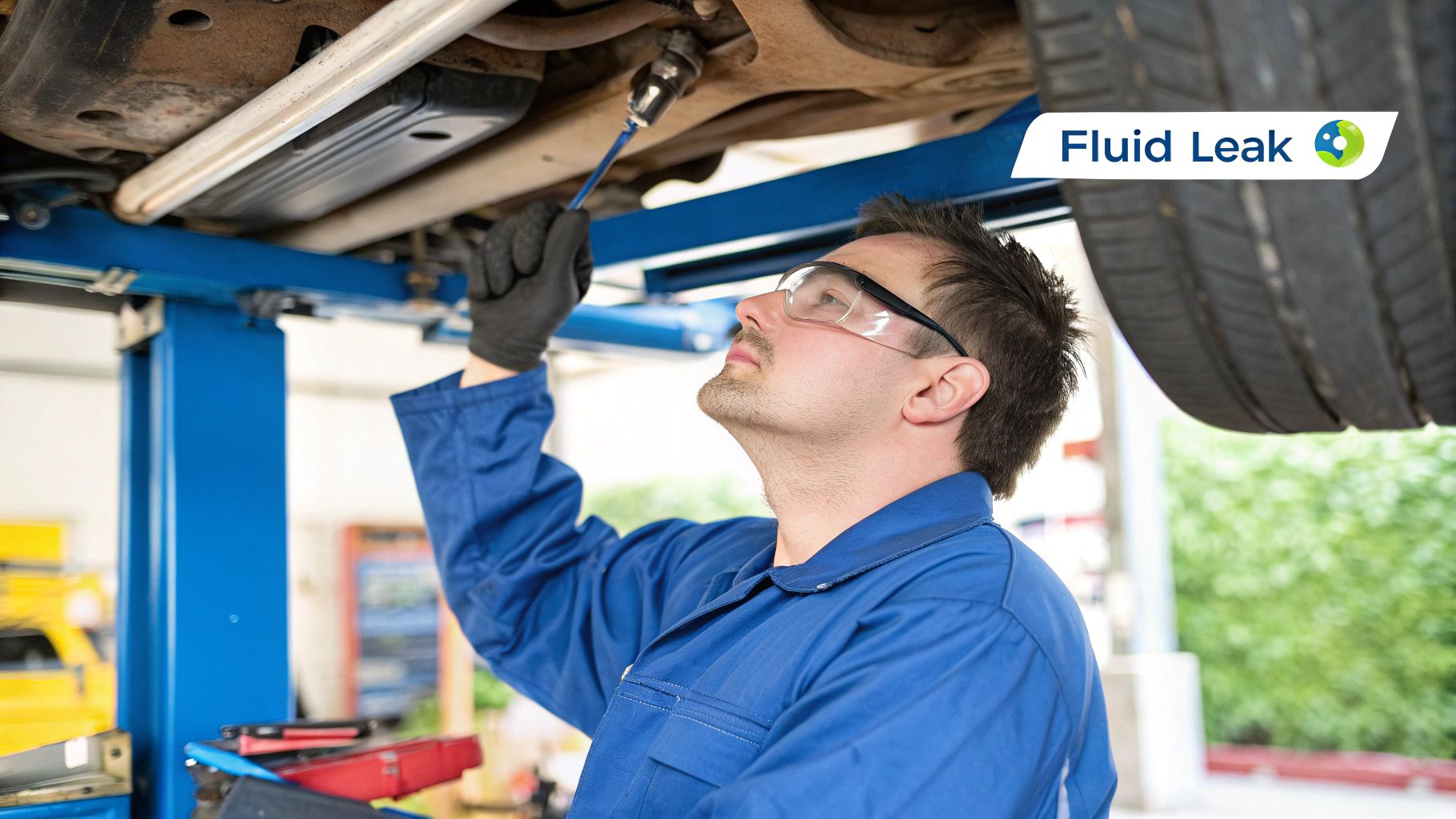
When your brake pedal hits the floor, your car is sending out a clear S.O.S. that needs immediate attention. The first thing we do as technicians is put on our detective hats and trace the problem all the way back to its source. The diagnostic process is systematic and designed to pinpoint exactly where that critical hydraulic pressure is escaping.
We start by thinking about the brake system’s key players: the master cylinder (the heart), the brake lines (the arteries), and the calipers or wheel cylinders (the muscles). A failure in any one of these parts can cause that sinking pedal.
The Search for Leaks
More often than not, the reason a brake pedal goes to the floor is an external fluid leak. Our technicians kick things off with a thorough visual inspection, checking every single inch of the brake system for any signs of escaping fluid. This includes:
- Brake Hoses: The flexible rubber hoses that connect to each wheel can crack and dry out, especially here in the Arizona climate.
- Brake Lines: We trace the metal lines running along your car’s undercarriage. They can rust through or get damaged by road debris, leading to tiny pinhole leaks.
- Calipers and Wheel Cylinders: The seals around the pistons in these parts can fail over time, causing fluid to seep out right around the wheels.
Often, the giveaway is a tell-tale puddle of clear or brownish fluid under your car. If you spot that, it’s a major red flag. Finding the source of a brake fluid leak is the first big step toward getting a safe, effective repair done.
Internal vs. External Failures
Sometimes, the problem isn’t leaving any evidence on the garage floor. A master cylinder can actually fail internally, which is a much trickier issue to diagnose. What happens is the internal seals wear out, allowing fluid to bypass them right inside the cylinder itself. You press the pedal, but the fluid just slips past the worn seal instead of pushing out to the brakes.
When we diagnose pedal travel issues, we’re typically looking at three main culprits: external fluid leaks, internal master cylinder failures, and air in the lines. Industry data shows that a whopping 85% of master cylinder failures involve internal seal wear, which causes that frustrating fluid bypass.
Whether it’s a straightforward leak or a complex internal failure, a professional inspection is the only way to know for sure. While this isn’t a DIY guide, our goal is to give you the knowledge you need for a more confident conversation when you bring your car in for brake repair services in Sun City. We’ll always walk you through our findings so you understand exactly what’s needed to get you back on the road safely.
How to Handle Sudden Brake Failure on the Road
Few things behind the wheel are more terrifying than pushing the brake pedal and feeling it sink straight to the floor. Your first instinct might be to panic, but staying calm and taking decisive action can be the difference between a controlled stop and a catastrophe.
Your Immediate Action Plan
If your brakes suddenly fail, your immediate goal is to slow the car down and get off the road safely. Follow these steps:
- Don’t Panic & Take Your Foot Off the Gas: This is the first and most important step. Your car will naturally start to slow down.
- Pump the Brake Pedal: Pump the pedal hard and fast. This can sometimes build up just enough hydraulic pressure to give you some stopping power.
- Use Engine Braking: Shift your car into a lower gear.
- Automatic Transmission: Shift down into a lower gear (L, 2, or 1).
- Manual Transmission: Downshift through your gears one at a time.
- Engage the Parking Brake Slowly: If you still need more stopping power, pull the parking brake lever or press the pedal slowly and steadily. A sudden application can lock the rear wheels and cause a spin.
- Steer to Safety: Keep your eyes on the road, use your signals, and look for a safe place to pull over, like the shoulder or an empty lot.
After You Have Stopped Safely
Once you’re safely off the road, turn on your hazard lights immediately. Whatever you do, do not try to drive the vehicle again. A brake pedal that goes to the floor isn’t a minor hiccup; it signals a critical failure. Your very next call should be to a tow truck. Recognizing the early warning signs you need brake repair can often prevent these scary emergencies from ever happening.
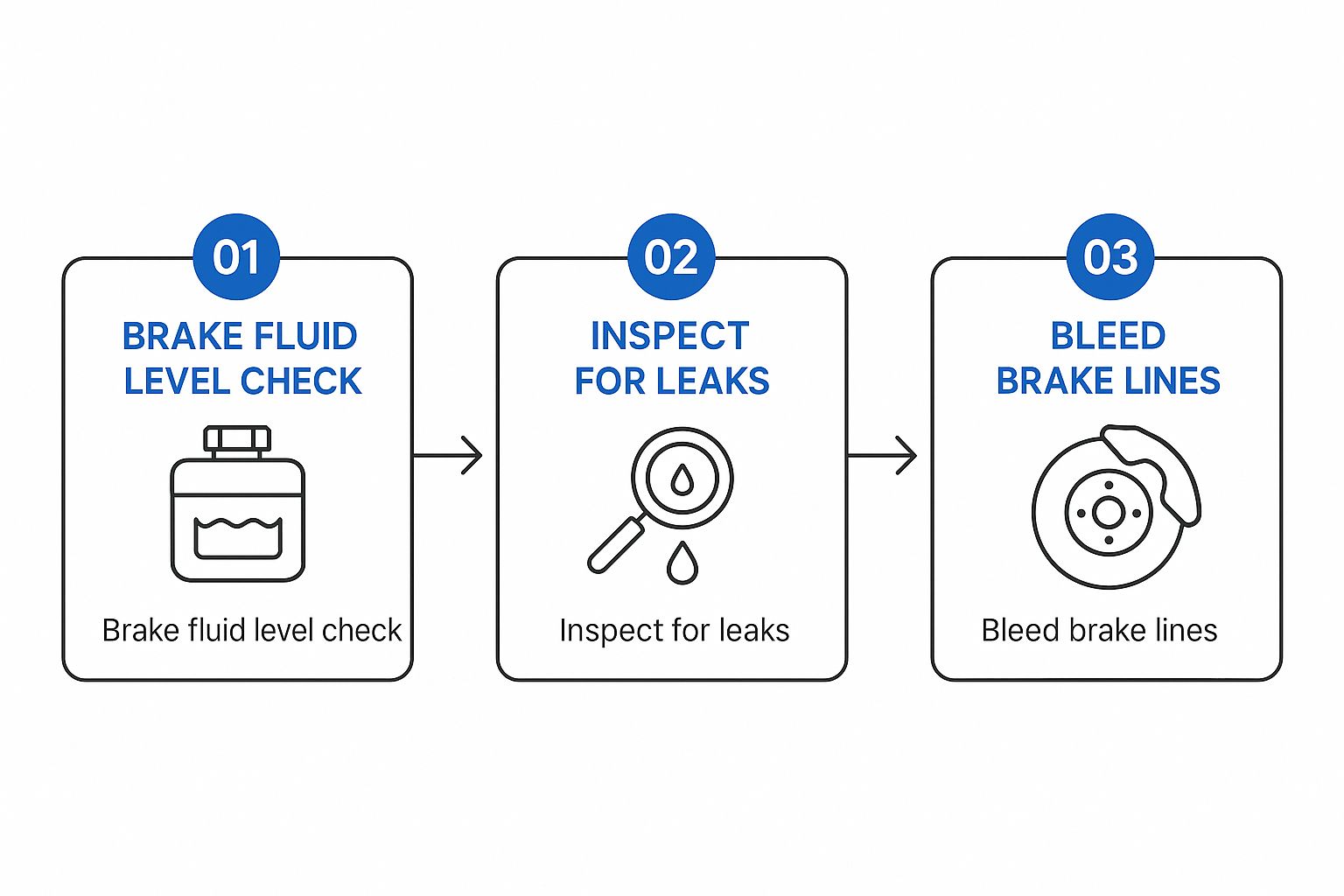
This systematic process ensures that whether the problem is as simple as low fluid, a hidden leak somewhere, or air in the brake lines, it gets found and fixed right.
Proactive Maintenance to Prevent Brake Problems
The best repair is the one you never have to make, and that couldn’t be more true for your vehicle’s brakes. A little proactive care can keep you from ever facing that heart-stopping moment. That reliability gives you peace of mind every single time you turn the key.
Don’t Ignore Your Brake Fluid
One of the most overlooked parts of your brake system is the fluid. Brake fluid is hygroscopic, meaning it absorbs moisture from the air. Over time, that moisture lowers the fluid’s boiling point. When you hit the brakes hard on a blistering Sun City afternoon, the heat can boil the water in your lines, creating steam bubbles. This leads to a spongy pedal and a dangerous situation called brake fade.
An ounce of prevention is truly worth a pound of cure when it comes to your brakes. Regular inspections and fluid flushes are the single best way to protect against internal corrosion and maintain the integrity of your hydraulic system.
 Routine Inspections Are Non-Negotiable
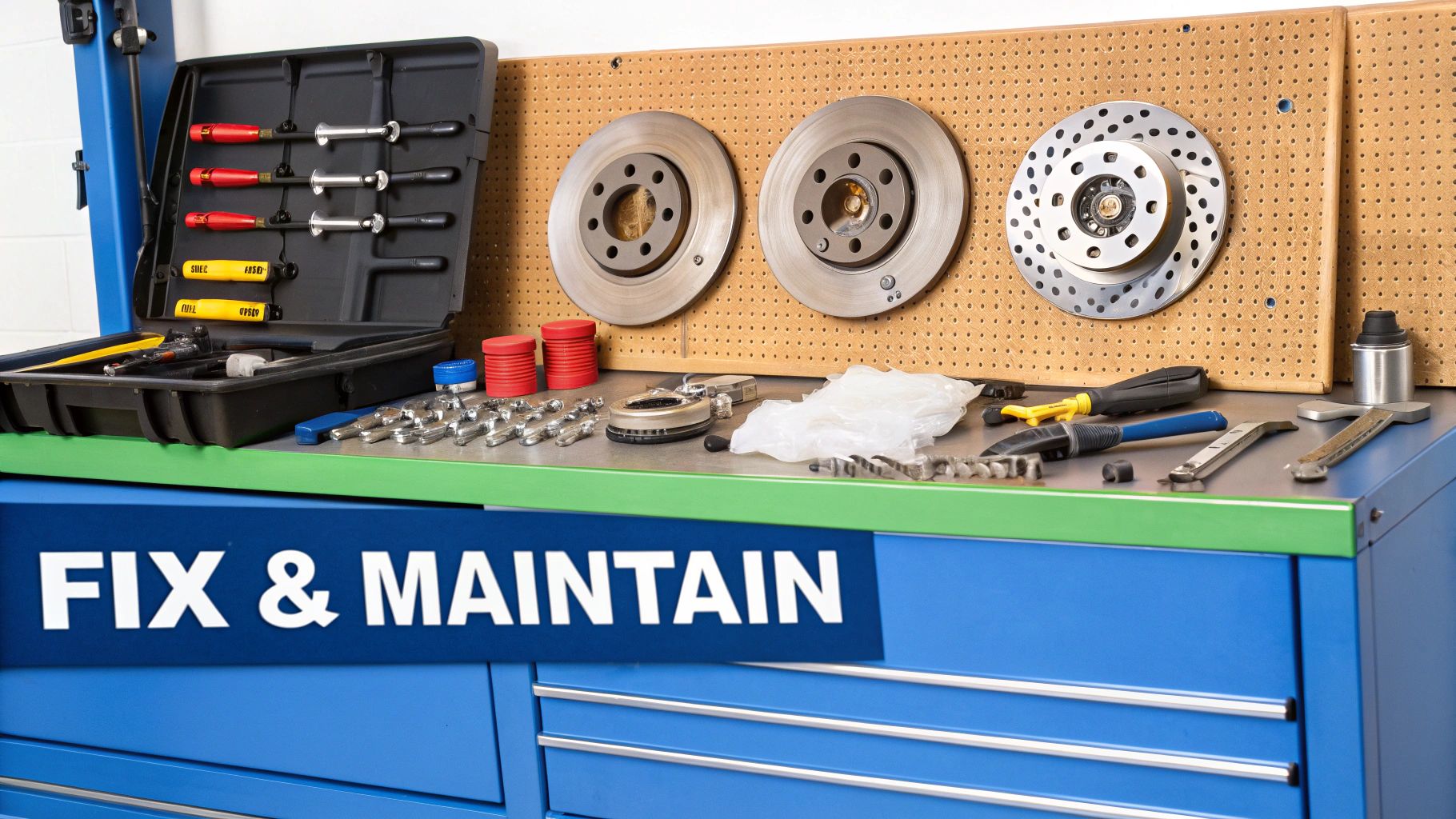
Beyond the fluid, all the physical parts of your brake system need a regular once-over. Here in Arizona, the dry heat is especially tough on rubber and metal components. A thorough brake inspection should be a standard part of your vehicle’s maintenance schedule. Here’s what we always look for during our brake services Sun City:
- Brake Lines and Hoses: We check for any signs of cracking, brittleness, or rust.
- Calipers and Wheel Cylinders: We inspect for fluid leaks and ensure they move freely.
- Brake Pads and Rotors: We ensure they have plenty of life left for optimal stopping power.
Staying on top of this routine care isn’t just about avoiding emergencies; it’s about saving money in the long run. Catching small issues early prevents them from snowballing into major repairs. It’s all part of a smart approach to vehicle ownership, and you can learn more about the benefits of scheduled maintenance on our blog.
Your Essential Brake System Maintenance Checklist
| Maintenance Task | Recommended Interval | Why It’s Important |
|---|---|---|
| Brake Fluid Check & Flush | Every 2 years or 30,000 miles | Prevents moisture buildup, corrosion, and brake fade. |
| Visual Inspection | Every 6 months or with oil change | Catches cracks in hoses, rust on lines, and early signs of leaks. |
| Pad & Rotor Measurement | Every 12 months or 15,000 miles | Ensures adequate stopping material and prevents damage. |
| Caliper & Hardware Check | Annually | Confirms calipers move freely, ensuring even brake pressure. |
Your Trusted Partner for Brake Repair in Sun City
When your vehicle’s safety is on the line, especially when a brake pedal goes to the floor, you need an auto repair shop you can depend on. That sinking feeling is an urgent signal that your car needs immediate, professional attention.
At Pete Nelson Automotive, our reputation as the trusted choice for auto repair Sun City AZ is built on honesty, ASE-certified expertise, and a commitment to our customers’ safety. We believe in doing things the right way, every single time. That means using high-quality parts, being transparent, and providing straightforward, honest advice. You won’t get any confusing jargon here—just clear explanations focused on getting you back on the road safely. The principles of quality and trust are universal, and knowing what makes for the best luxury cars repair shops can give you an idea of the high standards we hold ourselves to.
Your safety is our absolute number one priority. We treat every vehicle that comes into our shop as if it were our own, ensuring every repair is done right the first time.
Our friendly team is always here to answer your questions and make the whole process as smooth as possible. From a fluid check to a master cylinder replacement, our team has the skills to handle it all.
Frequently Asked Questions (FAQ)
Why does my brake pedal go to the floor when I stop?
A brake pedal that sinks to the floor when you hold it down at a stop is a classic sign of a failing master cylinder. The internal seals are likely worn out, allowing brake fluid to bypass them instead of maintaining pressure. This is a critical safety issue that requires immediate professional diagnosis and repair.
How much does it cost to fix a spongy brake pedal?
The cost can vary widely depending on the cause. A simple brake bleed to remove air from the lines is relatively inexpensive. However, if the cause is a leaking brake line, a faulty caliper, or a failed master cylinder, the repair will be more involved and costly. A proper inspection is needed to provide an accurate estimate.
Is it safe to drive if I have to pump my brakes?
No, it is extremely unsafe. Having to pump your brakes to build pressure indicates a serious problem in the hydraulic system, such as a major fluid leak or a failing master cylinder. There is a high risk of sudden and complete brake failure. Your vehicle should be towed to a repair shop immediately.
How often should I get my brakes checked in Arizona?
Given the harsh heat in Arizona, which can accelerate the wear on rubber and fluid components, we recommend a thorough brake inspection at least once a year or every 12,000 miles. This proactive check helps catch small problems like cracked hoses or contaminated fluid before they become dangerous failures.
Your safety is our top priority. If you’re experiencing any of these issues, don’t wait. Let the trusted, ASE-certified team at Pete Nelson Automotive provide the expert service and peace of mind you deserve.
Call 623-974-4723 or visit petenelsonautorepair.com to schedule your appointment today.
Pete Nelson Automotive
This Offer Will Expire 12-31-2026
Pete Nelson Automotive is pleased to offer you
"Get Ready for the Holidays"
A $215.00 Value for Only $159.95 (+tax)
Lube, Oil, & Filter Change, Up to 5 quarts of Engine oil
Inspect and top off all fluid levels, Includes up to 5 Quarts of 5w30 synthetic blend oil, additional charge for synthetic oil.
Travel Evaluation
Set Air Pressures and Tire Rotation if needed.
Battery, Alternator and Starter Electrical Test
Load test battery, Alternator output and Starting amps.
Full Brake Evaluation
Includes check brake system on four wheels, checking and testing brake fluid condition.
So Call 623-974-4723 today and make an appointment for this exclusive Special!
*Most Cars, Vans, Motor homes, 4×4’s, Diesels, and some foreign cars may be higher. You must bring this letter at time of service and allow 2 hours to complete.



