
Have you ever been driving around Sun City and noticed a strange humming sound that just won’t go away? Maybe it gets louder as you speed up on Grand Avenue or changes pitch when you take a turn. If that sounds familiar, you might be dealing with the first sign of a broken wheel bearing, and it’s a warning you shouldn’t ignore.
A failing wheel bearing is more than just an annoying noise; it’s a serious safety problem. When the steel bearings inside your wheel hub wear out, it can lead to major handling issues. In a worst-case scenario, the wheel could even separate from your vehicle while you’re driving.
That Unsettling Hum Driving Around Sun City
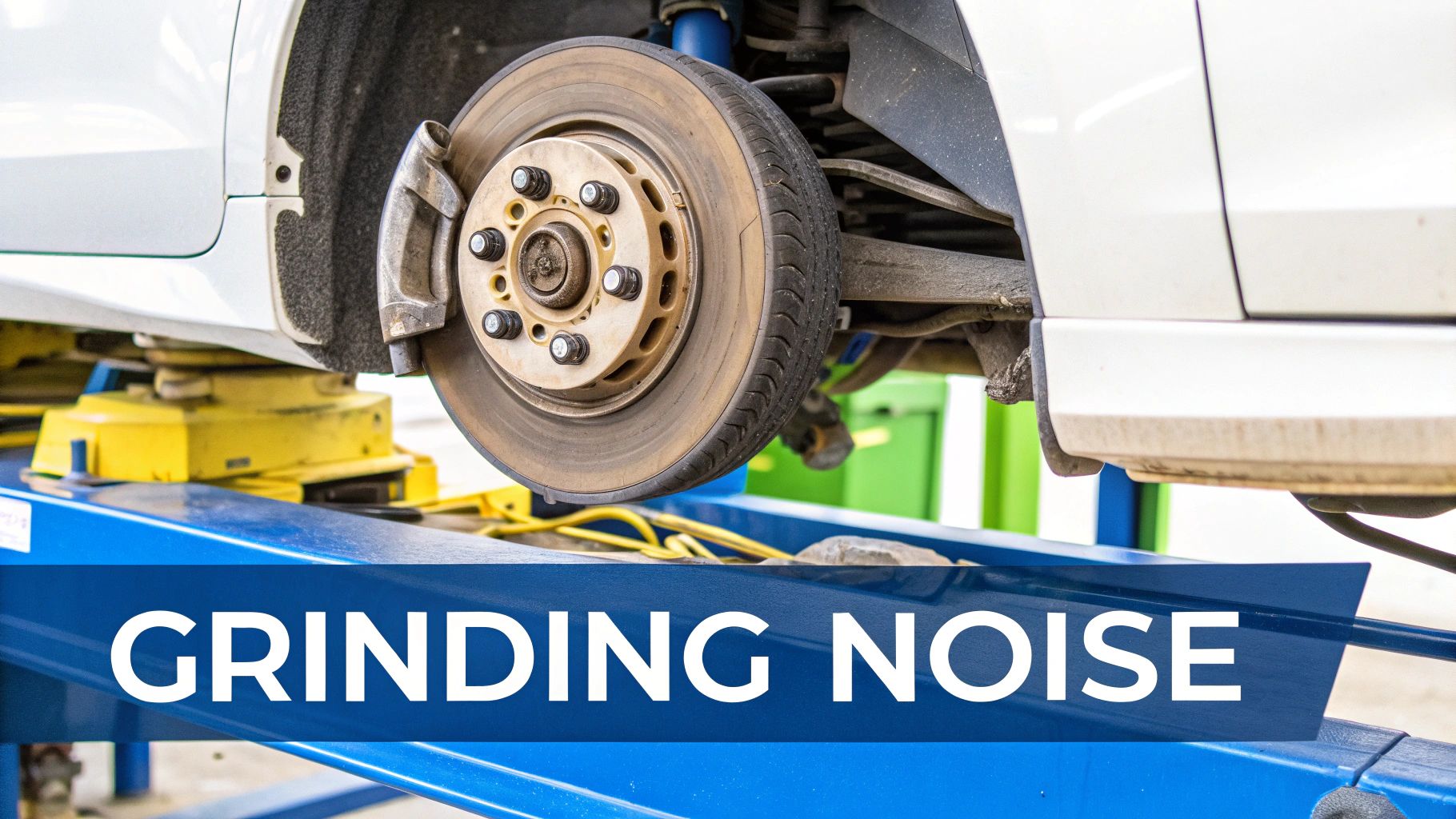
So, what exactly is that sound telling you? Think of a wheel bearing as the crucial, hardworking link between your wheel and your car. It’s a set of small steel balls or rollers held in a ring, and its job is to let your wheel spin smoothly with minimal friction while supporting the entire weight of your vehicle.
Why It’s More Than Just a Noise
When these bearings wear out, that smooth rotation is gone. What you get instead is friction, heat, and that tell-tale noise. This isn’t just an annoying sound; it’s a direct warning that a critical component is on its last legs.
Here in Arizona, our vehicles face some unique challenges. The intense summer heat can break down the grease that lubricates the bearings, and sudden monsoon downpours can force water past worn seals. These conditions put extra stress on these vital parts, making regular checks essential for every Sun City driver.
A broken wheel bearing compromises more than just your ride quality—it directly impacts your steering, braking, and overall vehicle stability. Addressing it early is the key to staying safe on the road.
At Pete Nelson Automotive, we know that strange car noises can be stressful. That’s why we’re here to help you pinpoint the problem before it turns into a dangerous situation. Recognizing the early signs gives you the power to act, ensuring your vehicle stays safe and reliable for every trip, whether it’s to the grocery store or across the Valley.
Recognizing the Warning Signs of Wheel Bearing Failure

Becoming a smarter car owner starts with learning to listen to your vehicle. A failing wheel bearing rarely gives out without a heads-up; it sends you signals through specific sounds and feelings. Knowing how to spot them can help you catch the problem before it gets serious.
The most common sign is a noise that changes with your speed. A broken wheel bearing usually starts as a low hum or a droning sound that gets louder the faster you go.
Key Signs of a Bad Wheel Bearing
Not all bearing noises are the same. Picking up on the differences can help you describe the problem to a mechanic, which always leads to a faster and more accurate diagnosis. Here are the most common signs to look out for:
- Humming or Roaring: This is the classic sound of a worn-out bearing. It’s caused by the tiny metal parts inside losing their smooth surface, creating friction as the wheel spins. It often gets louder as you accelerate.
- Grinding or Growling: This is a much more severe noise, almost like metal scraping on metal. It usually means the grease inside the bearing has failed completely, and the internal components are destroying themselves.
- Clicking or Popping: You’ll often hear this most when you’re turning. A rhythmic click that keeps pace with your wheel’s rotation can point to too much play or damage inside the bearing assembly.
- Steering Vibration: A slight tremor or shake you can feel in the steering wheel, which tends to get worse at higher speeds or during long, sweeping turns.
- Vehicle Pulling: The car seems to drift to one side on its own, forcing you to constantly correct the steering.
- Uneven Tire Wear: One edge of the tire (inner or outer) is wearing down much faster than the rest. This is a visual clue that something is wrong with the wheel’s alignment or stability.
These symptoms can sometimes overlap with other problems, which is why getting a professional inspection is so important. We cover many of these related issues in our guide to common vehicle issues in Sun City.
Physical Warnings You Can Feel
Beyond the noises, a failing wheel bearing also sends physical signals you can feel right through the steering wheel and the body of your car. Paying attention to these tactile clues is just as important.
One of the first things you might feel is a subtle vibration in the steering wheel. It might be barely noticeable at first, but it will get worse over time, especially at highway speeds. This happens because the worn-out bearing allows for too much movement, or “play,” in the wheel hub assembly.
Another key sign is your car pulling to one side. As a bearing degrades, it creates extra drag on that specific wheel. This can make your vehicle drift slightly to the left or right, and you’ll find yourself constantly correcting the steering. You might also notice your steering feels a bit loose or less responsive than it used to.
A critical visual check you can do yourself is to look for uneven tire wear. A wobbly wheel caused by a bad bearing will make your tire wear down irregularly on its inner or outer edge. This not only shortens the tire’s life but also points to a deeper mechanical issue that needs attention.
The Serious Risks of Ignoring a Bad Wheel Bearing
That humming or grinding noise coming from your wheel isn’t just an annoying soundtrack for your commute. It’s a critical warning that a key safety component is failing. Continuing to drive on a broken wheel bearing is a gamble with incredibly high stakes, leading to severe damage and putting you and others in serious danger.
As the bearing breaks down, it can no longer do its job of letting the wheel spin smoothly and securely. This kicks off a chain reaction of problems that steadily chip away at your vehicle’s stability and your control behind the wheel.
From Wobble to Major Damage
One of the first physical clues you’ll feel is a distinct wheel wobble. It might start as a subtle vibration in the steering wheel, but that slight shake is creating immense stress on all the surrounding parts.
This constant vibration isn’t just uncomfortable; it’s a wrecking ball for your suspension system and even your brakes. The shaking and friction can cause your brake pads and rotors to wear down unevenly and way too fast. Not only does that tack on extra costs to the final repair bill, but it seriously compromises your car’s ability to stop—a massive safety hazard. You can learn more about when you should be thinking about replacing your car brakes in our detailed guide.
The longer a failing wheel bearing is ignored, the more it strains other critical systems. A relatively straightforward bearing replacement can quickly spiral into a costly repair involving the hub assembly, CV joint, and suspension.
The Ultimate Danger: Wheel Separation
Here’s the absolute worst-case scenario of driving with a bad wheel bearing: complete wheel separation. This isn’t some far-fetched theory to scare you; it’s a mechanical reality. If that bearing seizes up or falls apart completely, the wheel can literally detach from your vehicle while you’re driving.
Imagine that happening as you merge onto Loop 101 or navigate a busy intersection in Sun City. You would lose control in an instant, and the outcome could easily be a serious accident.
The wheel bearing is the crucial link holding your wheel assembly together and connecting it to your car. When it fails, the results can be catastrophic. That’s why we at Pete Nelson Automotive frame immediate auto repair in Sun City, AZ, not as an option but as a crucial step for your safety. Hearing that first hum or feeling that slight vibration is your car’s way of asking for help.
What to Expect During a Professional Replacement
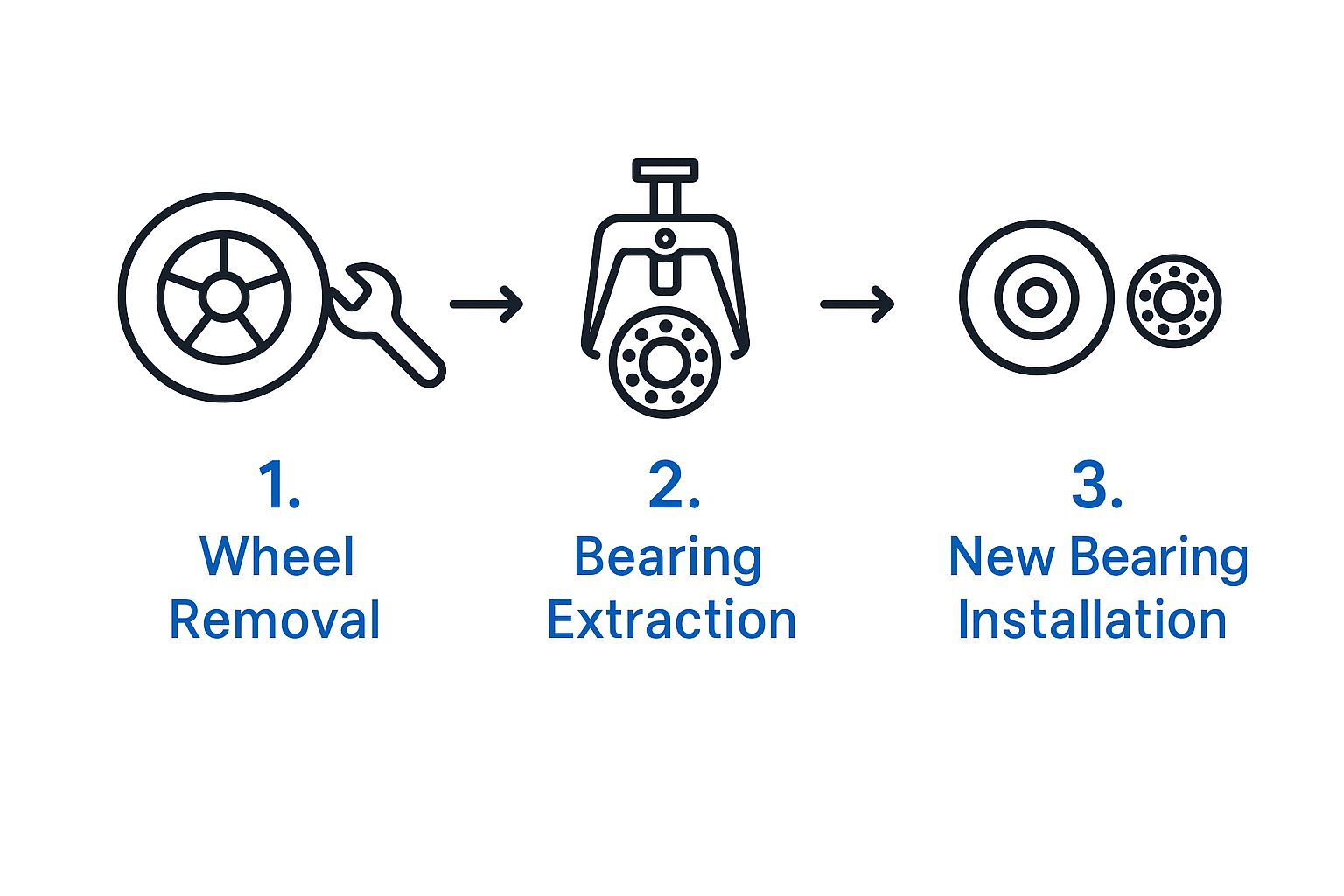
So, you’ve heard that tell-tale hum and suspect you have a broken wheel bearing. Bringing your car into a trusted shop like Pete Nelson Automotive is the right move. But what actually happens after you hand over the keys? Let’s walk through how a professional diagnosis and replacement really goes down.
The Diagnostic Process: Pinpointing the Problem
It all starts with confirming the problem. Our ASE-certified technicians will first take your car for a road test. This lets us hear the noise firsthand and feel how the car handles, especially when turning, to isolate which wheel is the source of the problem.
After the road test, we get your vehicle up on a lift for a hands-on diagnosis. We perform a “shake test,” firmly grabbing the tire to check for any excessive wobble or “play.” A healthy wheel should feel solid. We then spin each wheel by hand, listening and feeling for the roughness and grinding that indicates a failing bearing.
The Replacement: A Job for a Specialist
Once we’ve confirmed a bad wheel bearing, the real work begins. This is a precise job that demands specialized tools and a sharp eye for detail. The process involves carefully taking apart the brake caliper and rotor. Then comes the heavy lifting: using a hydraulic press, we push the old, seized bearing out of the hub assembly. Putting the new bearing in requires that same precision to make sure it’s seated perfectly straight and torqued to the manufacturer’s exact specifications.
Expert Tip: Getting the torque right is non-negotiable. If you over-tighten the axle nut, you can destroy a brand-new bearing in just a few hundred miles. Too loose, and you risk a dangerous wheel wobble. This is one of the biggest reasons you want a pro handling this repair for a safe, lasting fix.
This meticulous work is critical because a wheel bearing replacement touches other important systems. For instance, a proper wheel alignment is almost always recommended after this service. You can learn more about how often your vehicle needs a wheel alignment in our helpful guide.
Proactive Tips to Extend Wheel Bearing Life
While every wheel bearing has a shelf life, how you drive and maintain your car plays a huge part in how long they last. Being proactive can seriously extend their lifespan, helping you avoid a premature broken wheel bearing and a surprise repair bill. It’s all about reducing unnecessary stress on these hardworking parts.
Smart Driving and Regular Maintenance
Your best defense is consistent, common-sense vehicle care. Here are a few practical tips to keep in mind:
- Keep Your Wheels Aligned: When your car is out of alignment, your tires sit at an angle, putting constant, uneven pressure on the bearings. Regular alignments ensure the load is distributed evenly.
- Rotate and Balance Your Tires: An unbalanced tire can cause vibrations that send shockwaves through the hub assembly, putting a ton of stress on the bearings.
- Go Easy on Rough Roads: Hitting potholes, curbs, or speed bumps too hard can cause an immediate impact failure in a wheel bearing. Being mindful on rougher streets around Sun City goes a long way.
- Avoid Deep Water: Our monsoon season brings sudden downpours. Steer clear of deep standing water, as it can seep past the seals, wash away lubrication, and speed up wear and tear.
A smooth ride is usually a sign of a healthy car. Paying attention to how your vehicle feels and handles—and addressing the little things before they become big ones—is the secret to long-term reliability and safety.
This mindset doesn’t just protect your wheel bearings; it benefits your entire car. For more seasonal tips, take a look at our guide on essential spring car maintenance must-dos.
Frequently Asked Questions About Wheel Bearings
We’ve heard just about every question you can imagine when it comes to wheel bearings. Here are some of the most common ones we get from drivers right here in Sun City, AZ.
How much does a wheel bearing replacement cost in Sun City, AZ?
The cost can vary quite a bit depending on your vehicle’s make and model and whether it uses a full hub assembly or a press-in style bearing. A hub assembly is a more expensive part, while a press-in bearing requires more labor. We always provide a clear, detailed estimate before any work begins so there are no surprises.
Is it safe to drive with a broken wheel bearing?
We strongly advise against it. What starts as an annoying noise can quickly escalate into a serious safety hazard, including loss of steering control or even the wheel separating from the vehicle. It’s always safer to get your car inspected as soon as you suspect a problem. You can learn more about signs that your vehicle needs immediate attention on our blog.
Does a bad wheel bearing make noise constantly?
Not always. The classic sign is a humming or roaring sound that gets louder with speed. A key indicator we listen for on a test drive is how the noise changes when you turn. A bad bearing on the right side, for example, will often get quieter on a right turn because the vehicle’s weight shifts off of it.
Should I replace wheel bearings in pairs?
While it’s not always mandatory, it’s usually a smart move, especially on cars with higher mileage. Both bearings on an axle have experienced the same wear and tear. If one has failed, the other one is likely not far behind. Replacing them together can save you a second trip to the shop and ensure your car’s handling stays balanced.
Don’t let a strange noise turn into a serious safety risk. If you suspect you have a broken wheel bearing, the expert team at Pete Nelson Automotive is here to give you peace of mind with a professional diagnosis and repair.
Call 623-974-4723 or visit petenelsonautorepair.com to schedule your appointment today.
Pete Nelson Automotive
This Offer Will Expire 12-31-2026
Pete Nelson Automotive is pleased to offer you
"Get Ready for the Holidays"
A $215.00 Value for Only $159.95 (+tax)
Lube, Oil, & Filter Change, Up to 5 quarts of Engine oil
Inspect and top off all fluid levels, Includes up to 5 Quarts of 5w30 synthetic blend oil, additional charge for synthetic oil.
Travel Evaluation
Set Air Pressures and Tire Rotation if needed.
Battery, Alternator and Starter Electrical Test
Load test battery, Alternator output and Starting amps.
Full Brake Evaluation
Includes check brake system on four wheels, checking and testing brake fluid condition.
So Call 623-974-4723 today and make an appointment for this exclusive Special!
*Most Cars, Vans, Motor homes, 4×4’s, Diesels, and some foreign cars may be higher. You must bring this letter at time of service and allow 2 hours to complete.



