Driving down Grand Avenue on a sunny Sun City afternoon should be a relaxing experience. But that peace can evaporate the moment you loosen your grip and feel your car start to drift into the next lane. Is it just the road, or is something wrong?
That unsettling pull is more than just a minor annoyance; it’s a clear signal from your vehicle that something needs your attention. If you ignore it, you’re not just making driving harder—you’re risking bigger problems and compromising your safety on the road.
Common Reasons Your Car Pulls to One Side

A car that pulls to one side forces you to constantly correct your steering. This is tiring and can be unsafe, especially at higher speeds. Several issues can make your car veer off course, ranging from quick fixes to more complicated mechanical problems. Knowing the potential causes helps you figure out the right next step.
Here are the usual suspects we see at our Sun City auto repair shop:
- Tire Issues: Often, the problem is as simple as one tire having lower air pressure than the one on the opposite side. Uneven tread wear can also be a factor, creating an imbalance.
- Wheel Alignment: The intense Arizona heat and those unavoidable potholes can easily knock your car’s wheels out of their precise alignment, causing a persistent drift.
- Brake System Problems: A stuck brake caliper or a worn-out brake pad can create constant drag on one wheel, pulling your car in that direction every time you drive.
- Suspension and Steering Parts: Worn-out components in your suspension, like ball joints or tie rods, can create looseness in your steering and cause the car to wander.
To help you narrow down the possibilities, this quick diagnosis table breaks down the most likely causes based on when the pull is happening.
Quick Diagnosis for Why Your Car Is Pulling
This table helps you quickly identify potential reasons for the pull based on when and how it happens.
| When the Pull Occurs | Most Likely Cause | What You Should Do Next |
|---|---|---|
| Constantly, at all speeds | Wheel Alignment or Tire Issue | Check tire pressure and look for uneven tread wear. |
| Only when you hit the brakes | Brake System Problem | Schedule a professional brake inspection immediately. |
| When you accelerate | Worn Suspension Component | Have your steering and suspension systems checked. |
| After hitting a pothole or curb | Wheel Alignment | An alignment check is your best bet. |
While this table is a great starting point, a professional diagnosis is the only way to be certain. Here at Pete Nelson Automotive, our experienced technicians can quickly figure out why your car is pulling. For a reliable diagnosis, check out our professional auto repair services in Sun City, AZ.
The Simplest Cause: Uneven Tire Pressure and Wear
Before your mind starts jumping to complicated, wallet-draining repairs, let’s start with the most common—and easiest to fix—reason a car pulls to one side: your tires. It’s often that simple.
Even a small difference in pressure creates a noticeable pull you can feel right through the steering wheel. A tire with lower pressure flattens out more against the road, creating extra drag on that one side of the car.
Why Tire Pressure Matters in Arizona
Here in Sun City, AZ, that intense summer sun causes the air inside your tires to expand, raising the pressure. But then, as the temperatures drop overnight, the air contracts. These wild swings can make one tire lose pressure faster than others, creating the imbalance that starts the pulling.
Checking Your Tires: A Quick DIY Guide
The good news is that you can easily check your tires at home. Making this a regular habit can save you from much bigger headaches down the road.
- Find the Recommended PSI: Open your driver’s side door and look for a sticker on the door jamb. That sticker tells you the correct cold tire pressure for your car. Don’t go by the number printed on the tire itself.
- Use a Quality Gauge: Always check the pressure when the tires are cold, meaning the car has been sitting for at least three hours.
- Inspect the Treads: While you’re down there, look at the tread wear. If you notice the inside or outside edge of a tire is worn down more than the center, that’s a classic sign of an alignment problem that could also be contributing to the pull.
If you find that one tire is always low, you might have a slow leak. Following these essential tire maintenance tips is the best way to keep your car driving straight and ensure you’re safe on the road.
How Wheel Alignment Affects Your Steering
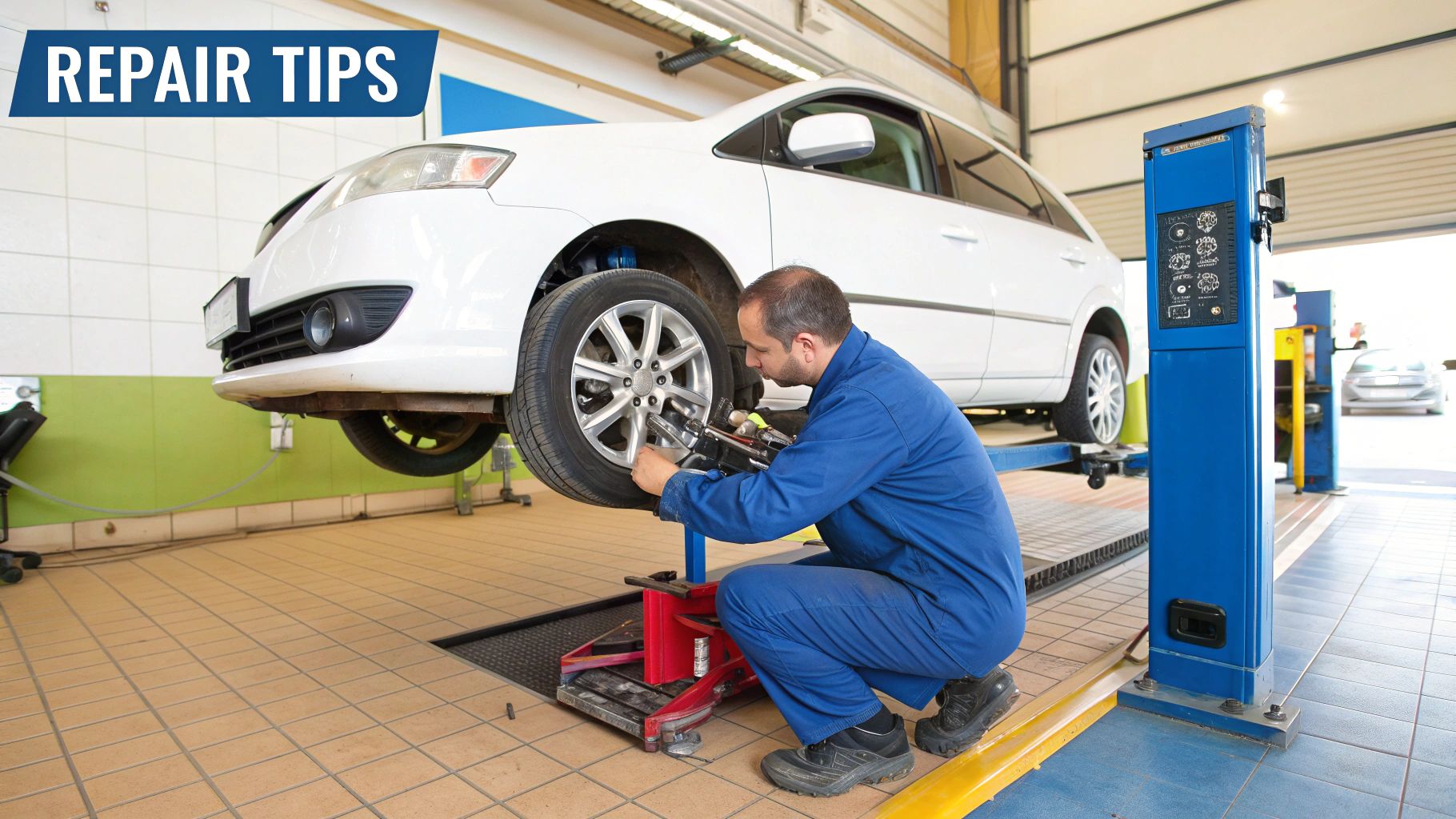
So, you’ve checked your tire pressure and the tread looks good, but your car still insists on drifting to one side. The next big culprit on our list is wheel alignment.
Wheel alignment is the precise angle of your wheels in relation to each other and the road. When everything is set just right, your car glides straight ahead. But the roads around Sun City can be tough, and one bad pothole is all it takes to throw those angles out of whack.
Understanding Alignment Angles
When you bring your car in, you might hear us talk about camber, toe, and caster. These technical terms simply describe the angles that keep your car going where you point it.
- Camber: This is the vertical tilt of your tires. If they lean in or out too much, it’ll cause the car to pull and will chew up the inside or outside edge of your tire tread.
- Toe: This is the direction your tires point in relation to each other. If the toe is off, it’s one of the fastest ways to wear out your tires and is a classic cause of a crooked steering wheel.
- Caster: This angle helps your steering wheel return to center after a turn. It’s key to making your car feel stable at higher speeds.
A crooked steering wheel is a dead giveaway. If you have to hold the wheel at an angle just to keep the car moving straight, it’s a sure sign you need an alignment check. Misalignment doesn’t just cause a pull; this extra drag can also slash your fuel economy by up to 10%.
Why Alignment is Not a DIY Job
Unlike adding air to your tires, wheel alignment is a precision job that requires specialized equipment. Here at Pete Nelson Automotive, we use high-tech, laser-guided machines to measure your car’s wheel angles down to a fraction of a degree. A professional alignment not only gets rid of the pull but also helps your tires last longer, saves you money on gas, and keeps you safer.
If you’re dealing with a stubborn pull or a crooked steering wheel, don’t just live with it. Learn more in our detailed guide on the top signs your car needs a wheel alignment.
Brake Problems That Can Cause a Pull
Does your car only start to veer off course the moment you step on the brake pedal? If the pull is exclusive to braking, that’s a huge red flag pointing directly to your brake system. This isn’t something to ignore; it’s a direct message that your vehicle’s most important safety feature needs immediate attention.
When one side isn’t working as hard as the other, your car will pull toward the side with the stronger, functioning brake.
Common Brake Culprits
Several specific brake issues can throw off this delicate balance. Here are the most frequent culprits our technicians in Sun City find:
- Seized Brake Caliper: A caliper’s job is to squeeze the brake pads against the rotor. If it gets stuck due to rust or debris, it can create constant drag on one wheel.
- Collapsed Brake Hose: The flexible hoses that carry brake fluid can deteriorate from the inside out. When one collapses, it can trap fluid, keeping the brake on that wheel partially engaged.
- Unevenly Worn Brake Pads: If one brake pad is significantly more worn than its counterpart, it won’t be able to apply the same amount of stopping power.
Signs to Watch For
Besides the pull itself, your car might be giving you other clues that your brakes are in trouble. Pay close attention to these warning signs:
- A distinct smell of burning rubber in your car after driving.
- Visible fluid leak near one of your wheels, a sign of a brake fluid leak.
- Squealing or grinding noises when you brake.
A car that pulls only when braking is a clear and urgent safety issue. Unlike a slow tire leak, a brake problem can fail suddenly, drastically affecting your ability to stop in an emergency.
Worn Suspension and Steering Components
If the pull you’re feeling is a little loose, almost like the car is wandering, and maybe you’re hearing some clunking over bumps, it’s time to look at your vehicle’s suspension and steering systems. When these critical parts wear out, your car can develop a pull that feels unpredictable and downright dangerous.
Symptoms of Worn Suspension Parts
Worn-out components like ball joints, tie rods, and control arm bushings create too much “play” or looseness in the system. This means your wheel alignment is constantly shifting as you drive, causing the car to drift or pull.
Here’s a quick rundown of symptoms that point a finger directly at suspension or steering trouble:
- Clunking or Rattling Noises: Hearing these sounds, especially when driving over bumpy roads, often means a worn ball joint or bushing is to blame.
- A “Loose” Steering Feel: If your steering feels less responsive than it used to, worn tie rods are a very likely culprit.
- Excessive Bouncing: A car that keeps bouncing long after hitting a dip probably has worn-out shocks or struts, affecting stability.
- Uneven Tire Wear: Worn suspension parts can chew up your tires unevenly, often creating a “cupping” pattern that looks like scalloped dips along the tread.
A pull from a suspension issue often feels different from other causes. It’s less of a constant, steady tug and more like a vague wandering or drifting sensation. For a deeper dive into what to look for, check out our guide on the signs of suspension trouble you shouldn’t ignore.
Your Local Experts for Auto Repair in Sun City
When your car starts pulling to one side, it’s not just an annoyance—it’s a clear signal that something isn’t right. Whether the culprit is your tires, alignment, brakes, or suspension, putting off a diagnosis can put your safety on the line and lead to more expensive repairs.
Here at Pete Nelson Automotive, we’ve built our reputation in the Sun City community on honest, top-tier service that gets you back on the road safely. We have the right tools and seasoned expertise to fix it right the first time. For a thorough evaluation and peace of mind, check out our professional auto repair services.
Frequently Asked Questions
Why does my car only pull when I accelerate?
This is likely “torque steer,” common in front-wheel-drive cars when power isn’t delivered equally to both front wheels. It can be caused by unequal-length drive axles or worn engine and suspension components. A professional inspection can pinpoint the exact cause.
Can a bad wheel bearing make my car pull to one side?
Yes, absolutely. A failing wheel bearing creates significant friction and drag on one wheel, causing your car to drift toward that side. You’ll usually also hear a humming or grinding sound that gets louder with speed.
Is it dangerous to drive a car that pulls to the side?
It can be very dangerous. A constant pull forces you to fight the steering wheel, increasing driver fatigue and slowing your reaction time. More importantly, the pull is always a symptom of an underlying issue with your tires, brakes, alignment, or suspension—all of which are critical for your safety.
How much does it cost to fix a car that pulls?
The cost varies widely depending on the cause. A simple fix like adjusting tire pressure costs nothing, while a wheel alignment is a routine, affordable service. However, if the issue is a seized brake caliper or worn suspension parts, the repair will be more involved and costly.
A car that pulls to one side is a problem you shouldn’t ignore. At Pete Nelson Automotive, our ASE-certified technicians have the expertise to diagnose the issue accurately and provide the right fix to keep you safe on the road.
Call 623-974-4723 or visit petenelsonautorepair.com to schedule your appointment today.
Pete Nelson Automotive
This Offer Will Expire 12-31-2026
Pete Nelson Automotive is pleased to offer you
"Get Ready for the Holidays"
A $215.00 Value for Only $159.95 (+tax)
Lube, Oil, & Filter Change, Up to 5 quarts of Engine oil
Inspect and top off all fluid levels, Includes up to 5 Quarts of 5w30 synthetic blend oil, additional charge for synthetic oil.
Travel Evaluation
Set Air Pressures and Tire Rotation if needed.
Battery, Alternator and Starter Electrical Test
Load test battery, Alternator output and Starting amps.
Full Brake Evaluation
Includes check brake system on four wheels, checking and testing brake fluid condition.
So Call 623-974-4723 today and make an appointment for this exclusive Special!
*Most Cars, Vans, Motor homes, 4×4’s, Diesels, and some foreign cars may be higher. You must bring this letter at time of service and allow 2 hours to complete.



