How to Fix Squeaky Brakes: A Sun City Driver’s Guide
Is there any sound more cringe-worthy than that high-pitched shriek every time you tap the brakes? Here in Sun City, every driver knows that sound. But is it just a minor annoyance, or is your car trying to tell you something serious? With our Arizona climate, it could honestly be either.
Let’s dive in and break down what’s really going on when your brakes start making a racket, and what you can do about it.
Why Your Brakes Are Squeaking in the Arizona Heat
Sometimes, the cause is no big deal. Our cool desert nights can leave a thin layer of moisture on your brake rotors. When you head out for your morning drive, the first few stops might produce a slight squeak as that moisture burns off. That’s completely normal and nothing to lose sleep over.
However, a squeal that sticks around is a different story.
Common Causes of Persistent Brake Noise
A squeak that won’t quit is often your car’s way of asking for help. It could be the built-in brake wear indicator doing its job. This is a tiny metal tab designed to scrape against the rotor and make that signature sound when your pads are on their last legs. Ignoring it is a sure way to turn a simple brake job into a much more expensive repair.
Other common culprits we see all the time at our Sun City AZ shop include:
- Brake Dust Buildup: Your pads and rotors shed fine metallic particles over time. When enough of this dust builds up, it can cause high-frequency vibrations—and that annoying squeal.
- Glazed Pads: Between our intense heat and constant stop-and-go driving, brake pads can overheat. This creates a hard, glassy surface (glazing) that not only makes a ton of noise but also seriously reduces your stopping power.
- Warped or Rusted Rotors: A little surface rust from humidity is normal, but warped or unevenly worn rotors are a bigger problem. They can cause both squeaking and a pulsing feeling in the brake pedal.
Squeaky brakes are easily one of the top reasons people seek out auto repair Sun City AZ. It’s no surprise, especially considering the average vehicle on U.S. roads is now over 12 years old, and older cars naturally need more parts replaced.
Expert Tip: Turning up the radio to drown out the noise is tempting, but it’s the worst thing you can do. A new or strange sound from your brakes is a direct message from your car. Paying attention can help you or your mechanic pinpoint the problem much faster. The first step to a quiet, safe stop is understanding how Arizona’s heat impacts your brakes.
Your Essential Squeaky Brake Diagnostic Checklist
Before you can fix squeaky brakes, you have to play detective. The specific sound your car is making—and when it’s making it—are huge clues that tell a story about what’s going on with your brake system. Paying close attention here can save you and your mechanic a ton of time and guesswork.
Start by just listening. Is it a constant squeal, or does it come and go? Are you hearing a high-pitched, ear-piercing screech, or is it more of a low, dull grinding noise? Getting these details down is the first real step toward a quiet ride.
How to Isolate the Squeak
To get to the root of the problem, you need to pinpoint the exact conditions that make the brakes sing. This information is gold, whether you’re planning a DIY fix or need to describe the issue to one of our ASE-certified technicians.
On your next drive around Sun City, pay attention to these four things:
- Timing: Does the squeak only happen first thing in the morning when things are cold and damp, or does it start after you’ve been on the road for a while? Morning squeaks often point to moisture on the rotors, while noise on hot brakes can mean glazed pads.
- Pressure: Do you hear the noise with just a light touch of the pedal, or only when you’re braking hard? A light-pressure squeak might just be brake dust or a hardware issue, but a loud noise during a hard stop is a much more urgent red flag.
- Speed: Does the sound pop up at low speeds, like when you’re pulling into a parking spot, or only when you’re cruising on the highway? Low-speed squeals can sometimes suggest rotor or caliper problems.
- Turning: Does turning the steering wheel make the noise change or stop completely? If it does, you might be dealing with a wheel bearing or a bent backing plate, not the brake pads themselves.
While you’re zeroed in on the squeaks, it’s a good idea to keep an ear out for other potential red flags. Getting familiar with various common brake problem symptoms can help you tell the difference between a minor annoyance and a serious safety hazard.
Decoding Brake Noises and Their Likely Causes
Different brake sounds often point to very different issues. To help you sort it out, we put together this quick guide to translate what your brakes might be trying to tell you.
| Type of Noise | When It Happens | Potential Cause |
|---|---|---|
| High-Pitched Squeal | Consistently when braking | The built-in wear indicators are telling you it’s time for new brake pads. |
| Loud Grinding | When braking, especially hard | This is serious. It’s likely metal-on-metal contact; pads are completely worn. |
| Scraping Sound | While driving (not braking) | A bent backing plate or a rock stuck between the rotor and shield. |
| Thumping or Pulsing | During braking, felt in pedal | Your brake rotors are likely warped or have uneven wear. |
| Clicking Noise | When applying or releasing brake | Could be loose or worn brake hardware (clips or pins) needing adjustment. |
A high-pitched squeal is the classic “heads-up” from the wear indicator that your brake pads are getting thin. A deep, metallic grinding, however, is a full-blown alarm bell. That sound usually means the pads are gone, and you’re hearing the metal caliper grinding against the metal rotor—a situation that needs immediate attention.
Our Pro Tip: Grab your phone and (safely!) record the sound. A short audio clip is incredibly helpful for our techs. It lets them hear exactly what you’re hearing, cutting out the guesswork so we can get right to the problem. If you want to learn more, you can also explore some of the top brake problems and their solutions we see most often in our shop.
DIY Fixes for Common Brake Squeaks You Can Handle
For the hands-on driver here in Sun City, some squeaky brakes don’t automatically mean a trip to the shop. Plenty of common noises are caused by simple things like brake dust or a lack of lubrication—issues you can often fix right in your garage with a little patience and the right tools.
Taking on a job like this not only saves you a few bucks but also gives you a much better feel for how your car’s braking system actually works. But before you even think about starting, put safety first. Never, ever work on a car that’s only held up by a jack. Always use a sturdy pair of jack stands.
Gearing Up for the Job
To do the job right, you’ll need a few key tools. Getting everything ready before you start makes the whole process smoother and, more importantly, safer. This isn’t the place to cut corners; using the wrong tool can easily damage your vehicle or lead to injury.
Your basic toolkit should include:
- A Lug Wrench: For getting the lug nuts off your wheels.
- A Sturdy Jack and Jack Stands: Absolutely essential for safely lifting and securing your vehicle.
- Brake Cleaner: This is a special aerosol spray made to dissolve brake dust, grease, and grime without leaving any residue behind.
- High-Temperature Brake Grease: This is critical. Regular grease will just melt or burn off. You need a product specifically made for the high heat of brake components.
- Basic Wrenches or a Socket Set: You’ll need these to remove the caliper bolts.
Cleaning and Lubricating Key Components
One of the most frequent culprits behind squealing brakes is simply a buildup of brake dust. This fine metallic powder gets stuck between the pads and rotors, causing high-frequency vibrations that you hear as an annoying squeak.
First, get the wheel off. Then, unbolt the brake caliper and carefully slide it off the rotor. Make sure to let it hang securely without putting any strain on the brake line. Now you can pull out the brake pads.
With everything exposed, generously spray the caliper and pads with brake cleaner to wash away all that caked-on dust and grime. Once everything is clean and dry, apply a thin layer of high-temperature brake grease to the back of the brake pads—the metal side, never the friction surface. Also, hit the contact points where the pads slide into the caliper bracket. This one simple step dampens vibrations and is often the secret to quiet brakes.
This simple diagnostic process—Listen, Identify, and Report—is the foundation for any successful brake service.
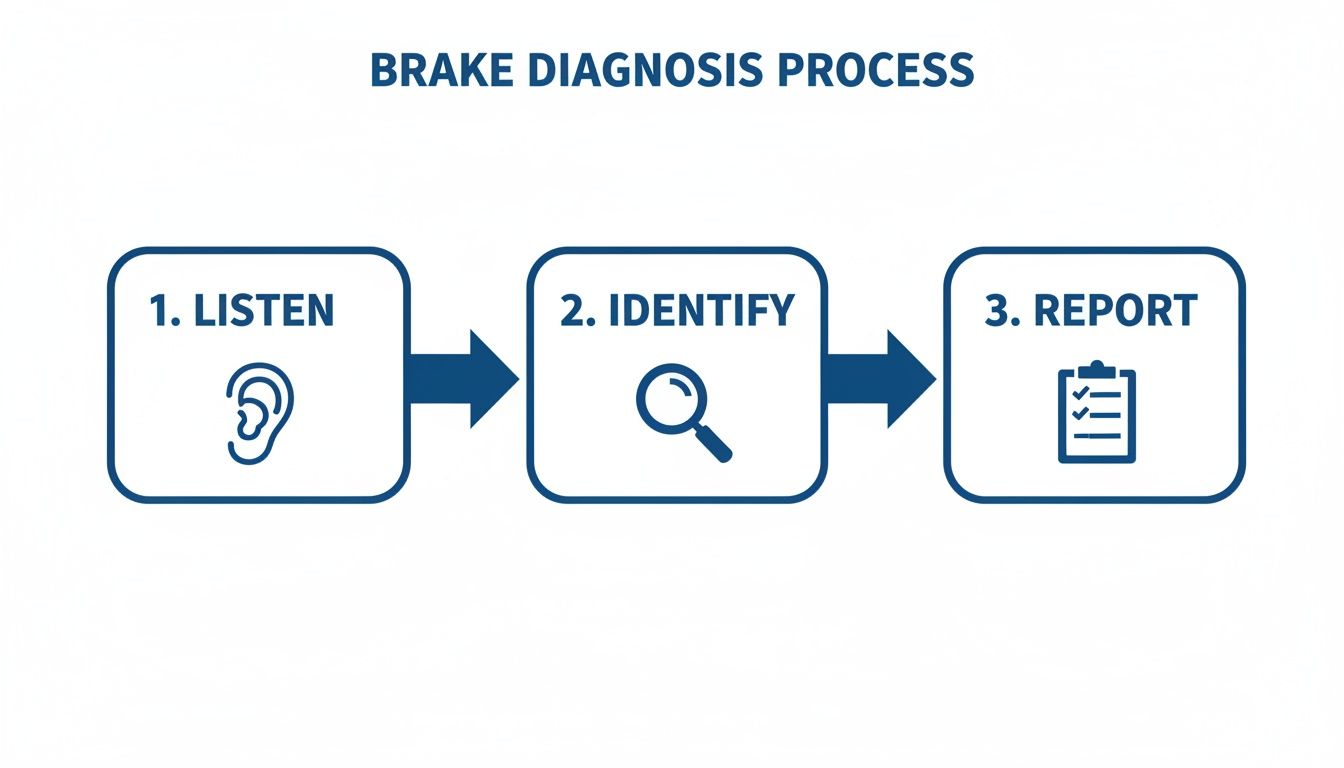
Following these steps ensures you’re not just guessing but methodically isolating the problem for an effective fix.
Safety First: Always wear protective gloves and safety glasses when working with brake cleaner and other chemicals. Brake dust can be harmful if inhaled, so consider wearing a dust mask as well.
These simple maintenance tasks can knock out many common squeaks. However, if the noise sticks around or if you see that your brake pads are worn down to almost nothing, it’s time to think about a replacement. You can learn more about your brake pad vs. rotor replacement options in another one of our guides.
When It’s Time to Call a Pro for Your Brakes
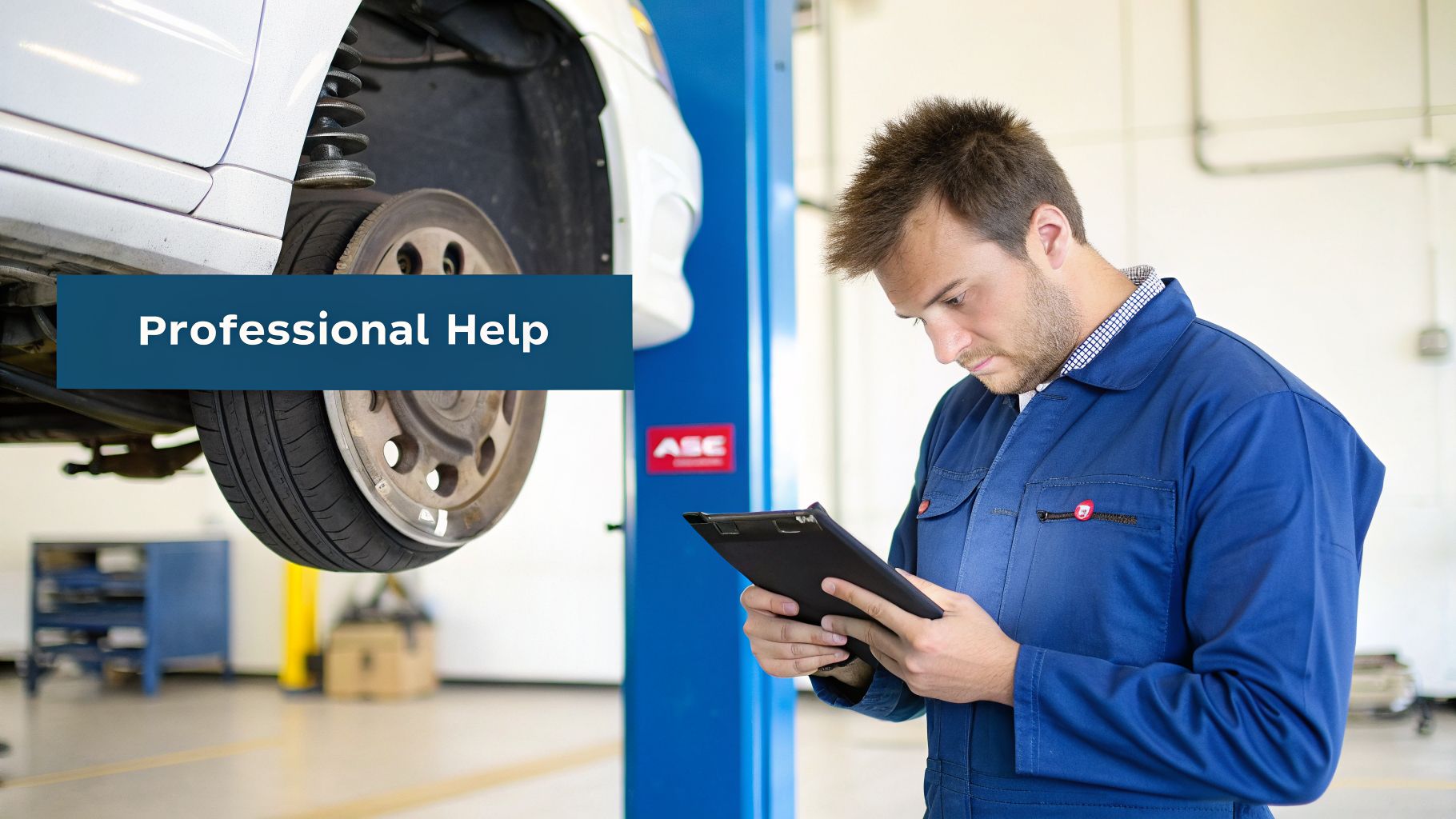
As a team that loves working on cars, we’re big fans of DIY work. But when it comes to brakes, knowing when to put the tools down and call an expert is the most important skill you can have. Your safety is literally on the line.
A high-pitched squeal is one thing, but some sounds are your car’s way of screaming for help. These are the red flags that tell you the problem has gone beyond a simple cleaning and needs a professional technician to get involved.
Red Flags That Mean “Stop Driving and Call Us”
If you hear or feel any of the following, it’s time to safely park the car and schedule a visit. These signs usually point to deeper issues that require specialized diagnostic tools and experience to fix right.
Here’s what to watch out for:
- A Deep, Metallic Grinding Noise: This isn’t a squeak; it’s a gut-wrenching grind. It means your brake pads are completely gone, and you’re hearing metal-on-metal contact between the caliper and the rotor. Not only is this extremely dangerous, but it’s actively destroying your rotors.
- A Spongy or Soft Brake Pedal: If your brake pedal feels squishy, like stepping on a sponge, or sinks closer to the floor than it used to, you’ve likely got air or moisture in your brake lines. This is a massive safety hazard because it dramatically reduces your stopping power.
- Your Car Pulls to One Side When Braking: This is a classic symptom of a failing or seized brake caliper. When one caliper isn’t clamping down with the right pressure, your car will veer toward the side with the working brake, which can make it incredibly hard to control in an emergency stop.
The Professional Difference
The automotive brake systems market is a huge global industry, expected to hit $74.45 billion by 2034. This tells you just how complex and critical these systems are. While many squeaks are due to worn pads, other problems need a trained eye. You can read more about these brake system market trends if you’re interested in the data.
At Pete Nelson Automotive, our ASE-certified technicians have tools you won’t find in a home garage—like brake fluid pressure testers and advanced diagnostic scanners. This equipment lets us find the real problem quickly and get your brakes working exactly to factory specs.
Trying to bleed brake lines or wrestle with a seized caliper without the right knowledge can easily compromise your entire braking system. For these critical repairs, trusting a professional isn’t just about convenience—it’s about ensuring the safety of you, your passengers, and everyone else on the road. For more on this, check out our guide on when to replace car brakes.
Your Proactive Maintenance Plan to Prevent Future Squeaks
The best way to fix a squeaky brake is to make sure it never starts squeaking in the first place. A little proactive care goes a long way, not just in keeping your car quiet, but also in saving you money and stress down the line. It’s a lot like getting your AC unit serviced here in Sun City before the summer heat hits—a bit of attention now prevents a massive headache later.
A solid plan really boils down to two things: regular professional check-ups and smart driving. Your brake system is full of parts that are literally designed to wear down, so catching that wear and tear early is the name of the game.
Schedule Consistent Brake Inspections
We can’t stress this enough: get your brakes professionally inspected at least once a year, or every 12,000 miles. A perfect time to do this is when you’re already in for a routine oil change in Sun City AZ. It’s a simple add-on that doesn’t take much extra time but gives you a ton of peace of mind.
During an inspection, a good technician will:
- Measure the thickness of your brake pads and rotors.
- Check for uneven wear, a classic sign of a bigger problem.
- Look at your brake fluid level and for any contamination.
- Inspect all the brake lines and hoses for cracks or leaks.
This quick look gives us a complete picture of your brake system’s health. We can spot the small stuff before it turns into a noisy, expensive problem.
Smart Driving Habits Make a Big Difference
How you drive has a direct impact on how long your brakes last. Aggressive driving—think slamming on the brakes in traffic or riding the pedal all the way down a long hill—creates a ton of heat. That heat is what causes pad glazing and warped rotors, two of the most common culprits behind brake noise.
A simple change in habit can dramatically extend the life of your brake components. By leaving more space between you and the car ahead, you give yourself more time to brake gradually. This keeps temperatures down and wear to a minimum.
Choose the Right Brake Pad Materials
Not all brake pads are created equal. The material they’re made of plays a huge role in noise, dust, and performance. When it’s time for a replacement, picking the right one is key to a quiet ride.
- Metallic Pads: These are tough and offer fantastic stopping power. The trade-off? They tend to be the noisiest and create the most brake dust.
- Organic Pads: Made from non-metallic materials, these are quiet and affordable, but they also wear out the fastest.
- Ceramic Pads: For most drivers, this is the sweet spot. Ceramic pads are exceptionally quiet, produce very little dust, and perform reliably across a wide range of temperatures.
While ceramic pads might cost a little more upfront, their long-term value is hard to beat for a quiet ride. If you’re thinking about a brake job, check out our Specials page to see our current offers.
Frequently Asked Questions About Squeaky Brakes
As the go-to shop for brake services in Sun City, we hear a lot of the same questions. Here are clear, straightforward answers to the most common ones.
Is it safe to drive with squeaky brakes?
It depends on the sound. A faint squeak on a damp morning that goes away quickly is usually harmless. However, a persistent, high-pitched squeal every time you brake is a clear warning sign that your brake pads are worn. If you hear a loud, metallic grinding sound, stop driving immediately and call for service, as this indicates a serious safety issue.
How often should I get my brakes checked in Arizona?
Given our intense heat and stop-and-go traffic, we recommend a professional brake inspection at least once a year or every 12,000 miles. A great time to do this is during a routine service like an oil changes in Sun City AZ. Regular checks help catch minor issues before they become major, expensive problems.
Why do my brakes squeak when it rains?
This is very common! When it’s damp, a thin layer of surface rust can form on your metal brake rotors. The first few times you apply the brakes, the pads scrape this rust off, causing a temporary squeak or light grinding noise. If the sound disappears after a few stops, it’s completely normal.
How much does it cost to fix squeaky brakes?
The cost can vary widely depending on the cause. A simple fix like cleaning and lubricating components is very affordable, while replacing brake pads is a routine maintenance cost. If rotors or calipers also need to be replaced, the price will be higher. At Pete Nelson Automotive, we always provide a detailed, transparent estimate before any work begins, so you know exactly what to expect.
Your Trusted Partner for Brake Repair in Sun City, AZ
When it comes to something as vital as your brakes, you need a team you can trust without question. For years, Pete Nelson Automotive has been the go-to auto repair Sun City AZ shop because we serve our neighbors with honesty and expertise. Our commitment is simple: keep you safe on the road through quality work and straight talk.
Whether you’re dealing with a persistent squeal or just want the peace of mind that comes with a professional check-up, our team is here to help. Don’t let a small noise turn into a big problem. Let our experts give you the confidence that comes with a perfectly performing brake system.
Call 623-974-4723 or visit petenelsonautorepair.com to schedule your appointment today.
Pete Nelson Automotive
This Offer Will Expire 12-31-2026
Pete Nelson Automotive is pleased to offer you
"Get Ready for the Holidays"
A $215.00 Value for Only $159.95 (+tax)
Lube, Oil, & Filter Change, Up to 5 quarts of Engine oil
Inspect and top off all fluid levels, Includes up to 5 Quarts of 5w30 synthetic blend oil, additional charge for synthetic oil.
Travel Evaluation
Set Air Pressures and Tire Rotation if needed.
Battery, Alternator and Starter Electrical Test
Load test battery, Alternator output and Starting amps.
Full Brake Evaluation
Includes check brake system on four wheels, checking and testing brake fluid condition.
So Call 623-974-4723 today and make an appointment for this exclusive Special!
*Most Cars, Vans, Motor homes, 4×4’s, Diesels, and some foreign cars may be higher. You must bring this letter at time of service and allow 2 hours to complete.



