Transmission Going Out? a Guide for Sun City Drivers
You’re cruising along an Arizona highway when the engine suddenly revs, but the car doesn’t accelerate with it. Maybe the shift into reverse hesitates, or the vehicle jolts when it finally engages. In Sun City, where heat, stop-and-go traffic, hills, and long summer drives can stress a vehicle, those changes deserve attention.
A transmission going out doesn’t always fail without warning. Early symptoms can point to a fluid problem, an electrical fault, a worn component, or internal damage. The right diagnosis helps you decide whether a service, repair, rebuild, or replacement makes financial sense.
Recognizing Early Warning Signs
A driver may first notice the problem while merging onto US-60. The engine sounds busy, the RPM climbs, but the vehicle takes too long to pick up speed. Later, shifting from park to drive may bring a pause, a thump, or a lurch. These changes are easy to dismiss when the car still moves, but they often provide the best opportunity to prevent a breakdown.
Slipping is the clearest warning for many drivers. The engine revs rise without a matching increase in road speed, which means the transmission isn’t transferring power efficiently. Delayed engagement, rough shifts, shuddering, whining, humming, or a burning odor can also indicate trouble.
Practical rule: A symptom that appears only when the vehicle is hot, under load, or during one particular gear change still matters. Intermittent behavior can help a technician identify the failing circuit, solenoid, clutch pack, or hydraulic passage.
Mileage doesn’t eliminate the need for diagnosis. A large independent analysis of 97,705 NHTSA transmission-related reports found that 26.6% of reported failures happened before 36,000 miles, while 71.3% occurred before 100,000 miles (transmission complaint mileage analysis). A relatively new vehicle can have a serious transmission issue, especially if it has experienced heat, towing, neglected fluid service, or a manufacturing defect.
For a practical overview of how drivetrain design affects driving feel, an expert Acura TL Type S review can provide useful vehicle context. For symptoms specific to your situation, compare what you’re feeling with these signs your transmission is failing before assuming the entire unit needs replacement.
Immediate Safety Steps to Take
If the transmission begins slipping in traffic, focus on control and visibility before diagnosis. Continuing to drive can turn a manageable fault into extensive internal damage, and sudden loss of drive can leave you exposed on a busy road.

Take these steps:
- Reduce demand: Ease off the accelerator and avoid towing, steep climbs, hard acceleration, and unnecessary gear changes.
- Move safely: If the vehicle still responds, steer to a safe shoulder or parking area, switch on the hazard lights, and keep clear of traffic.
- Stop for severe symptoms: Smoke, grinding, heavy slipping, overheating, or a rapidly growing fluid leak means you shouldn’t drive to a shop.
- Arrange a tow: A tow is the safer choice if the vehicle suddenly loses forward or reverse drive, enters limp mode, or can’t maintain speed.
- Record what happened: Note whether the engine was cold or hot, which gear was selected, and whether the symptom appeared during acceleration, braking, or a hill.
Engine RPM rising without a corresponding increase in vehicle speed is a common sign of slipping. Guidance for drivers also recommends towing rather than driving when slipping is severe or accompanied by overheating, smoke, grinding, or rapid fluid loss (when transmission slipping requires a tow).
Don’t crawl under a hot vehicle or touch leaking fluid. Transmission fluid and nearby components can be hot enough to burn you, and a puddle under the car needs professional identification before you choose a repair.
Basic Checks You Can Perform
A few safe observations can give your mechanic better information, but they can’t replace a proper transmission diagnosis. Start with the owner’s manual because the fluid check procedure varies by vehicle. Some transmissions have a dipstick, while others require a specific temperature, level position, and inspection plug.
Park on a level surface and follow the manufacturer’s procedure. If the vehicle uses a dipstick, check the level only in the stated operating condition. Looking at the fluid when the transmission is cold, when the vehicle isn’t level, or when the engine is off can produce a misleading result.
Healthy fluid is generally bright red or pink and shouldn’t smell burnt. Low fluid, dark fluid, or a strong burnt odor raises concern for a leak, hydraulic pressure loss, overheated fluid, or worn clutch material. Practical diagnostic guidance identifies fluid condition as a high-value first check, while cautioning that fluid appearance alone doesn’t prove the transmission is healthy (transmission fluid and slipping diagnosis).
What to write down
- Fluid level: Record whether it appears low, correct, or impossible to verify safely.
- Fluid condition: Note color, odor, and visible debris without touching the fluid.
- Leak location: Look for fresh spots, but don’t assume every red or brown fluid leak comes from the transmission.
- Driving pattern: Write down whether the symptom occurs hot, cold, uphill, at highway speed, or during one shift.
Don’t add random additives or perform a flush to hide a slipping problem. A technician may need to scan transmission modules, reproduce the symptom, and measure line pressure. If the vehicle is making a new whine or growl, review the guidance on transmission noise diagnosis and arrange an inspection before the sound becomes a loss of drive.
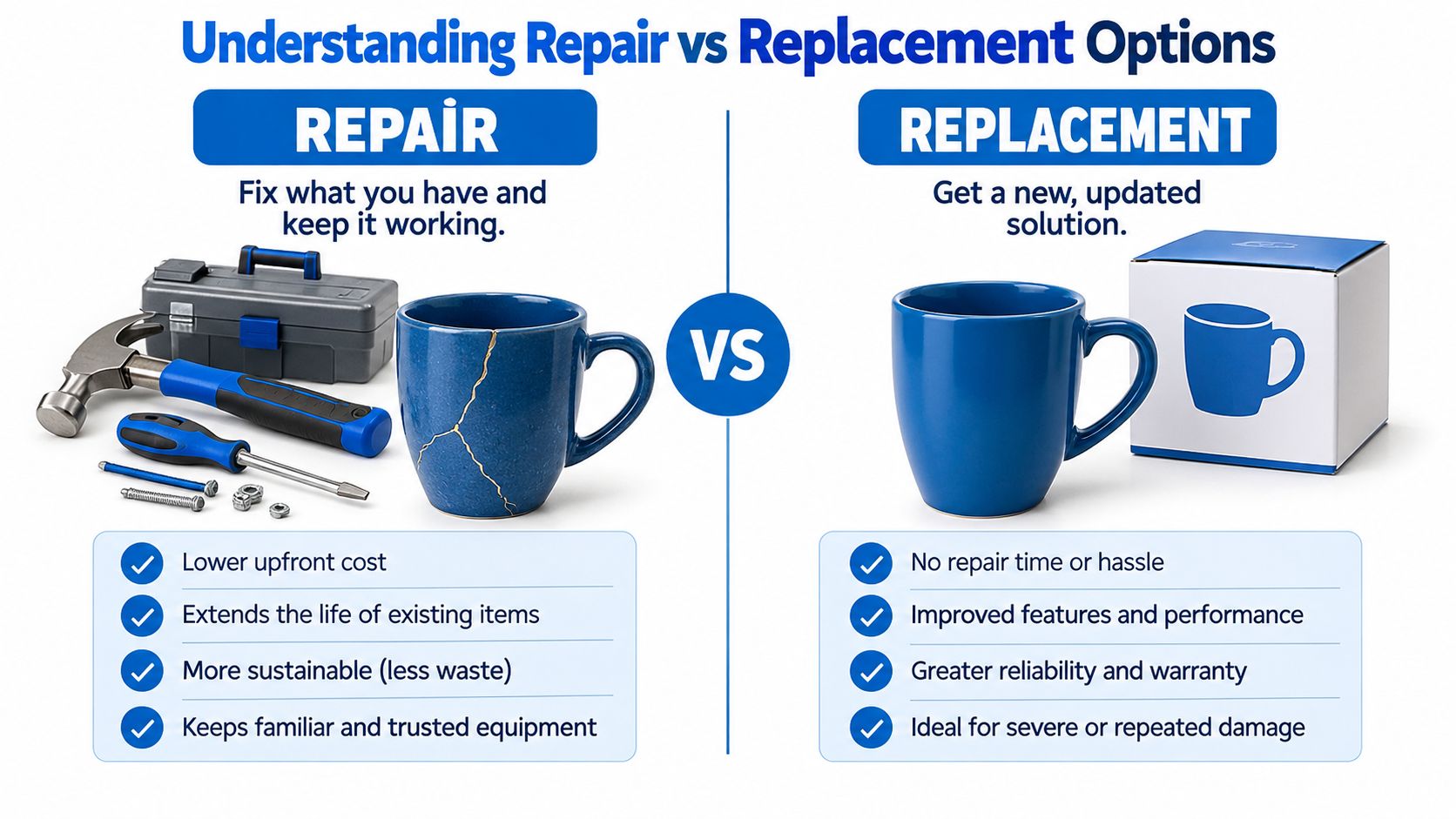
Understanding Repair vs Replacement Options
The correct choice depends on what failed, the vehicle’s condition, and the quality of the evidence behind the estimate. A low fluid level caused by an accessible leak is a different decision from a transmission with burned fluid, damaged clutch packs, and metal contamination.
A repair may involve a leak, wiring fault, sensor, solenoid, valve body, or other serviceable component. It usually makes the most sense when testing identifies a specific fault and the rest of the unit remains in usable condition. The risk is that a narrow repair won’t solve broader internal wear, so ask what testing supports the recommendation.
A rebuild restores or replaces internal components while reusing the transmission case and suitable parts. It can fit an older vehicle that otherwise has a sound engine, body, cooling system, and suspension. A replacement unit may offer a different balance of warranty coverage, availability, and turnaround time, but the exact source and condition of that unit matter.
Reported repair outcomes vary widely. One large 2026 dataset reports a median cost of $3,200, with a quarter of outcomes under $1,500, a quarter over $5,000, and 5.2% above $10,000. The same source reports a median of $3,000 for 2010 through 2019 and $5,516 for 2023 through 2026 (transmission repair cost data). These figures are a reference point, not a quote for your vehicle.
Questions to ask before approving work
- What failed: Is the problem confirmed, or is the estimate based only on symptoms?
- What is included: Ask about fluid, filters, seals, programming, cooling-system checks, and labor.
- What protection applies: Confirm warranty terms, exclusions, and whether parts are new, remanufactured, or used.
- What else needs attention: A failing transmission may not be the only expensive system on an aging vehicle.
Arizona heat also affects the decision. A replacement transmission installed in a vehicle with neglected cooling, a leaking radiator, or unresolved overheating can face the same stress that contributed to the original problem. Review the reasoning behind how a transmission rebuild can extend the life of your car and compare the estimate with the vehicle’s overall condition, not just its current inconvenience.
The Impact of Arizona Heat on Transmissions
Desert heat changes how carefully you should evaluate a transmission complaint. Fluid thins as temperature rises, seals and hoses age under repeated heat cycles, and heavy traffic keeps the drivetrain working when airflow is limited. A vehicle that shifts acceptably during a cool morning commute may slip after a long drive across the West Valley.
Heat-related symptoms often follow a recognizable pattern. Slipping that appears after warming up, on hills, or while towing can point toward overheated or thinned fluid, low line pressure, or internal wear (transmission slipping under load). That pattern doesn’t identify one failed part, but it gives a technician an important direction for testing.
Service choices for desert driving
Inspection and leak repair are appropriate when fluid is low or a seal, line, pan, or connection is leaking. Running the transmission below its proper fluid level can reduce hydraulic pressure and increase heat.
Fluid service may help when the fluid is degraded but the unit isn’t showing evidence of advanced internal damage. The procedure should match the manufacturer’s requirements. One OEM schedule lists AT fluid replacement at 90,000 km under severe-use conditions, while another recommends regular leak and level checks with fluid changes at specified intervals (OEM fluid maintenance guidance).
Severe service can include frequent short trips under 10 miles, extensive idling, dusty roads, or towing. Independent maintenance guidance notes that some vehicles may need fluid changes at roughly 35,000 to 40,000 miles under those conditions (severe-service fluid guidance). Check your own maintenance schedule instead of applying one interval to every vehicle.
Protecting the cabin with expert tips for car window tint won’t repair a transmission, but reducing interior heat can make summer driving more comfortable. For broader desert maintenance, use these Arizona heat tips for cooling systems, tires, and batteries alongside transmission inspections.
Choosing a Trusted Local Repair Shop
Transmission diagnosis requires more than plugging in a basic code reader and guessing. A careful shop should reproduce the symptom, scan transmission-specific systems, inspect fluid and leaks, and explain why the evidence supports a repair, rebuild, or replacement.
Ask whether the technician will document the conditions that trigger the problem. Hot versus cold operation, one gear versus every gear, and light throttle versus heavy load can separate an electrical concern from a hydraulic or mechanical failure. A shop that explains those distinctions gives you a clearer basis for approving work.
Certification and experience matter because modern transmissions combine mechanical parts, hydraulic control, sensors, wiring, and computer modules. Pete Nelson Automotive is staffed by ASE-certified technicians with over 50 years of combined experience and provides maintenance and repair services that include transmission work, brake service, and computer diagnostics. Its auto repair service in Sun City AZ also covers broader maintenance needs that can affect how a vehicle performs in extreme heat.
Look for a written estimate, clear warranty terms, and direct answers to these questions:
- What did testing confirm?
- What repair options are available?
- What happens if the transmission is opened and additional damage is found?
- Can the vehicle be safely driven, or should it be towed?
A trustworthy local shop won’t promise that a fluid change can cure every failure. It will explain what the vehicle needs now, what can wait, and what risks come with each option.
Frequently Asked Questions
How do I know if my transmission is going out?
Watch for slipping, delayed engagement, rough or jolting shifts, unusual whining, burning odor, or loss of drive. RPM rising without a matching increase in speed is a particularly important warning sign.
Should I drive with a slipping transmission?
Avoid driving if slipping is severe or accompanied by overheating, smoke, grinding, or rapid fluid loss. Pull over safely and arrange a tow rather than risking further damage or loss of power in traffic.
Can low transmission fluid cause shifting problems?
Yes. Low fluid can reduce hydraulic pressure and contribute to delayed engagement or slipping. Check the level using the vehicle manufacturer’s procedure, then have the source of any leak identified.
Is a rebuild better than a replacement?
Neither option is automatically better. The decision depends on the confirmed failure, the vehicle’s overall condition, parts availability, warranty, and the total estimate.
How can Arizona drivers protect a transmission?
Follow the correct maintenance schedule, inspect for leaks, and treat heat-related slipping as an urgent diagnostic issue. Towing, dusty roads, extensive idling, and frequent short trips may require severe-service maintenance.
Pete Nelson Automotive can inspect transmission symptoms, perform computer diagnostics, evaluate fluid and leaks, and explain repair, rebuild, or replacement options for drivers in Sun City and the West Valley. Visit Pete Nelson Automotive to schedule a careful inspection before a minor warning becomes a roadside failure. Call 623-974-4723 or visit petenelsonautorepair.com to schedule your appointment today.
Pete Nelson Automotive
This Offer Will Expire 12-31-2026
Pete Nelson Automotive is pleased to offer you
"Get Ready for the Holidays"
A $215.00 Value for Only $159.95 (+tax)
Lube, Oil, & Filter Change, Up to 5 quarts of Engine oil
Inspect and top off all fluid levels, Includes up to 5 Quarts of 5w30 synthetic blend oil, additional charge for synthetic oil.
Travel Evaluation
Set Air Pressures and Tire Rotation if needed.
Battery, Alternator and Starter Electrical Test
Load test battery, Alternator output and Starting amps.
Full Brake Evaluation
Includes check brake system on four wheels, checking and testing brake fluid condition.
So Call 623-974-4723 today and make an appointment for this exclusive Special!
*Most Cars, Vans, Motor homes, 4×4’s, Diesels, and some foreign cars may be higher. You must bring this letter at time of service and allow 2 hours to complete.



