Transmission Noise Guide: What Your Car’s Sounds Mean
A transmission noise that rises with mechanical excitation can follow a useful engineering rule of thumb, about 6 dB louder for each doubling of the relevant excitation, while reducing transmission error by 10 dB can lower transmission sound by about 7 dB. That doesn’t mean every new sound requires a rebuild, but it does mean the sound deserves a careful diagnosis before you decide whether to keep driving.
You’re cruising down Thunderbird Road in your SUV when a faint whine turns into a metallic clunk. The Arizona heat is pressing through the windows, and your first thought is the one most drivers have: “Is my transmission about to fail?” Most transmission noises can be narrowed down without immediate disassembly, and the difference between a modest fluid service and a major repair often comes from identifying the right sound, under the right driving conditions, early.
Introduction to Understanding Transmission Noise
You are driving through Sun City when a faint whine becomes a metallic clunk. The heat is pressing through the windows, and the immediate question is understandable: is the transmission failing? The sound alone cannot answer that. Its pitch, rhythm, vibration, and timing provide the useful clues.
A transmission communicates through conditions. A whine in Neutral points to a different group of possibilities than grinding during acceleration. A clunk when selecting Drive may involve a mount or driveline component rather than a destroyed internal gearset.
Engineering research connects gearbox sound with tooth contact, vibration, transmission error, alignment, and torsional excitation. The linked Gearbox-noise research also discusses sound levels exceeding 100 dB sound pressure level in gearbox analysis and experiments. That finding illustrates why a small mechanical change can become obvious inside the cabin.
Sun City conditions can expose a developing problem sooner. Extreme heat, long drives, heavy traffic, and repeated acceleration place more demand on fluid and components, making a marginal noise easier to hear. Record whether the sound changes with engine speed, road speed, gear selection, temperature, or braking. Compare those observations with these signs your transmission may be failing. Clear details help a technician separate normal wear from a repair that should not wait, reducing the chance of unnecessary teardown.
Understanding the Four Main Types of Transmission Noise
Start by describing the sound more precisely than “it’s making a funny noise.” The four common categories below don’t identify a failure by themselves, but they help a technician choose the right tests.
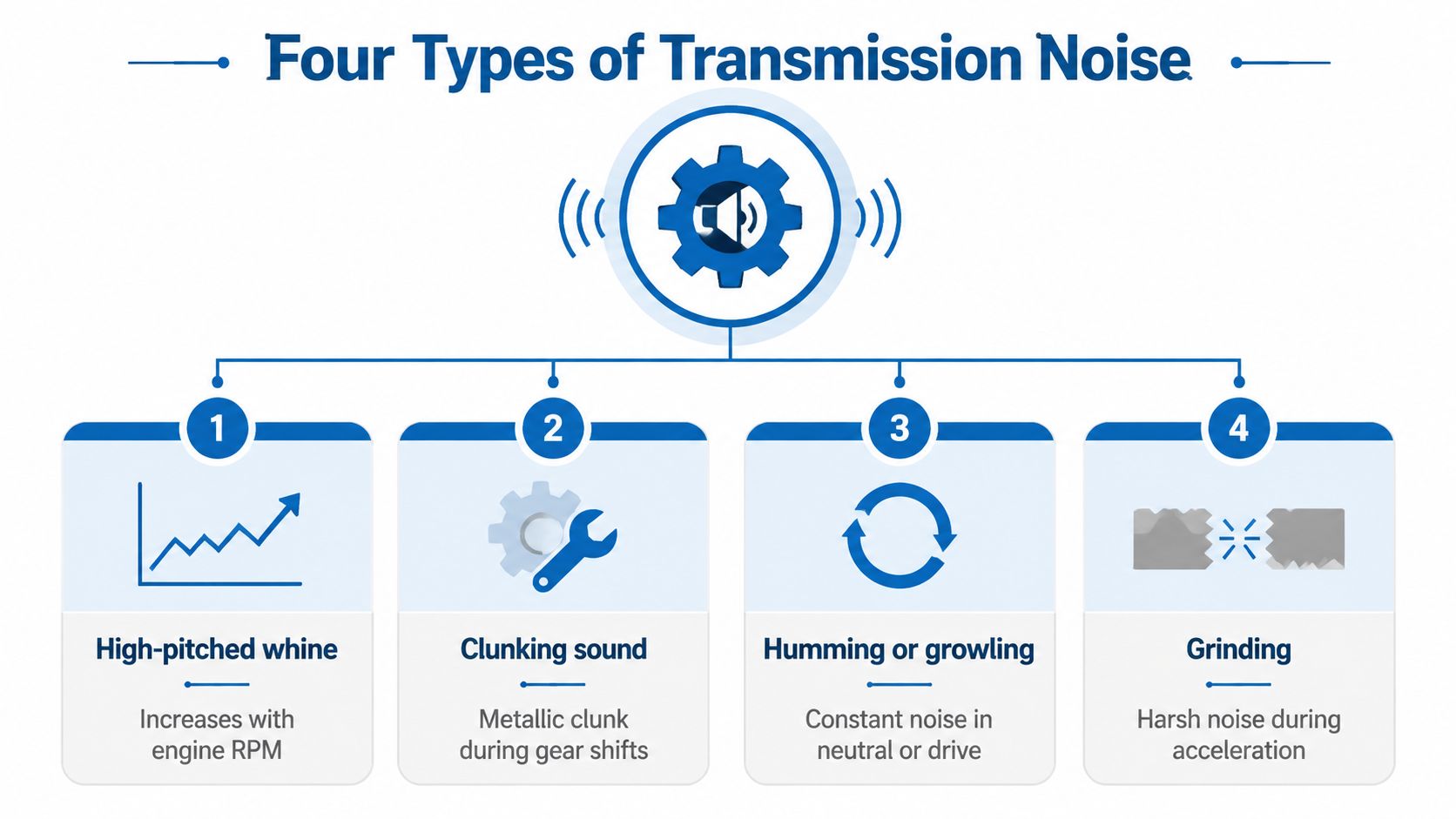
- High-pitched whine: If the pitch follows engine RPM, possible sources include the pump, fluid aeration, bearings, or gearmesh. A whine that remains in Neutral deserves attention because the pump or torque converter can keep operating even when the geartrain isn’t carrying vehicle load.
- Grinding or growling: Harsh metal-on-metal noise during a shift, acceleration, or deceleration can point toward worn gears, synchronizer problems in a manual gearbox, insufficient lubrication, or internal bearing wear. Don’t continue testing aggressively if grinding is loud or accompanied by difficult engagement.
- Clunk or bang: A single clunk when selecting Drive or Reverse may come from a worn transmission mount, loose driveline hardware, or excessive backlash. A repeated bang combined with a harsh shift is more urgent than a soft, occasional engagement thump.
- Buzzing or humming: A steady hum that changes with road speed may involve a bearing, CV joint, torque converter behavior, or another rotating component outside the transmission. Road-speed correlation matters because not every sound that seems internal comes from the gearbox.
Practical rule: Describe when the noise occurs, not just what it sounds like. “Whines in Park and gets louder with RPM” is far more useful than “transmission whine.”
A new grind, rapidly worsening whine, fluid leak, burning odor, slipping, or loss of engagement should receive prompt professional attention. If the vehicle still shifts normally and the sound is mild, avoid hard acceleration and arrange a diagnostic visit rather than authorizing a rebuild based on sound alone. Drivers dealing with delayed engagement or a vehicle that won’t shift should review what can cause a car not to shift gears.
How to Diagnose Transmission Noise Like a Professional
A Sun City driver may hear a whine after a hot commute and assume the transmission is failing. Start with isolation instead. Automatic-transmission guidance identifies the torque converter, pump, and geartrain as primary internal noise sources. GEARS Magazine’s diagnostic guidance recommends comparing the sound across operating states and loads, including whether it changes in different gear ratios or disappears in a 1:1 ratio.
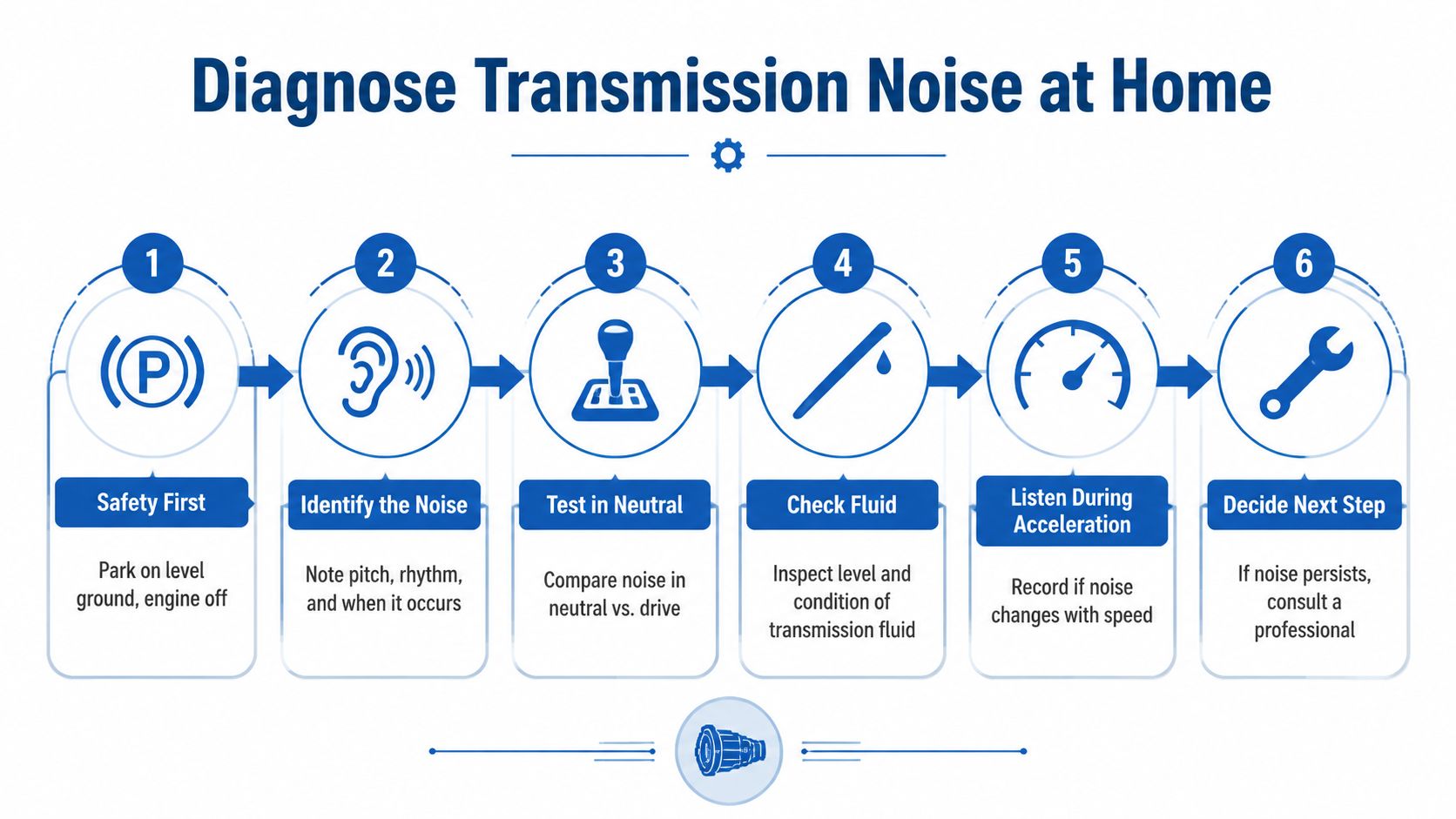
You can gather useful clues safely. Park on level ground, set the parking brake, and keep the owner’s manual available for fluid-check instructions. Never crawl beneath a running vehicle or place yourself near moving components.
Listen for the operating condition
Write down what happens in each situation:
- Does it occur in Park or Neutral? A noise that continues in Neutral may point away from loaded gearmesh and toward the pump or converter area.
- Does it appear only in Drive or Reverse? Load-dependent noise may relate more closely to gearmesh or planetary-set operation.
- Does engine RPM change the pitch? If the sound rises when you lightly raise RPM while stationary, record that pattern.
- Does vehicle speed change the sound? A road-speed connection can shift attention toward wheel bearings, CV joints, tires, or converter lockup behavior.
- Does throttle input matter? A noise that grows during acceleration and fades during coast-down may involve torsional loading or internal alignment.
Do not test by holding the brake and applying heavy throttle. Have a passenger record a short cabin video when possible, so the technician can hear the pattern without a risky road test.
Check the simple clues
Look for visible fluid leakage, an unusual odor, or fluid that differs from the manufacturer’s normal description. Color alone cannot confirm condition. Do not add fluid unless you know the correct specification and checking procedure. A scan tool may reveal transmission-control faults. Understanding car computer diagnostics can clarify what those results can and cannot show, because a clean code read does not prove that mechanical components are healthy.
Bring a precise description: “The whine starts in Park, gets louder with RPM, and does not depend on road speed.” That helps your technician separate heat-related fluid concerns, external components, and internal faults before recommending major work.
Repair Options and Estimated Costs for Transmission Noises
A frightening sound does not automatically mean a complete rebuild. The repair depends on the confirmed source, fluid condition, internal wear, vehicle design, and whether the transmission still operates properly. Before approving major work, request a written estimate and ask which test supports the recommendation.
| Repair Type | Estimated Cost | Typical Noise Addressed |
|---|---|---|
| Fluid service or filter service | Varies by vehicle and service | Whine related to fluid condition, level, or aeration |
| Mount or bushing replacement | Varies by vehicle and access | Clunk during engagement or shifting |
| Pump or converter repair | Varies by diagnosis and parts | Whine or hum present in Park, Neutral, or under load |
| Internal transmission repair or rebuild | Varies widely by unit and damage | Persistent grinding, severe whine, slipping, or internal bearing and gear concerns |
These ranges stay general because labor access, fluid specification, parts availability, and transmission design can change an estimate substantially. A shop should inspect the vehicle rather than quote major repairs from a noise description alone.
Why small corrections can matter
Transmission noise may respond to small changes in gear geometry and alignment. Research reports that reducing transmission error by 10 dB can reduce transmission sound level by about 7 dB, as documented in the gearbox-noise engineering paper. Transmission error means the difference between a gear pair’s intended movement and its actual movement. A technician may therefore check alignment, gear condition, shaft support, and mounts before recommending replacement.
Fluid service can help when fluid is low, aerated, contaminated, or due under the manufacturer’s schedule. It cannot repair damaged gears or bearings. Adding fluid without addressing a leak only delays the needed repair.
Internal repair may preserve a usable vehicle when damage is limited and the unit’s case, shafts, or other major parts remain serviceable. A rebuild is not automatically the right choice, so ask what failed and which components will be inspected or replaced. For more context, see how a transmission rebuild can extend vehicle life.
Prevention and Maintenance Tips for Arizona Drivers
Arizona heat places extra demands on fluid, seals, mounts, and cooling systems. Sustained heat can reduce the fluid’s ability to protect internal components, while stop-and-go traffic repeatedly loads the drivetrain. Heat isn’t proof that a transmission caused a noise, but it can make a marginal condition easier to notice.
Build a practical maintenance routine
- Follow the manufacturer schedule: Use the service interval specified for your vehicle, transmission, and driving conditions. Don’t substitute a universal fluid for the required specification.
- Inspect for leaks: Check the driveway and the transmission pan area for fresh fluid. A low level can allow pump aeration, which may produce an erratic whine in Park.
- Treat towing as severe use: If you tow, haul, or spend long periods in heavy traffic, ask whether the vehicle needs additional cooling or a different maintenance schedule.
- Respond to early changes: Harsh shifts, hesitation before engagement, intermittent whining, or a new vibration deserve documentation before they become constant.
- Use smooth inputs: Gentle acceleration and avoiding unnecessary drivetrain shock can reduce stress on mounts, gears, and shafts.
SAE research identifies engine input torque amplitude and fluctuation, driveline torsional vibration, gear geometry, and shaft flexibility as major contributors to gear-rattle noise. Even a mechanically healthy transmission can become noisy when low-speed torque pulsations excite backlash in the gearset, so noise isn’t always a direct measure of wear. The SAE technical paper provides the engineering context for why load and deceleration patterns matter.
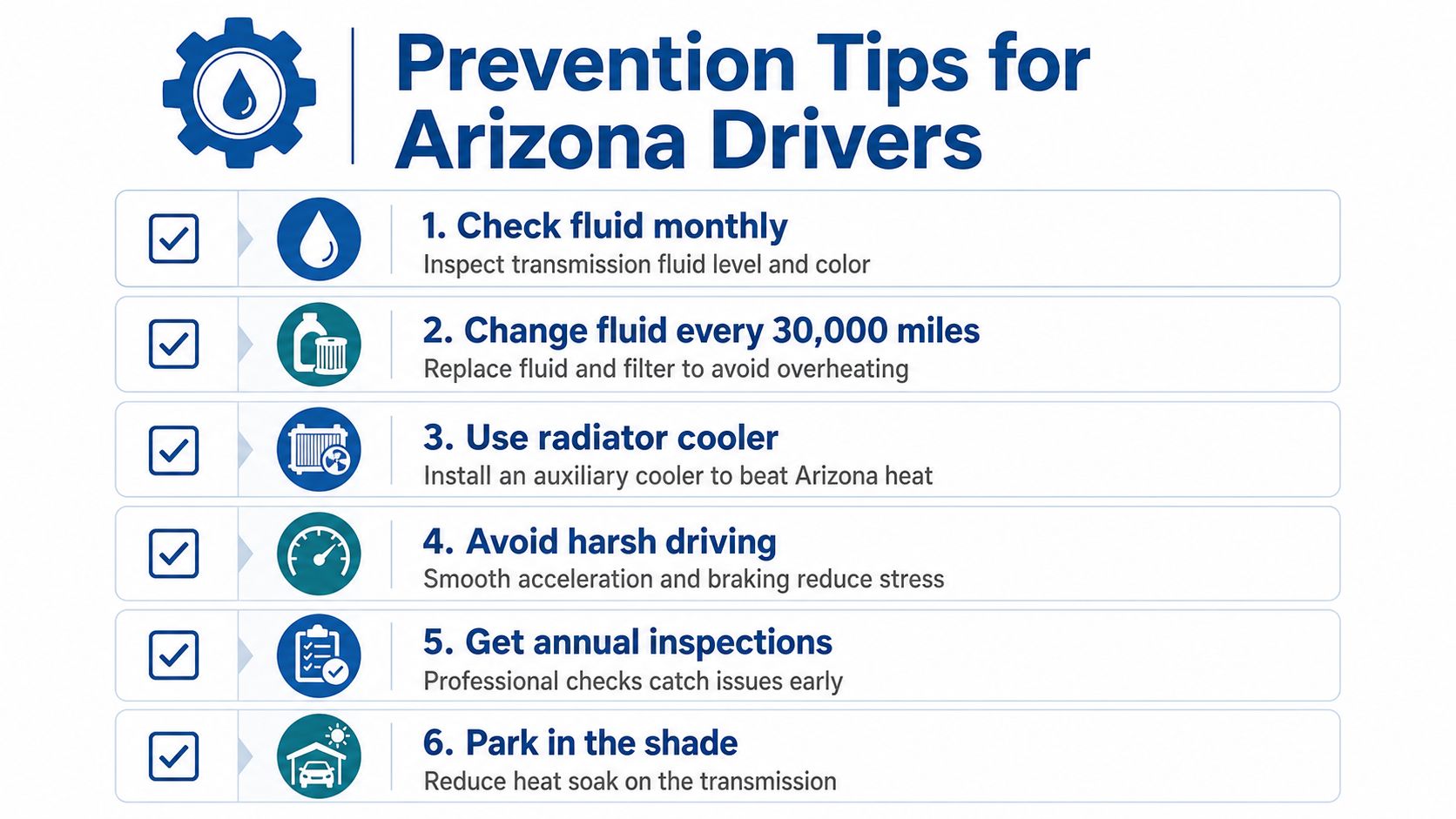
For a broader maintenance plan covering fluid checks, cooling, belts, tires, and inspections, use these preventive maintenance best practices. Shade can reduce cabin and surface heat, but it can’t replace correct fluid level, leak repair, or scheduled service.
Taking the Next Steps When You Hear Transmission Noise
The most useful action is simple: document the pattern before memory turns it into a vague complaint. Write down the gear, driving condition, approximate vehicle speed, engine-RPM relationship, throttle position, and whether the sound changes during acceleration, cruising, or deceleration.
Bring these details to the technician:
- Sound quality: whine, grind, hum, rattle, clunk, or click.
- Operating state: Park, Neutral, Drive, Reverse, or a particular gear.
- Timing: cold start, after a long drive, during turns, or only after the vehicle warms up.
- Related symptoms: slipping, delayed engagement, harsh shifting, vibration, warning lights, or leaks.
- Change over time: occasional, constant, louder, or newly accompanied by a shift problem.
Transmission systems have also evolved. Early sliding-gear systems were known for clunks and grinds, while synchromesh gearboxes introduced in the 1920s and 1930s matched gear speeds before engagement. Automatic transmissions entered the market in the 1930s and 1940s, changing the sound profile toward hydraulic whirring and fluid movement. This transmission history helps explain why sound expectations differ between older manuals, conventional automatics, hybrids, and newer electric drivetrains.
A two-speed automatic transmission for a pure electric vehicle has been studied as a distinct gear-transmission noise problem, and newer research continues to connect sound quality with vibration during end-of-line testing. Some whine or hum may be characteristic of a mechanism, while a new or changing sound still deserves evaluation. Vehicle architecture matters.
Pete Nelson Automotive in Sun City provides transmission work and computer diagnostics through ASE-certified technicians, with a courtesy shuttle and a women-friendly service environment. When you call 623-974-4723, ask about the Smooth Ride Special, which includes a lube, oil, and filter change with fluid top-off, a trip safety inspection, and tire balance and rotation.
Frequently Asked Questions About Transmission Noise
Is transmission noise always a sign of failure?
No. Some sounds result from normal gear operation, torsional vibration, or the design of an electrified drivetrain. A new, worsening, harsh, or load-dependent noise should still be checked.
Can Arizona heat cause transmission noise?
Heat can stress fluid and drivetrain components, especially during towing or heavy traffic. It may reveal an existing issue, so inspect for leaks and follow the vehicle’s specified service schedule.
Should I drive with a whining transmission?
Avoid hard acceleration and long trips until the source is known. Stop driving and seek prompt help if the whine comes with slipping, loss of engagement, grinding, burning odor, or a fluid leak.
What should I tell the repair shop?
Explain whether the sound changes with engine RPM, road speed, gear selection, throttle, or deceleration. Owners comparing symptoms can also review these common transmission issues on this Acura for useful terminology.
Pete Nelson Automotive can diagnose transmission noise, perform computer diagnostics, inspect fluid and leaks, and explain repair options for domestic and import vehicles in Sun City and the West Valley. Visit Pete Nelson Automotive or call 623-974-4723 to schedule your appointment today.
Pete Nelson Automotive
This Offer Will Expire 12-31-2026
Pete Nelson Automotive is pleased to offer you
"Get Ready for the Holidays"
A $215.00 Value for Only $159.95 (+tax)
Lube, Oil, & Filter Change, Up to 5 quarts of Engine oil
Inspect and top off all fluid levels, Includes up to 5 Quarts of 5w30 synthetic blend oil, additional charge for synthetic oil.
Travel Evaluation
Set Air Pressures and Tire Rotation if needed.
Battery, Alternator and Starter Electrical Test
Load test battery, Alternator output and Starting amps.
Full Brake Evaluation
Includes check brake system on four wheels, checking and testing brake fluid condition.
So Call 623-974-4723 today and make an appointment for this exclusive Special!
*Most Cars, Vans, Motor homes, 4×4’s, Diesels, and some foreign cars may be higher. You must bring this letter at time of service and allow 2 hours to complete.



