Have you ever been stuck in that stop-and-go traffic on Bell Road, especially during the summer heat, and wondered if your brakes are truly up to the task? It’s a common thought for any driver in Sun City, AZ. While we often think about our brake pads, there’s a vital, often-overlooked component that’s just as critical: your brake fluid. The color of that fluid is one of the quickest and clearest ways to check the health of your entire braking system.
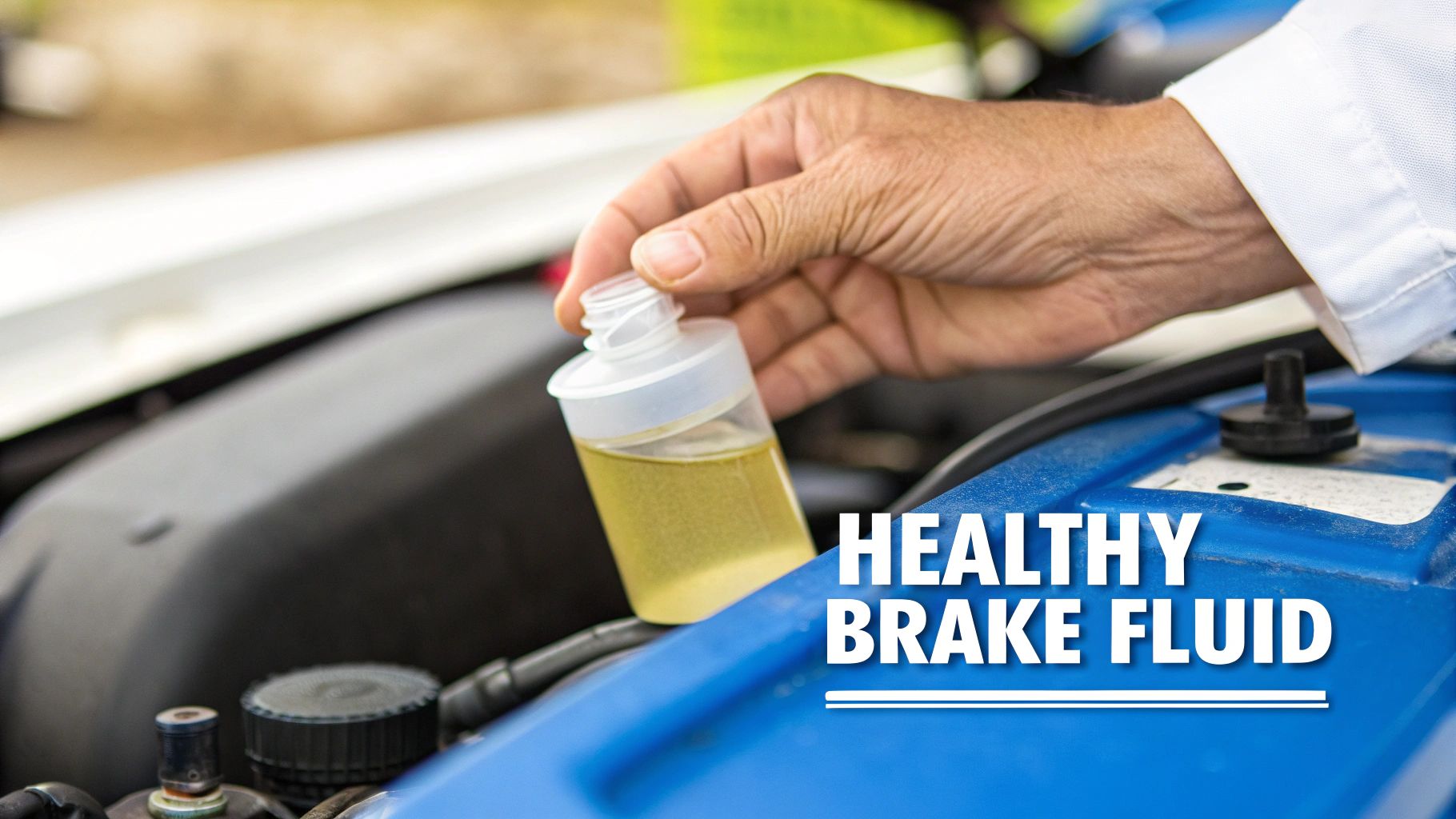
Fresh brake fluid should be nearly clear with a light yellow tint, a lot like brand-new vegetable oil. If that’s what you see in the reservoir, your fluid is in great shape. But as it gets older and starts soaking up moisture from the air, you’ll see it begin to darken—that’s your first clue that it’s time for a professional to take a look.
Understanding Your Brake Fluid Color in Sun City
Living here in Sun City, we all know how much we rely on our cars, especially when the Arizona heat kicks in. Before you head out on a trip or even just run errands, a quick check under the hood is one of the smartest things you can do. While you’re peeking at the engine oil and coolant, don’t forget about the lifeblood of your vehicle’s most important safety system: the brake fluid.
This hydraulic fluid is what takes the force from your foot on the pedal and powerfully applies it to the brakes on your wheels. When it’s new, the most common types like DOT 3 and DOT 4 are almost clear or have a slight amber color. Over time, that changes. The fluid darkens as it absorbs moisture and microscopic contaminants from the brake lines, which degrades its performance and lowers its boiling point.
Why Its Color Matters for Safety
That change in color is more than just cosmetic; it’s a quick visual report on the health of your brake fluid and, by extension, the safety of your entire braking system. Healthy, clean fluid means your brakes will respond the second you need them. Contaminated fluid, on the other hand, can lead to that dreaded “spongy” pedal feel or, even worse, complete brake failure in the extreme Arizona heat.
To help you get a quick read on your fluid’s condition, we’ve put together this simple reference guide.
Brake Fluid Color Quick Reference Guide
This table gives you a simple, at-a-glance way to check your brake fluid’s health right under the hood. Just compare the color you see in the reservoir to the chart below.
| Color | Condition | Action Recommended |
|---|---|---|
| Clear to Light Yellow | Excellent. The fluid is fresh and performing as it should. | No action is needed. Your brakes are in top condition. |
| Darkening Yellow / Light Brown | Fair. The fluid is aging and has started to absorb moisture. | Start planning for a brake fluid flush in the near future. |
| Dark Brown to Black | Critical. The fluid is heavily contaminated and compromised. | This needs immediate attention. Schedule a full system flush with a professional right away. |
Keeping an eye on the color is a simple but crucial step. Knowing when to replace your car brakes and the fluid that powers them is one of the most important parts of staying safe on the road.
Why Brake Fluid Darkens Over Time
If you’ve ever wondered why your brake fluid goes from clean and clear to dark and grimy, the answer is all about its chemistry. The easiest way to think about it is to picture a sponge left out during the humid Arizona monsoon season—it’s just going to soak up moisture from the air. Your brake fluid is designed to do the exact same thing.
Most cars you see on the road today use a glycol-based brake fluid. This fluid is hygroscopic, which is just a fancy way of saying it loves to absorb water. Over time, tiny amounts of moisture manage to sneak into the sealed brake system, seeping through microscopic pores in rubber hoses and past seals. This isn’t a sign of a problem; it’s a completely normal process, but it’s the main reason your fluid starts to break down.
Heat and Contamination
Once that moisture finds its way into the brake fluid, it kicks off a chemical reaction that heat makes even worse. Every single time you step on the brake pedal, the fluid is forced under incredible pressure and heat, especially in that stop-and-go traffic on Bell Road. That heat, combined with the water it has absorbed, causes the fluid’s boiling point to drop.
At the same time, as your brake lines and seals get older, little particles of rubber and metal can break off and start floating around in the fluid. This junk, mixed with the absorbed moisture, creates a contaminated sludge that turns your once-clear fluid into a dark, murky mess.
That darkening color is your vehicle’s way of telling you that the brake fluid is losing its ability to protect the system and perform safely under pressure. A lower boiling point means the fluid can turn to vapor under hard braking, leading to a spongy pedal or even brake failure.
The Arizona Heat Factor
Here in Arizona, our high temperatures put an incredible amount of extra strain on your entire braking system. The combination of intense outside heat and the heat your brakes generate on their own can push contaminated fluid past its boiling point way faster than in cooler parts of the country. This is why understanding the impact of Arizona’s heat on your brakes is so important for local drivers.
Think of it like a countdown timer on your fluid’s health. In our climate, regular inspections are non-negotiable. The color of your brake fluid gives you a clear, visual warning that it’s time to get the system flushed and serviced by a pro before a small problem turns into a serious safety issue.
Decoding the Brake Fluid Color Spectrum
Now that you know why brake fluid gets darker, let’s break down what each color is telling you about your car’s health. Think of the brake fluid color spectrum as a simple traffic light for your brake system—it gives you clear signals ranging from “you’re good to go” to “stop and get service now.”
Paying attention to these visual cues is one of the easiest ways you can stay ahead of problems. A quick peek into the reservoir can reveal a surprising amount about what’s going on deep inside those critical brake lines.
Fresh and Healthy: Clear to Light Amber
When brake fluid is brand new, it should be nearly transparent with a light amber or yellowish tint. Picture fresh honey or a light cooking oil—that’s the color you’re looking for.
If this is what you see, your fluid is clean, free from contamination, and has a high boiling point. This means you’re getting maximum stopping power and safety. It’s the gold standard for healthy brake fluid.
Aging Fluid: Darkening Yellow or Light Brown
Over time, as the fluid does its job, it naturally starts to absorb moisture from the air and will begin to darken. When it gets to a darker yellow or light brown shade, similar to iced tea, it’s a clear sign the fluid is aging.
Your brakes will still work, but this color change is an early warning. It tells you that the moisture content is rising, which in turn lowers the fluid’s boiling point. No need to panic, but it’s the perfect time to start thinking about a brake fluid flush with your trusted auto repair shop in Sun City, AZ.
Critical Warning: Dark Brown or Black
If you pop the hood and find fluid that’s dark brown or black, treat it as a critical safety warning. This isn’t just old fluid; it’s heavily contaminated with moisture, rust particles, and tiny bits of deteriorated rubber from the hoses and seals.
At this point, the fluid has a dangerously low boiling point and can no longer protect your brake system from corrosion. This is a common issue that can snowball into much bigger, more expensive problems. You can learn more in our guide on the top 5 most common brake problems and solutions.
Your brake fluid is now a major liability. The risk of brake fade—or even complete brake failure—is extremely high, especially in the Arizona heat. This condition demands immediate professional service.
How to Safely Check Your Brake Fluid
Knowing what different brake fluid colors mean is one thing, but actually popping the hood to check it yourself is another. The good news? This is one of the easiest DIY checks any Sun City driver can do right in their own driveway. It only takes a couple of minutes and gives you a surprisingly clear picture of your brake system’s health.
First things first, you need to locate the brake fluid reservoir. It’s usually a small, semi-transparent plastic container tucked away in the engine bay, most often on the driver’s side near the firewall. You’ll see “MAX” and “MIN” lines clearly marked on the side, which tell you where the fluid level should be.
Step-by-Step Inspection
Follow these simple steps to get a safe and accurate read on your fluid’s condition:
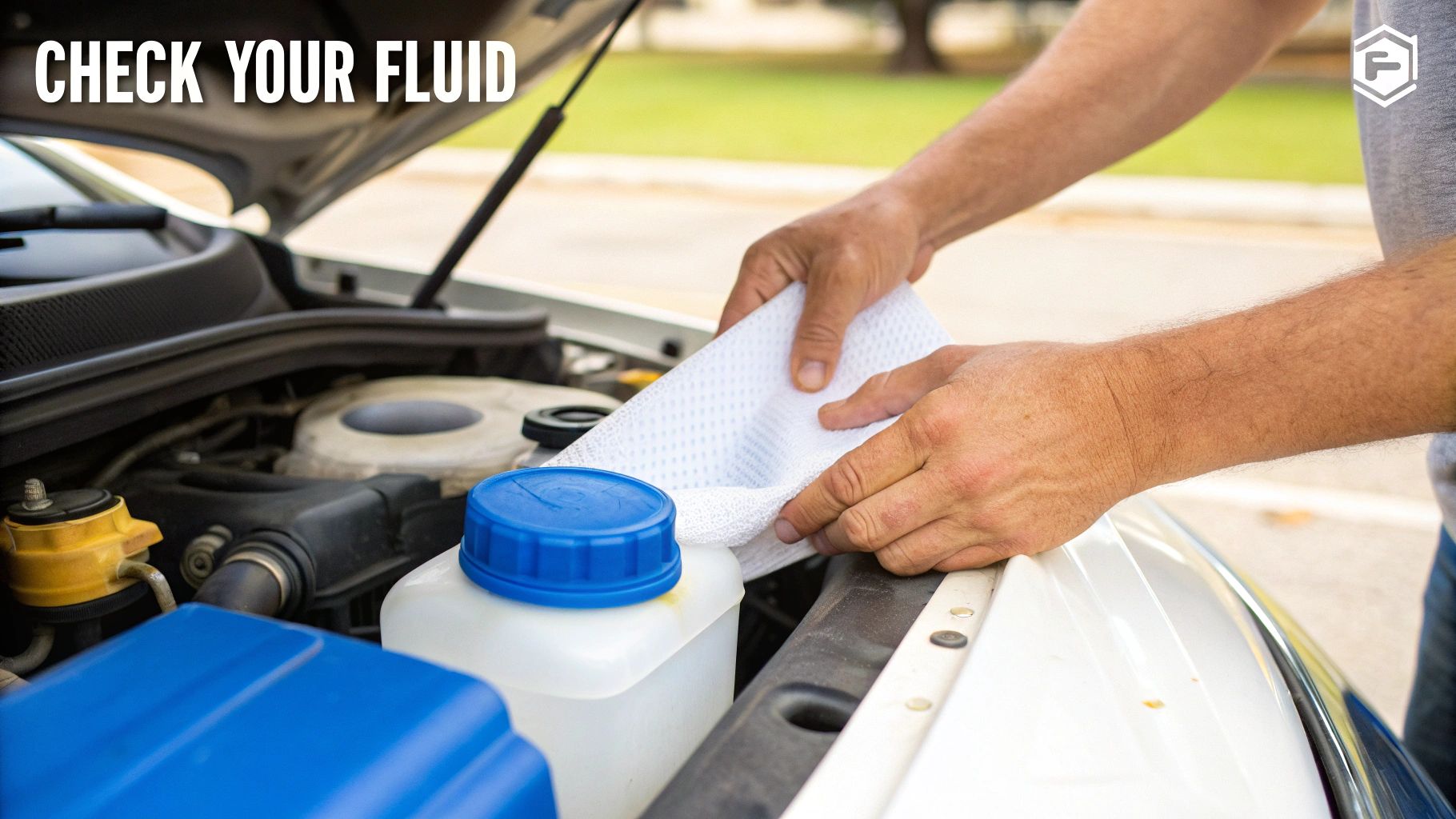
- Clean the Area First: Before you even think about opening that cap, grab a clean rag and wipe it down thoroughly, along with the area around it. This is a critical step. Skipping it could let dirt or debris fall into the reservoir, contaminating your entire brake system.
- Check the Level and Color: With everything clean, go ahead and carefully unscrew the cap. The first thing to check is the fluid level—is it between the “MAX” and “MIN” lines? If the level is low, that could be a red flag for a bigger problem. You can learn more about finding a potential brake fluid leak in our detailed guide.
- Get a True Color Sample: Just glancing at the fluid in the reservoir can be deceiving; it often looks lighter than it really is. For an accurate look, take a clean, white paper towel or a lint-free cloth and just dip the very tip into the fluid. Pull it out and check the color against the white background to see its true hue.
If the fluid on your paper towel is dark brown or black, it’s time to stop. If you’re not comfortable with what you see—or with doing the check yourself—that’s a clear signal to let a professional take over. This is the perfect time to have a trusted auto repair shop in Sun City, AZ, like ours, take a look.
When to Schedule a Brake Fluid Change
While brake fluid color is a fantastic visual cue, it doesn’t tell you the whole story. Think of it as a helpful hint, not the final word. Most car manufacturers recommend a complete brake fluid flush every two to three years, no matter what it looks like in the reservoir. This is a crucial piece of preventative maintenance for your car.
If your fluid is dark, that’s a definite red flag that service is long overdue. But here’s the tricky part: even fluid that still looks clean and amber can be dangerously saturated with moisture. This hidden water dramatically lowers its boiling point, putting you at serious risk of brake failure.
Why Time Matters More Than Color in Sun City
Living here in Sun City, AZ, means our cars are in a constant battle with intense desert heat. That relentless heat speeds up the wear and tear on everything, especially your braking system. When brake fluid is full of moisture, that heat can cause it to boil, creating vapor pockets in your brake lines.
The result? A spongy, mushy, or completely unresponsive brake pedal right when you need it most.
Sticking to a regular service schedule is the single best way to prevent this dangerous situation and avoid expensive damage to critical parts like the master cylinder or your ABS module. That fresh amber color corresponds to a specific DOT chemical classification, which you can read more about in this report on industry standards and market trends. Using the right fluid isn’t just a recommendation; it’s essential for your car’s performance and your safety.
Ultimately, think of a brake fluid change as non-negotiable insurance for your safety on the road.
Your Trusted Partner for Brake Service in Sun City
When it comes down to it, the message is simple: the brake fluid color in your car’s reservoir tells you a story about its health and your safety. Fresh, new fluid is nearly clear with a slight amber tint. Dark brown or black fluid isn’t just old—it’s a critical warning that your braking system is compromised and needs immediate attention. For every driver in Sun City, this isn’t something to put off.
A professional brake fluid flush is much more than a simple top-off. It’s a complete exchange that pushes every last drop of old, contaminated fluid out of the master cylinder, brake lines, and calipers. This process doesn’t just restore your brake system’s performance; it actively protects it from the inside out, preventing corrosion and ensuring you have maximum stopping power when it truly matters.
Here at Pete Nelson Automotive, we’ve built our reputation on honest advice and expert workmanship. We are your local experts for comprehensive brake repair in Sun City, and your safety is always our number one priority. Don’t leave something as important as your brakes to guesswork. Let our certified technicians give you the peace of mind you deserve.
Is your brake fluid looking a little dark? Don’t wait for a bigger problem to show up. Call 623-974-4723 or visit petenelsonautorepair.com to schedule your appointment today.
Frequently Asked Questions About Brake Fluid
We get a lot of questions about brake fluid from drivers here in Sun City, AZ. To help you get the answers you need quickly, we’ve put together a few of the most common ones we hear in the shop.
What should brake fluid color look like?
Healthy brake fluid should be a transparent light yellow or amber color, similar to fresh vegetable oil. If it’s dark brown or black, it’s heavily contaminated and needs to be flushed and replaced immediately to ensure your brakes work safely.
How often should I get my brakes checked in Arizona?
Because of the extreme heat here in Sun City, AZ, we recommend a professional brake inspection at least once a year or every 12,000 miles. This allows a technician to check your brake pads, rotors, and fluid to catch any potential issues before they become serious safety hazards.
Can I just top off my brake fluid if it looks low?
While you can add a little bit in an emergency, low fluid is almost always a red flag for a bigger issue. It could be a sign of worn-out brake pads or a dangerous brake system leak. Topping it off is just a temporary fix that hides the real problem, so it’s crucial to have a professional technician find the root cause.
How much does a brake fluid flush cost?
The final cost depends on your vehicle’s make and model, but a brake fluid flush is one of the most affordable and important preventative services you can get. It’s a small investment that protects your brake system from corrosion and helps you avoid much bigger, more expensive repairs down the road. Give us a call at Pete Nelson Automotive 623-974-4723, and we’ll be happy to give you a clear, no-surprise quote for your specific car.
Pete Nelson Automotive
This Offer Will Expire 12-31-2026
Pete Nelson Automotive is pleased to offer you

"Get Ready for the Holidays"
A $215.00 Value for Only $159.95 (+tax)
Lube, Oil, & Filter Change, Up to 5 quarts of Engine oil
Inspect and top off all fluid levels, Includes up to 5 Quarts of 5w30 synthetic blend oil, additional charge for synthetic oil.
Travel Evaluation
Set Air Pressures and Tire Rotation if needed.
Battery, Alternator and Starter Electrical Test
Load test battery, Alternator output and Starting amps.
Full Brake Evaluation
Includes check brake system on four wheels, checking and testing brake fluid condition.
So Call 623-974-4723 today and make an appointment for this exclusive Special!
*Most Cars, Vans, Motor homes, 4×4’s, Diesels, and some foreign cars may be higher. You must bring this letter at time of service and allow 2 hours to complete.



