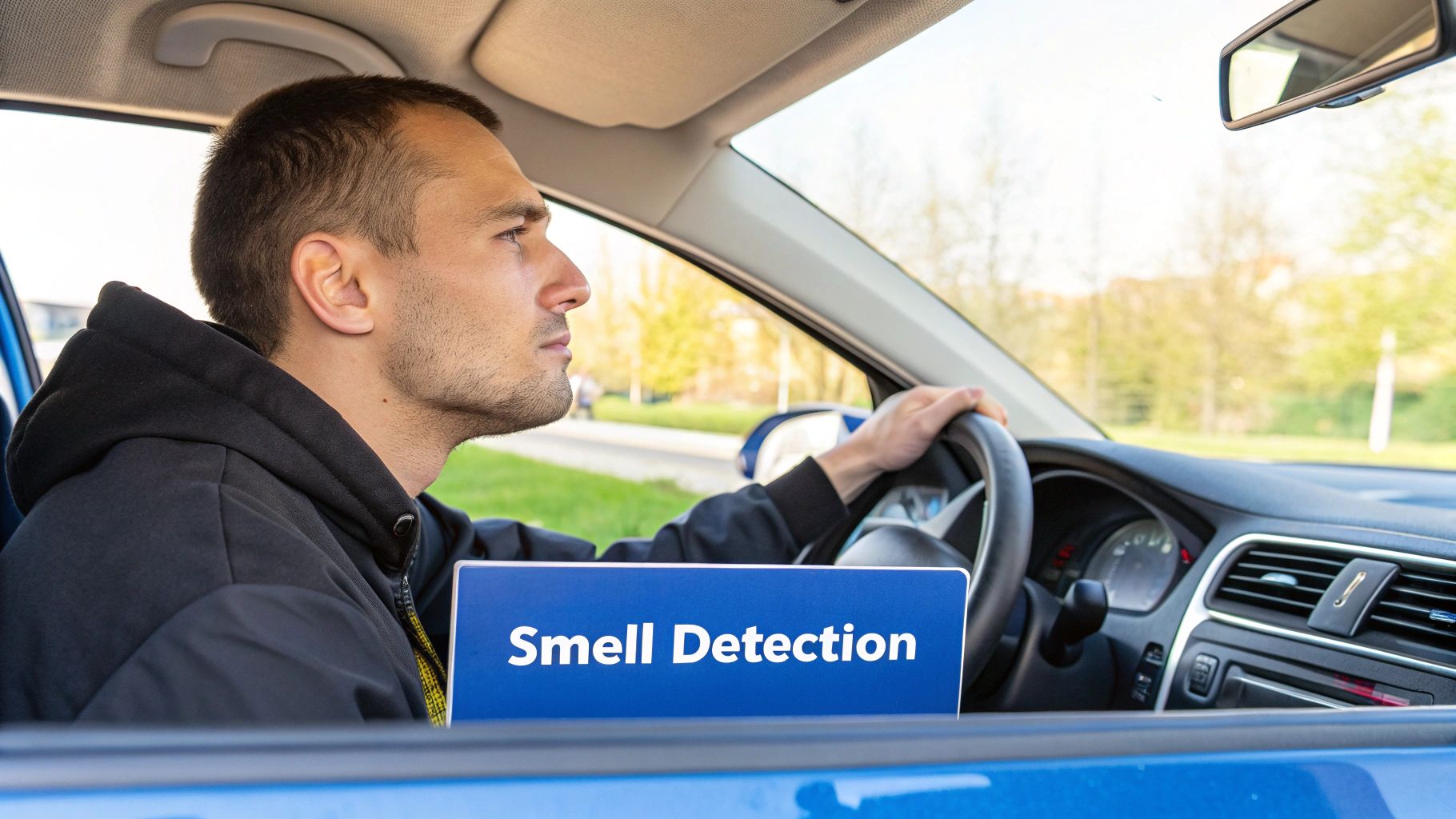
 Driving around Sun City, you get used to the Arizona heat, but one smell you should never ignore is burning rubber coming from your vehicle. That sharp, acrid odor is a universal warning sign that something is wrong. It could be a slipping drive belt, an overheating clutch, leaking fluids hitting hot engine parts, or even a dragging brake caliper.
It’s your car’s way of telling you that a component is creating far too much friction and heat. Ignoring it is a recipe for more serious and expensive damage down the road. At Pete Nelson Automotive, we’re here to help you translate these warning signs into clear, actionable solutions.
Decoding That Alarming Smell: What Your Car Is Trying to Tell You
Picture this: you’re driving down Grand Avenue on a warm Sun City afternoon when a sharp, acrid smell fills the cabin. It’s that unmistakable scent of burning rubber, and it immediately sets off alarm bells. While many drivers might first think of screeching tires, the real cause is almost always happening under the hood or within your braking system.
Pushing this smell to the back of your mind isn’t just a bad idea—it can lead to some seriously costly repairs and compromise your safety. As your trusted local experts for auto repair in Sun City AZ, we’ve helped countless drivers get to the bottom of mysterious odors. Think of that burning rubber smell as a specific message from your car. Our job is to help you translate it.
Common Sources of a Burning Rubber Smell
So, what’s actually causing that unsettling aroma? The possibilities range from relatively minor issues to critical failures. Here are a few of the most frequent culprits our technicians track down:
- Slipping Belts: Your engine’s serpentine belt is made of tough rubber. If a belt gets old and worn, or the tensioner fails, it can slip on the pulleys. That slippage generates intense heat and the classic burning rubber smell.
- Leaking Fluids: This one is sneaky. An oil or transmission fluid leak can drip onto a blazing-hot exhaust manifold. As that fluid burns off, it can produce an odor that smells an awful lot like burning rubber.
- Brake System Problems: Ever had a brake caliper seize up or “stick”? When that happens, it forces the brake pad against the rotor constantly. This non-stop friction creates extreme heat that can burn the brake pad material and even overheat the tire, kicking off that distinct smell.
- Clutch Issues: For those driving a manual transmission, a worn or slipping clutch is a prime suspect. It can create a powerful burning smell, especially when you’re shifting gears under a heavy load.
- Road Debris: Sometimes, the cause isn’t part of your car at all. A plastic bag or other road trash can get snagged on your hot exhaust system. As it melts, it creates a smell that’s easily mistaken for burning rubber.
These are just a handful of the potential issues. We often see these problems pop up more frequently here due to Arizona’s extreme heat, which accelerates wear and tear on all the rubber components in a vehicle. You can learn more about how our unique climate affects vehicles by reading our guide to common car problems in Sun City, AZ.
Diagnosing Problems with Your Brakes and Clutch
When you catch a whiff of burning rubber, your mind probably jumps to a few key culprits. More often than not, the source is either the brake system or the clutch. Both rely on friction to do their job, but when that friction gets out of hand, it creates intense heat and a smell that’s hard to ignore. As your go-to experts for brake services Sun City, we can help you figure out what’s going on.
Reading the Signs from Your Brake System
A persistent burning smell from your brakes—even when you’re not braking hard—is a serious red flag. This usually points to a seized brake caliper. When a caliper gets stuck, it holds the brake pad against the rotor constantly, creating non-stop friction and heat.
Here are the tell-tale signs of a brake-related burning smell:
- The odor is strongest right after you’ve been driving.
- Your vehicle pulls to one side while braking or cruising.
- You can see smoke coming from a wheel well.
- The wheel hub is incredibly hot to the touch (be very careful!).
A seized caliper isn’t just a smelly inconvenience; it’s a serious safety hazard that can dramatically increase your stopping distance and cause severe damage to your rotors.
Understanding a Slipping Clutch
If you drive a manual, that burning smell is often coming from the clutch. A clutch disc is made from a friction material much like a brake pad. When the clutch is worn out or used improperly, it can slip instead of fully grabbing.
This slippage creates an incredible amount of heat, literally burning the clutch’s surface. The resulting odor is similar to burning brakes but is often described as smelling more like burning paper.
You’ll typically notice the clutch smell in these situations:
- When you’re accelerating, especially up a hill.
- Right after you shift gears.
- Your engine RPMs shoot up, but your car’s speed doesn’t follow.
A slipping clutch means your engine’s power isn’t making it to the wheels. If you suspect this, it’s crucial to get it checked out before you end up stranded. For a deeper dive into brake health, take a look at our guide on when to replace your car brakes. Don’t wait for the smell to get worse; letting our team diagnose the problem early can save you from more expensive failures.
Under the Hood: Investigating Belts and Fluid Leaks
If your brakes and clutch seem fine, the next place to investigate is the engine bay. It’s a classic mistake to assume the odor is always coming from an actual rubber part. Often, it’s a fluid leak dripping onto a scorching hot engine component, which smells almost exactly the same.
A tiny oil leak from a valve cover gasket can easily find its way onto the exhaust manifold. That manifold can get hotter than 1,200°F, and when oil hits that surface, it vaporizes instantly, creating a sharp, acrid smoke you’d swear was burning rubber.
Spotting Fluid Leaks
Finding a fluid leak can feel like detective work, but it gets easier when you know where to look. First, wait for the engine to cool down, then grab a flashlight and pop the hood.
Start by checking the top of the engine around the valve cover for a wet, grimy film—a classic sign of a slow oil leak. If you want to dive deeper, we have a whole guide on what causes an oil leak in vehicles.
Don’t stop there. Check for other common leaks:
- Power Steering Fluid: Often reddish or light brown, a leak here can easily drip onto hot parts.
- Coolant: Usually bright green, pink, or orange, leaking coolant gives off a distinct, sweet burning smell as it vaporizes.
Pro Tip: Slide a piece of clean cardboard under your engine overnight. In the morning, any drips will be impossible to miss, and the fluid’s color gives you a huge clue about the source.
Inspecting Your Drive Belts
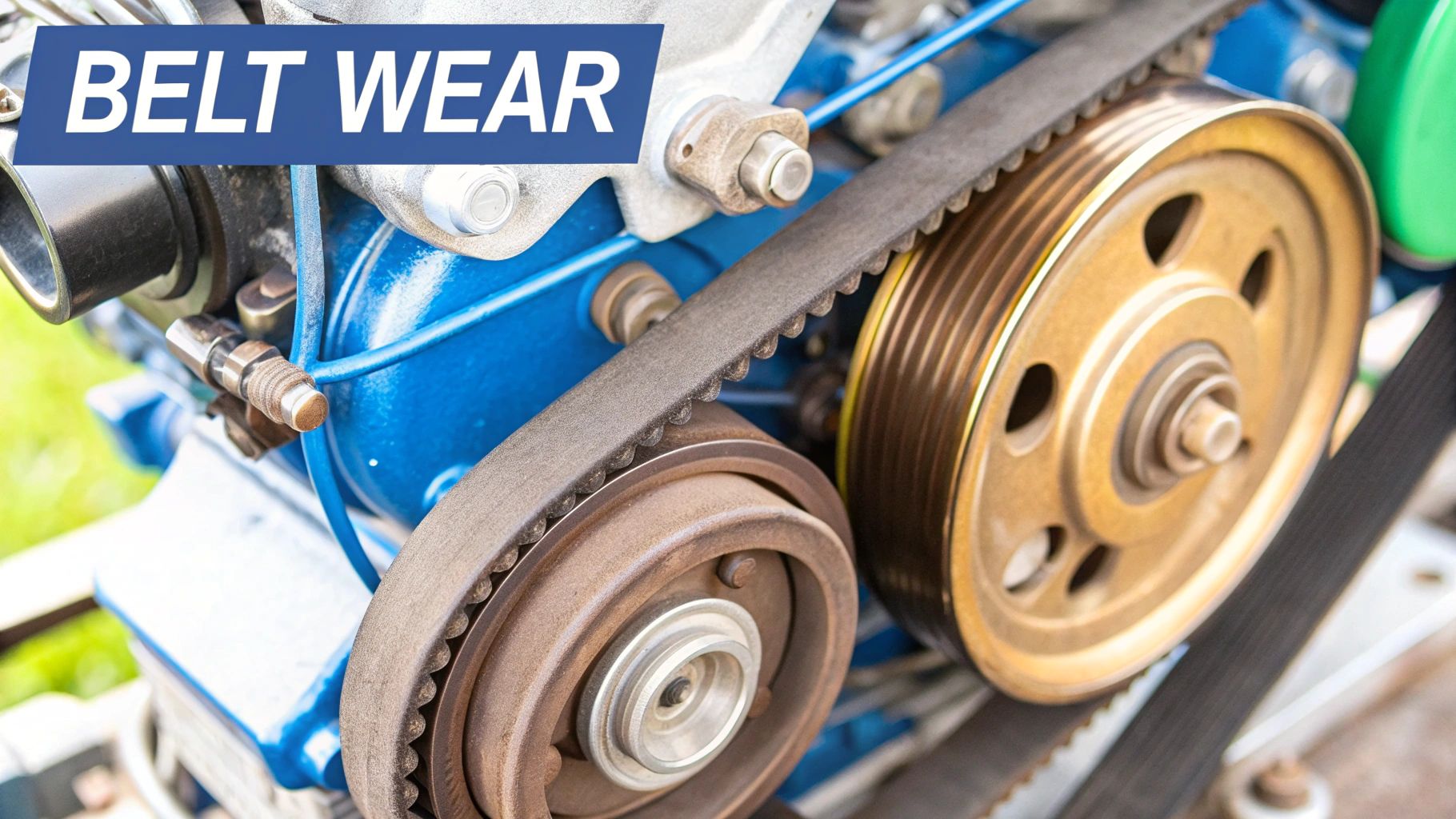
Another top contender for that car smells like burning rubber problem is a slipping drive belt. The serpentine belt powers everything from the alternator to the power steering. If that belt is old or the tensioner is weak, it can slip, creating friction and burning the belt’s surface.
A quick visual check can tell you a lot. Here’s what to look for:
- Cracks and Fraying: Deep cracks or shredded edges mean it’s past its expiration date.
- Glazing: A shiny, polished surface is a dead giveaway that it’s been slipping.
- Squealing Noises: A high-pitched squeal when you start the car is the textbook sound of a slipping belt.
Don’t ignore a failing belt. If it snaps, your engine can overheat, the battery will stop charging, and you’ll lose power steering. If you see these signs, it’s time to get it checked out.
How Your Tires Can Signal Deeper Mechanical Issues
Sometimes, the simplest answer is the right one—that burning rubber smell is actually coming from your tires. While aggressive driving can cause it, a persistent burning tire smell is often a symptom of a serious mechanical issue putting your car at risk.
When your car’s suspension or brakes aren’t working right, they can force your tires to endure extreme, constant stress. This generates a tremendous amount of heat—a critical warning sign that something is about to fail.
The Dangers of Misalignment
One of the most common culprits we see in our Sun City shop is poor wheel alignment. When your wheels aren’t pointing straight, one or more tires are essentially being dragged sideways down the road. This constant, unnatural friction creates enough heat to burn the rubber right off the tread, drastically shortening the life of your tires and compromising your car’s handling.
When Brakes Are the Real Problem
A seized brake caliper is another major offender. When a caliper gets stuck, it keeps the brake pad clamped against the rotor, refusing to let go. This constant friction overheats the entire wheel assembly—the rotor, the wheel, and eventually, the tire itself.
Here’s how to spot the signs of a stuck caliper:
- A powerful burning smell coming from one specific wheel.
- Your car pulls to one side while you’re driving.
- The wheel on that side feels significantly hotter than the others after a drive.
A seized caliper is a severe safety risk that can lead to complete brake failure. Tire-related problems are a huge factor in road safety. A 2015 study highlighted that thousands of crashes happen each year due to tire failures, often preceded by overheating. You can read the full report from the NTSB to see just how serious it is.
Recognizing Uneven Tire Wear
Your tires tell a story about your car’s health. Take a moment to look at them. Do you see any of these patterns?
- Wear on the inner or outer edge: Classic sign of an alignment problem.
- Scalloped or “cupped” wear: Often points to worn-out shocks or struts.
- Wear right down the center: Usually caused by overinflation.
Keeping an eye on your tire pressure is another crucial step. We have a helpful guide on what to do when your tire pressure warning light comes on. Ignoring these signs can lead to a dangerous blowout, especially on scorching hot Arizona pavement.
Digging into Electrical Faults and Foreign Debris
So, you’ve checked the belts, brakes, and tires, but that nasty burning smell is still hanging around. Now it’s time to consider two other culprits. One is harmless, but the other is a serious safety hazard: a hidden electrical short.
When the plastic insulation on a wire gets hot enough to melt, it gives off a sharp smell almost identical to burning rubber. This is a major fire risk. You might notice the smell comes and goes or see other electrical gremlins like flickering lights or fuses that keep blowing.
Safety First: An electrical burning smell is one you should never ignore. If you suspect an electrical problem, pull over safely, turn off the engine, and call for professional help.
How to Spot Electrical System Problems
Pinpointing an electrical fault can be tough, but there are a few tell-tale signs:
- Flickering Lights: Headlights or dash lights dimming or flickering.
- Repeatedly Blown Fuses: If the same fuse keeps popping, you have a persistent short.
- Visible Smoke: Wisps of smoke from under the dashboard or engine bay.
These are all red flags. Our team specializes in comprehensive electrical system repair to safely track down and fix these dangerous faults.
The Problem with Road Debris
On a much less alarming note, the source might not even be part of your car. It’s incredibly common for road debris like a plastic bag to get kicked up and stick to your hot exhaust pipe. As it melts, it creates a powerful smell. If the smell appeared suddenly with no other symptoms, take a look underneath your car (after it cools down!) to see if you’ve picked up an unwanted hitchhiker.
Interestingly, the auto industry is developing new ways to help drivers catch problems early. Smart tire technologies, part of a market expected to hit $171.58 billion by 2033, now use sensors to monitor tire temperature and wear. Discover more insights about these automotive advancements.
Frequently Asked Questions
Is it safe to drive if my car smells like burning rubber?
It’s never a good idea. While the cause could be harmless, it often points to a serious issue like a seized brake caliper, slipping belt, or electrical short. We recommend pulling over safely as soon as you can. If you see smoke or the smell is overwhelming, call for a tow to avoid further damage or a potential fire.
Why does my car smell like burning plastic?
A burning plastic smell is a huge red flag that almost always points to an electrical issue. The insulation around your car’s wiring can melt when there’s a short circuit, creating that distinct odor. Because of the serious fire risk, this requires immediate professional attention. Our technicians can perform an electrical system repair to fix the source safely.
Can a bad oil leak smell like burning rubber?
Yes, absolutely. This is one of the most common causes we find when the belts and tires are fine. When engine oil from a leaking gasket drips onto the scorching hot exhaust manifold, it burns off and produces a sharp, acrid smell that’s very easy to mistake for burning rubber. Getting it checked out can prevent low oil levels and engine damage.
How often should I get my belts and hoses checked in Sun City?
Here in the Arizona heat, rubber parts degrade much faster. We strongly recommend a quick visual inspection of your belts and hoses with every oil change. Look for cracks, shiny glazing, or fraying on belts, and check hoses for soft spots or bulges. This proactive approach can help you avoid a breakdown on the road.
Don’t let a strange smell turn into a major headache. The ASE-certified team at Pete Nelson Automotive is here to provide the expert diagnostics and honest repairs you need to drive with confidence.
Call 623-974-4723 or visit Pete Nelson Automotive to schedule your appointment today.
Pete Nelson Automotive
This Offer Will Expire 12-31-2026
Pete Nelson Automotive is pleased to offer you
"Get Ready for the Holidays"
A $215.00 Value for Only $159.95 (+tax)
Lube, Oil, & Filter Change, Up to 5 quarts of Engine oil
Inspect and top off all fluid levels, Includes up to 5 Quarts of 5w30 synthetic blend oil, additional charge for synthetic oil.
Travel Evaluation
Set Air Pressures and Tire Rotation if needed.
Battery, Alternator and Starter Electrical Test
Load test battery, Alternator output and Starting amps.
Full Brake Evaluation
Includes check brake system on four wheels, checking and testing brake fluid condition.
So Call 623-974-4723 today and make an appointment for this exclusive Special!
*Most Cars, Vans, Motor homes, 4×4’s, Diesels, and some foreign cars may be higher. You must bring this letter at time of service and allow 2 hours to complete.



