10 Car Dashboard Warnings in Sun City: What to Do
That glowing icon on a hot Arizona afternoon can turn a routine drive into a stressful decision. You’re crossing Sun City, the air conditioner is working hard, and a symbol you don’t recognize appears on the dash. Should you keep driving, pull over, or schedule an appointment? The answer depends on the warning, its color, and how the vehicle feels. This guide sorts common car dashboard warnings by urgency, so you can separate a drive-now problem from a service-soon issue. Even careful owners who research the value of a classic car still need to understand the warning lights on the car they drive every day.
1. Oil Pressure Warning Light
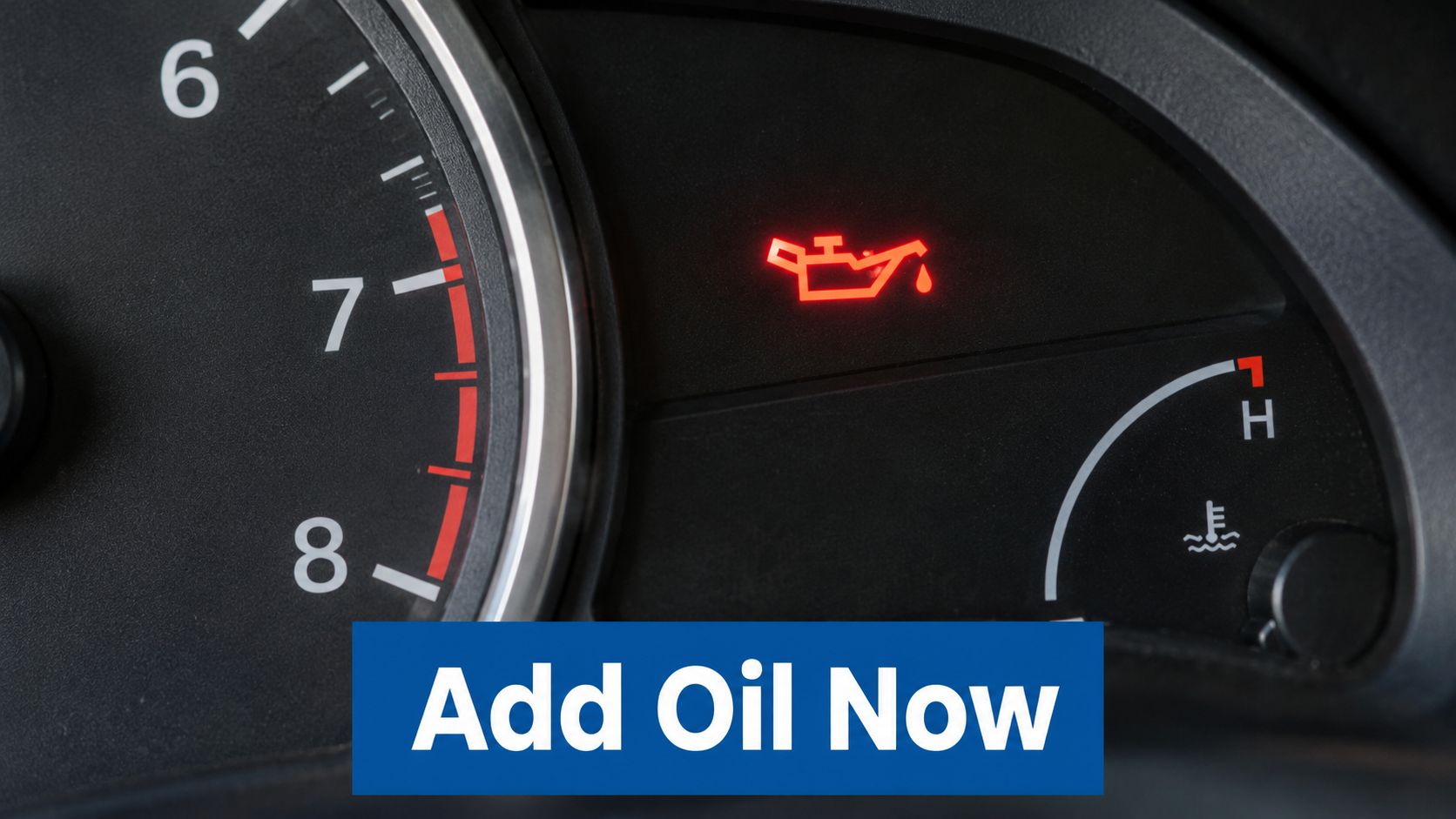
The oil can symbol means engine oil pressure may have fallen below a safe level. That’s different from an oil-change reminder. Low pressure can leave internal engine parts without enough lubrication, and continued driving can cause severe damage quickly. Arizona heat adds stress, so check the oil level when the engine is cool and use the viscosity listed in your owner’s manual.
Practical rule: If the oil-pressure light stays on while the engine runs, pull over safely, shut the engine off, and arrange diagnosis.
Check the level at fuel stops during summer. Regular oil-pressure-switch symptom checks and oil changes help distinguish a low level from a leak, worn component, or faulty switch. Pete Nelson Automotive’s Smooth Ride Special includes oil, filter, and fluid top-off service.
2. Engine Coolant Temperature Warning Light
A thermometer over wavy lines, or a red thermometer, warns that the engine is overheating. Sun City’s summer temperatures can expose weak cooling-system parts, including hoses, radiators, fans, and water pumps. Stop as soon as it’s safe, turn off the engine, and let it cool.
Never remove a hot radiator cap. Pressurized coolant can cause serious burns. Check the coolant only after the engine is cold, and arrange a pressure test before summer travel. A leaking hose might seem manageable in the driveway, but the same leak can become an overheated engine in stop-and-go traffic. Review local car-overheating causes before deciding that adding coolant solves the problem.
3. Brake System Warning Light
The red brake light usually shows an exclamation point inside a circle. First, confirm that the parking brake is fully released. If the light remains on, the vehicle may have low brake fluid, a hydraulic pressure problem, or another fault that affects stopping performance.
Sun City’s frequent intersections and stop-and-go traffic make brake condition especially important. Don’t top off the reservoir with an unapproved fluid. The specification in your owner’s manual matters, and moisture-contaminated fluid may need service rather than being replaced at the reservoir. Schedule brake services in Sun City promptly, particularly if the pedal feels soft, the car pulls, or stopping distance changes. A brake warning is not a light to dismiss while researching strategies for injury compensation.
4. Airbag SRS Warning Light
An illuminated airbag or SRS light shows a seated passenger with an inflated bag. The fault can involve an airbag, crash sensor, seatbelt pretensioner, wiring, or control module. Your car may drive normally, but the restraint system may not protect occupants as designed in a collision.
Treat this warning as a safety appointment, not a cosmetic repair. Do not probe connectors or attempt an airbag repair yourself, since accidental deployment can cause serious injury. In Sun City, have the system checked before a summer road trip.
Pete Nelson Automotive can scan the SRS module, test seat sensors and pretensioners, and tell you which component triggered the light. Schedule repair and maintenance services rather than ignoring the warning.
5. Battery and Charging System Warning Light
The battery-shaped light usually points to a charging-system problem, not just an old battery. The alternator supplies electrical power while the engine runs. If it stops charging, the vehicle may continue briefly on stored battery power before systems shut down.
Valley heat is hard on batteries and electrical connections. Look for terminal corrosion, dimming lights, slow accessories, or repeated starting trouble. A load test and charging-system test are more useful than replacing the battery by guesswork.
If the light appears while driving, turn off nonessential electrical loads and arrange service rather than assuming you’ll make it home. Review how to tell if an alternator is bad and contact the shop for electrical diagnostics.
6. Transmission Temperature or Transmission Fault Warning
A gear with a thermometer, “Transmission Hot,” or “Check Transmission” message means the transmission may be overheating or the control system has detected a fault. Heat, towing, and repeated stop-and-go driving can place extra demand on fluid and internal components.
If the message says the transmission is hot, reduce load and stop safely when the owner’s manual directs you to do so. Don’t continue a long drive hoping the warning disappears. Check the manufacturer’s fluid-service schedule, especially if the vehicle works hard in extreme heat.
Delayed diagnosis can turn a manageable electrical, fluid, or cooling issue into internal transmission damage. Learn the signs your transmission is failing and use professional computer diagnostics when the warning returns.
7. ABS Anti-Lock Braking System Warning Light
The amber ABS symbol means the anti-lock system has detected a fault. Normal braking may still operate, but the anti-lock function can be unavailable during a hard stop. That matters when monsoon rain reduces tire grip and water collects on the road.
A wheel-speed sensor, wiring issue, tone ring, or hydraulic concern can trigger the light. Ask for an ABS scan instead of replacing parts based only on the symbol. Include a brake-fluid check during an oil change or tire rotation visit.
If the ABS light appears with a soft pedal, grinding, or a red brake warning, limit driving and arrange immediate inspection.
A pre-monsoon brake inspection gives you a better chance of finding worn components before traction becomes unpredictable.
8. Traction Control and Electronic Stability Control Warning
The car-with-squiggly-lines symbol may flash while traction control or stability control actively corrects wheel slip. During a monsoon shower, a brief flash can mean the system is working. A steady light can mean the system is disabled or has detected a fault.
An alignment problem after a pothole strike can affect steering and stability-system readings. Uneven tires, a wheel-speed sensor, or damaged suspension parts can also contribute. Have the system scanned if the light stays on during normal driving on dry pavement.
Keep tires rotated and balanced, especially before storm season. If the light appeared after an impact, schedule an alignment through the shop’s contact page rather than repeatedly resetting the warning.
9. Tire Pressure Monitoring System TPMS Warning Light
The horseshoe-shaped tire symbol with an exclamation mark usually means one or more tires are significantly underinflated. The National Highway Traffic Safety Administration says TPMS-equipped vehicles from the 2008 model year and newer must detect and warn about system malfunctions, and it recorded 511 deaths in tire-related crashes in 2024. NHTSA’s tire guidance explains why pressure deserves prompt attention.
Check all four tires when they’re cool, compare them with the door-jamb specification, and inspect for nails, sidewall damage, or a slow leak. A flashing light followed by steady illumination commonly indicates a TPMS fault, while a steady symbol generally points to low pressure. Persistent warnings may require sensor, battery, relearn, or valve-stem diagnosis. Use this guide to understand your tire-pressure warning light, and ask about the Smooth Ride Special’s four-tire balance and rotation.
10. Check Engine Light (Malfunction Indicator Lamp)
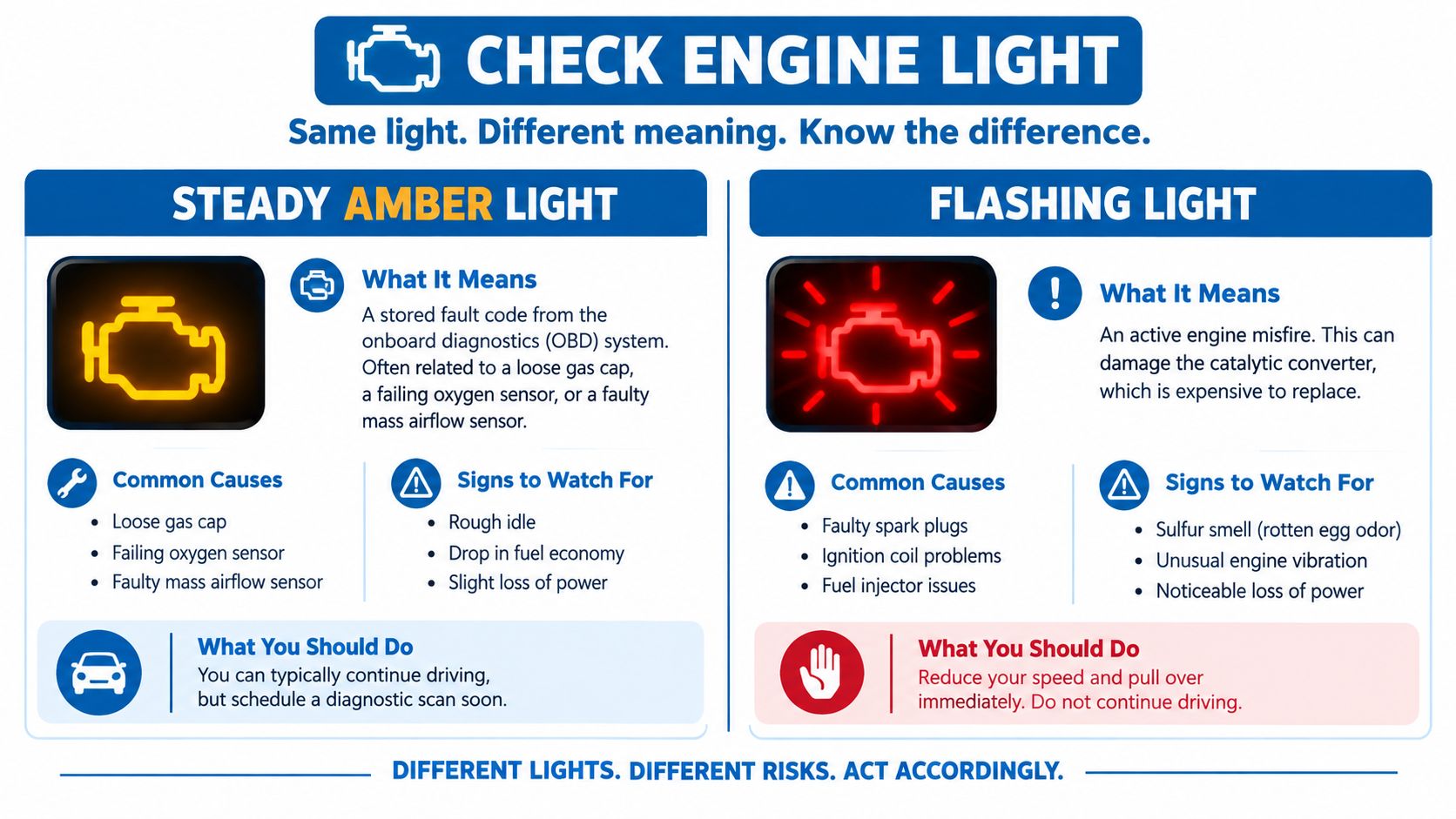
The engine-shaped light may appear during a hot Sun City commute, stop-and-go traffic, or after a rough monsoon drive. It monitors emissions, fuel delivery, ignition, and related sensors. A loose fuel cap can trigger it, while heat-damaged hoses, ignition faults, or sensor problems may also be involved. If the light stays steady and the car drives normally, schedule diagnosis soon rather than panic.
A flashing light needs faster action. AAA identifies repeated flashing as a possible severe misfire that can overheat and damage the catalytic converter. Limit driving and seek immediate diagnosis if the vehicle shakes, loses power, smells unusual, or makes noise. Ask for the stored code and freeze-frame information. Use professional computer diagnostics instead of clearing the light before the cause is repaired.
10-Point Dashboard Warning Lights Comparison
| Item | 🔄 Implementation Complexity | ⚡ Resources & Response Speed | 📊 Expected Outcome (⭐) | Ideal Use Cases | 💡 Key Advantages / Tips |
|---|---|---|---|---|---|
| Oil Pressure Warning Light | High, can be sensor, pump, or internal wear | Immediate stop; dipstick check now, tow and pressure test by shop | ⭐⭐⭐⭐ Prevents rapid engine seizure if addressed immediately | Sudden light after start; high‑heat driving; routine oil checks in summer | Check oil at every fill‑up; use correct viscosity; regular oil changes |
| Engine Coolant Temperature Warning Light | Medium, coolant level, cap, thermostat, fan checks | Act quickly; turn on heater, pull over, allow cool-down; pressure test at shop | ⭐⭐⭐⭐ Prevents head gasket/warped heads when acted on early | Overheating, steam, high ambient temps before long trips | Never open hot radiator; check coolant cold; pressure-test before summer |
| Brake System Warning Light | Medium–High, may be simple (parking brake) or hydraulic leak | Immediate check: parking brake then fluid; avoid driving if soft pedal; tow if needed | ⭐⭐⭐⭐ Safety‑critical, prevents brake failure if inspected promptly | Light on after parking brake release; spongy pedal; pre‑trip checks | Confirm parking brake first; use correct brake fluid; annual inspections |
| Airbag (SRS) Warning Light | Medium, diagnostic scan often needed; avoid DIY airbag work | Drive only if necessary; prioritize qualified SRS scan and repairs | ⭐⭐⭐ Risk of non‑deploying airbags; safety system compromised | After battery change, seat work, or post‑accident inspections | Don’t place kids front seat; have trained technician repair SRS faults |
| Battery & Charging System Warning Light | Medium, alternator, belt, battery, or connections | Turn off accessories; drive to shop if possible; multimeter/load test recommended | ⭐⭐⭐ Can lead to stall or electrical failure; often fixed with battery/alternator service | Dimming lights, slow cranking, frequent jumpstarts, hot climates | Clean terminals, load‑test battery before summer, check belt/alternator |
| Transmission Temp / Fault Warning | High, fluid, cooler, solenoids, or control module issues | Reduce load; pull over to cool if temp‑related; full diagnostic and fluid service | ⭐⭐⭐⭐ Prevents costly rebuilds if cooled and serviced promptly | Towing, heavy traffic, overheating transmission symptoms | Follow fluid service interval, avoid heavy loads when hot |
| ABS Warning Light | Medium, wheel sensor, wiring, or module faults | Drive cautiously; ABS scan and sensor cleaning/replacement at shop | ⭐⭐⭐ ABS disabled; normal brakes remain but reduced emergency control | Before wet/monsoon season, after wheel damage or sensor contamination | Scan ABS codes, inspect wheel sensors, check brake fluid |
| Traction Control / ESC Warning | Low–Medium, often sensor or tire related | Check traction switch/tire pressure; scan sensors if steady on | ⭐⭐⭐ Stability control disabled; higher skid risk in poor traction | Slippery roads, after alignment or wheel changes, monsoon season | Verify tire pressure, check sensors and alignment, drive cautiously |
| TPMS Warning Light | Low, usually underinflation; sometimes sensor/service needed | Check cold tire pressures; inflate to door placard; replace sensor if flashing | ⭐⭐⭐ Prevents blowouts and uneven wear; quick fix if only pressure | Heat‑related pressure drops, slow leaks, post‑tire service | Check tires in morning; inflate to placard, inspect for punctures |
| Check Engine Light (MIL) | Medium, wide range from gas cap to ignition/fuel/sensors | If flashing: stop safely; if steady: read OBD‑II code and diagnose | ⭐⭐⭐⭐ Range from minor to catalytic converter risk (flashing = urgent) | Emissions issues, rough idle, drop in fuel economy, sensor faults | Read codes promptly, tighten gas cap, schedule diagnostic scan |
Know Which Lights Can Wait and Which Cannot
Oil pressure, engine overheating, serious brake warnings, airbag faults, and a flashing check-engine light deserve immediate action. Pull over when safe, shut down the vehicle when appropriate, and arrange qualified inspection. Brake, cooling, and airbag warnings should never be treated as routine reminders.
Service-soon warnings include a steady check-engine light, ABS, TPMS, traction-control, battery, and transmission alerts when the vehicle still feels normal. That doesn’t mean they can wait indefinitely. A dashboard light can disappear after a restart while the underlying fault remains stored, and Sun City heat, monsoon traction loss, and daily traffic can expose the problem again.
Pete Nelson Automotive serves Sun City and the West Valley at 9000 N 103rd Ave, with weekday hours from 8:00 am to 5:00 pm. The shop provides brake service, diagnostics, transmission work, alignments, tires, air conditioning service, and oil changes for domestic vehicles, imports, and classic cars. Call 623-974-4723 or visit petenelsonautorepair.com to schedule your appointment today.
Pete Nelson Automotive can scan warning lights, inspect braking and cooling systems, test charging components, and explain the repair options in plain language. Visit Pete Nelson Automotive for dependable service in Sun City and the West Valley, and schedule an inspection before a small warning becomes a roadside problem.
Pete Nelson Automotive
This Offer Will Expire 12-31-2026
Pete Nelson Automotive is pleased to offer you
"Get Ready for the Holidays"
A $215.00 Value for Only $159.95 (+tax)
Lube, Oil, & Filter Change, Up to 5 quarts of Engine oil
Inspect and top off all fluid levels, Includes up to 5 Quarts of 5w30 synthetic blend oil, additional charge for synthetic oil.
Travel Evaluation
Set Air Pressures and Tire Rotation if needed.
Battery, Alternator and Starter Electrical Test
Load test battery, Alternator output and Starting amps.
Full Brake Evaluation
Includes check brake system on four wheels, checking and testing brake fluid condition.
So Call 623-974-4723 today and make an appointment for this exclusive Special!
*Most Cars, Vans, Motor homes, 4×4’s, Diesels, and some foreign cars may be higher. You must bring this letter at time of service and allow 2 hours to complete.



