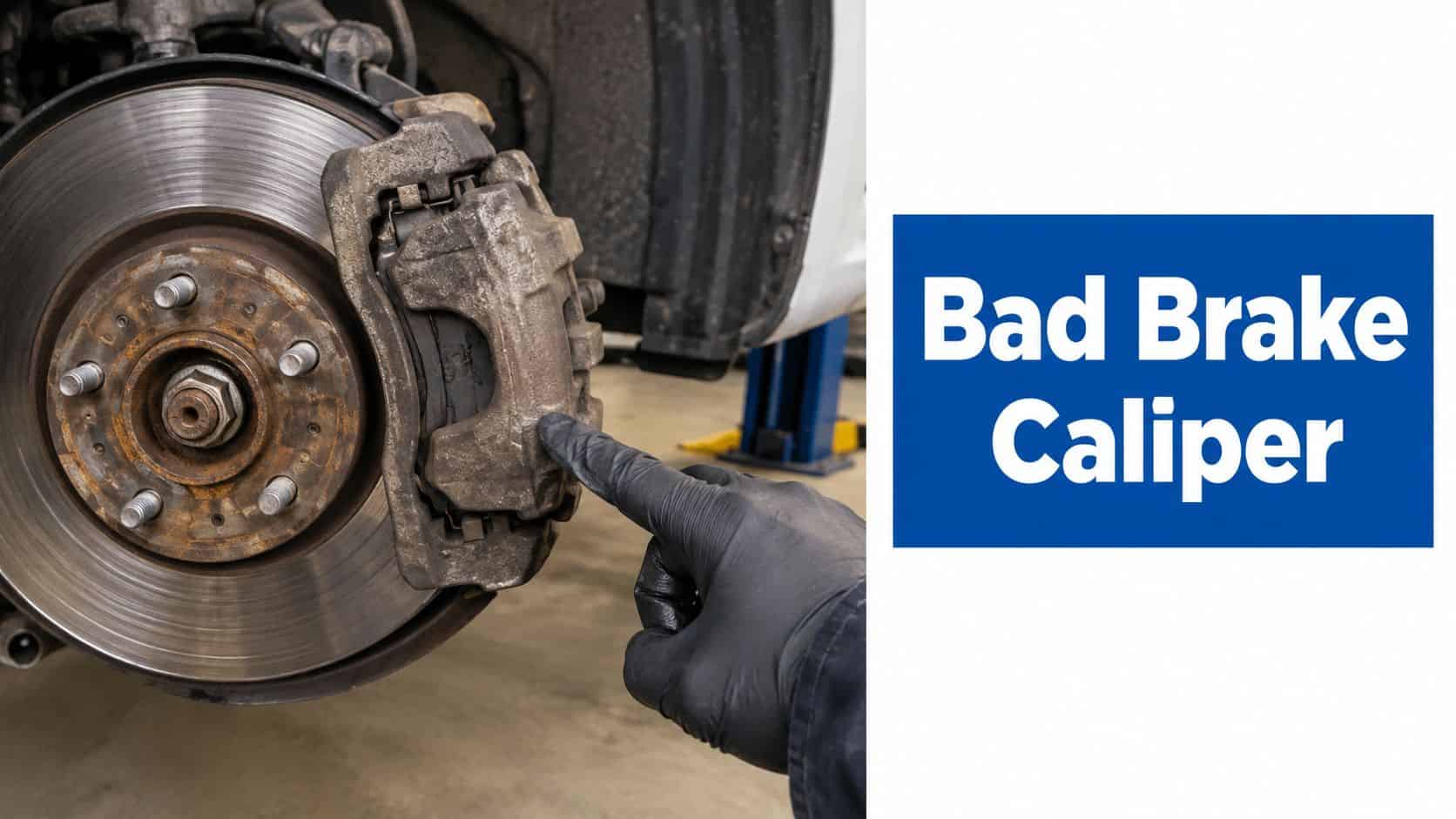
You’re slowing for traffic on Grand Avenue when the steering wheel needs an unexpected correction. Later, in a Sun City grocery store parking lot, you notice a hot-brake smell near a wheel. The car still stops, but something clearly isn’t right.
These can be signs of a bad brake caliper, but they aren’t proof that the caliper needs replacing. The safest approach is to identify what changed, avoid risky home testing, and have a technician distinguish a sticking caliper from a hose restriction, loose hardware, or another brake problem.
What Happens When You Press the Brake Pedal
When you press the pedal, hydraulic pressure reaches the brake caliper. The caliper acts as a clamp, pressing the brake pads against the rotor, the metal disc that turns with the wheel. That contact creates the friction needed to slow the vehicle.
Trouble starts when the clamping force doesn’t match what your foot is asking for. A caliper might remain applied after you release the pedal, apply unevenly, or leak fluid instead of maintaining pressure. Those failures feel different from the driver’s seat, even though they involve the same wheel-end assembly.
A bad caliper usually means sticking, dragging, leaking, or uneven application, not a visibly broken part. Heat-related warning signs may appear before a dramatic loss of braking.
A car that still stops can still have a serious brake defect. Normal-feeling stops don’t cancel out a new burning smell or intermittent pull.
For a first-time owner, the useful distinction is between a symptom and its cause. Tell the shop what the vehicle did and when it happened, rather than asking for a caliper replacement before anyone has inspected it.
How a Healthy Brake Caliper Is Supposed to Work
A healthy caliper needs both hydraulic pressure and free mechanical movement. On a sliding-caliper design, the piston pushes a pad toward the rotor, while the caliper slides on guide pins so the opposing pad can clamp properly. Rubber seals contain the fluid, and a flexible brake hose supplies pressure.
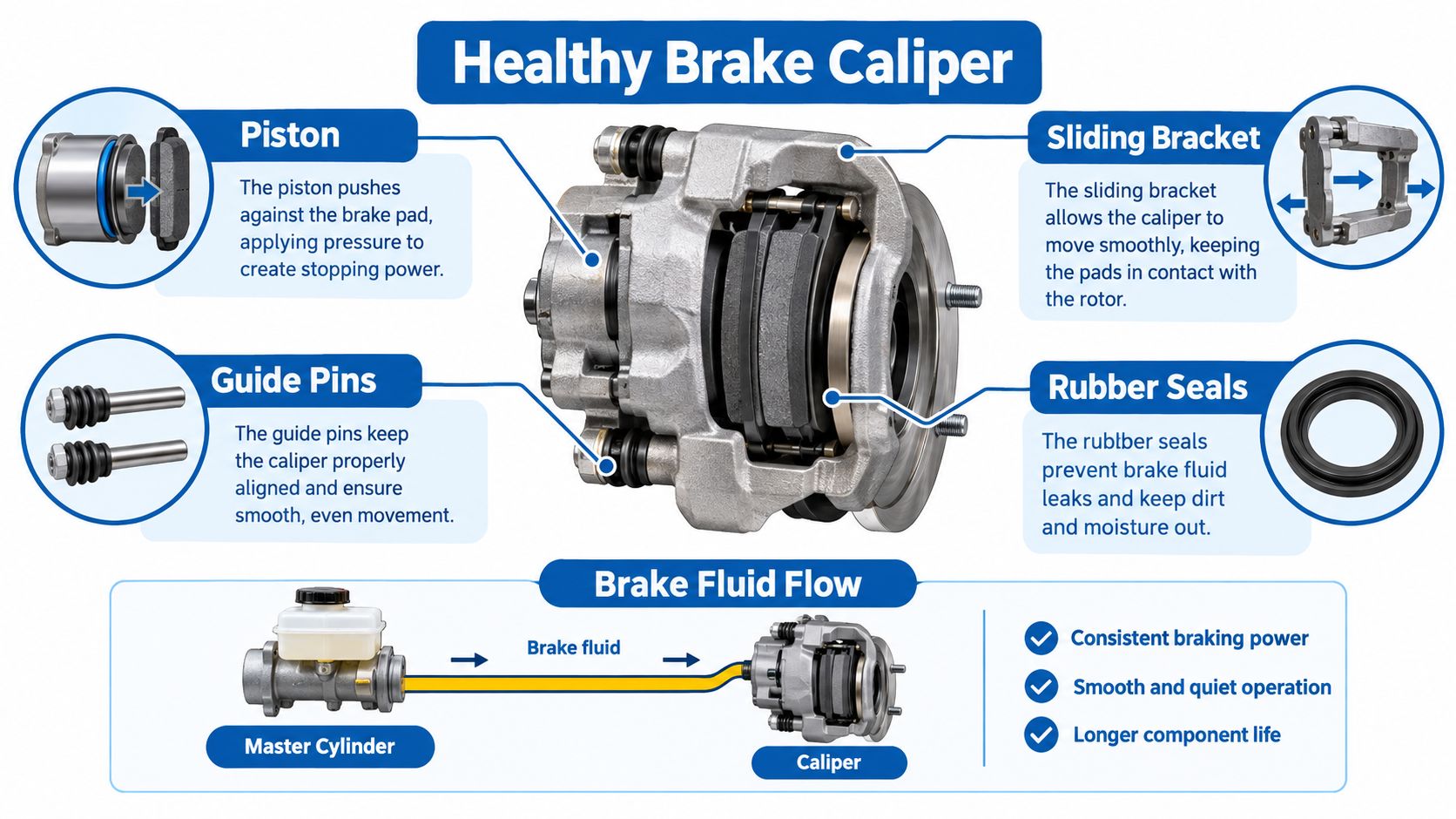
When you release the pedal, the assembly must release its clamping force. The pads need enough running clearance that they don’t remain forcibly pressed against the rotor.
- The piston must return properly. Binding prevents normal release.
- Guide pins must move freely. Their boots and lubrication need inspection, not just a quick exterior glance.
- Pads must move in their supports. A pad stuck in its bracket can imitate a seized caliper.
- Seals and connections must stay dry. Genuine fluid leakage requires investigation.
One manufacturer’s caliper service procedure specifies less than 0.08 inch (2 mm) of inboard/outboard movement with the pads and hardware correctly installed as an indication of adequate running clearance. That’s model-specific guidance, not a universal measurement for every vehicle.
The practical lesson is simple: a brake repair must restore both application and release. Replacing friction material without checking movement can leave the original problem untouched.
The Warning Signs Drivers Actually Feel
You may first notice a pedal that travels farther than usual or a steering pull while slowing down. A leaking caliper can reduce effective hydraulic pressure, while uneven application or release can produce different braking forces across the axle. Neither symptom identifies the faulty component by itself.
How Brake Drag Becomes a Safety Problem
When a caliper fails to release, the pads continue rubbing the rotor. Vehicle motion becomes continuous frictional heat, which can damage braking surfaces and overheat the fluid.
The NHTSA defective-caliper recall notice documented brake drag, overheating, damaged ABS sensors, and boiling brake fluid that could cause loss of braking function. It identified burning odor, extra throttle needed to overcome drag, an ABS warning light, and wheel-end smoke as practical warnings.
Watch for these patterns:
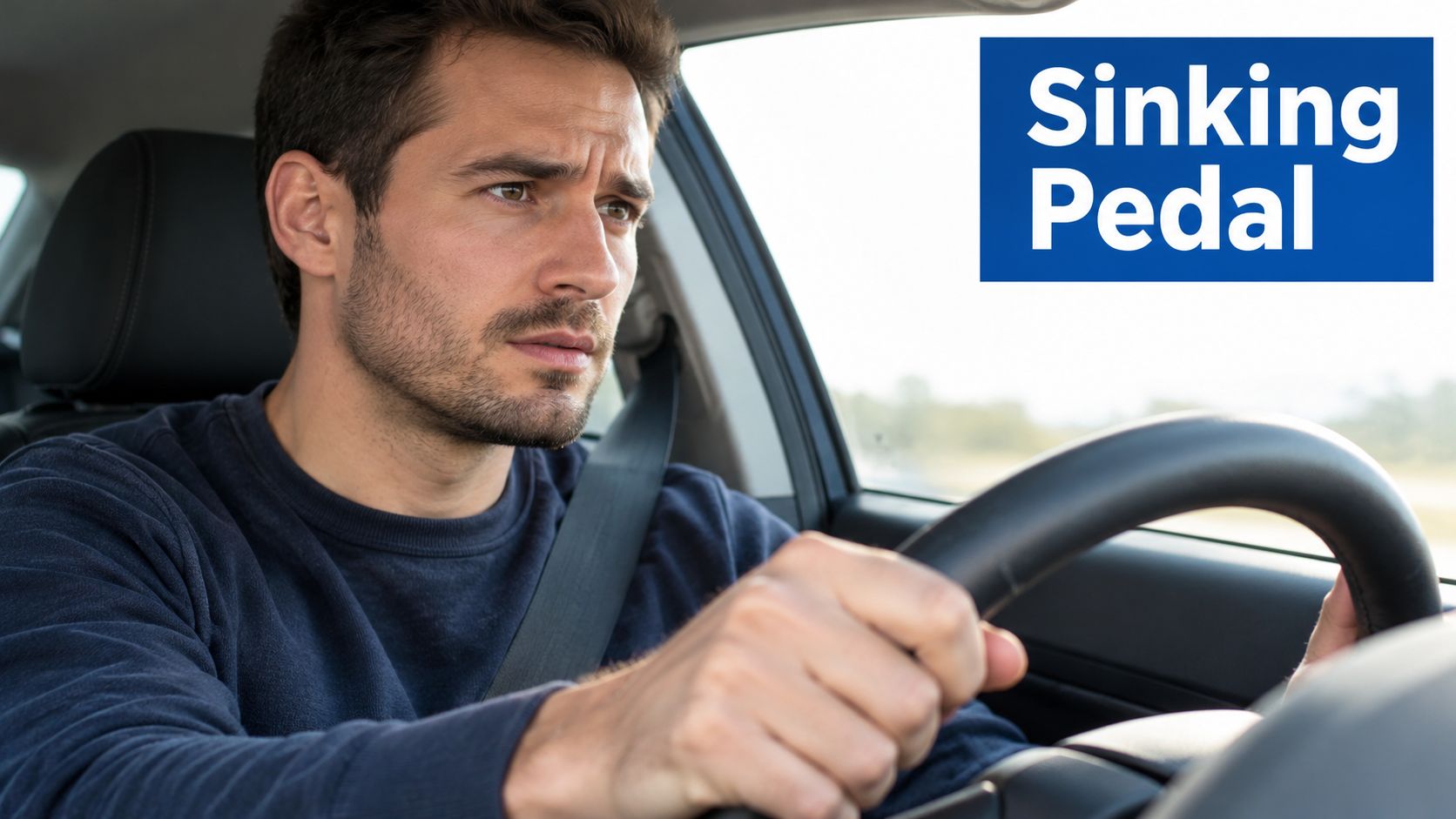
- Soft or sinking pedal. Overheated fluid or a hydraulic problem can make pedal travel abnormal. Don’t dismiss a pedal approaching the floor.
- Sudden pull during braking. One wheel may be contributing different braking force, but the direction alone doesn’t identify the failed part.
- Burning smell or smoke. These are reasons to stop safely, not finish the errand.
- Unusual resistance to movement. More throttle effort or declining fuel economy can accompany dragging brakes.
- New warning lights. An ABS or brake light needs attention, especially alongside heat, pulling, or pedal changes.
A grinding noise when braking also deserves inspection, although noise alone doesn’t establish caliper failure.
A hot wheel combined with a burning smell, or a new ABS light combined with these symptoms, is an urgent safety issue. Arrange inspection rather than continuing to see whether it improves.
Why Uneven Brake Pad Wear Is a Big Clue
“My pads wore out quickly” gives a technician less information than measured differences between the pads. Comparing the inner and outer pads at the same wheel, then comparing wear across the axle, helps locate abnormal movement or pressure.
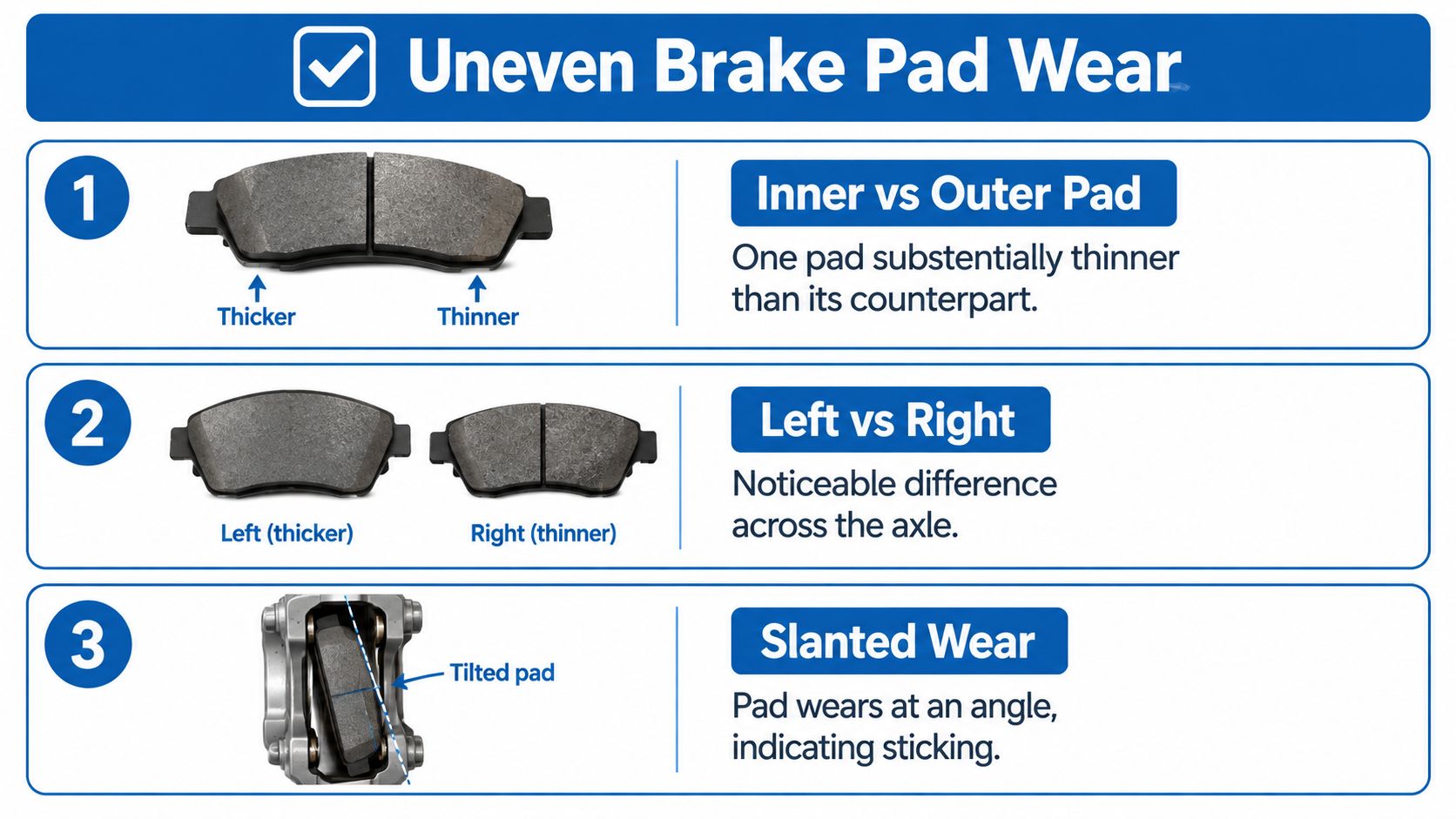
An NHTSA-hosted uneven-pad-wear service bulletin identifies an inboard-to-outboard thickness difference of at least 3 mm during normal highway driving, or 6 mm or greater under severe use, as requiring diagnosis. Severe use includes heavy city driving and frequent elevation changes.
Those thresholds belong to that bulletin’s application. They shouldn’t become a blanket replacement rule for every car.
What the Wear Pattern Tells the Shop
- Inner versus outer differences direct attention toward piston movement, guide pins, pad supports, and possible hose restriction.
- Left versus right differences call for comparison of brake operation across the axle.
- Tapered wear means the pad has worn at an angle, requiring a closer mechanical inspection.
An NHTSA brake-system recall report connected significant tangential taper wear with potentially reduced brake torque at the affected wheel and noted that excessive braking noise could precede decreased function.
Shop-floor rule: Measure the pads and explain the pattern before recommending parts.
Looking through wheel spokes isn’t a substitute for measuring both pads. Familiarity with brake pad wear indicators helps you recognize a warning, but it won’t establish why the wear occurred.
Symptoms That Look Like a Bad Caliper But Are Not
A hot wheel doesn’t automatically mean a seized piston. A restricted flexible hose can prevent hydraulic pressure from releasing, while seized pad hardware or guide pins can keep the brake applied mechanically. Replacing the caliper without distinguishing those causes may leave the drag unresolved.
Loose mounting hardware presents a different danger. An NHTSA caliper-bracket bolt recall report documented that improperly torqued bolts could allow a caliper to shift or detach, potentially increasing stopping distance, causing vehicle pull, damaging a wheel or tire, and producing a clunk or rattle during braking.
| Symptom | Look-alike problems to investigate |
|---|---|
| Pull while braking | Uneven brake force, pad contamination, rotor faults, or suspension-related problems |
| Persistent brake drag | Restricted hose, seized pins, stuck pads, or slow-returning piston |
| Clunk or rattle | Caliper or bracket mounting hardware |
| Pulsating braking response | Rotor condition, particularly after overheating |
A proper inspection compares rotor temperatures under equivalent conditions, checks fasteners, examines friction surfaces, and evaluates pressure release. The manufacturer’s brake-drag diagnostic guidance also identifies bearing and booster-pushrod issues as possible mimics.
When your car pulls to one side, describe whether it happens during braking, cruising, or both. That distinction helps the shop avoid treating an alignment as a cure for a brake defect, or replacing a caliper for a non-caliper problem.
What Drivers Can Safely Check Before Calling a Shop
Your job is to gather observations, not recreate the fault. Don’t take a vehicle with questionable braking onto a quiet road just to test it.
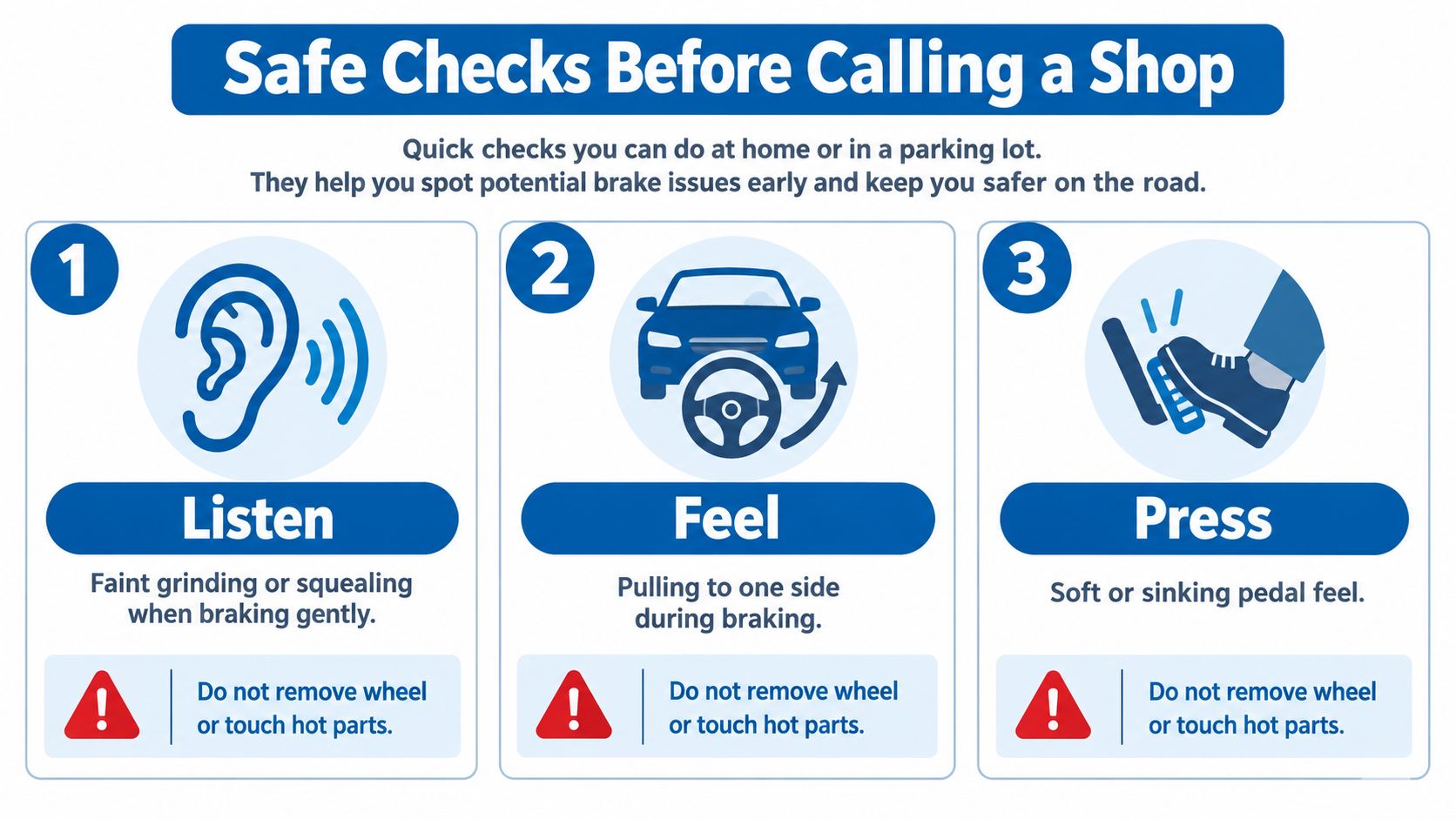
While safely parked, write down what you noticed during the trip:
- Listen and describe. Record whether scraping or grinding happened while braking or continued after pedal release.
- Look without reaching inside. Note smoke, visible wetness, discoloration, or unusual brake-dust differences. Appearance alone isn’t a diagnosis.
- Check the dashboard. Record which warning light appeared and whether it coincided with another symptom.
- Describe pedal and steering changes. Tell the shop if braking required correction or the pedal felt different.
- Notice odors. Report a new hot-brake smell and where it seemed strongest.
The NHTSA-published brake-drag bulletin describes rotor-rotation checks for technicians working with the vehicle safely raised. It also warns against touching recently driven brake components because they can be dangerously hot.
Don’t touch hot wheels or rotors, open a bleeder screw, or ignore a soft pedal to complete a home check.
Visible moisture needs professional identification. NHTSA brake-service guidance on caliper fluid explains that fluid around the piston should be checked to distinguish brake fluid from assembly oil.
If you suspect a brake fluid leak, don’t wipe it away. Arrange service rather than waiting for the next oil change.
When to Bring Your Car to Pete Nelson Automotive
For drivers seeking auto repair in Sun City, AZ, the next step should match the severity of the symptom. Visible fluid near a wheel, altered pedal travel, pronounced wheel-end heat, or a new brake warning light calls for prompt professional assessment. Severe heat, smoke, or unreliable stopping means stopping safely and arranging transport rather than driving to the shop.
What a Useful Brake Inspection Includes
A brake specialist should investigate the complete assembly, not just quote a replacement caliper. The evaluation should include:
- Temperature comparison using a noncontact infrared thermometer under equivalent conditions.
- Pad measurements on both sides of each rotor.
- Hardware inspection covering caliper and bracket fasteners.
- Movement checks for slide pins, pads, and piston retraction.
- Hydraulic diagnosis to distinguish a caliper fault from a restricted hose or an upstream problem.
Pete Nelson Automotive is a local option for brake repair and inspection, with ASE-certified technicians and related diagnostic and alignment services. Explain intermittent symptoms clearly, including when they occur and whether they followed recent brake work.
Preventive maintenance serves a different purpose from urgent diagnosis. The Smooth Ride Special includes an oil and filter change, fluid top-off, a trip safety inspection, and tire balance and rotation, making it relevant between services. It isn’t a reason to postpone inspection of an active braking concern.
Ask the shop to explain what failed, what evidence confirms it, and which surrounding parts were affected. That’s a more useful conversation than choosing parts based solely on a symptom list.
Frequently Asked Questions About Bad Brake Calipers
How Much Does Brake Caliper Repair Cost?
The estimate depends on the vehicle, the confirmed fault, and any related damage. Ask for an itemized quote separating diagnosis, parts, labor, and necessary hydraulic service rather than relying on a generic online price.
How Long Does It Take to Replace a Brake Caliper?
There isn’t a reliable universal timeframe. Parts availability, fastener condition, hydraulic work, and final verification affect scheduling, so ask the shop for an estimate after inspection.
Can I Drive With Signs of a Bad Brake Caliper?
Don’t continue with smoke, severe heat, fluid leakage, or a soft or sinking pedal. Stop safely and ask the shop or roadside assistance whether the vehicle should be transported.
Will New Brake Pads Fix a Sticking Caliper?
New pads won’t correct a binding piston, seized guide pin, or restricted hose. The technician must resolve the underlying fault and assess whether the existing pads and rotors remain serviceable.
For brake inspection and diagnostic troubleshooting, visit Pete Nelson Automotive and describe the pulling, pedal change, noise, or heat you’ve noticed. Call 623-974-4723 or visit petenelsonautorepair.com to schedule your appointment today.
Pete Nelson Automotive
This Offer Will Expire 12-31-2026
Pete Nelson Automotive is pleased to offer you
"Get Ready for the Holidays"
A $215.00 Value for Only $159.95 (+tax)
Lube, Oil, & Filter Change, Up to 5 quarts of Engine oil
Inspect and top off all fluid levels, Includes up to 5 Quarts of 5w30 synthetic blend oil, additional charge for synthetic oil.
Travel Evaluation
Set Air Pressures and Tire Rotation if needed.
Battery, Alternator and Starter Electrical Test
Load test battery, Alternator output and Starting amps.
Full Brake Evaluation
Includes check brake system on four wheels, checking and testing brake fluid condition.
So Call 623-974-4723 today and make an appointment for this exclusive Special!
*Most Cars, Vans, Motor homes, 4×4’s, Diesels, and some foreign cars may be higher. You must bring this letter at time of service and allow 2 hours to complete.



